Temperature sensing is a vital function of the human body, helping maintain internal stability and protect against environmental extremes. Whether you’re stepping into cold water or touching a hot surface, specialized receptors in your skin and body instantly detect temperature changes and send signals to the brain.
This guide explains how thermoreceptors work, the pathways involved, and how your body interprets temperature.
What Is Temperature Sensing?
Temperature sensing, also known as thermosensation, is the process by which the body detects changes in heat and cold.
It plays two critical roles:
- Protecting the body from extreme temperatures (e.g., burns or frostbite)
- Helping regulate internal body temperature (homeostasis)
This system involves both the peripheral nervous system (receptors in the skin) and the central nervous system (brain and spinal cord).
What Are Thermoreceptors?
Thermoreceptors are specialized sensory receptors that detect temperature changes. They are primarily located in the skin but are also found in deeper tissues and the hypothalamus.
These receptors respond to:
- External temperature (environment)
- Internal temperature (core body conditions)
Unlike some other receptors, thermoreceptors are highly sensitive to even small changes in temperature.
Types of Thermoreceptors
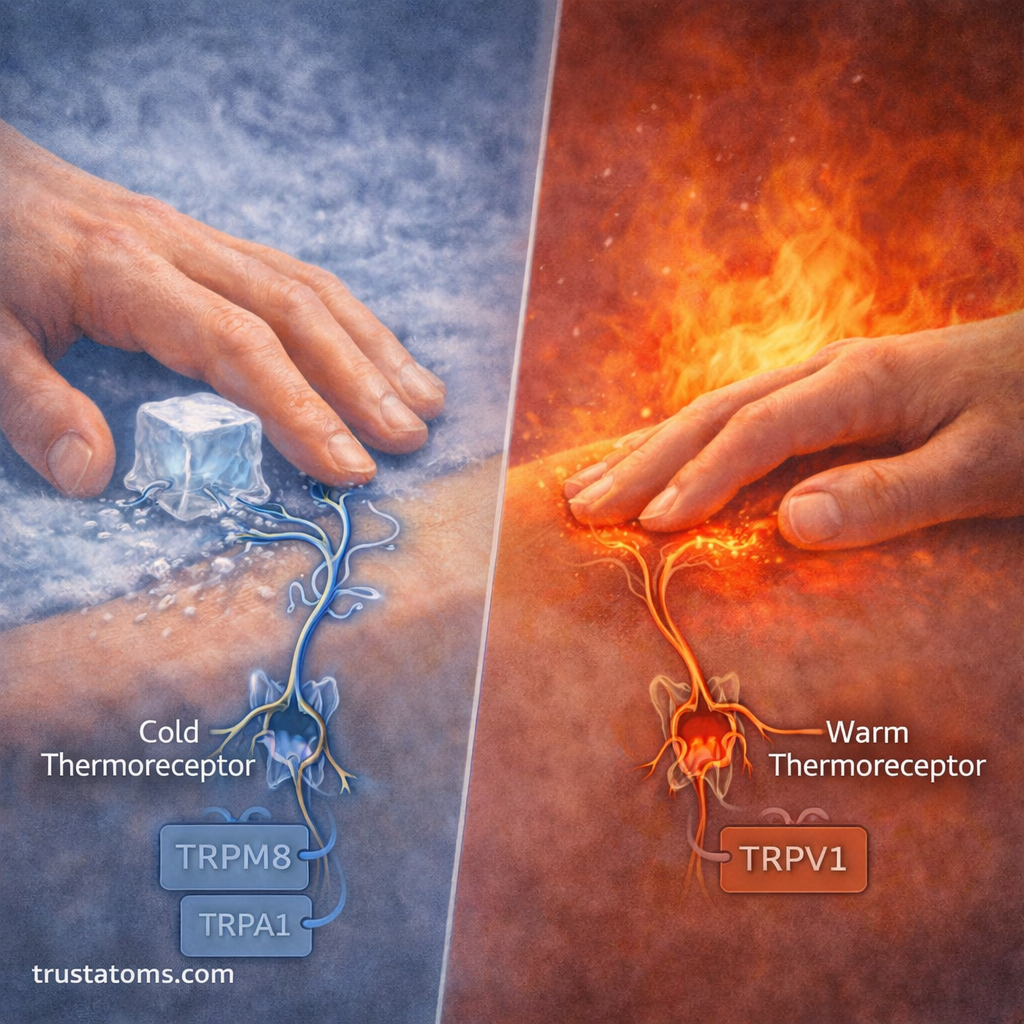
Thermoreceptors are generally divided into two main categories based on what they detect.
Cold Receptors
- Activated by decreasing temperatures
- Most active between approximately 10°C and 35°C (50°F–95°F)
- Found closer to the skin surface
- More numerous than warm receptors
Cold receptors respond quickly when you encounter cooler environments, which is why cold often feels more immediate than warmth.
Warm Receptors
- Activated by increasing temperatures
- Most active between approximately 30°C and 45°C (86°F–113°F)
- Located slightly deeper in the skin
- Fewer in number compared to cold receptors
Warm receptors provide gradual signals as temperature rises.
Nociceptive Temperature Receptors
When temperatures become extreme, pain receptors (nociceptors) are activated.
- Above ~45°C (113°F): heat pain
- Below ~10°C (50°F): cold pain
These signals trigger protective responses, such as pulling your hand away from a hot surface.
How Thermoreceptors Work
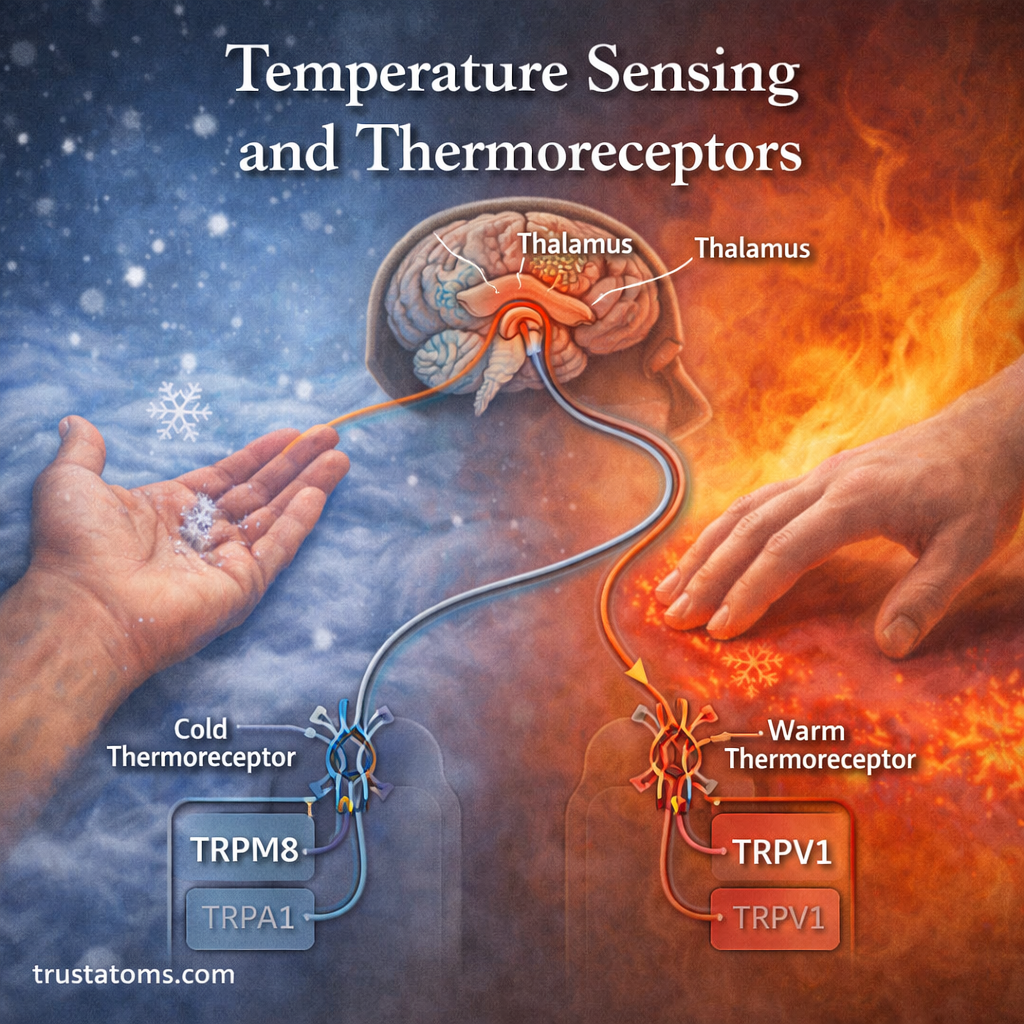
Thermoreceptors detect temperature changes through specialized ion channels in their membranes.
TRP Channels (Transient Receptor Potential)
These channels open or close depending on temperature, allowing ions to flow and generate electrical signals.
Examples include:
- TRPV1
Activated by high temperatures and substances like capsaicin (spicy foods) - TRPM8
Activated by cold temperatures and menthol - TRPA1
Responds to extreme cold and irritants
These channels convert temperature stimuli into nerve impulses.
The Temperature Sensation Pathway
Temperature signals follow a structured pathway from the skin to the brain.
1. Detection
- Thermoreceptors in the skin detect changes in temperature
- Ion channels trigger electrical signals in sensory neurons
2. Transmission
- Signals travel through peripheral nerves
- Enter the spinal cord via the dorsal horn
- Cross to the opposite side of the spinal cord
3. Ascending Pathway
- Signals travel upward via the spinothalamic tract
- Reach the thalamus (relay center)
4. Perception
- Signals are sent to the somatosensory cortex
- The brain identifies temperature intensity and location
This process allows you to consciously feel hot or cold.
Temperature vs Pain: What’s the Difference?
Temperature and pain are closely related but processed differently.
- Moderate temperatures activate thermoreceptors
- Extreme temperatures activate nociceptors (pain receptors)
This overlap ensures rapid protective responses.
For example:
- Warm water feels comfortable
- Very hot water triggers pain and withdrawal
Role of the Hypothalamus in Temperature Regulation
The hypothalamus acts as the body’s thermostat.
Key Functions
- Monitors internal body temperature
- Compares it to a set point (~37°C or 98.6°F)
- Activates responses to maintain balance
Responses to Heat
- Sweating to cool the body
- Dilating blood vessels (vasodilation)
Responses to Cold
- Shivering to generate heat
- Constricting blood vessels (vasoconstriction)
This system ensures stable internal conditions despite environmental changes.
Adaptation to Temperature
Thermoreceptors can adapt to constant temperatures over time.
Example
- Jumping into a cold pool feels shocking at first
- After a few minutes, the sensation becomes less intense
This occurs because receptor firing decreases as the stimulus remains constant.
However, sudden changes still trigger strong responses.
Factors That Affect Temperature Perception
Temperature sensation is influenced by several factors beyond the actual temperature.
Physical Factors
- Skin thickness
- Blood flow
- Environmental conditions (wind, humidity)
Biological Factors
- Age (older adults may have reduced sensitivity)
- Health conditions (e.g., nerve damage)
Psychological Factors
- Attention and focus
- Expectation (anticipating cold or heat)
These factors can alter how temperature is experienced.
Clinical Relevance
Understanding thermoreceptors is important in both medicine and everyday health.
Common Conditions
- Neuropathy
Reduced ability to sense temperature - Burns
Damage to thermoreceptors and surrounding tissue - Hypothermia
Dangerously low body temperature - Fever
Elevated set point in the hypothalamus
Safety and Everyday Importance
Temperature sensing helps prevent injury and maintain survival.
Everyday Examples
- Pulling your hand away from a hot stove
- Dressing appropriately for weather
- Adjusting water temperature while bathing
Without thermoreceptors, these protective behaviors would not be possible.
Final Thoughts
Temperature sensing is a finely tuned system involving thermoreceptors, neural pathways, and brain processing. From detecting subtle changes in the environment to preventing serious injury, this system plays a crucial role in survival.
By understanding how thermoreceptors work and how signals travel through the body, you gain insight into one of the most essential sensory systems in human anatomy.