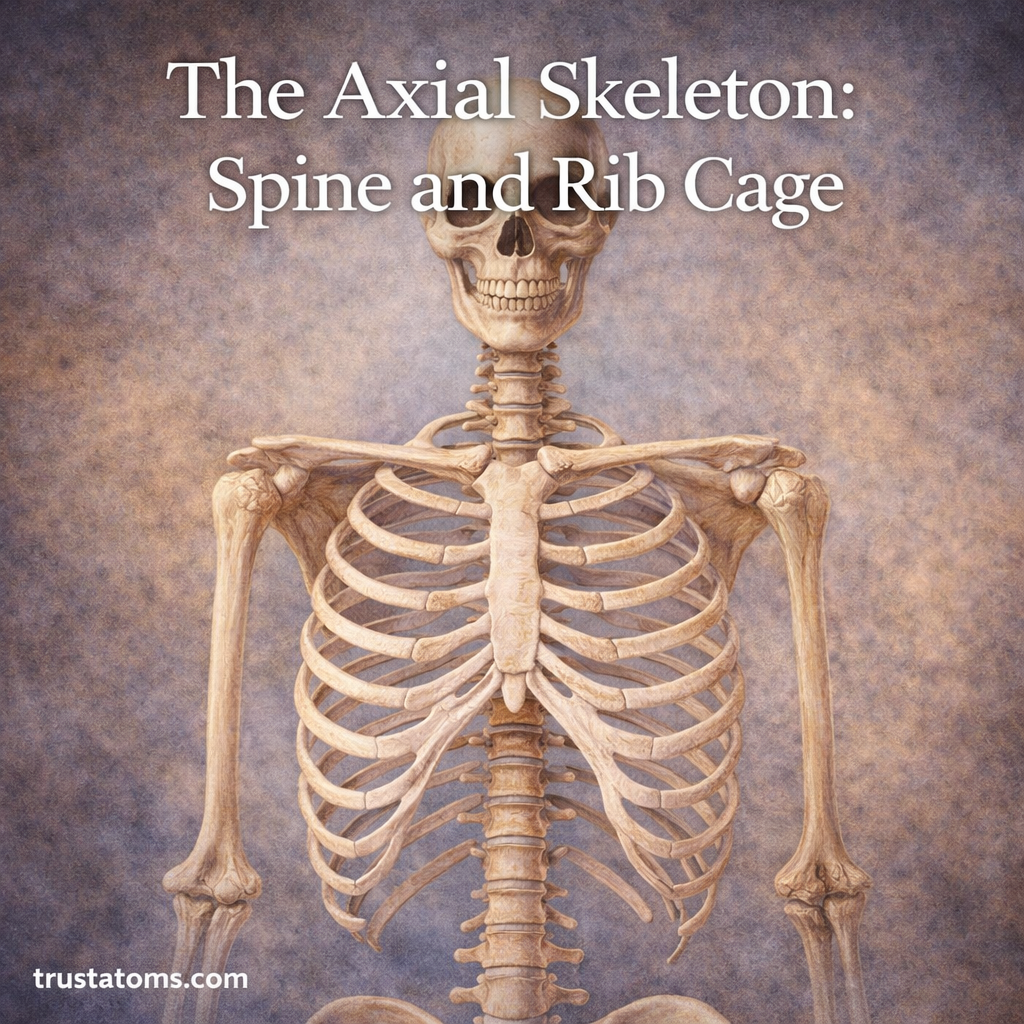
The axial skeleton forms the central framework of the human body. It includes the skull, spine, and rib cage, all of which protect vital organs and support posture.
Among these, the spine (vertebral column) and rib cage (thoracic cage) play especially important roles in stability, movement, and protection.
What Is the Axial Skeleton?
The axial skeleton consists of 80 bones aligned along the body’s central axis.
Main Components
- Skull
- Vertebral column (spine)
- Rib cage (ribs and sternum)
Core Functions
- Supports the head and torso
- Protects the brain, spinal cord, and organs
- Maintains posture and balance
- Provides attachment points for muscles
The Vertebral Column (Spine)
The spine is a flexible column made up of individual bones called vertebrae. It supports body weight while allowing movement.
Structure of the Spine
The vertebral column is divided into five regions:
- Cervical spine (neck) – 7 vertebrae
- Thoracic spine (upper back) – 12 vertebrae
- Lumbar spine (lower back) – 5 vertebrae
- Sacrum – 5 fused vertebrae
- Coccyx (tailbone) – 4 fused vertebrae
Functions of the Spine
- Supports the head and upper body
- Protects the spinal cord
- Allows flexibility and movement
- Absorbs shock during activity
Intervertebral Discs
Between most vertebrae are intervertebral discs, which act as cushions.
Key Roles:
- Absorb shock
- Allow flexibility
- Prevent bone-to-bone contact
Natural Curves of the Spine
The spine has natural curves that improve balance and shock absorption:
- Cervical curve (inward)
- Thoracic curve (outward)
- Lumbar curve (inward)
These curves help distribute weight efficiently.
The Rib Cage (Thoracic Cage)
The rib cage is a protective structure that surrounds the chest cavity.
Components of the Rib Cage
- 12 pairs of ribs
- Sternum (breastbone)
- Thoracic vertebrae
Types of Ribs
Ribs are categorized based on how they attach to the sternum:
- True ribs (1–7): Directly connected to the sternum
- False ribs (8–10): Indirectly connected
- Floating ribs (11–12): Not connected to the sternum
Functions of the Rib Cage
- Protects the heart and lungs
- Supports breathing movements
- Provides attachment for muscles
- Maintains chest structure
How the Spine and Rib Cage Work Together
The spine and rib cage form a coordinated system that supports and protects the body.
Key Interactions
- Ribs attach to thoracic vertebrae
- Spine provides structural support for the rib cage
- Together they stabilize the upper body
This integration allows for both protection and mobility.
Role in Breathing
The rib cage plays a major role in respiration.
Breathing Mechanics
- Muscles (like the diaphragm) contract
- Rib cage expands outward
- Chest cavity volume increases
- Air is drawn into the lungs
During exhalation, the process reverses.
Importance of Posture and Alignment
Proper alignment of the axial skeleton is essential for overall health.
Benefits of Good Posture
- Reduces strain on the spine
- Improves breathing efficiency
- Prevents injury
- Enhances movement and balance
Common Conditions Affecting the Spine and Rib Cage
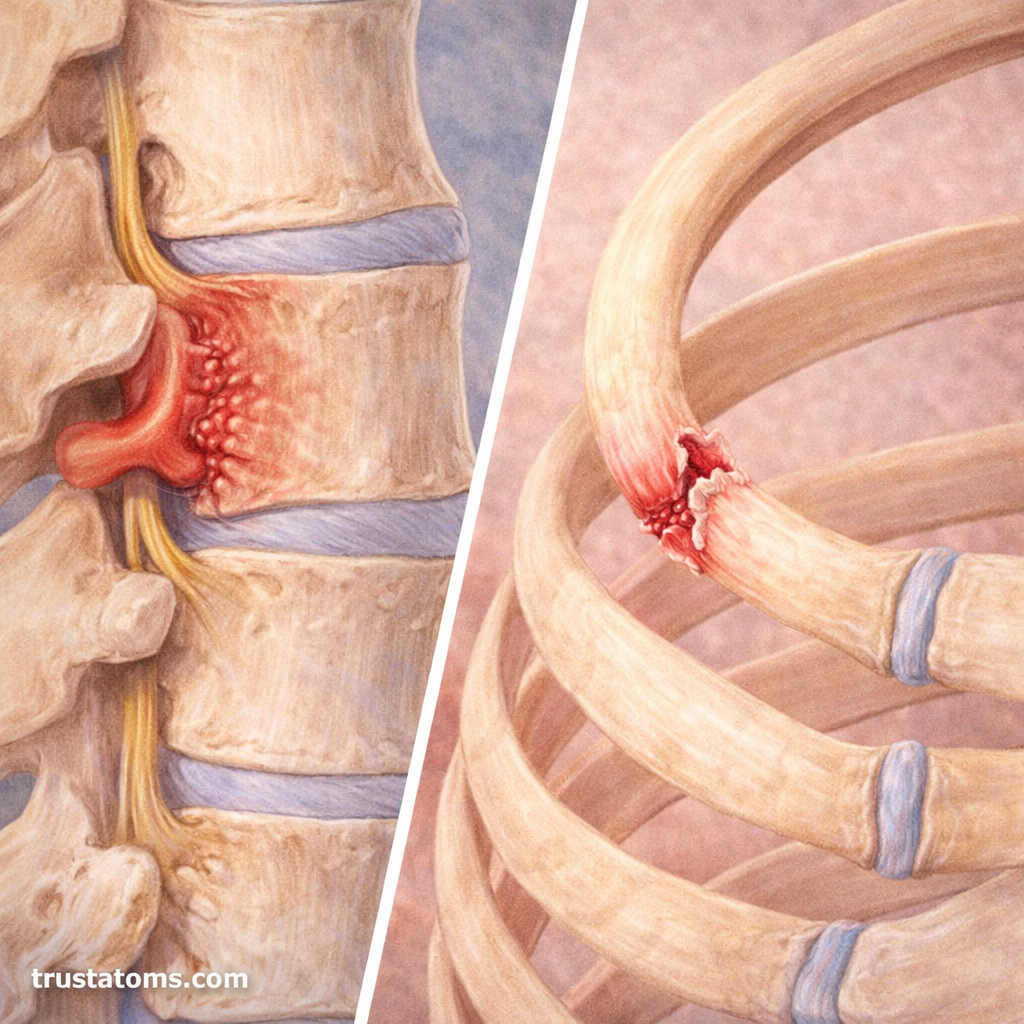
Problems with the axial skeleton can impact mobility and health.
Spine-Related Conditions
- Herniated discs
- Scoliosis (abnormal curvature)
- Degenerative disc disease
Rib Cage Issues
- Rib fractures
- Costochondritis (inflammation of rib cartilage)
Factors That Affect Axial Skeleton Health
Several factors influence the health of the spine and rib cage.
Key Factors
- Physical activity level
- Body mechanics and posture
- Age-related changes
- Nutrition (calcium and vitamin D)
- Injury history
How to Support a Healthy Spine and Rib Cage
Maintaining axial skeleton health is important for long-term mobility.
Practical Tips
- Practice good posture
- Strengthen core muscles
- Stay physically active
- Use proper lifting techniques
- Maintain a healthy weight
Common Misconceptions
- The spine is rigid (it is flexible and dynamic)
- The rib cage does not move (it expands during breathing)
- Back pain always means serious damage (often related to strain or posture)
Final Thoughts
The spine and rib cage are central to the body’s structure and function. Together, they provide support, protect vital organs, and enable movement and breathing.
Understanding how the axial skeleton works helps you appreciate the importance of posture, alignment, and overall skeletal health.