The human body must maintain a stable internal temperature to function properly. One of the most important systems responsible for this balance is thermoregulation—the process of controlling body temperature.
A key player in this system is the skin, specifically how blood flows through it. By adjusting blood flow, the body can release or conserve heat, helping you stay cool in hot conditions and warm in cold environments.
What Is Thermoregulation?
Thermoregulation is the body’s ability to maintain a stable internal temperature, typically around 37°C (98.6°F).
This process is controlled by the hypothalamus, a region in the brain that acts like a thermostat.
When body temperature changes, the hypothalamus triggers responses such as:
- Sweating
- Shivering
- Changes in skin blood flow
Role of Skin in Temperature Control
The skin is the body’s largest organ and plays a central role in heat exchange with the environment.
It regulates temperature by:
- Controlling blood flow near the surface
- Releasing heat through radiation and evaporation
- Acting as a barrier to external temperature changes
How Skin Blood Flow Regulates Temperature
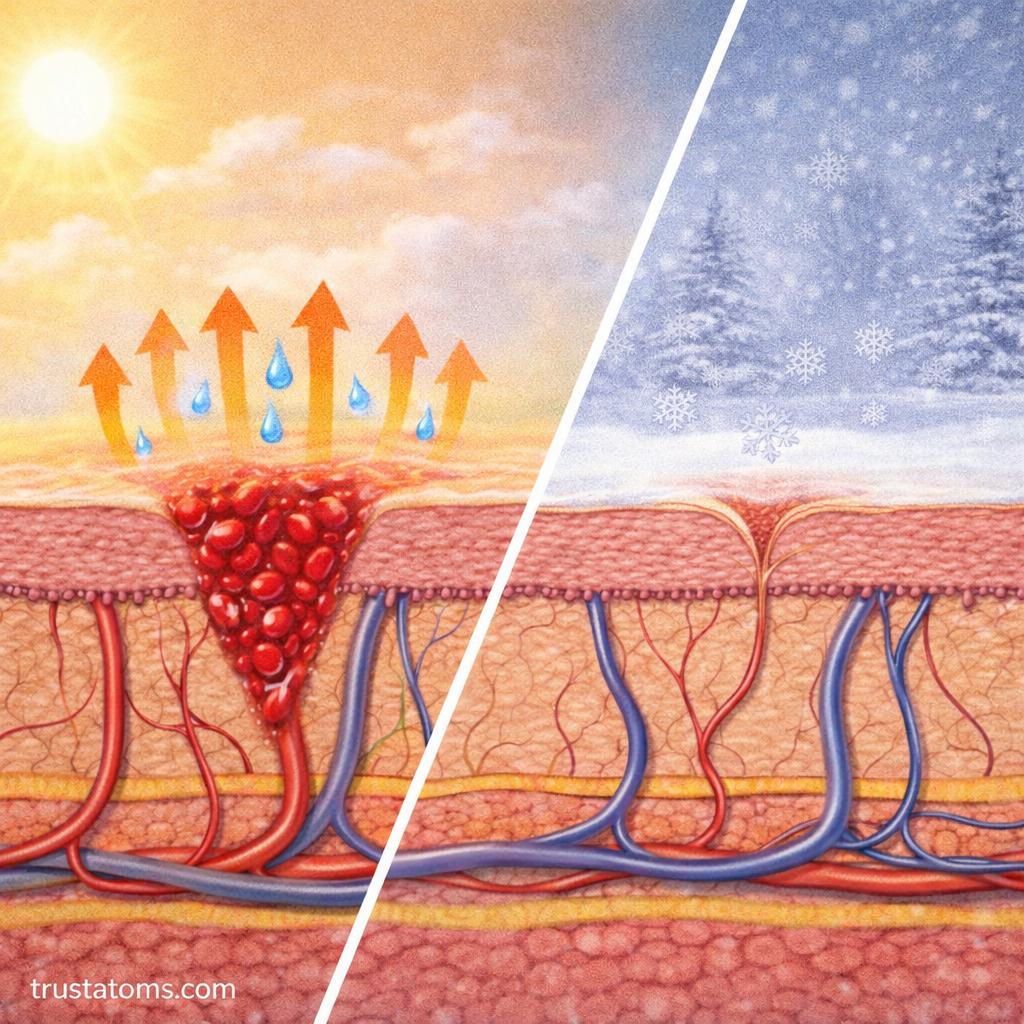
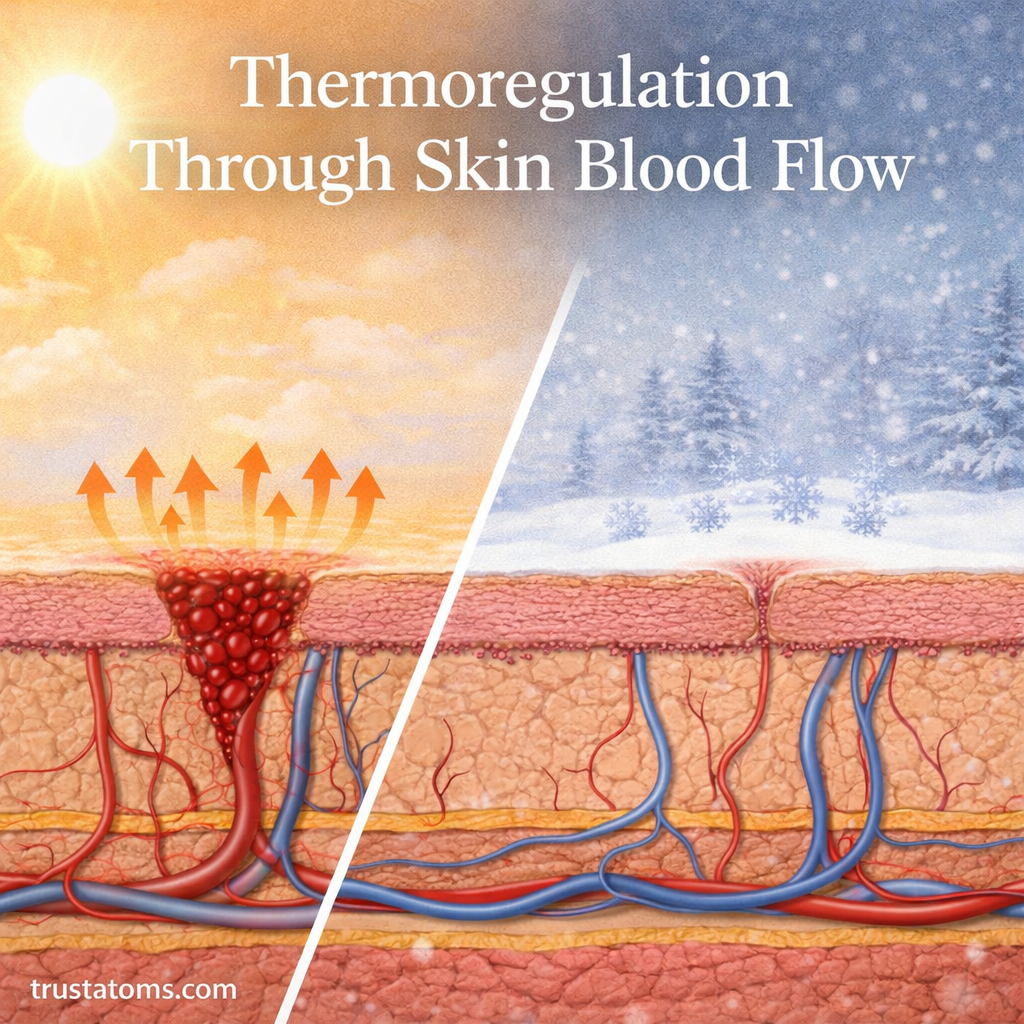
Blood carries heat throughout the body. By adjusting how much blood reaches the skin, the body can control heat loss.
Vasodilation (Heat Loss)
Vasodilation occurs when blood vessels in the skin widen.
What Happens
- More blood flows to the skin surface
- Heat is released into the environment
- Skin may appear flushed or red
When It Occurs
- Hot weather
- Physical activity
- Fever
Why It Matters
- Prevents overheating
- Helps cool the body efficiently
Vasoconstriction (Heat Conservation)
Vasoconstriction occurs when blood vessels in the skin narrow.
What Happens
- Less blood reaches the skin surface
- Heat is retained within the body
- Skin may appear pale or feel cold
When It Occurs
- Cold environments
- Exposure to wind or water
- Low body temperature
Why It Matters
- Reduces heat loss
- Helps maintain core temperature
The Process of Heat Exchange
The skin uses several mechanisms to regulate temperature through blood flow.
Radiation
- Heat moves from the body to the surrounding air
- Most effective when the environment is cooler than the body
Conduction
- Heat transfers through direct contact
- Example: touching a cold surface
Convection
- Heat is carried away by moving air or water
- Wind increases heat loss
Evaporation
- Sweat evaporates from the skin
- Removes heat and cools the body
Interaction Between Blood Flow and Sweating
Thermoregulation often involves both blood flow changes and sweating working together.
- Vasodilation increases heat delivery to the skin
- Sweating enhances cooling through evaporation
This combination is especially important during exercise or high temperatures.
Factors That Affect Skin Blood Flow
Several factors influence how effectively the skin regulates temperature.
Internal Factors
- Age
- Hormonal changes
- Fitness level
- Hydration
External Factors
- Ambient temperature
- Humidity
- Wind exposure
- Clothing
What Happens When Thermoregulation Fails?
If the body cannot regulate temperature properly, it can lead to serious conditions.
Overheating (Hyperthermia)
- Occurs when heat gain exceeds heat loss
- Symptoms include sweating, dizziness, and fatigue
- Severe cases can lead to heatstroke
Excessive Cooling (Hypothermia)
- Occurs when the body loses heat faster than it can produce it
- Symptoms include shivering, confusion, and slowed heart rate
Importance of Thermoregulation
Maintaining a stable body temperature is critical for survival.
Key Benefits
- Ensures proper enzyme function
- Supports organ performance
- Prevents heat-related or cold-related illnesses
Tips to Support Healthy Thermoregulation
Simple habits can help your body regulate temperature effectively.
In Hot Conditions
- Stay hydrated
- Wear lightweight, breathable clothing
- Avoid prolonged sun exposure
In Cold Conditions
- Dress in layers
- Keep extremities covered
- Stay dry to prevent heat loss
Final Thoughts
Thermoregulation through skin blood flow is a vital process that helps the body adapt to changing environments. By controlling blood vessel dilation and constriction, the skin plays a key role in maintaining a stable internal temperature.
Understanding how this system works highlights the importance of proper hydration, clothing, and environmental awareness in supporting your body’s natural temperature control.