Volcanoes are among the most powerful and dynamic features on Earth. While eruptions may appear unpredictable, scientists have identified clear patterns in how volcanoes behave. These eruption patterns depend on factors such as magma composition, gas content, and tectonic setting.
Understanding volcanic eruption patterns helps scientists forecast activity, reduce risks, and better understand Earth’s internal processes.
What Is a Volcanic Eruption?
A volcanic eruption occurs when magma (molten rock beneath the surface) rises and escapes through cracks or vents in the Earth’s crust.
During an eruption, volcanoes can release:
- Lava flows
- Ash clouds
- Gases (such as water vapor, carbon dioxide, sulfur dioxide)
- Rock fragments (tephra)
The way these materials are released determines the eruption pattern.
Key Factors That Influence Eruption Patterns
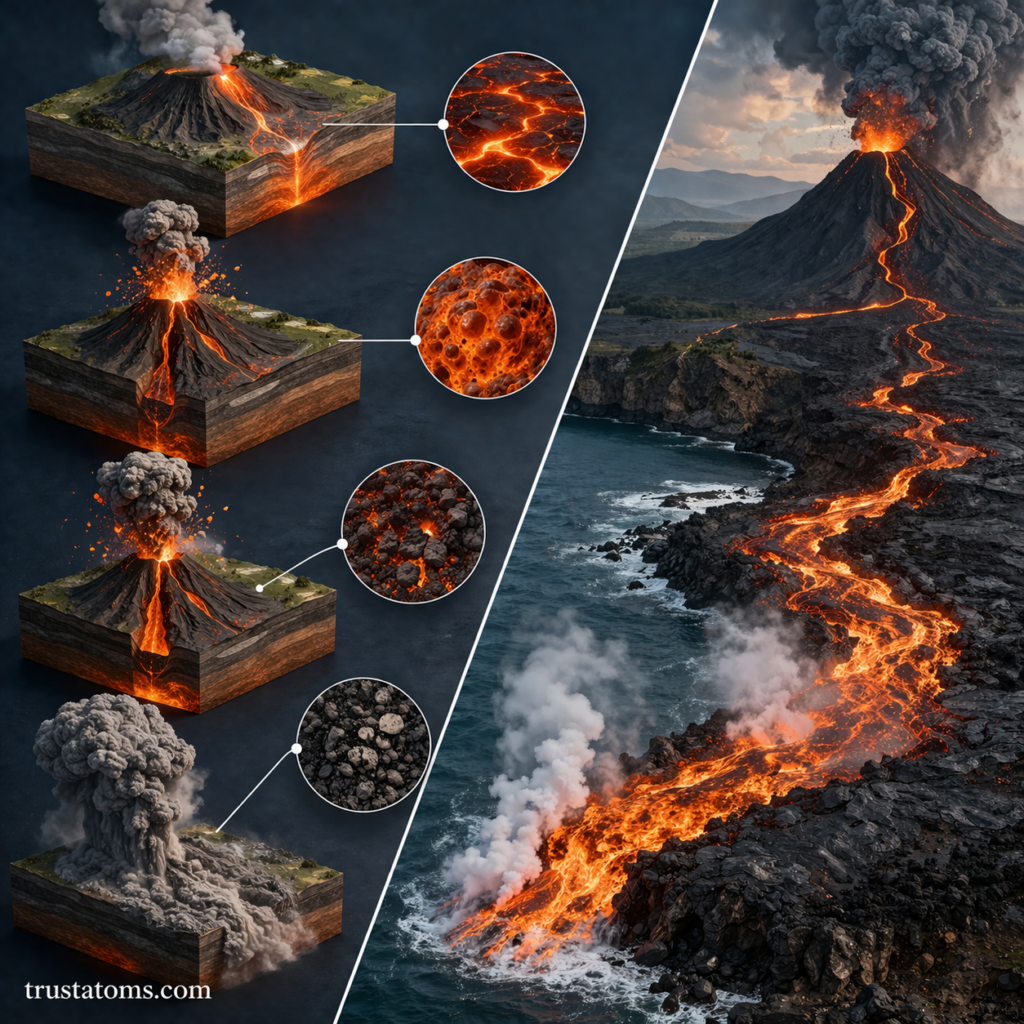
Volcanic eruptions are shaped by several important variables.
Magma Composition
- Basaltic magma (low silica): flows easily, less explosive
- Andesitic magma (moderate silica): intermediate behavior
- Rhyolitic magma (high silica): thick, highly explosive
Gas Content
- High gas pressure leads to explosive eruptions
- Low gas content results in gentle lava flows
Viscosity
Viscosity refers to how thick or sticky magma is:
- Low viscosity → fluid lava, quiet eruptions
- High viscosity → trapped gases, explosive eruptions
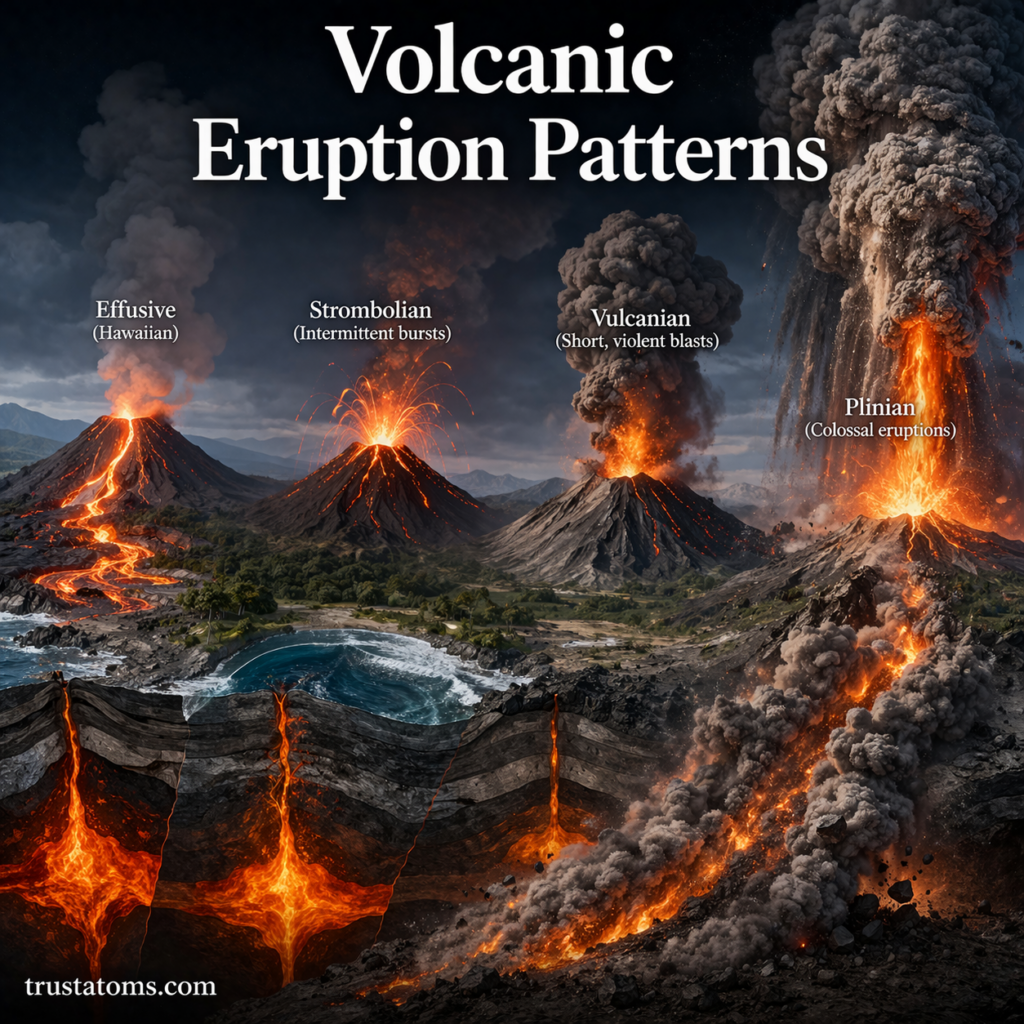
Types of Volcanic Eruption Patterns
Scientists classify eruptions into different types based on their behavior and intensity.
Effusive Eruptions
Effusive eruptions are relatively gentle and involve the steady flow of lava.
Characteristics:
- Lava flows spread over large areas
- Minimal ash or explosions
- Common in shield volcanoes
Example behavior: Slow-moving lava rivers
Explosive Eruptions
Explosive eruptions are violent and release large amounts of ash, gas, and fragmented rock.
Characteristics:
- Powerful blasts
- Tall ash columns
- Pyroclastic flows (hot gas and debris)
These eruptions can be highly dangerous and affect large regions.
Strombolian Eruptions
Named after Stromboli volcano in Italy, these eruptions involve moderate bursts of lava and gas.
Characteristics:
- Intermittent explosions
- Ejection of lava fragments
- Relatively predictable intervals
Vulcanian Eruptions
More intense than Strombolian eruptions, Vulcanian eruptions involve short, violent explosions.
Characteristics:
- Thick ash clouds
- High-pressure gas release
- Fragmented magma
Plinian Eruptions
Plinian eruptions are among the most powerful and destructive.
Characteristics:
- Massive eruption columns reaching the upper atmosphere
- Widespread ash fallout
- Potential for global climate impact
These eruptions can last for hours or days and are capable of reshaping landscapes.
Volcanic Eruption Cycles
Volcanoes often follow cycles of activity rather than erupting randomly.
Active Phase
- Increased seismic activity
- Rising magma
- Gas emissions
Eruption Phase
- Release of lava, ash, and gases
- Peak volcanic activity
Dormant Phase
- Reduced activity
- Magma remains beneath the surface
Extinct Phase
- No expected future eruptions
- Magma supply is depleted
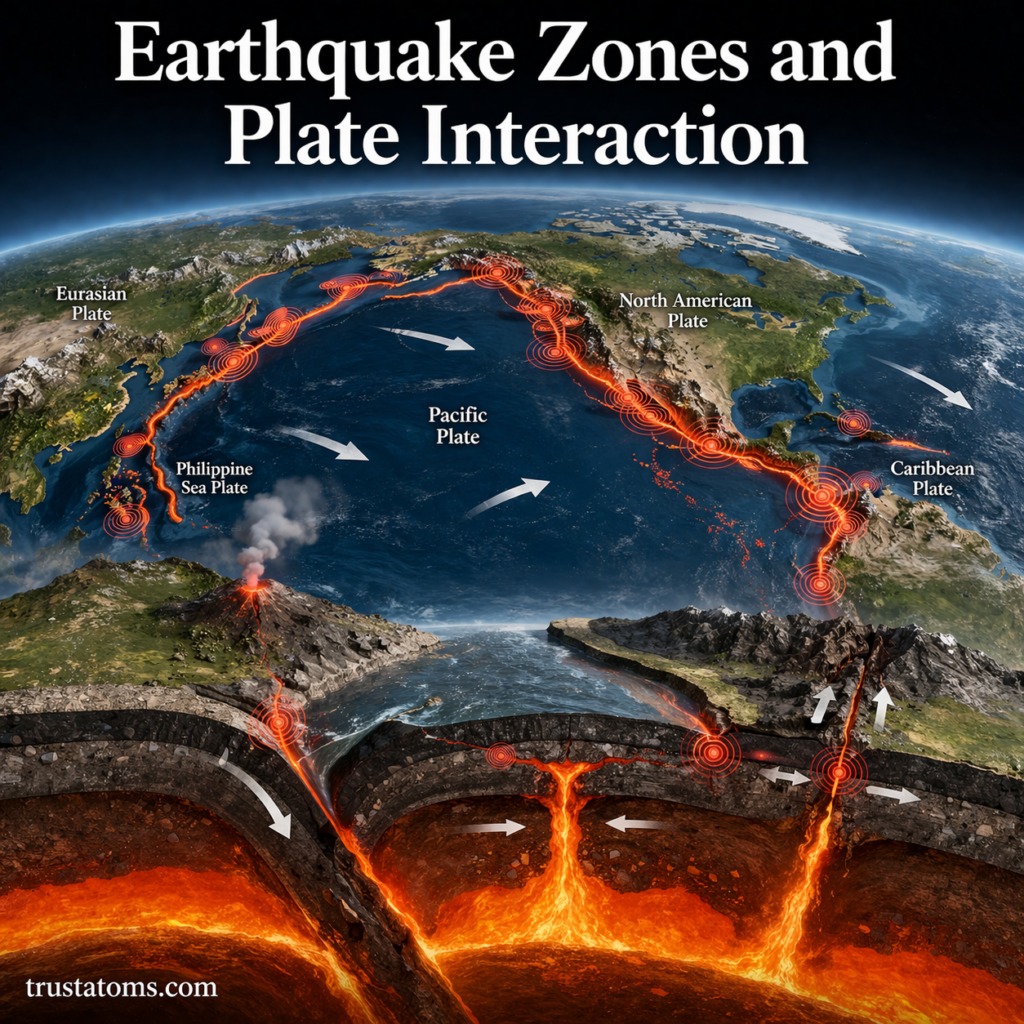
Tectonic Settings and Eruption Patterns
The location of a volcano plays a major role in its eruption style.
Divergent Boundaries
- Magma rises as plates move apart
- Typically produce effusive eruptions
Convergent Boundaries
- Subduction creates high-pressure magma
- Often produce explosive eruptions
Hotspots
- Occur within tectonic plates
- Can produce long-lasting volcanic chains
Example: Hawaiian Islands (mostly effusive eruptions)
Volcanic Hazards Associated With Eruption Patterns
Different eruption types pose different risks.
Lava Flows
- Destroy structures and vegetation
- Move slowly but can cover large areas
Ash Fall
- Affects air quality and visibility
- Damages crops and infrastructure
Pyroclastic Flows
- Extremely hot and fast-moving
- Among the most dangerous volcanic hazards
Volcanic Gases
- Toxic and harmful to health
- Can contribute to climate effects
Monitoring and Predicting Eruptions
Scientists use various tools to study eruption patterns and predict volcanic activity.
Common Monitoring Methods
- Seismographs (detect ground movement)
- Gas measurements
- Satellite imaging
- Ground deformation tracking
Warning Signs of Eruptions
- Increased earthquakes
- Swelling of the volcano
- Changes in gas emissions
- Rising temperatures
While exact timing is difficult to predict, these signs help reduce risk.
Why Understanding Eruption Patterns Matters
Studying volcanic eruption patterns has important real-world benefits.
Key Advantages
- Improves disaster preparedness
- Helps protect communities
- Supports aviation safety
- Advances scientific knowledge
Final Thoughts
Volcanic eruption patterns reveal the inner workings of Earth’s geology. From gentle lava flows to explosive ash clouds, each eruption type tells a story about magma, pressure, and tectonic forces.
By understanding these patterns, scientists can better anticipate volcanic behavior and help minimize the impact on people and the environment.