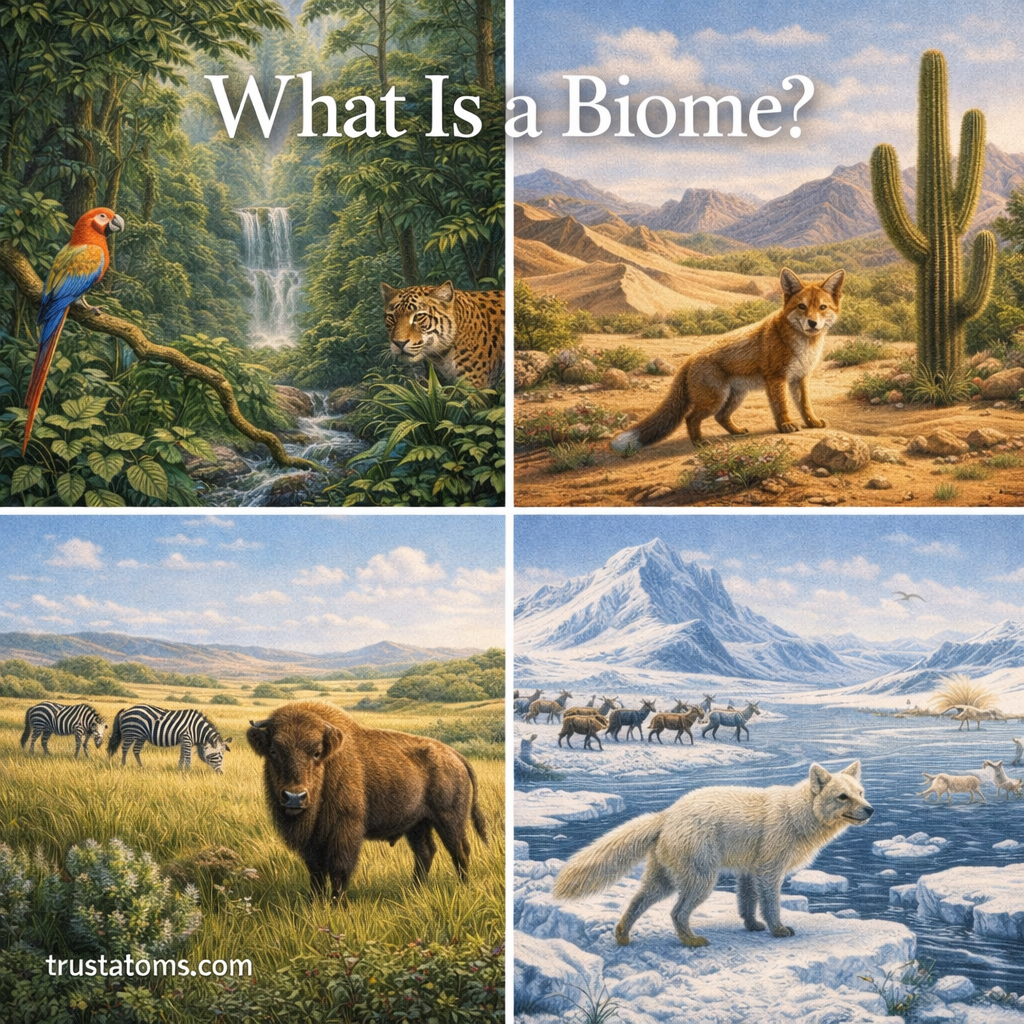
A biome is a large ecological region on Earth defined by its climate, vegetation, and the types of animals that live there. Biomes represent broad environmental zones where living organisms share similar adaptations to the surrounding conditions.
From tropical rainforests to icy tundra landscapes, each biome supports unique communities of plants and animals. Scientists use the concept of biomes to understand how ecosystems are organized across the planet and how life responds to different climates.
Studying biomes helps researchers explain patterns of biodiversity, species distribution, and ecological relationships at a global scale.
The Basic Definition of a Biome
In biology and ecology, a biome refers to a large geographic area characterized by specific climate conditions and dominant plant life.
While individual ecosystems may vary within a biome, they share similar environmental patterns.
Key characteristics that define a biome include:
- Average temperature
- Amount of precipitation
- Types of plants that dominate the landscape
- Animals adapted to those conditions
For example, desert biomes receive very little rainfall, while tropical rainforest biomes receive heavy precipitation throughout the year.
How Biomes Differ From Ecosystems
Although the terms are sometimes used interchangeably, biomes and ecosystems are different concepts.
Biome
A biome refers to a large-scale ecological region that may span continents.
Examples include:
- Deserts
- Rainforests
- Grasslands
- Tundra
Ecosystem
An ecosystem refers to a specific local environment where organisms interact with each other and with their physical surroundings.
Examples include:
- A single pond
- A coral reef
- A forest valley
- A marsh wetland
In simple terms:
- Biomes are large ecological zones
- Ecosystems are smaller systems within those zones
Major Types of Biomes on Earth
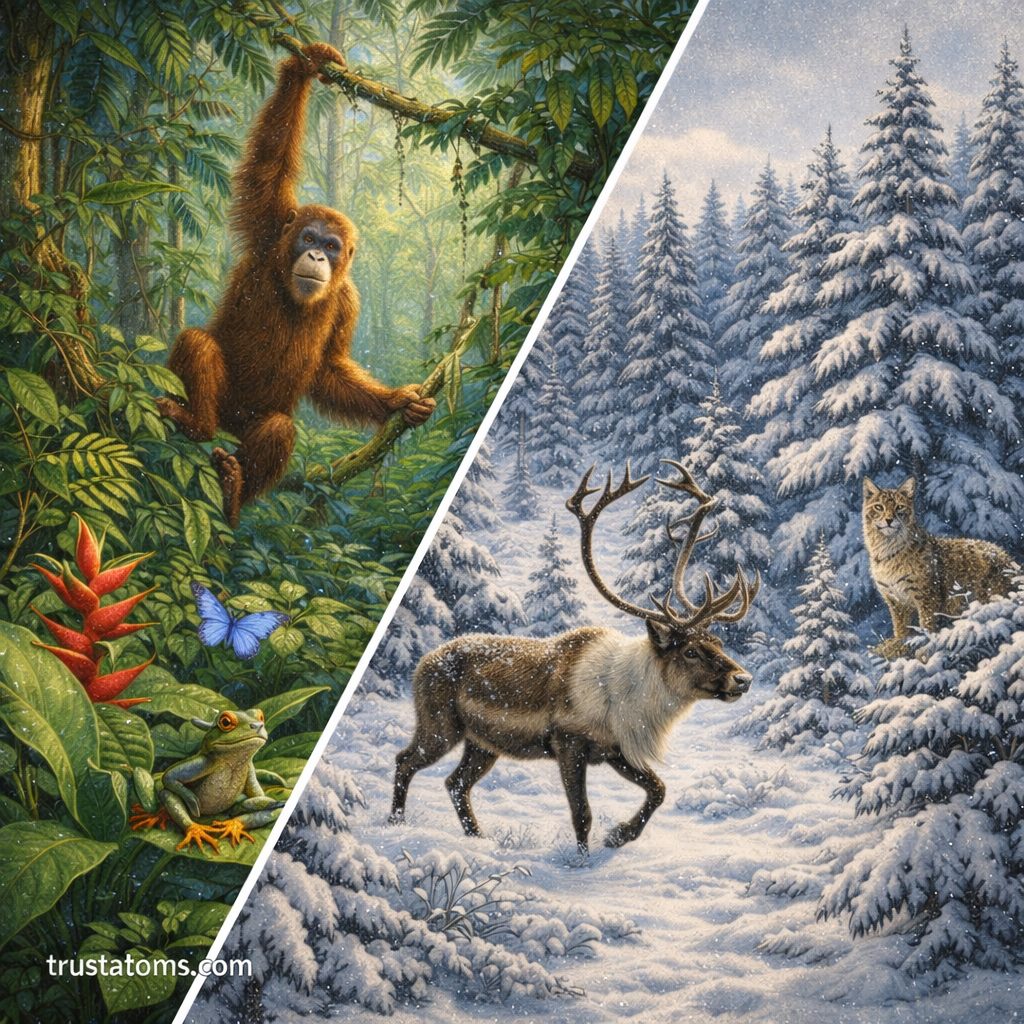
Scientists commonly classify Earth’s biomes into several major categories based on climate and vegetation.
Tropical Rainforest
Tropical rainforests are warm, humid environments located near the equator.
Key characteristics include:
- High rainfall throughout the year
- Dense plant growth
- Extremely high biodiversity
Common rainforest organisms include:
- Monkeys
- Birds
- Frogs
- Insects
- Tropical trees and vines
Examples of tropical rainforest regions include the Amazon Basin and parts of Southeast Asia.
Desert
Deserts are extremely dry environments with very little rainfall.
Characteristics include:
- Low precipitation
- Large temperature differences between day and night
- Sparse vegetation
Plants and animals in deserts are adapted to conserve water.
Examples include:
- Cacti
- Lizards
- Camels
- Desert foxes
Grassland
Grasslands are open regions dominated by grasses rather than large trees.
Key features include:
- Moderate rainfall
- Fertile soils
- Seasonal drought or fire
Grasslands support many grazing animals.
Examples include:
- Bison
- Antelope
- Zebras
- Prairie dogs
Major grassland regions include the African savannas and the North American prairies.
Temperate Forest
Temperate forests occur in regions with moderate climates and distinct seasons.
Characteristics include:
- Warm summers
- Cold winters
- Deciduous trees that shed leaves annually
Common organisms include:
- Deer
- Bears
- Owls
- Oak and maple trees
Temperate forests are found in parts of North America, Europe, and East Asia.
Tundra
The tundra biome is one of the coldest environments on Earth.
It is primarily found in Arctic regions and high mountain areas.
Key characteristics include:
- Extremely low temperatures
- Permafrost (permanently frozen soil)
- Short growing seasons
Vegetation in tundra environments includes mosses, grasses, and small shrubs.
Animals adapted to tundra conditions include:
- Arctic foxes
- Caribou
- Snowy owls
- Polar bears
Aquatic Biomes
Aquatic biomes include water-based environments such as oceans and freshwater systems.
These can be divided into two major categories:
- Freshwater biomes
- Marine biomes
Freshwater environments include:
- Lakes
- Rivers
- Streams
- Wetlands
Marine environments include:
- Oceans
- Coral reefs
- Coastal ecosystems
Aquatic biomes support a vast diversity of life, from microscopic plankton to large marine mammals.
Factors That Shape Biomes
Several environmental factors influence where biomes occur on Earth.
Climate
Climate is the most important factor determining biome distribution.
Temperature and rainfall patterns influence which plants can grow in a region.
Since plants form the foundation of food webs, they determine which animals can survive there.
Latitude
Latitude affects the amount of sunlight a region receives.
Areas near the equator receive more direct sunlight and tend to support tropical biomes, while regions near the poles experience colder climates.
Elevation
Higher elevations tend to have cooler temperatures and different vegetation patterns.
Mountain environments may contain several biome zones at different heights.
Adaptations Within Biomes
Organisms living in different biomes develop special traits that help them survive.
These adaptations may include:
- Thick fur for cold climates
- Water storage in desert plants
- Migration behaviors
- Camouflage for protection
Over long periods of time, species evolve characteristics that match the environmental challenges of their biome.
Why Biomes Matter
Biomes help scientists understand how life is organized across Earth’s environments.
They also help researchers study important environmental issues such as:
- Climate change
- Habitat loss
- Biodiversity conservation
- Ecosystem stability
By examining biomes, scientists can better predict how environmental changes may affect plant and animal populations.
Biomes and the Global Environment
Biomes play a crucial role in maintaining Earth’s ecological balance.
They influence:
- Global climate patterns
- Carbon storage
- Water cycles
- Food webs
Protecting natural biomes is essential for preserving biodiversity and maintaining the environmental systems that support life on our planet.