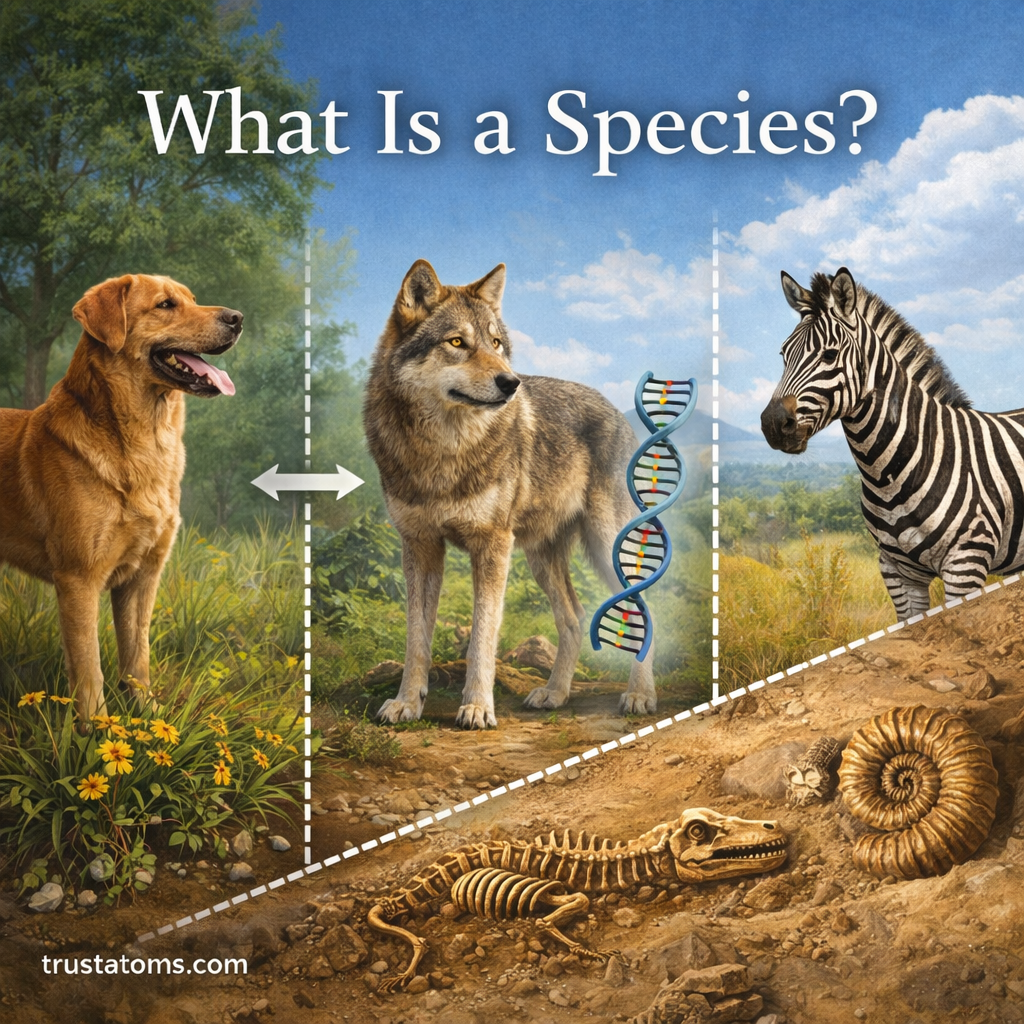
In biology, the concept of a species is one of the most fundamental ways scientists classify living organisms. A species represents a group of organisms that share common characteristics and can typically reproduce with one another to produce fertile offspring.
Understanding what a species is helps biologists organize biodiversity, study evolution, and understand how life on Earth changes over time.
However, defining a species is not always simple. While many organisms clearly belong to distinct species, others blur the boundaries through hybridization, genetic similarities, or evolutionary transitions.
The Basic Definition of a Species
The most widely known definition comes from the Biological Species Concept, which describes a species as:
A group of organisms that can interbreed naturally and produce fertile offspring.
This means individuals within the same species:
- Share similar genetic characteristics
- Can reproduce with one another in nature
- Produce offspring capable of reproducing themselves
For example:
- All domestic dogs belong to the species Canis lupus familiaris and can reproduce with each other despite their physical differences.
- Horses and donkeys can mate, but their offspring (mules) are usually sterile, meaning the parents belong to different species.
Why Species Classification Matters
Identifying species is essential for understanding life on Earth.
Scientists rely on species classification to:
- Study biodiversity
- Track evolutionary relationships
- Monitor ecosystem health
- Protect endangered organisms
- Understand how organisms adapt to environments
Species classification also helps scientists communicate clearly about organisms around the world.
Without standardized species definitions, biological research would become confusing and inconsistent.
Key Characteristics That Define a Species
Scientists use several factors to determine whether organisms belong to the same species.
1. Reproductive Compatibility
Members of a species can reproduce with one another and produce fertile offspring.
This reproductive isolation separates species from one another.
Examples include:
- Wolves and dogs producing fertile hybrids
- Lions and tigers producing infertile hybrids (ligers or tigons)
2. Genetic Similarity
Members of a species share a large portion of their DNA.
Modern genetic analysis helps scientists determine how closely organisms are related and whether they belong to the same species.
DNA sequencing has improved species identification, especially for organisms that appear visually similar.
3. Physical Characteristics
Organisms within a species often share recognizable traits.
These traits may include:
- Body structure
- Color patterns
- Size and shape
- Anatomical features
However, physical traits alone are not always reliable since some species can look nearly identical.
4. Ecological Role
Organisms within the same species often occupy similar ecological niches.
They may share:
- Habitat preferences
- Feeding strategies
- Behavioral patterns
These ecological similarities can help scientists distinguish species in complex ecosystems.
Different Scientific Concepts of Species
Biologists use several definitions depending on the organisms being studied.
Biological Species Concept
The Biological Species Concept focuses on reproductive ability.
Key idea:
Members of the same species can interbreed and produce fertile offspring.
This concept works well for animals and plants that reproduce sexually but is less useful for organisms that reproduce asexually.
Morphological Species Concept
The Morphological Species Concept classifies organisms based on physical appearance.
Scientists compare:
- Shape
- Size
- Structural features
This method is often used in paleontology when studying fossils, where reproductive information is unavailable.
Phylogenetic Species Concept
The Phylogenetic Species Concept focuses on evolutionary relationships.
According to this concept, a species is the smallest group of organisms that share a common evolutionary ancestor and distinct genetic traits.
Scientists use genetic data and evolutionary trees to identify species boundaries.
Ecological Species Concept
This concept defines species based on ecological roles.
A species is identified by how it interacts with its environment, including:
- Resource use
- Habitat preference
- Behavioral patterns
Two organisms that occupy different ecological niches may be considered separate species even if they appear similar.
Challenges in Defining Species
Despite its importance, the concept of a species can be difficult to apply.
Hybridization
Some organisms from different species can interbreed and produce hybrids.
Examples include:
- Ligers (lion + tiger)
- Coywolves (coyote + wolf hybrids)
These hybrids can complicate species boundaries.
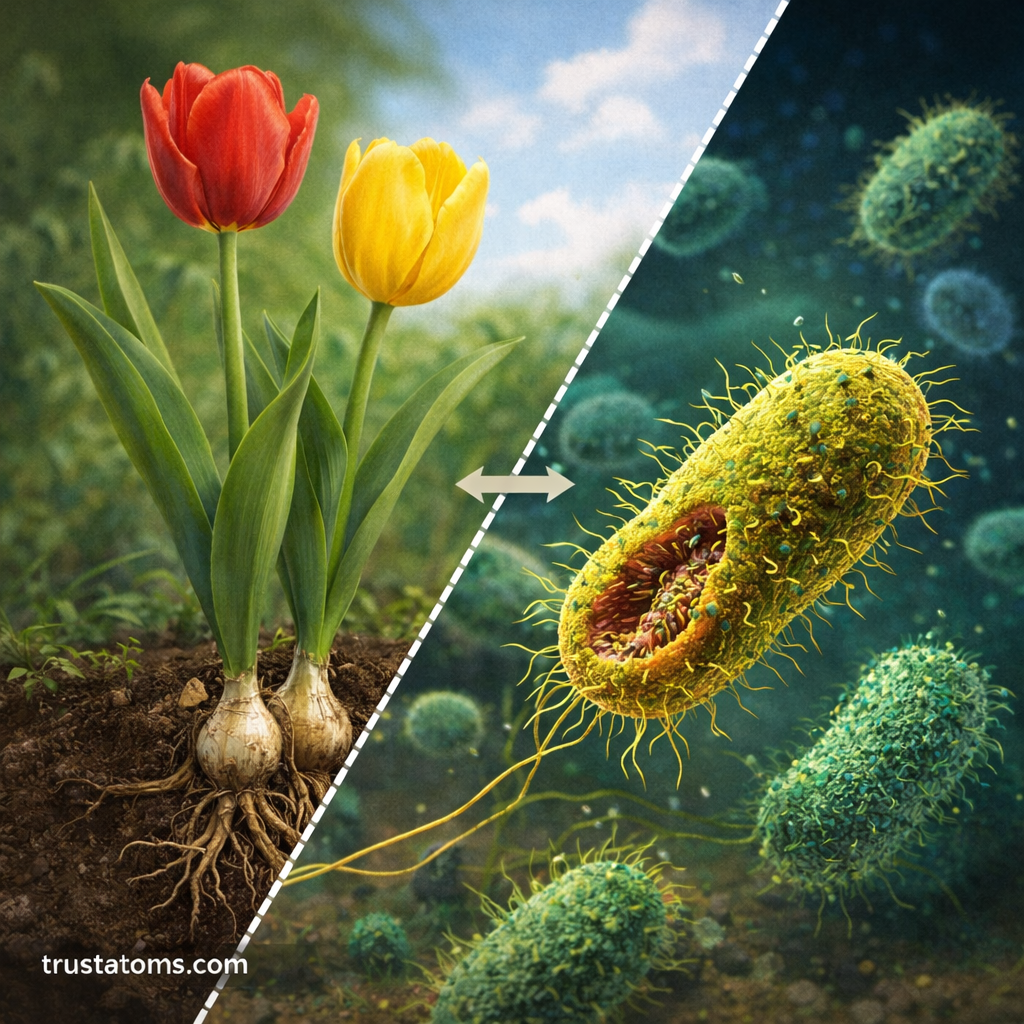
Asexual Reproduction
Many organisms reproduce without mating.
Examples include:
- Bacteria
- Some plants
- Certain fungi
Because they do not reproduce sexually, defining species based on reproduction is difficult.
Scientists often rely on genetic similarity in these cases.
Ring Species
A ring species occurs when neighboring populations can interbreed, but populations at opposite ends cannot.
This creates a chain of interbreeding populations that gradually diverge.
A classic example involves gull populations around the Arctic, where neighboring groups interbreed but distant populations do not.
Species and Evolution
The concept of species is closely tied to evolution.
Over time, populations can change genetically through:
- Mutation
- Natural selection
- Genetic drift
- Geographic isolation
When populations become genetically different enough that they can no longer interbreed, a new species forms.
This process is called speciation.
Types of Speciation
Scientists identify several ways new species can form.
Allopatric Speciation
Occurs when populations become geographically separated.
Examples of barriers include:
- Mountains
- Rivers
- Oceans
- Climate changes
Over time, the separated populations evolve independently.
Sympatric Speciation
Occurs when new species evolve in the same geographic area.
This can happen through:
- Genetic mutations
- Behavioral changes
- Differences in mating preferences
Sympatric speciation is more common in plants and insects.
Parapatric Speciation
Occurs when neighboring populations experience different environmental pressures.
These populations may evolve gradually into distinct species while still sharing a border.
How Scientists Identify New Species
Modern biology uses several methods to determine whether an organism represents a new species.
Field Observation
Researchers study organisms in their natural habitats to observe:
- Behavior
- Habitat use
- Reproductive patterns
Genetic Analysis
DNA sequencing allows scientists to compare genetic differences between organisms.
Even small genetic differences can indicate evolutionary separation.
Comparative Anatomy
Scientists examine structural differences between organisms.
This method has historically been the primary tool for species classification.
Fossil Evidence
In paleontology, species are identified through fossil characteristics.
Because reproductive information is unavailable, classification relies on physical structure and evolutionary history.
The Role of Species in Ecosystems
Species play unique roles within ecosystems.
Each species contributes to ecological processes such as:
- Pollination
- Nutrient cycling
- Food webs
- Population control
Losing a species can disrupt ecosystem balance.
For example:
- Pollinator loss can affect plant reproduction.
- Predator loss can lead to overpopulation of prey species.
Understanding species relationships helps scientists protect biodiversity.
Why the Species Concept Continues to Evolve
As scientific tools improve, the way scientists define species continues to change.
Advances in:
- DNA sequencing
- evolutionary biology
- ecological modeling
have revealed that species boundaries are often more complex than previously believed.
Rather than a single definition, scientists now use multiple species concepts depending on the organisms being studied.
This flexible approach helps researchers better understand the diversity of life.
Final Thoughts
A species represents one of the most important categories in biological classification. While the general idea is straightforward—a group of organisms capable of reproducing with one another—the reality can be much more complex.
By studying genetics, behavior, ecology, and evolution, scientists continue refining how species are identified and classified.
Understanding what a species is helps researchers explore biodiversity, track evolutionary changes, and protect the incredible variety of life that exists on Earth.