A predator is an organism that captures, kills, and consumes another organism, called its prey, to obtain energy and nutrients. This feeding relationship is known as predation and occurs in nearly every ecosystem, from forests and grasslands to oceans and freshwater ponds.
Predators include lions, wolves, sharks, spiders, and microscopic organisms that consume other living things. In the study of biology, predation helps explain how energy moves between organisms, why animal populations change, and how species develop adaptations for survival.
Although predators are often pictured as large hunting mammals, many are small insects, aquatic invertebrates, or even carnivorous plants. Their hunting methods vary, but all obtain resources by capturing other organisms.
The Biological Definition of a Predator
In ecology, a predator is an organism that obtains food by capturing and consuming prey. Predation generally involves killing the prey, distinguishing it from most parasitic relationships, in which the parasite remains associated with a living host.
Predation is a direct interaction that transfers energy from one organism to another in the food chain.
Predators can consume animals that eat plants or other animals. A herbivore, such as a rabbit or grasshopper, may become prey for a fox, snake, or bird.
Predation is one of several relationships explored in Ecological Interactions in Community Systems, alongside competition, parasitism, and mutualism.
How Predators and Prey Affect Each Other
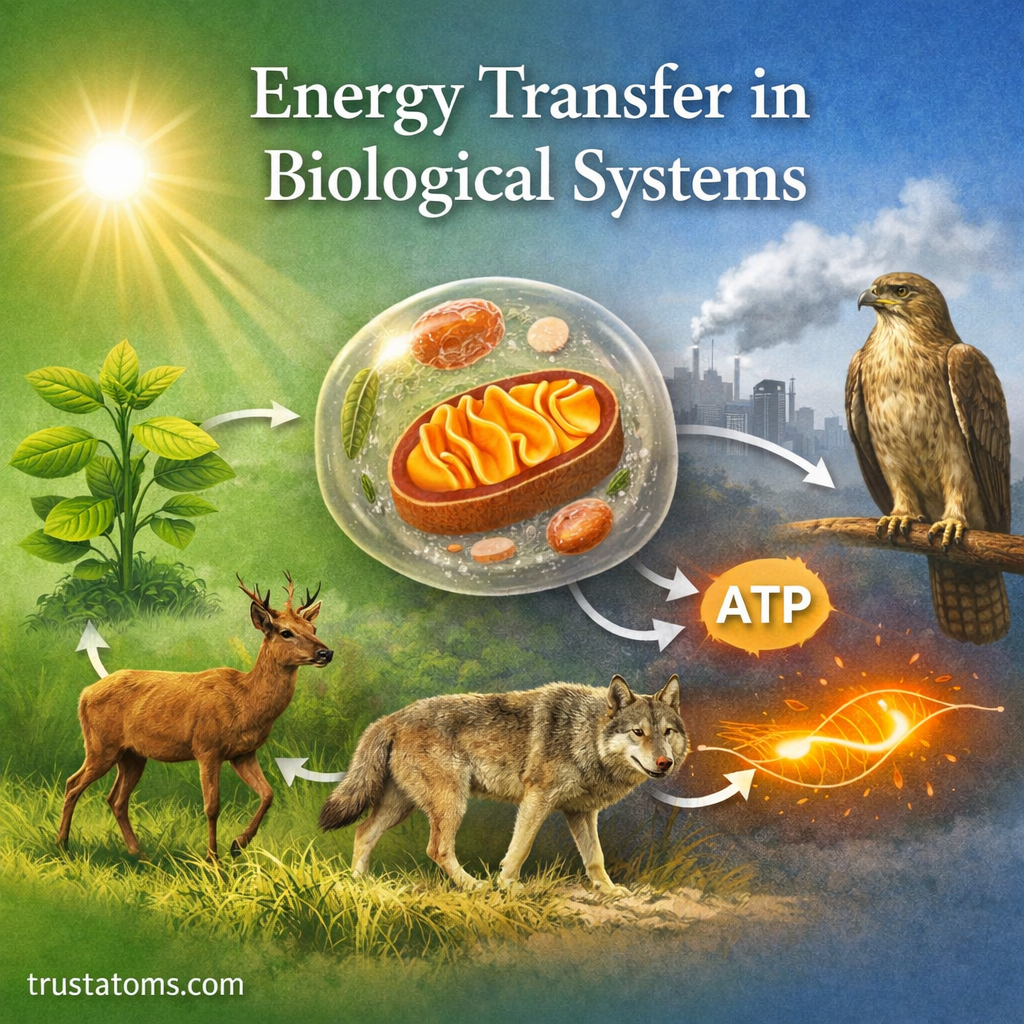
Predators and prey are connected through food webs that move energy through ecosystems.
When predators consume prey, they obtain nutrients and chemical energy needed for growth, movement, and reproduction. Predation can also influence prey population sizes and behavior.
Consider a grassland where foxes hunt rabbits. If fox numbers decline, more rabbits may survive and reproduce, potentially increasing grazing pressure on vegetation. However, rabbit populations also depend on food availability, disease, weather, and other predators.
Predator and prey populations can fluctuate over time. An increase in prey may support more predators, while declining prey availability can eventually reduce predator numbers.
Major Types of Predators
Predators can be grouped by their diets, hunting behavior, or position within a food web. These categories sometimes overlap.
Carnivorous Predators
Carnivores typically possess specialized adaptations for hunting, such as sharp teeth, claws, and sensitive senses. Examples include lions, wolves, eagles, and many sharks.
However, being a carnivore does not automatically make an animal an active hunter. Some carnivores obtain much of their food by scavenging animals that are already dead.
Insect and Invertebrate Predators
Praying mantises capture insects with specialized front legs, dragonflies hunt flying insects, and ladybug adults and larvae consume aphids.
These smaller predators can influence insect populations in gardens, forests, and agricultural environments.
Aquatic Predators
Sharks, barracudas, octopuses, and many other aquatic animals capture living prey. Their strategies include rapid pursuit, camouflage, suction feeding, and grasping with specialized appendages.
Apex Predators
An apex predator occupies the highest predatory position in a particular food web and generally has no regular natural predators as a healthy adult.
Examples include orcas, tigers, and some large sharks. Apex status depends on the ecosystem, and young individuals may still be vulnerable to other predators.
Hunting Strategies Used by Predators
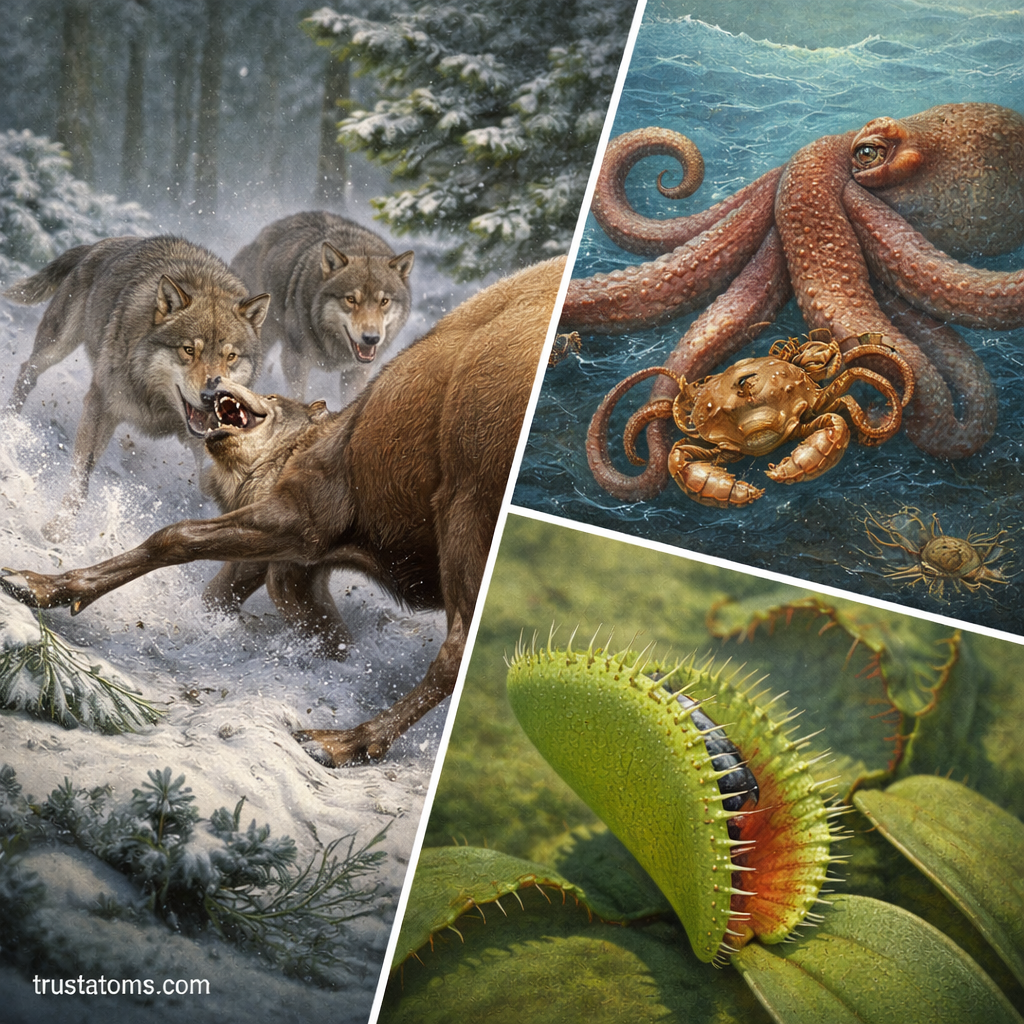
Predators use different methods to locate, capture, and subdue prey. Their strategies depend on body structure, habitat, and the behavior of the animals they hunt.
Pursuit Hunting
Pursuit predators chase moving prey. Cheetahs use rapid acceleration over short distances, while wolves may pursue large mammals over longer distances.
Ambush Hunting
Ambush predators remain concealed or motionless until prey approaches. Crocodiles, praying mantises, and many spiders use this approach to reduce unnecessary movement and energy expenditure.
Cooperative Hunting
Some predators hunt in groups. Wolves may coordinate movements while pursuing elk, and orcas sometimes cooperate to concentrate fish or capture larger prey.
Trap-Based Hunting
Orb-weaver spiders construct webs that capture insects, while antlion larvae create sandy pits that trap small arthropods.
Carnivorous plants provide another example. Venus flytraps capture insects with modified leaves and digest them to obtain nutrients, particularly nitrogen and phosphorus. They still obtain most of their energy through photosynthesis.
Physical and Sensory Adaptations for Hunting
Predators possess inherited characteristics that improve their ability to detect, capture, or consume prey.
- Sharp claws and teeth help grasp and process prey.
- Forward-facing eyes provide overlapping visual fields that support depth perception.
- Camouflage helps predators approach prey without being detected.
- Venom allows some snakes and spiders to immobilize prey.
- Echolocation helps toothed whales locate prey underwater.
- Specialized sensory organs help some sharks detect weak electrical signals produced by other animals.
No single adaptation guarantees success. Hunting outcomes depend on environmental conditions, prey defenses, and the predator’s physical condition.
How Prey Animals Avoid Predators
Prey species possess defenses that reduce their chances of being captured. These include camouflage, rapid escape movements, protective structures, and warning signals.
For example, a tortoise can withdraw into its shell, while schooling fish may reduce individual risk by moving together. Some insects produce unpleasant chemicals that discourage predators from eating them.
According to evolutionary biology, natural selection can favor inherited traits that improve hunting success in predators and survival in prey. These reciprocal pressures can produce increasingly specialized adaptations over generations.
How Predators Influence Ecosystems
Predators can affect ecosystems through both direct consumption and changes in prey behavior. Their effects depend on the species involved and the surrounding environmental conditions.
Predators may influence:
- Prey population sizes and distribution.
- Grazing pressure on plants and other producers.
- Competition among prey species.
- The availability of resources for other organisms.
In some ecosystems, changes in predator abundance trigger a trophic cascade: effects that spread through multiple feeding levels. For instance, reducing predators may increase herbivore pressure on vegetation, although the outcome varies among ecosystems.
Where Predators Fit in Food Chains
Predators occupy different trophic levels depending on what they eat. A frog that consumes a grasshopper acts as a secondary consumer, while a snake eating that frog occupies a higher consumer level.
A simplified example is grass, grasshopper, frog, and snake. Grass captures sunlight through photosynthesis, and energy passes to each consumer through feeding.
Because organisms use much of the energy they obtain for metabolism, progressively less energy is generally available at higher trophic levels. This limits the amount of predator biomass that ecosystems can support.
Frequently Asked Questions
Are all predators carnivores?
Predators consume other organisms, so animal predators obtain animal material when hunting. However, some omnivores also hunt, and carnivorous plants capture small animals primarily to obtain nutrients rather than energy.
Can an animal be both predator and prey?
Yes. A frog may prey on insects while becoming prey for snakes, birds, or larger fish. Most food webs contain many organisms that function as both predators and prey.
What happens when predators disappear?
Removing predators can change prey populations, feeding behavior, and vegetation. Some ecosystems experience trophic cascades, but the effects depend on other predators, food availability, disease, and environmental conditions.
A predator obtains energy and nutrients by capturing and consuming prey, using strategies that range from pursuit and ambush to cooperative hunting. These feeding relationships influence population sizes, species adaptations, and the movement of energy through food webs. Studying predators alongside their prey helps scientists understand how changes in one species can affect an entire ecological community.
Sources: OpenStax, Biology 2e; Encyclopaedia Britannica, “Predation”; National Geographic Society, Resource Library, “Food Web”.