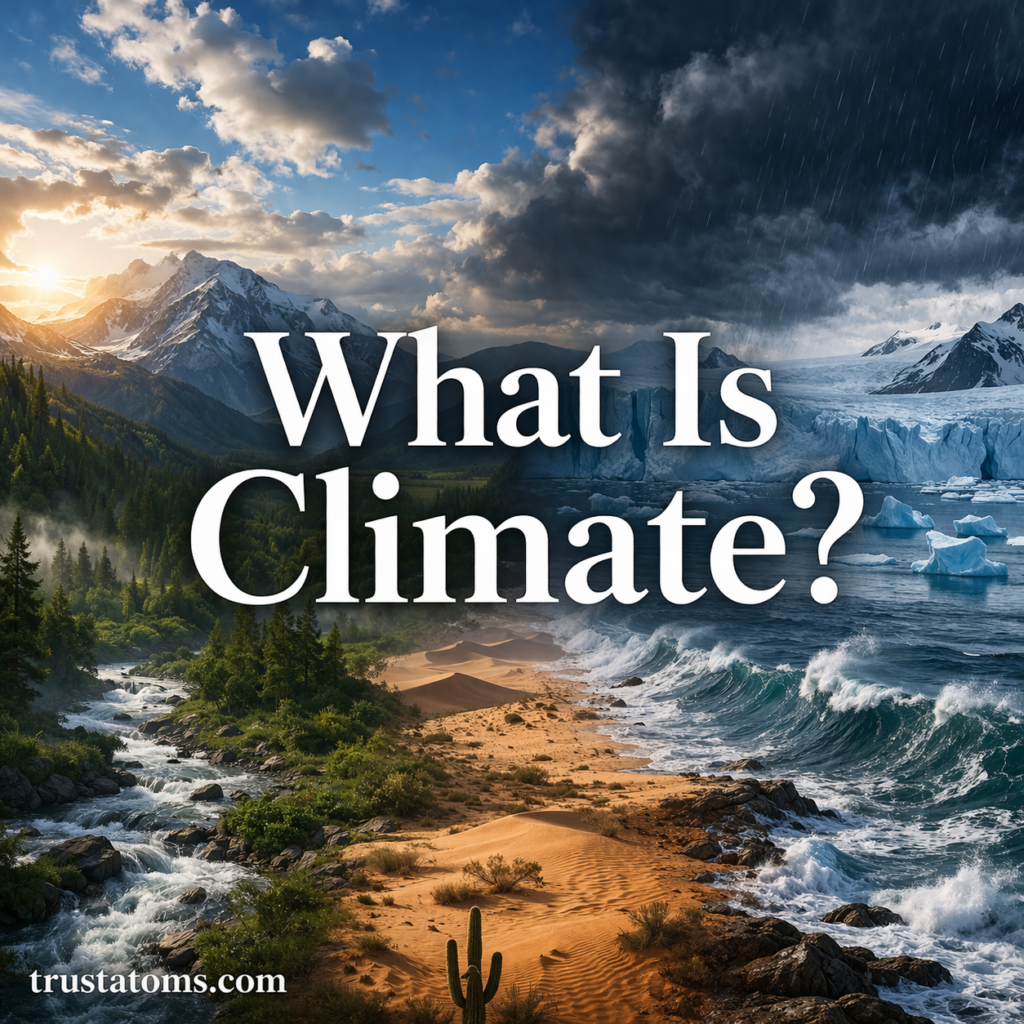
Climate is one of the most important concepts in Earth science, yet it’s often confused with weather. While weather describes short-term atmospheric conditions, climate refers to long-term patterns that shape how a region behaves over decades or even centuries.
Understanding climate helps explain everything from why deserts are dry to why some regions experience heavy rainfall year-round.
Climate vs. Weather: What’s the Difference?
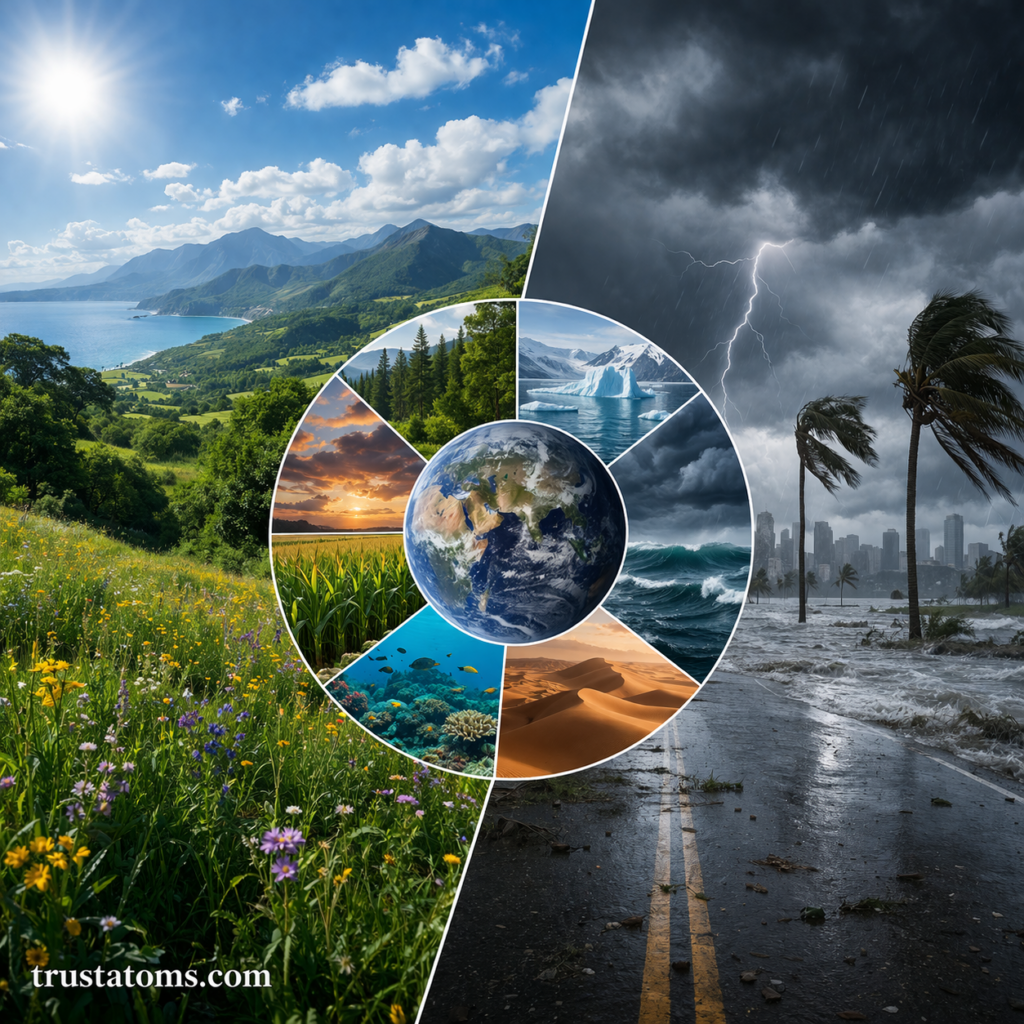
Although closely related, climate and weather are not the same.
Weather
Weather refers to short-term atmospheric conditions, such as:
- Temperature today
- Rain or snow this week
- Wind and storms over a few days
It can change rapidly, even within hours.
Climate
Climate describes long-term averages and patterns of weather in a region, typically measured over 30 years or more.
It answers questions like:
- Is this region generally warm or cold?
- Does it rain often or rarely?
- Are extreme events common?
Key Elements of Climate
Climate is determined by several interacting factors.
Temperature
- Average temperatures over time
- Seasonal variations (summer vs. winter)
Precipitation
- Rain, snow, sleet, or hail
- Frequency and intensity of precipitation
Humidity
- Amount of moisture in the air
- Influences how hot or cold it feels
Wind Patterns
- Direction and speed of air movement
- Affects heat distribution and weather systems
Atmospheric Pressure
- Influences storm formation and air movement
- High and low-pressure systems shape regional climate
What Determines Climate?
Several large-scale factors control a region’s climate.
Latitude
The closer a place is to the equator, the more direct sunlight it receives.
- Equatorial regions → warm climates
- Polar regions → cold climates
Altitude (Elevation)
Higher elevations tend to be cooler.
- Mountains are colder than lowlands
- Temperature drops as altitude increases
Distance from Oceans
Water heats and cools more slowly than land.
- Coastal areas → milder temperatures
- Inland areas → more extreme temperature swings
Ocean Currents
Ocean currents redistribute heat across the planet.
- Warm currents → warmer coastal climates
- Cold currents → cooler, often drier conditions
Topography
Land features like mountains and valleys affect climate.
- Mountains can block rainfall (rain shadow effect)
- Valleys can trap heat or cold air
Types of Climate Zones
Earth is divided into several major climate zones based on temperature and precipitation patterns.
Tropical Climate
- Warm year-round
- High rainfall
- Found near the equator
Dry (Arid) Climate
- Very low precipitation
- Includes deserts and semi-arid regions
Temperate Climate
- Moderate temperatures
- Distinct seasons
- Common in mid-latitudes
Continental Climate
- Large temperature differences between seasons
- Cold winters and warm summers
Polar Climate
- Extremely cold
- Low precipitation (often in the form of snow)
How Climate Is Measured
Scientists use long-term data to understand climate patterns.
Data Sources
- Weather stations
- Satellites
- Ocean buoys
- Ice cores and tree rings (for historical climate data)
Time Scale
Climate is typically measured over:
- 30-year periods (standard baseline)
- Decades to centuries for long-term trends
Climate Change: A Growing Focus
Climate is not static—it can change over time.
Natural Causes
- Volcanic eruptions
- Solar variations
- Natural climate cycles (like El Niño and La Niña)
Human Influence
In recent decades, human activities have become a major factor:
- Burning fossil fuels
- Deforestation
- Industrial emissions
These activities increase greenhouse gases, which trap heat in the atmosphere.
Why Climate Matters
Climate affects nearly every aspect of life on Earth.
Environmental Impact
- Ecosystem stability
- Water availability
- Biodiversity
Human Impact
- Agriculture and food supply
- Infrastructure planning
- Health and safety
Economic Impact
- Energy demand
- Disaster recovery costs
- Insurance and risk management
Common Misconceptions About Climate
“Climate and weather are the same”
Weather is short-term; climate is long-term patterns.
“Cold weather disproves global warming”
Short-term cold events do not contradict long-term warming trends.
“Climate never changes”
Climate has always changed, but current changes are happening faster than many natural cycles.
Final Thoughts
Climate provides the big picture of how Earth’s atmosphere behaves over time. By understanding climate, we gain insight into patterns that influence ecosystems, human societies, and the future of our planet.
As climate continues to evolve, studying it becomes increasingly important for making informed decisions and building resilience in a changing world.