White blood cells, also known as leukocytes, are essential components of the immune system. They act as the body’s defense force, constantly patrolling for harmful invaders such as bacteria, viruses, parasites, and abnormal cells.
Without white blood cells, the body would be unable to fight infections or recover from illness effectively.
What Are White Blood Cells?
White blood cells are specialized immune cells produced primarily in the bone marrow. They circulate through the bloodstream and lymphatic system, ready to respond when the body detects a threat.
Their main roles include:
- Identifying pathogens and foreign substances
- Destroying harmful invaders
- Coordinating immune responses
- Supporting long-term immunity
Unlike red blood cells, white blood cells are not primarily responsible for oxygen transport—they are focused entirely on protection.
Types of White Blood Cells
White blood cells are divided into several types, each with a unique function in immune defense.
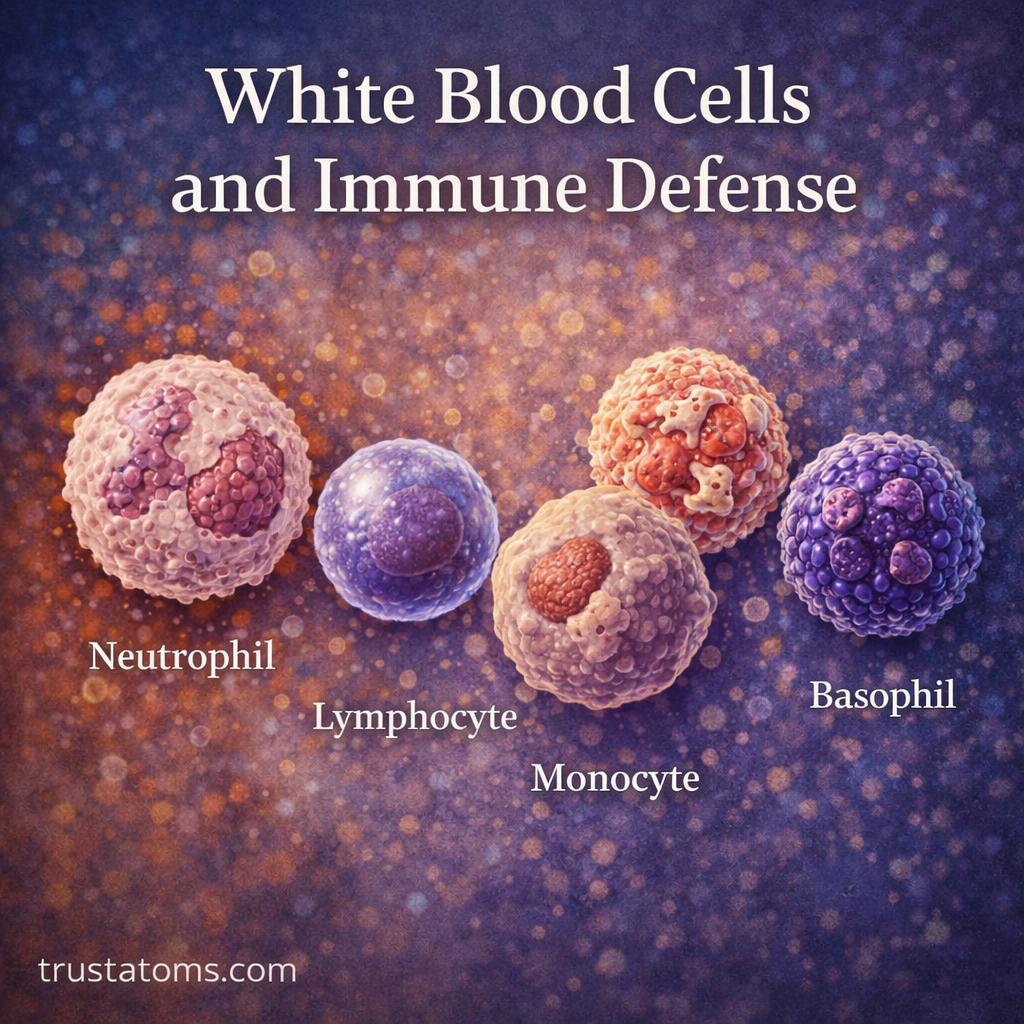
Neutrophils
Neutrophils are the most abundant type of white blood cell and are usually the first to arrive at the site of infection.
Key Functions
- Engulf and digest bacteria and fungi
- Respond quickly to inflammation
- Form part of pus during infections
Lymphocytes
Lymphocytes are central to adaptive immunity and include B cells and T cells.
B Cells
- Produce antibodies that target specific pathogens
- Help neutralize toxins and viruses
T Cells
- Destroy infected or abnormal cells
- Coordinate immune responses
Monocytes
Monocytes circulate in the bloodstream and transform into macrophages or dendritic cells once they enter tissues.
Key Functions
- Engulf pathogens and debris
- Present antigens to other immune cells
- Support activation of adaptive immunity
Eosinophils
Eosinophils are involved in responses to parasites and play a role in allergic reactions.
Key Functions
- Attack parasitic infections
- Contribute to inflammation in allergies
Basophils
Basophils are the least common type of white blood cell but play an important role in immune signaling.
Key Functions
- Release histamine during allergic reactions
- Promote inflammation
- Help recruit other immune cells
How White Blood Cells Defend the Body
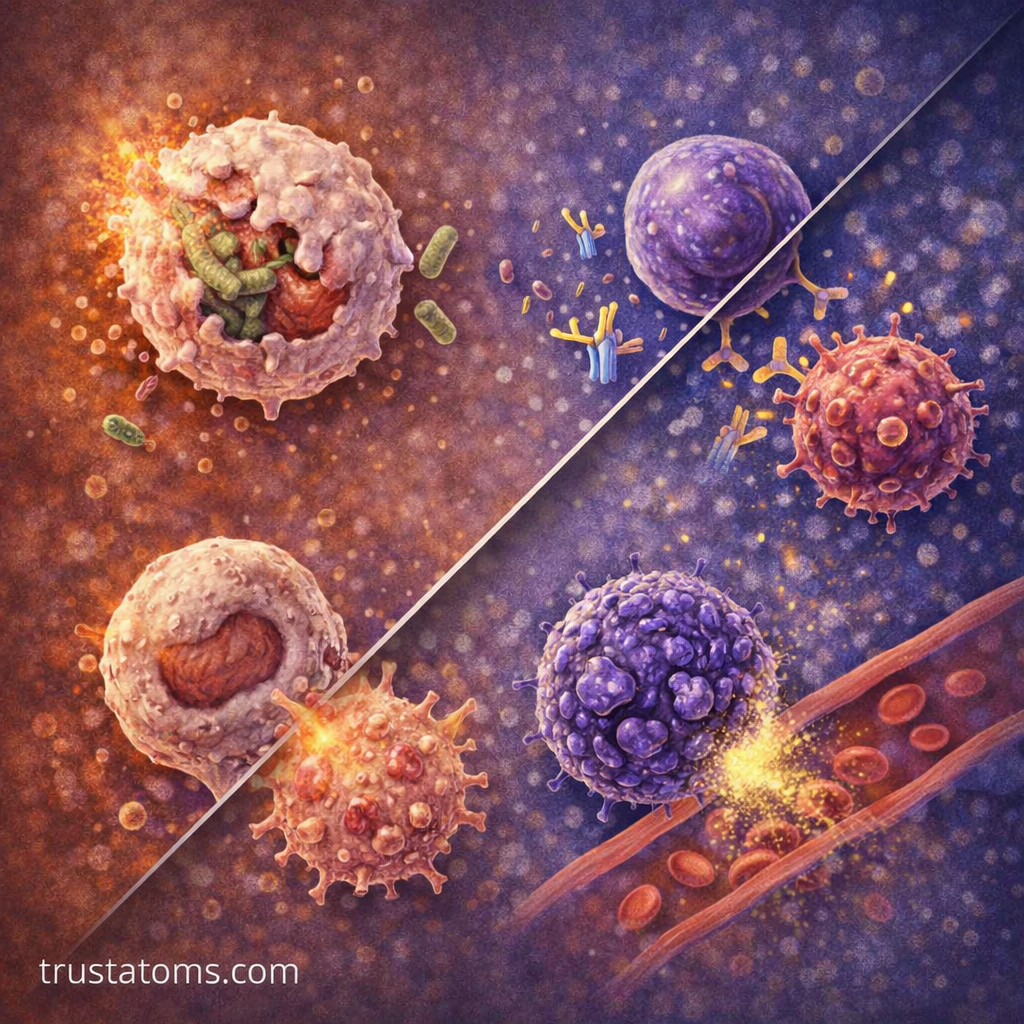
White blood cells use multiple strategies to protect the body:
1. Detecting Threats
They recognize foreign substances through markers called antigens.
2. Engulfing Pathogens
Certain cells, like neutrophils and macrophages, surround and digest invaders in a process called phagocytosis.
3. Producing Antibodies
B cells release antibodies that bind to specific pathogens, marking them for destruction.
4. Destroying Infected Cells
T cells identify and eliminate cells that have been infected by viruses or have become abnormal.
5. Coordinating the Immune Response
White blood cells communicate using chemical signals (cytokines) to organize a coordinated defense.
Where White Blood Cells Are Found
White blood cells are present throughout the body, including:
- Bloodstream – transports cells to infection sites
- Lymph nodes – filter pathogens and activate immune responses
- Spleen – removes old cells and supports immune activity
- Bone marrow – produces new white blood cells
- Tissues – where immune responses often occur
Normal White Blood Cell Count
A normal white blood cell count varies by individual but generally falls within a healthy range.
- Typical range: about 4,000 to 11,000 cells per microliter of blood
Abnormal levels may indicate:
- High count (leukocytosis): infection, inflammation, or stress
- Low count (leukopenia): weakened immune system or underlying conditions
Why White Blood Cells Are Important
White blood cells are critical for:
- Fighting infections and preventing illness
- Detecting and eliminating abnormal cells
- Supporting recovery from injury or disease
- Maintaining overall immune balance
A properly functioning white blood cell system is essential for long-term health.
Factors That Affect White Blood Cell Function
Several factors influence the effectiveness of white blood cells:
- Nutrition – deficiencies can weaken immune responses
- Sleep – poor sleep reduces immune efficiency
- Stress – chronic stress suppresses immune activity
- Exercise – supports circulation and immune health
- Age – immune function may decline over time
How to Support Healthy White Blood Cells
Maintaining healthy white blood cells involves consistent lifestyle habits:
- Eat a balanced diet rich in vitamins and minerals
- Get enough quality sleep
- Stay physically active
- Manage stress levels
- Practice good hygiene
- Stay up to date with vaccinations
Simple Way to Understand White Blood Cells
Think of white blood cells as a defense team:
- Neutrophils and monocytes = first responders
- Lymphocytes = specialized attackers and planners
- Eosinophils and basophils = support and signaling units
Together, they form a coordinated system that protects the body from harm.
Final Thoughts
White blood cells are the backbone of immune defense. From rapid responses to highly targeted attacks, these cells work together to detect, eliminate, and remember threats.
Understanding how white blood cells function highlights the importance of maintaining a healthy immune system—and the vital role these cells play in keeping you safe every day.