Air pressure and atmospheric circulation are fundamental to understanding weather, climate, and how energy moves across the planet. These processes influence everything from daily wind patterns to large-scale systems like storms and jet streams.
In this guide, you’ll learn how air pressure works, what causes it to change, and how it drives the movement of air around Earth.
What Is Air Pressure?
Air pressure is the force exerted by the weight of air above a given point on Earth’s surface.
Even though air feels light, it has mass—and gravity pulls it downward, creating pressure.
Key Points About Air Pressure
- Measured using a barometer
- Typically expressed in millibars (mb) or hectopascals (hPa)
- Standard sea-level pressure is about 1013 mb (1013 hPa)
- Decreases with altitude
Why Air Pressure Changes
Air pressure is not constant—it varies depending on several factors.
1. Altitude
- Higher altitude = lower pressure
- Less air above means less weight pressing down
2. Temperature
- Warm air expands and becomes less dense → lower pressure
- Cold air is denser and sinks → higher pressure
3. Moisture (Humidity)
- Moist air is less dense than dry air
- Higher humidity often contributes to lower pressure
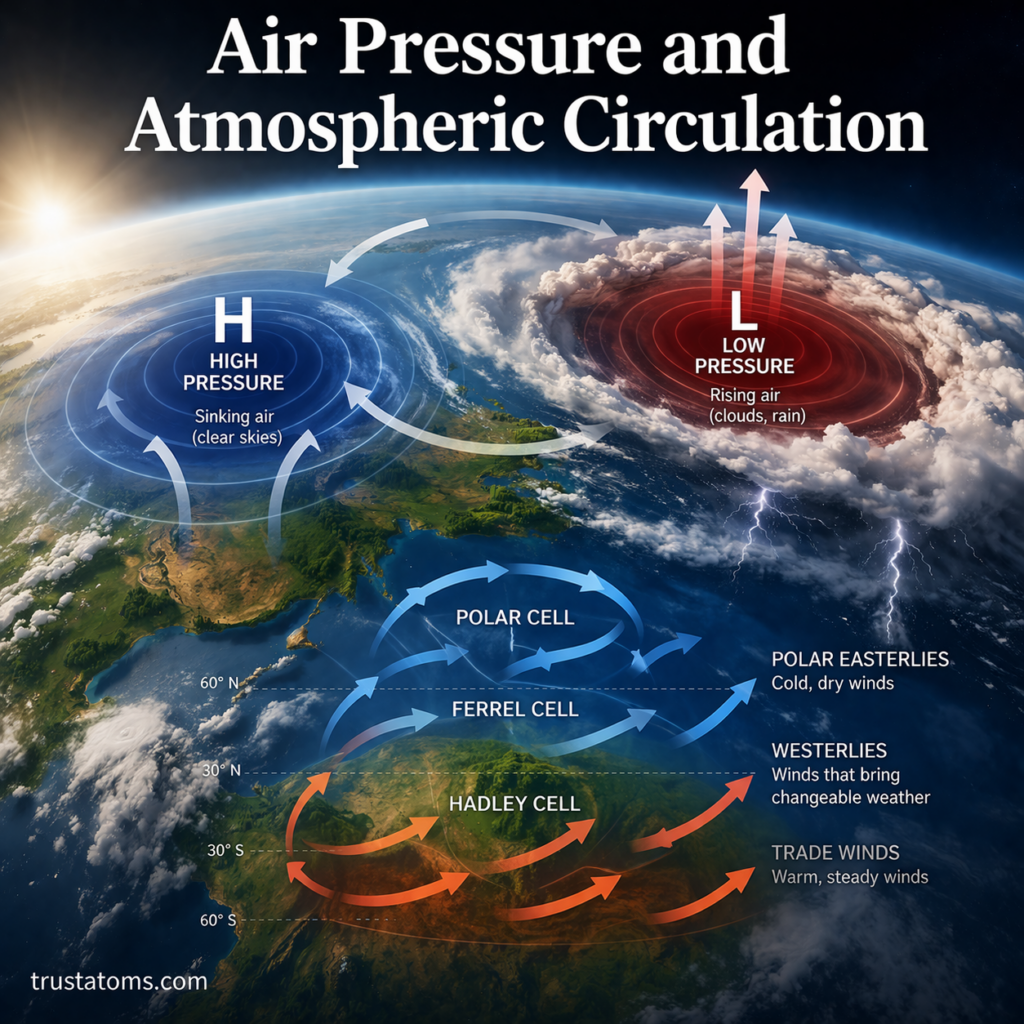
High Pressure vs Low Pressure Systems
Differences in air pressure create pressure systems that drive weather patterns.
High Pressure Systems
- Air sinks and spreads outward
- Associated with clear skies and calm weather
- Stable atmospheric conditions
Low Pressure Systems
- Air rises and converges
- Leads to cloud formation, precipitation, and storms
- Unstable atmospheric conditions
What Is Atmospheric Circulation?
Atmospheric circulation refers to the large-scale movement of air that distributes heat around the planet.
It helps balance temperature differences between the equator and the poles.
The Three-Cell Circulation Model
Earth’s global circulation is often explained using a three-cell model in each hemisphere.
1. Hadley Cell (0°–30° latitude)
- Warm air rises near the equator
- Moves poleward and cools
- Sinks around 30° latitude
Results:
- Tropical rainforests near the equator
- Dry deserts around 30° latitude
2. Ferrel Cell (30°–60° latitude)
- Air flows poleward near the surface
- Warmer air meets cooler air
Results:
- Variable weather patterns
- Mid-latitude storms and fronts
3. Polar Cell (60°–90° latitude)
- Cold air sinks at the poles
- Moves toward lower latitudes
Results:
- Cold, dry polar climates
- Polar easterly winds
Global Wind Patterns
Atmospheric circulation creates consistent global wind belts.
Major Wind Systems
- Trade winds (tropics): blow toward the equator
- Westerlies (mid-latitudes): blow west to east
- Polar easterlies: cold winds from the poles
These wind patterns influence ocean currents, climate zones, and weather systems worldwide.
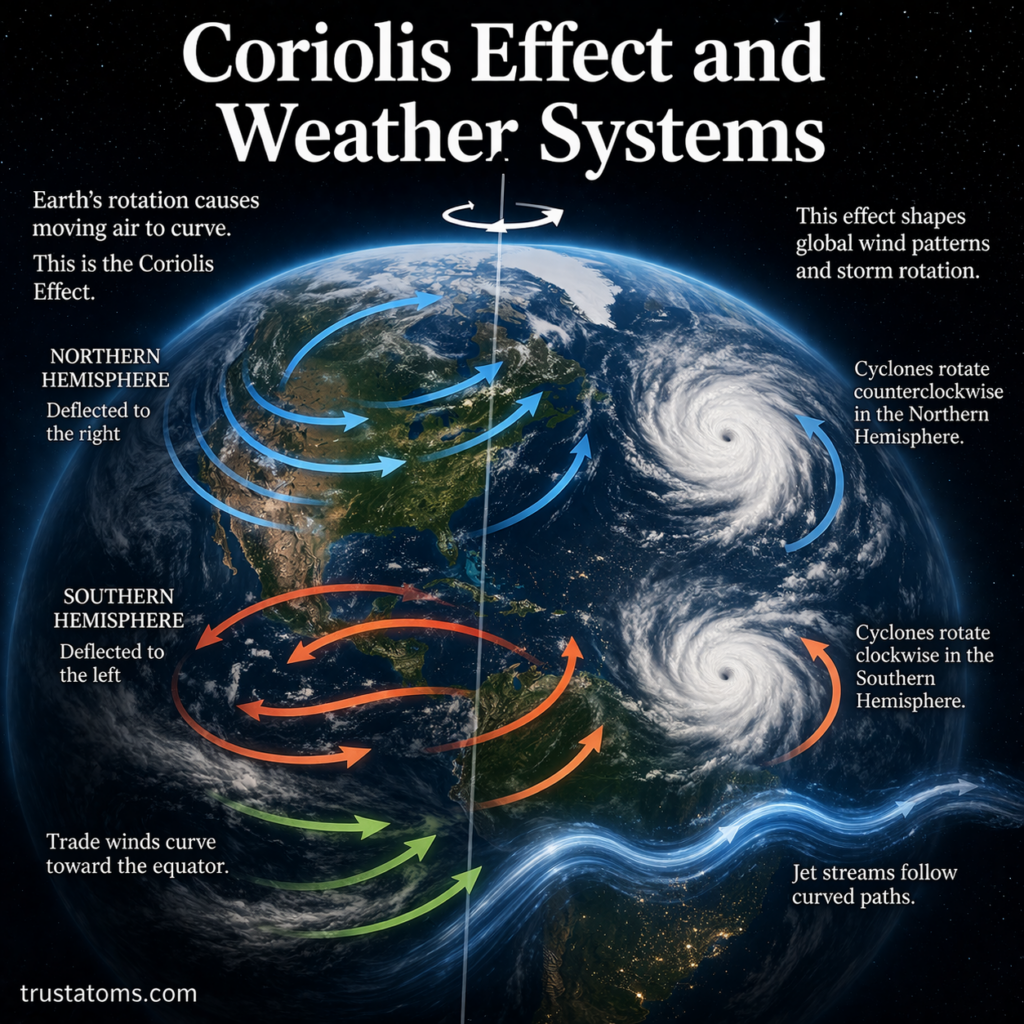
The Role of the Coriolis Effect
Earth’s rotation affects how air moves across the planet.
Key Effects
- Deflects winds to the right in the Northern Hemisphere
- Deflects winds to the left in the Southern Hemisphere
This deflection shapes global wind patterns and contributes to the rotation of storms.
Jet Streams: Fast-Moving Air Currents
Jet streams are narrow bands of strong winds in the upper atmosphere.
Characteristics
- Found in the upper troposphere
- Can exceed speeds of 100–200 mph
- Flow from west to east
Why They Matter
- Influence weather systems and storm paths
- Affect airline flight routes and travel time
How Air Pressure Drives Weather
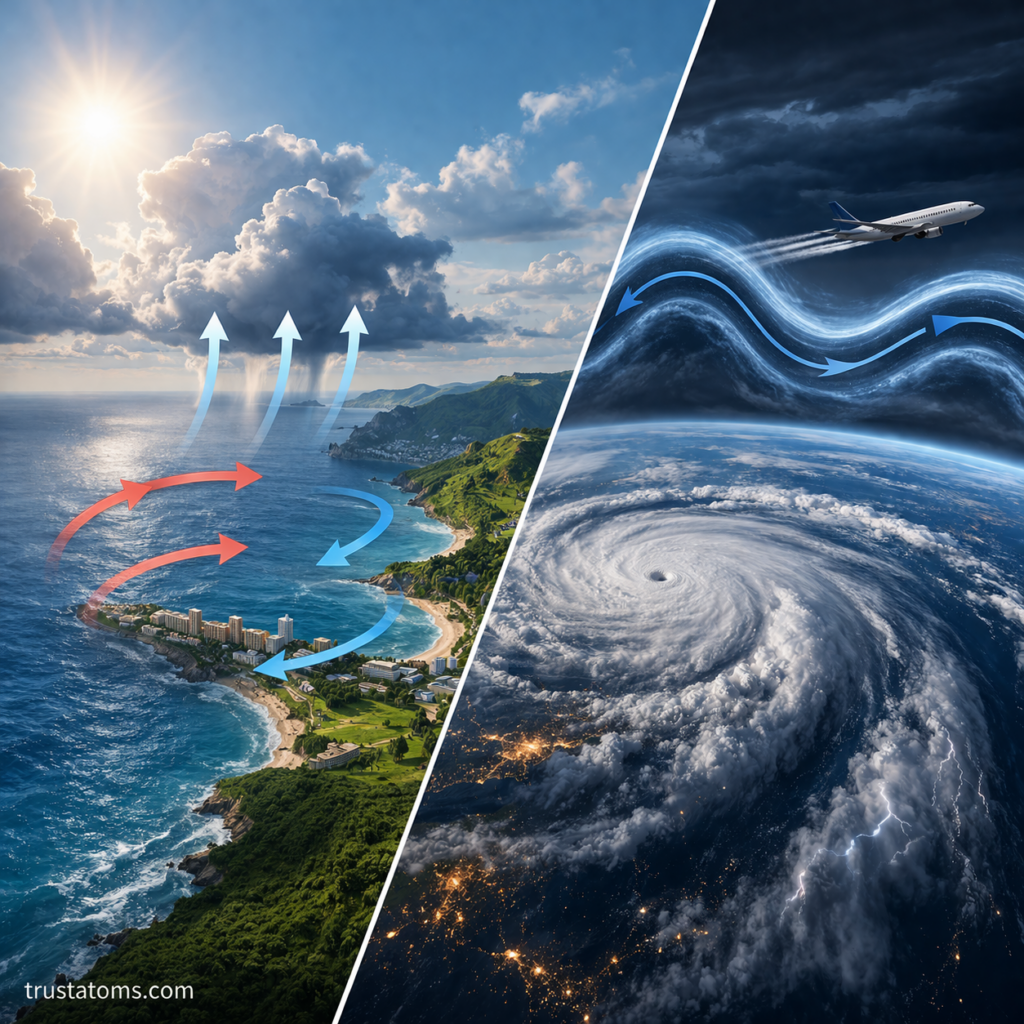
Air pressure differences are the engine behind weather.
Key Processes
- Air moves from high pressure to low pressure
- Rising air cools and forms clouds
- Sinking air warms and clears skies
These movements create:
- Winds
- Storms
- Temperature changes
Real-World Examples
Air pressure and circulation can be seen in everyday weather:
- Sea breezes: caused by temperature differences between land and water
- Hurricanes: fueled by low-pressure systems over warm oceans
- Cold fronts: where cold air pushes under warm air
Why It All Matters
Understanding air pressure and atmospheric circulation helps explain:
- Why weather changes day to day
- How climate zones form
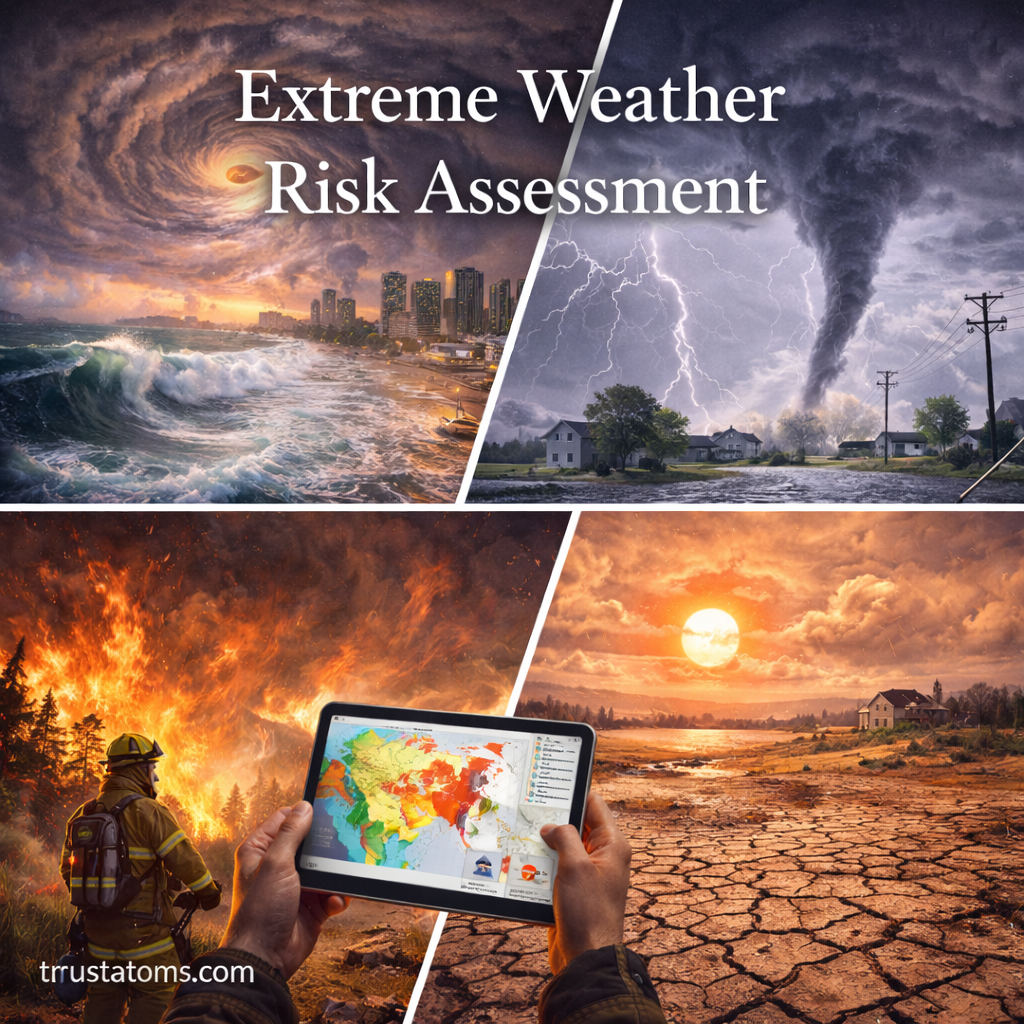
- How extreme weather events develop
It also plays a crucial role in aviation, agriculture, and environmental science.
Final Thoughts
Air pressure and atmospheric circulation are interconnected systems that keep Earth’s climate in balance. From gentle breezes to powerful storms, these forces shape the environment we live in every day.
By understanding how air moves and why pressure changes, you gain deeper insight into the dynamic processes that drive Earth’s atmosphere.