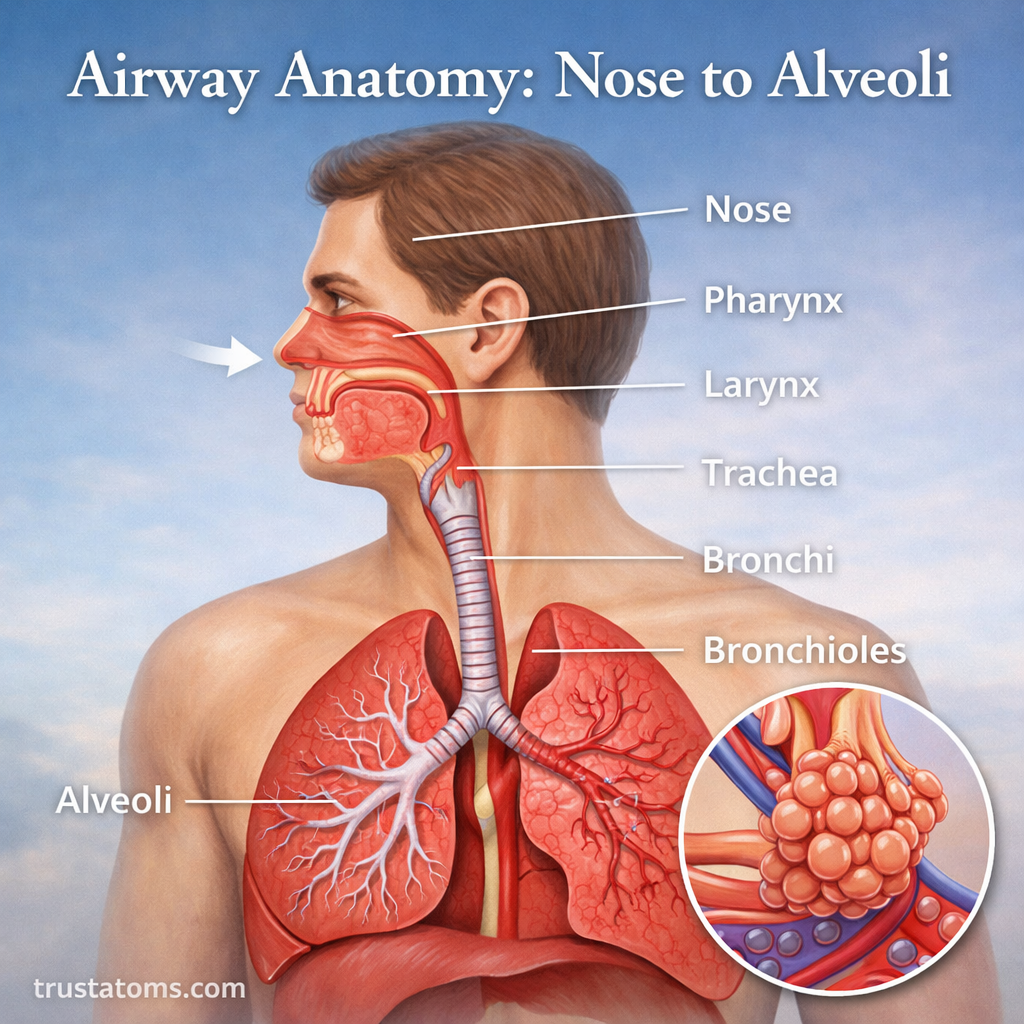
Airway anatomy refers to the structures that carry air from the outside environment into the lungs, where oxygen enters the bloodstream and carbon dioxide is removed. This pathway—from the nose to the alveoli—is carefully designed to filter, warm, and transport air efficiently.
Understanding how each part of the airway works helps explain how the body breathes, protects itself from harmful particles, and supports overall health.
Overview of the Airway Pathway
Air travels through a series of connected structures known as the respiratory tract. These structures are divided into two main sections:
Upper Airway
- Nose and nasal cavity
- Sinuses
- Pharynx (throat)
Lower Airway
- Larynx (voice box)
- Trachea (windpipe)
- Bronchi and bronchioles
- Alveoli (air sacs in the lungs)
Each section plays a role in preparing air and delivering it to the lungs.
Step-by-Step Airflow: From Nose to Alveoli
Air follows a specific path every time you breathe. Here’s how it moves through the body:
1. Nose and Nasal Cavity
The journey begins at the nose, the primary entry point for air.
Key functions:
- Filters dust, bacteria, and particles using tiny hairs (cilia)
- Warms cold air to body temperature
- Adds moisture to prevent dryness in the lungs
The nasal cavity is lined with mucus, which traps harmful substances before they can enter deeper airways.
2. Pharynx (Throat)
After passing through the nasal cavity, air enters the pharynx.
- Acts as a shared passageway for air and food
- Directs air toward the lower respiratory tract
- Divided into three parts: nasopharynx, oropharynx, and laryngopharynx
The pharynx ensures that air continues toward the lungs while coordinating with the digestive system.
3. Larynx (Voice Box)
The larynx sits just below the pharynx and plays multiple important roles.
- Keeps the airway open
- Produces sound for speech
- Prevents food from entering the airway using the epiglottis
When you swallow, the epiglottis closes over the larynx to protect the lungs.
4. Trachea (Windpipe)
The trachea is a sturdy tube that carries air toward the lungs.
Key features:
- Reinforced with cartilage rings to keep it open
- Lined with cilia to move debris upward and out
- Connects the larynx to the bronchi
This structure ensures a clear and stable passage for airflow.
5. Bronchi
At the end of the trachea, the airway splits into two main branches called bronchi.
- One bronchus leads to each lung
- Further divides into smaller branches inside the lungs
- Distributes air evenly throughout both lungs
The branching structure allows air to reach all areas of the lungs efficiently.
6. Bronchioles
Bronchi continue dividing into smaller tubes called bronchioles.
- Control airflow with smooth muscle walls
- Adjust air distribution based on the body’s needs
- Lead directly to the alveoli
Bronchioles act like adjustable pathways, helping regulate how much air reaches different parts of the lungs.
7. Alveoli
Alveoli are tiny air sacs located at the end of the airway pathway. This is where gas exchange takes place.
Key characteristics:
- Surrounded by a network of capillaries
- Thin walls allow gases to pass easily
- Large surface area for efficient oxygen exchange
Functions:
- Oxygen moves into the bloodstream
- Carbon dioxide moves out of the blood to be exhaled
This final step is critical for delivering oxygen to cells and removing waste gases.
How the Airway Protects the Body
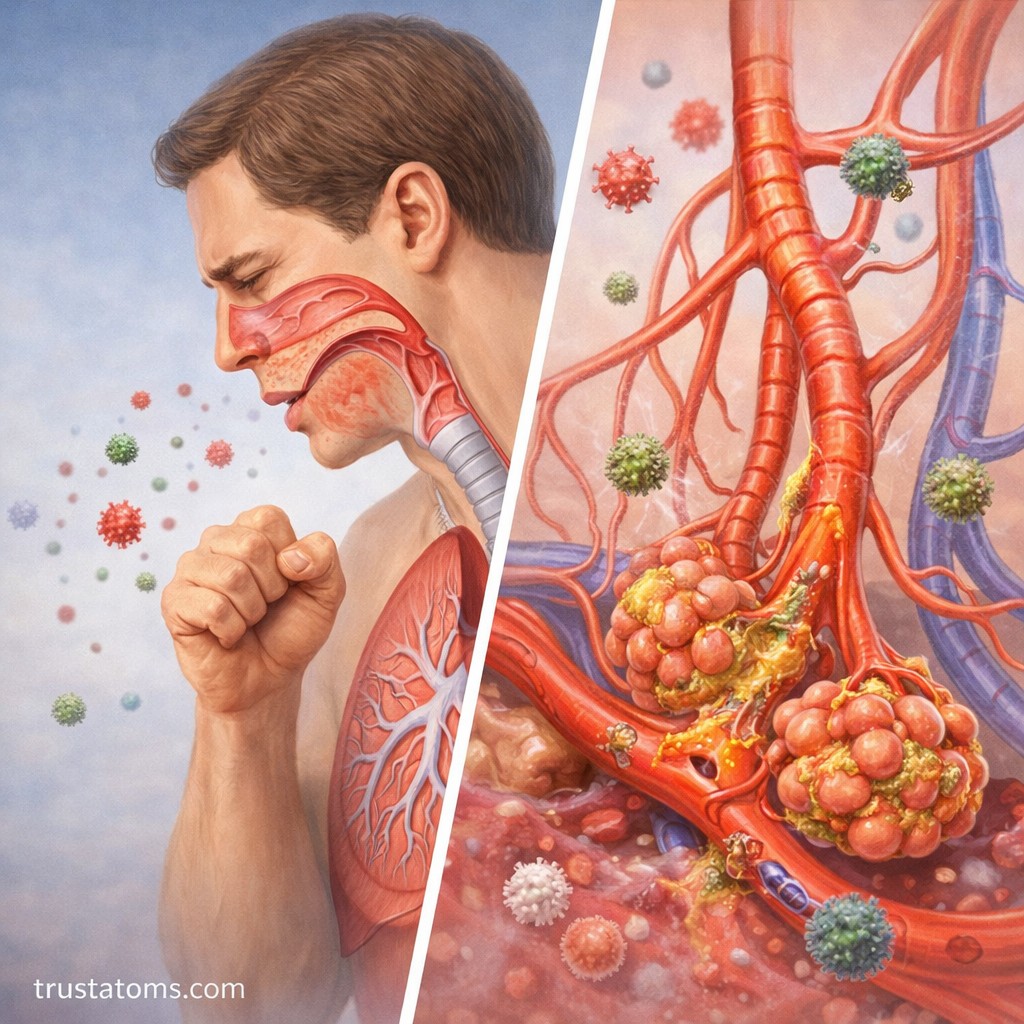
The airway is not just a passage for air—it also serves as a defense system.
Protective Mechanisms
- Cilia – Tiny hair-like structures that sweep debris out of the airways
- Mucus – Traps dust, bacteria, and pollutants
- Cough reflex – Expels irritants from the respiratory tract
- Epiglottis – Prevents choking by blocking food from entering the airway
These features help keep the lungs clean and functioning properly.
Why Airway Anatomy Matters
Understanding airway anatomy is important for recognizing how breathing works and what can go wrong.
Common issues related to airway structure include:
- Blocked airways (e.g., choking or inflammation)
- Asthma (narrowed bronchioles)
- Infections like bronchitis or pneumonia
- Structural abnormalities affecting airflow
Knowing the pathway from the nose to the alveoli provides a foundation for understanding respiratory health and disease.
Tips for Supporting Healthy Airways
Maintaining healthy airways can improve breathing and overall well-being.
- Avoid smoking and secondhand smoke
- Reduce exposure to air pollution and allergens
- Stay hydrated to keep mucus thin
- Practice regular physical activity
- Maintain good indoor air quality
Small daily habits can make a significant difference in airway function over time.
Final Thoughts
Airway anatomy—from the nose to the alveoli—is a highly organized system designed for efficient breathing and protection. Each structure plays a unique role in filtering, transporting, and exchanging gases.
By understanding how air moves through the body, you gain insight into one of the most essential processes for life: breathing.