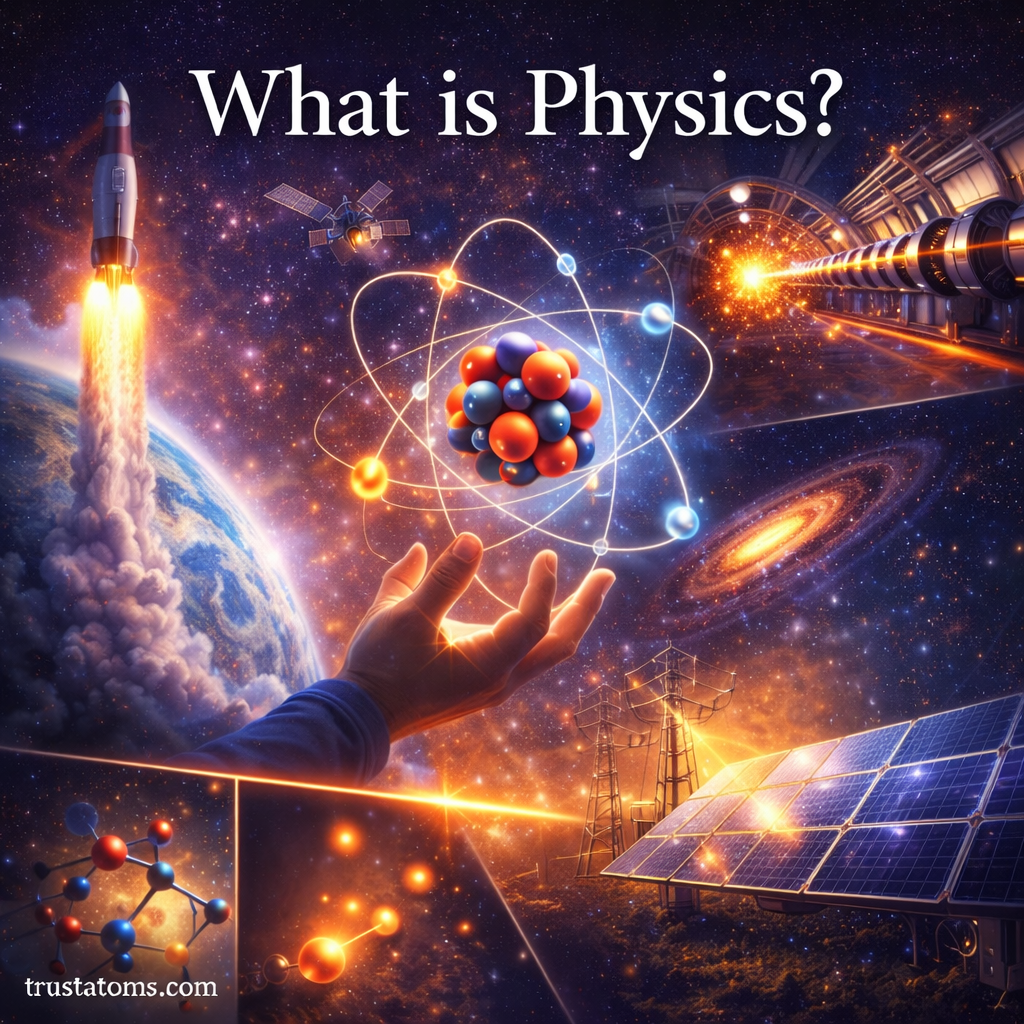
Physics is the branch of science that studies matter, energy, motion, and the fundamental forces that govern the universe. It seeks to explain how the natural world behaves—from subatomic particles to galaxies and large-scale cosmic structures.
At its core, physics asks questions such as:
- Why do objects move?
- How does energy transfer?
- What forces shape the universe?
- What laws govern nature?
Physics serves as a foundation for many scientific disciplines. Concepts explored here frequently overlap with What Is Chemistry?, What Is Astronomy?, and What Is Earth Science?.
Understanding physics helps explain everything from falling objects and electricity to black holes and planetary motion.
The Basic Ideas Behind Physics
Physics focuses on understanding the rules that describe how the universe behaves.
Major concepts include:
- Motion
- Forces
- Energy
- Gravity
- Light
- Waves
- Electricity and magnetism
By studying these principles, physicists can explain phenomena ranging from simple movement to large-scale cosmic interactions.
Foundational topics include:
Major Branches of Physics
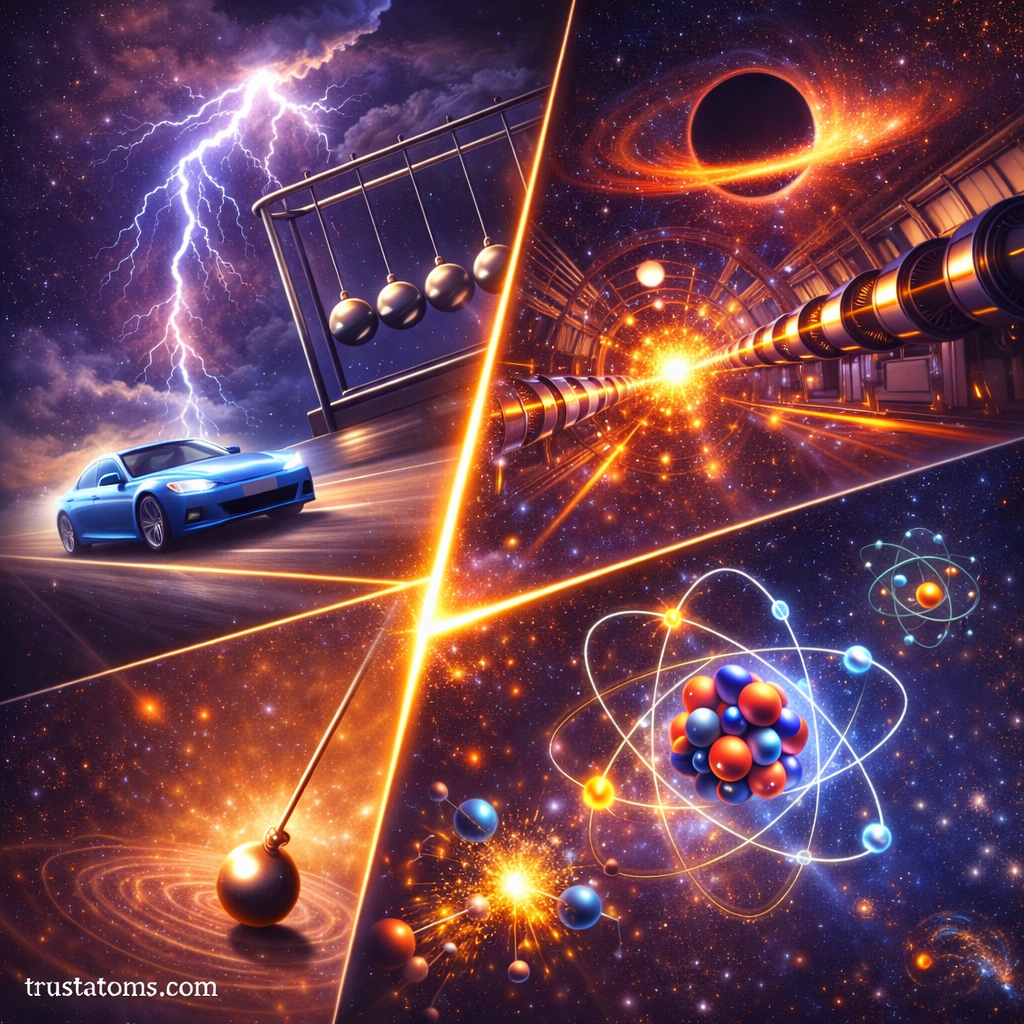
Physics contains multiple specialized fields.
Classical Physics
Classical physics studies motion and forces in everyday situations.
Topics include:
- Mechanics
- Thermodynamics
- Electromagnetism
- Optics
Continue exploring:
Classical physics explains many familiar experiences, from driving cars to throwing a ball.
Modern Physics
Modern physics explores ideas beyond classical models.
Major areas include:
- Quantum mechanics
- Particle physics
- Relativity
- Nuclear physics
Related articles:
- Quantum Mechanics Explained
- Special Relativity Overview
- Particle Physics Basics
- Radioactive Decay Explained
Astrophysics
Astrophysics applies physical laws to space and the universe.
Topics include:
- Stars
- Black holes
- Planetary systems
- Galaxies
- Cosmic evolution
Astrophysics strongly overlaps with What Is Astronomy?.
Continue with:
The Four Fundamental Forces
Physics identifies four fundamental forces that govern interactions throughout the universe.
Gravity
Gravity attracts objects with mass toward one another.
Gravity governs:
- Planetary orbits
- Falling objects
- Galaxies
- Large-scale structures
Related reading:
Gravity also plays a major role in What Is Astronomy?.
Electromagnetic Force
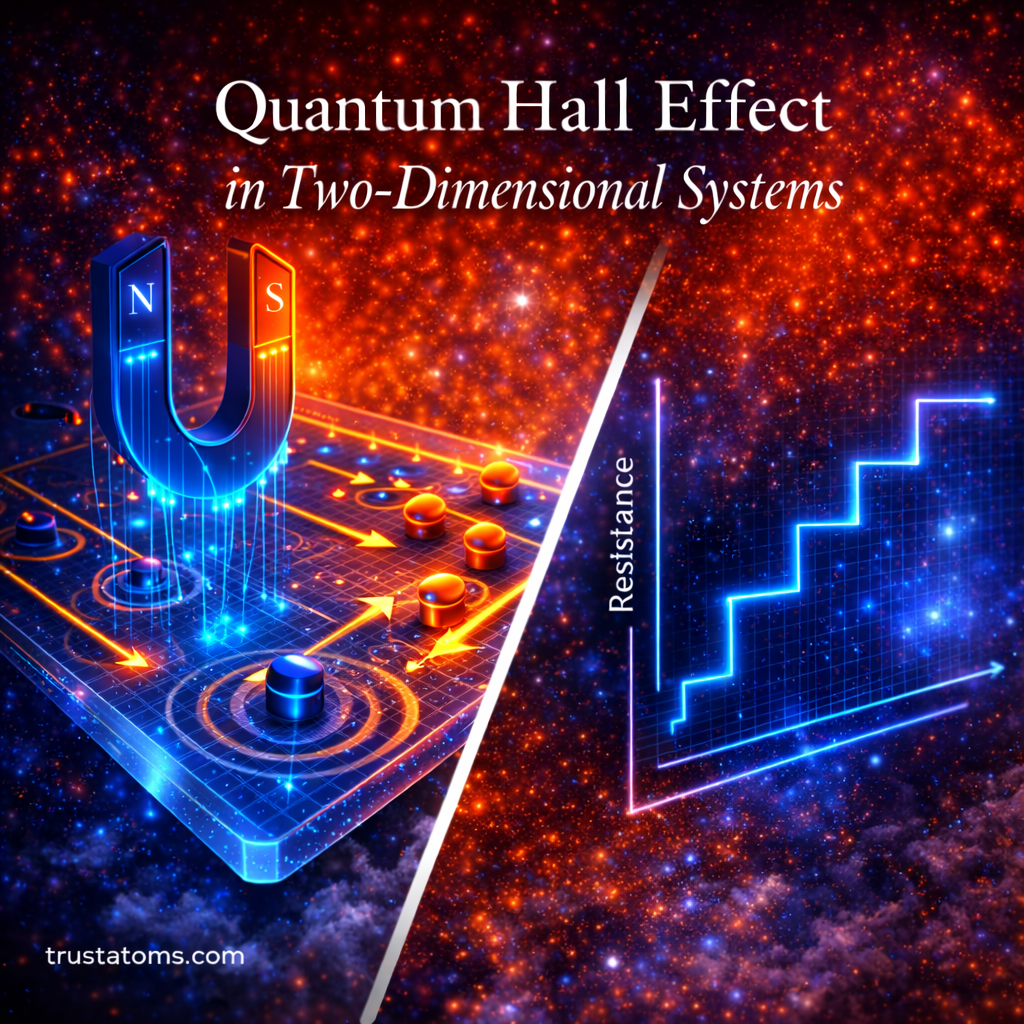
Electromagnetism governs interactions involving charged particles.
Examples include:
- Electricity
- Magnetism
- Light
- Electronics
Continue with:
Electromagnetic interactions also influence atomic behavior discussed in What Is Chemistry?.
Strong Nuclear Force
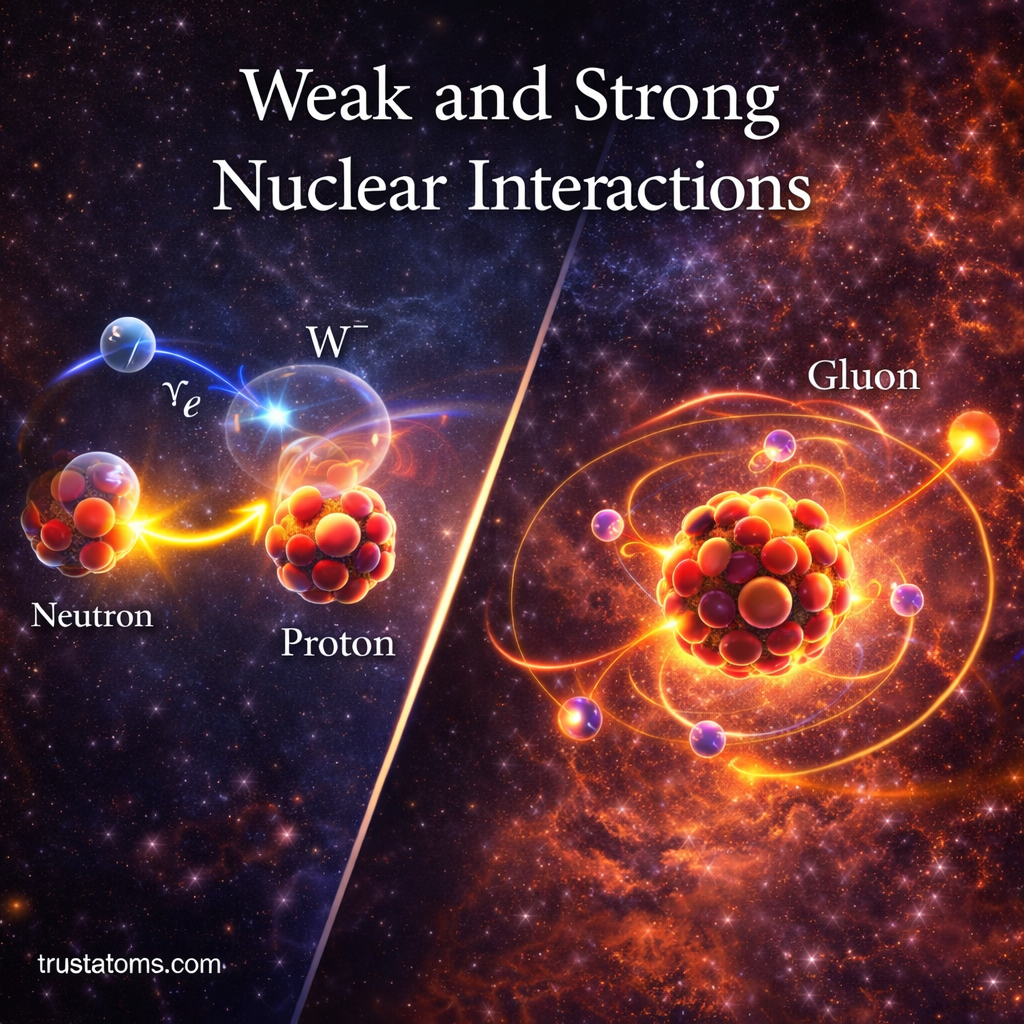
The strong force holds atomic nuclei together.
Related topic:
Weak Nuclear Force
The weak force contributes to radioactive decay and stellar reactions.
Readers can continue with:
Why Physics Matters
Physics supports many areas of modern science and technology.
Applications include:
- Electronics
- Medical imaging
- Transportation
- Communication systems
- Space exploration
- Engineering
Many discoveries in astronomy, chemistry, and Earth science rely on physical principles.
Examples:
- Planetary motion relates to What Is Astronomy?
- Atomic interactions support What Is Chemistry?
- Geological forces influence What Is Earth Science?
How Physicists Study the Universe
Physicists use observation, experimentation, and mathematical models.
Common tools include:
- Telescopes
- Lasers
- Sensors
- Particle accelerators
- Supercomputers
Explore:
Physics in Everyday Life
Physics affects daily experiences constantly.
Examples include:
- Smartphones
- GPS systems
- Solar panels
- Vehicles
- Heating systems
Even simple activities like walking, cooking, or throwing a ball involve physical laws.
Continue Exploring Physics
Continue learning with:
Related science guides:
Final Thoughts
Physics is the science that studies matter, energy, motion, and the laws that govern nature. From everyday experiences to cosmic mysteries, physics helps explain how the universe behaves at every scale.
As scientific understanding continues to grow, physics remains one of the most important fields for understanding reality and driving technological progress.