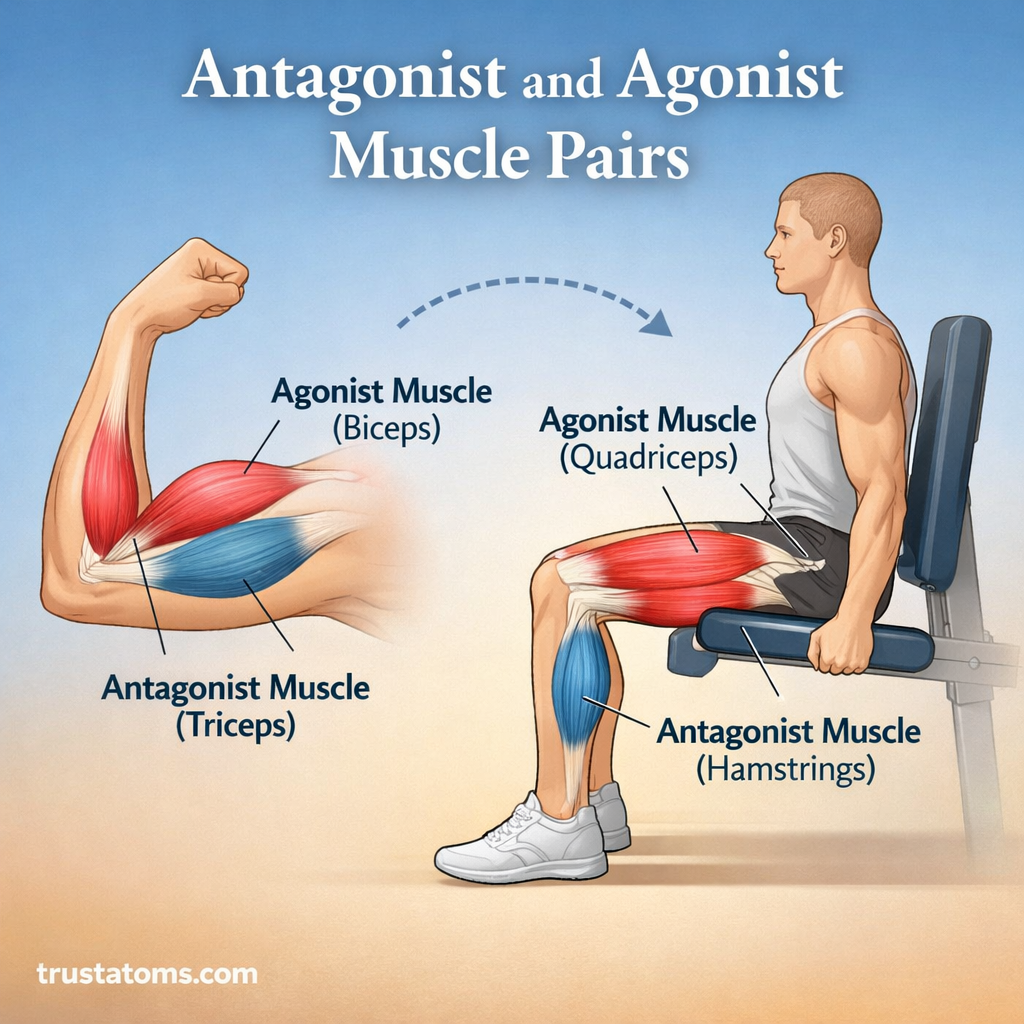
Understanding how your muscles work together is essential to grasping human movement. Every time you bend your arm, walk, or lift an object, your body relies on coordinated muscle actions. Two key players in this system are agonist and antagonist muscle pairs.
These muscle relationships are the foundation of controlled, efficient movement in the human body.
What Are Agonist and Antagonist Muscles?
Agonist Muscles (Prime Movers)
An agonist muscle is the primary muscle responsible for producing a specific movement. It contracts to create the desired action.
For example:
- When you bend your elbow, the biceps brachii acts as the agonist.
- It shortens (contracts) to pull the forearm upward.
Antagonist Muscles
An antagonist muscle performs the opposite action of the agonist. While the agonist contracts, the antagonist relaxes to allow movement.
Using the same example:
- The triceps brachii is the antagonist during elbow flexion.
- It relaxes to allow the biceps to bend the arm.
When the movement reverses (straightening the arm), their roles switch.
How Muscle Pairs Work Together
Muscles cannot push—they can only pull. Because of this limitation, the body relies on opposing muscle pairs to create smooth, controlled motion.
The Basic Mechanism
- The agonist contracts (shortens).
- The antagonist relaxes (lengthens).
- Movement occurs at the joint.
- To reverse the movement, the roles switch.
This coordinated interaction is called reciprocal inhibition, a neurological process that ensures muscles don’t work against each other at the same time.
Common Examples of Antagonist and Agonist Pairs
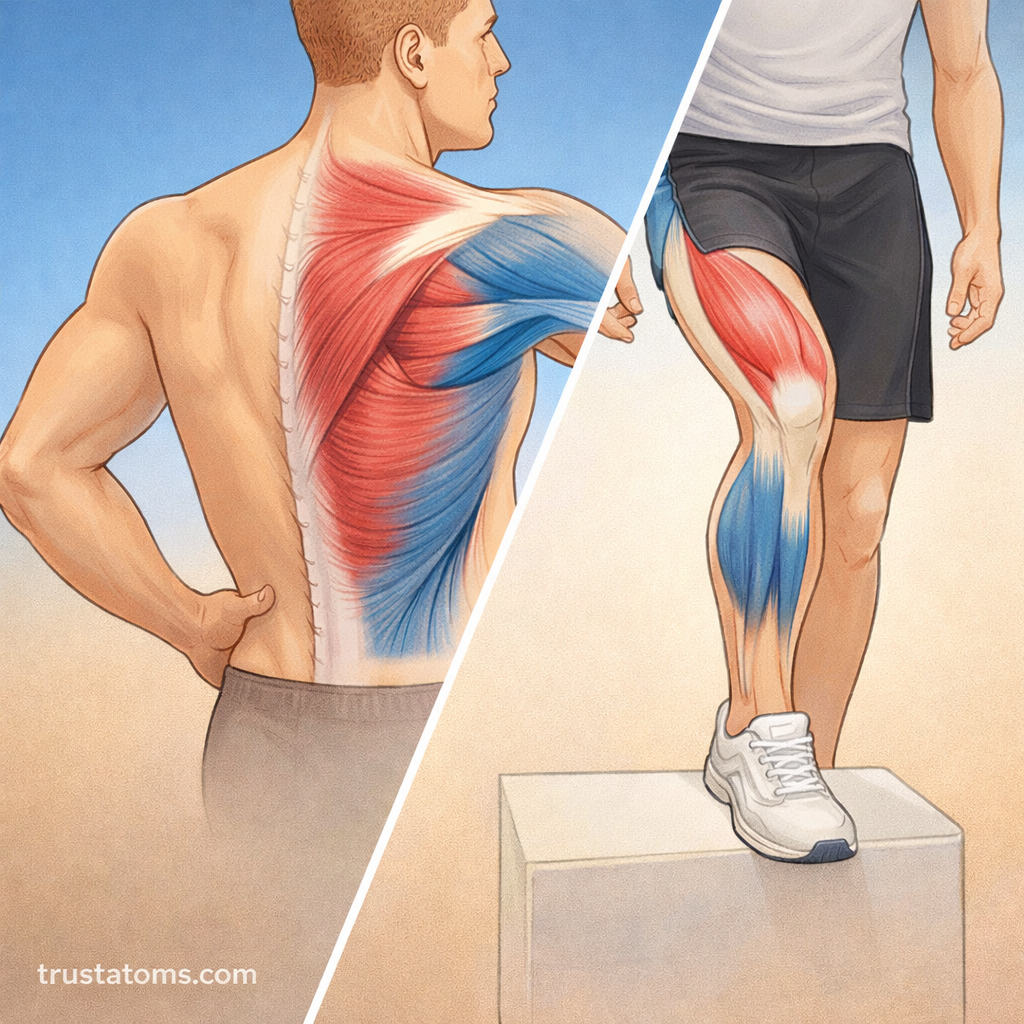
1. Elbow Joint
- Agonist (flexion): Biceps brachii
- Antagonist: Triceps brachii
- Agonist (extension): Triceps brachii
- Antagonist: Biceps brachii
2. Knee Joint
- Agonist (flexion): Hamstrings
- Antagonist: Quadriceps
- Agonist (extension): Quadriceps
- Antagonist: Hamstrings
3. Ankle Joint
- Agonist (pointing toes): Gastrocnemius and soleus
- Antagonist: Tibialis anterior
- Agonist (lifting toes): Tibialis anterior
- Antagonist: Gastrocnemius and soleus
Why Antagonistic Muscle Pairs Are Important
Smooth and Controlled Movement
Without opposing muscles, movements would be jerky and uncoordinated. Antagonistic pairs allow for precision and fluidity.
Joint Stability
These muscle pairs help stabilize joints by maintaining balanced tension on both sides.
Injury Prevention
Balanced muscle strength reduces strain on joints and lowers the risk of injuries such as strains or tears.
Functional Movement
Everyday actions—walking, lifting, reaching—depend on proper coordination between agonists and antagonists.
The Role of the Nervous System
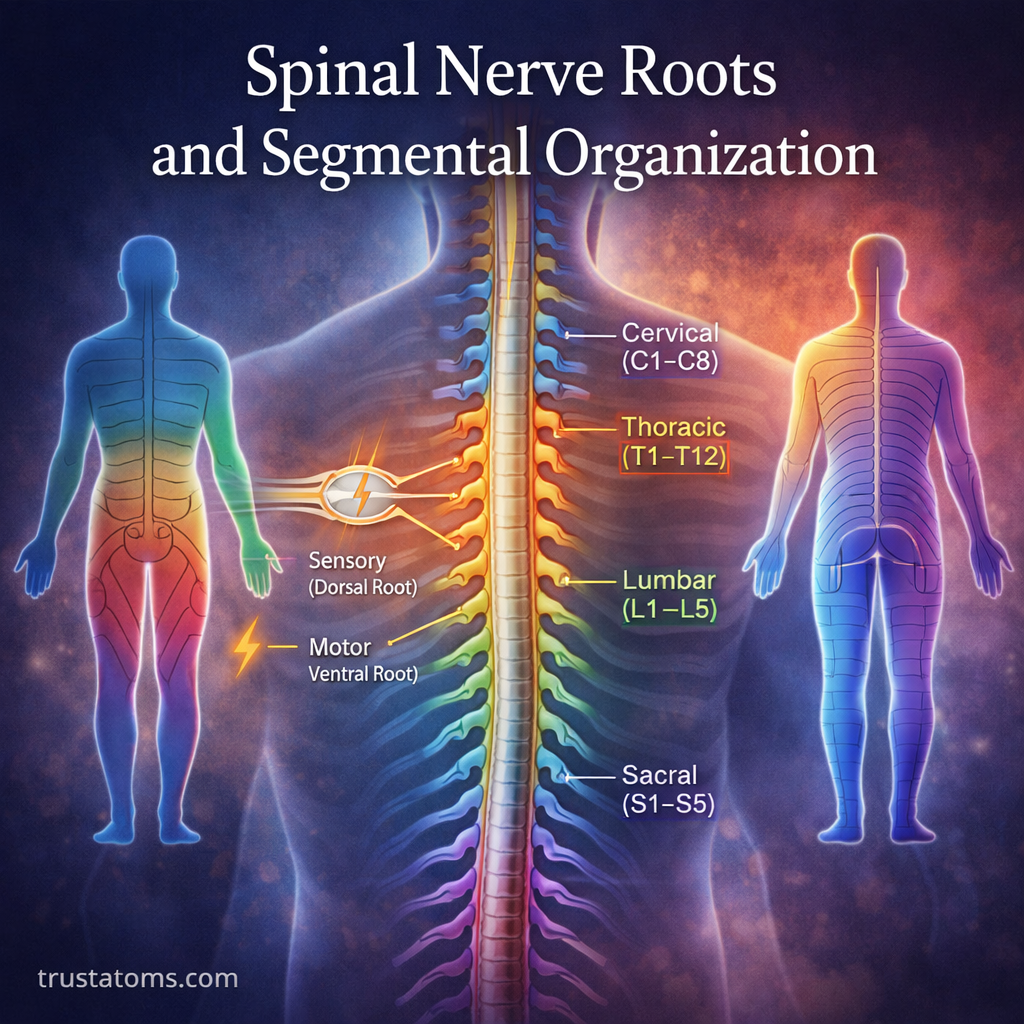
The nervous system plays a critical role in coordinating muscle pairs.
Key Processes:
- Motor signals from the brain activate the agonist.
- Simultaneously, inhibitory signals relax the antagonist.
- This ensures efficient and conflict-free movement.
This coordination happens almost instantly, allowing for seamless physical activity.
What Happens When Muscle Balance Is Off?
When one muscle in a pair becomes stronger or tighter than the other, it can lead to imbalances.
Common Issues:
- Reduced range of motion
- Poor posture
- Increased injury risk
- Joint pain or stiffness
Example:
If the quadriceps are significantly stronger than the hamstrings, it may increase the risk of knee injuries.
Training Agonist and Antagonist Muscles
Balanced training is essential for optimal performance and injury prevention.
Best Practices:
- Train both sides of a muscle pair equally
- Include both pushing and pulling exercises
- Focus on full range of motion
- Incorporate stretching for tight muscles
Example Workout Pairings:
- Biceps curls + Triceps extensions
- Leg extensions + Hamstring curls
- Chest press + Rows
Real-World Applications
Sports Performance
Athletes rely heavily on coordinated muscle pairs for speed, strength, and agility.
Rehabilitation
Physical therapy often focuses on restoring balance between agonist and antagonist muscles after injury.
Everyday Life
Simple tasks like climbing stairs or carrying groceries depend on these muscle interactions.
Key Takeaways
- Agonist muscles create movement, while antagonist muscles oppose it.
- These muscles work in pairs to allow controlled, efficient motion.
- Proper balance between muscle pairs is essential for joint health and injury prevention.
- Training both sides of a muscle pair improves performance and reduces risk.