Viruses are unique pathogens that invade host cells and use them to replicate. Because they hide inside our own cells, the body must rely on highly specialized antiviral defense mechanisms to detect and eliminate them. These defenses involve both rapid, non-specific responses and highly targeted immune strategies.
Understanding how the body fights viruses reveals just how coordinated and sophisticated the immune system truly is.
What Makes Viruses Different?
Unlike bacteria, viruses cannot reproduce on their own. They must enter host cells and hijack cellular machinery to multiply. This creates a unique challenge for the immune system:
- Infected cells appear “normal” on the outside
- Viruses replicate inside cells, out of direct reach
- Killing infected cells can damage healthy tissue
Because of this, antiviral defenses must balance effectiveness with precision.
The Two Lines of Antiviral Defense
The immune system uses two main strategies to fight viral infections:
1. Innate Immune Response (Immediate Defense)
This is the body’s first line of defense. It acts quickly but is not specific to a particular virus.
2. Adaptive Immune Response (Targeted Defense)
This response develops more slowly but is highly specific and provides long-term protection.
Innate Antiviral Defense Mechanisms
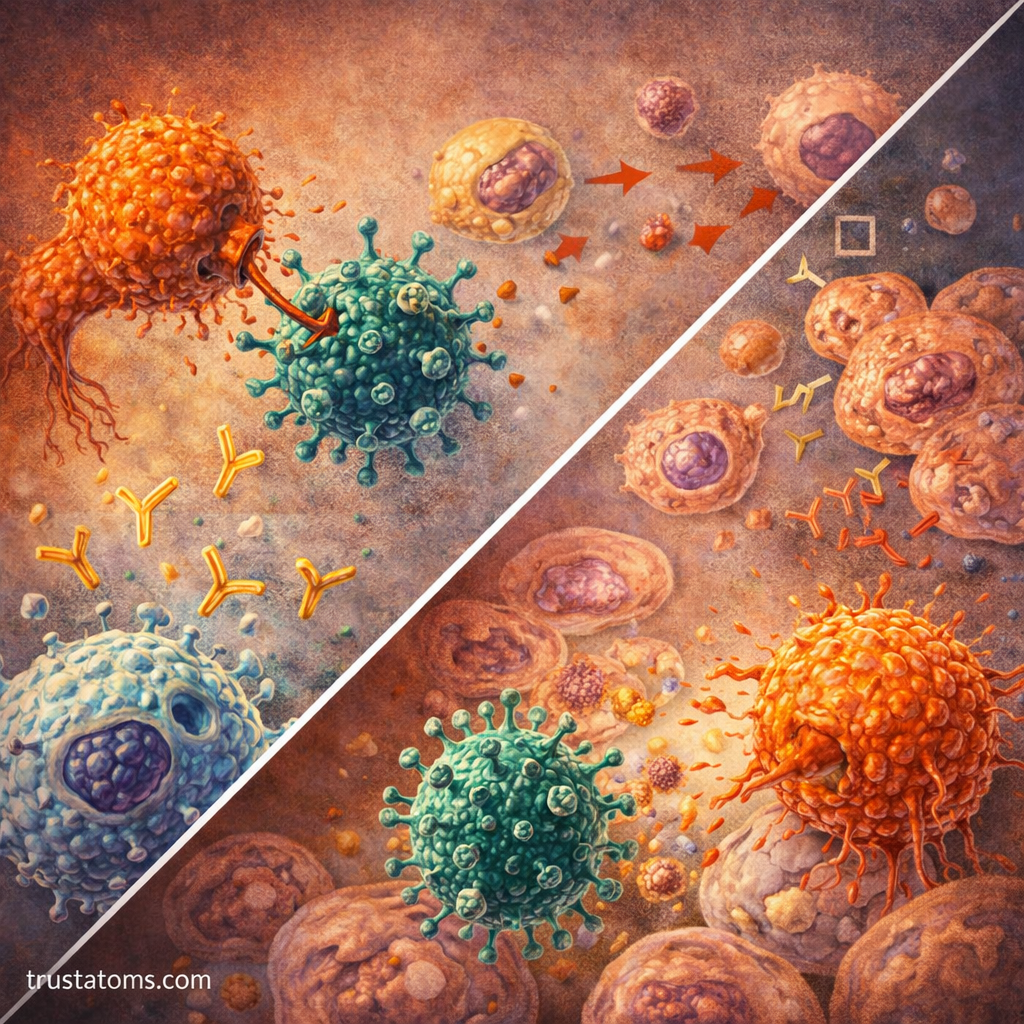
The innate immune system responds within hours of infection and plays a critical role in limiting viral spread early on.
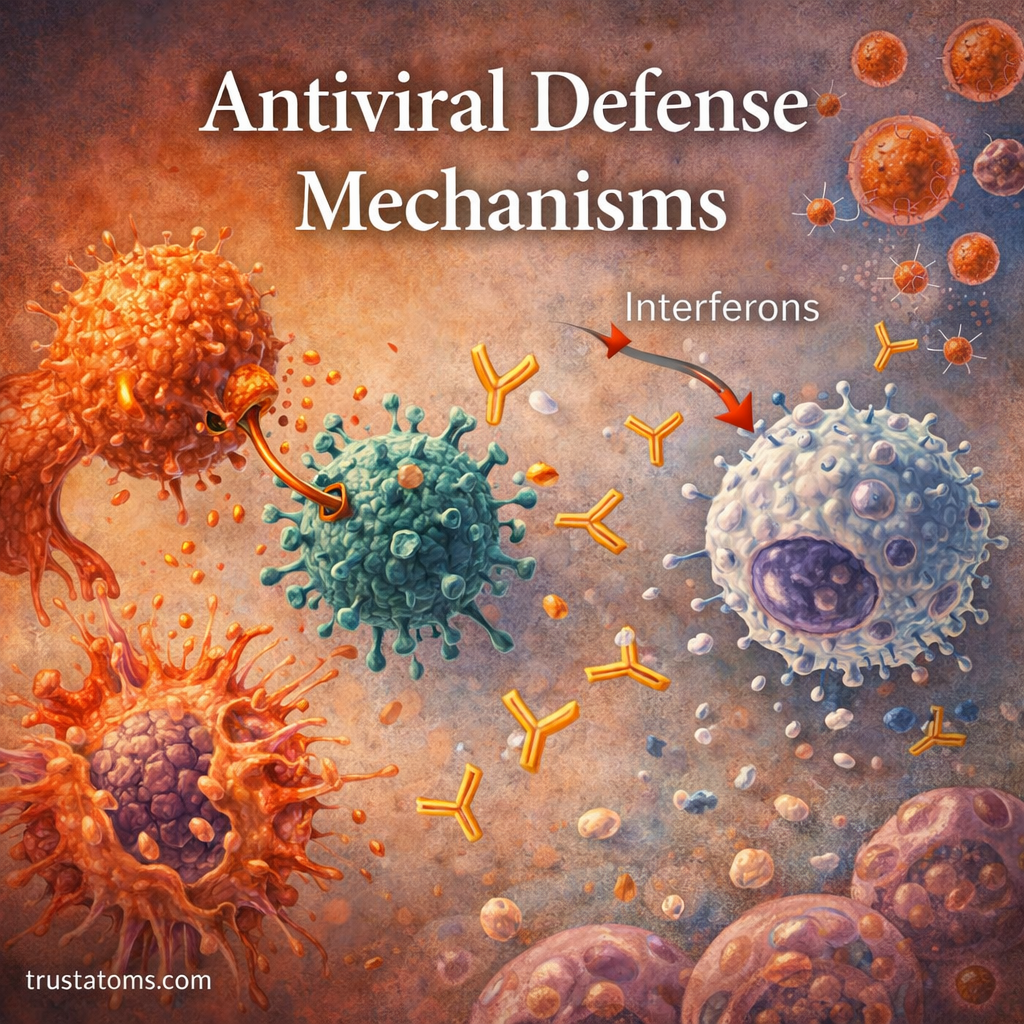
Interferons: The Antiviral Signal
Interferons are proteins released by infected cells that warn nearby cells of a viral threat.
Key Functions of Interferons
- Trigger antiviral states in neighboring cells
- Inhibit viral replication inside cells
- Activate immune cells such as natural killer (NK) cells
Interferons essentially create a “defensive barrier” that slows the virus before it spreads widely.
Natural Killer (NK) Cells
Natural killer cells are specialized immune cells that detect and destroy virus-infected cells.
How NK Cells Work
- Identify cells with abnormal or missing surface markers
- Release enzymes that induce cell death (apoptosis)
- Act quickly without needing prior exposure to the virus
NK cells are especially important in the early stages of infection.
Inflammation and Cytokine Signaling
When viruses are detected, the body releases cytokines that coordinate the immune response.
Effects of Cytokines
- Recruit immune cells to the infection site
- Increase blood flow and vascular permeability
- Trigger systemic responses like fever
This process helps contain the infection but can also contribute to symptoms such as fatigue and body aches.
Adaptive Antiviral Defense Mechanisms
If the virus persists, the adaptive immune system takes over with a more precise attack.
T Cells: Destroying Infected Cells
T cells play a central role in identifying and eliminating virus-infected cells.
Types of T Cells
- Cytotoxic T Cells (CD8+): Directly kill infected cells
- Helper T Cells (CD4+): Coordinate immune responses and activate other cells
Cytotoxic T cells recognize viral fragments displayed on infected cells and trigger their destruction.
B Cells and Antibodies
B cells produce antibodies that specifically target viruses.
What Antibodies Do
- Bind to viruses and block their ability to enter cells
- Mark viruses for destruction by other immune cells
- Neutralize viral particles in circulation
This is especially effective against viruses outside of cells, such as during transmission between cells.
Immune Memory and Long-Term Protection
One of the most powerful features of the adaptive immune system is memory.
How Immune Memory Works
- After an infection, memory B and T cells remain in the body
- These cells recognize the same virus if it returns
- The response is faster and stronger during reinfection
This is the principle behind vaccinations, which train the immune system without causing disease.
The Role of Apoptosis in Viral Control
Apoptosis, or programmed cell death, is a key antiviral strategy.
Why It Matters
- Infected cells self-destruct to stop viral replication
- Limits the spread of viruses to neighboring cells
- Controlled process minimizes inflammation compared to cell rupture
Both immune signals and infected cells themselves can trigger apoptosis.
Viral Evasion Strategies
Viruses have evolved ways to escape immune detection, making infections harder to control.
Common Evasion Tactics
- Blocking interferon production
- Hiding inside cells with minimal immune signals
- Mutating rapidly to avoid antibody recognition
- Inhibiting antigen presentation on infected cells
These strategies explain why some viruses are persistent or difficult to treat.
Balancing the Immune Response
An effective antiviral response must strike a balance.
Too Weak
- Virus spreads rapidly
- Infection becomes severe
Too Strong
- Excess inflammation damages tissues
- Can lead to complications like cytokine storms
The immune system constantly adjusts its response to maintain this balance.
Final Thoughts
Antiviral defense mechanisms are a complex combination of rapid signaling, targeted destruction, and long-term memory. From interferons warning neighboring cells to T cells eliminating infected ones, the immune system uses multiple layers of protection to fight viral threats.
By understanding these processes, it becomes clear that the body is not passively affected by viruses—it actively detects, adapts, and defends itself with remarkable precision.