Balance is something most people take for granted—until it’s disrupted. Whether you’re standing still, walking, or reacting to sudden movement, your body is constantly working behind the scenes to maintain stability. This process is known as balance control in postural systems, and it involves a complex interaction between the brain, muscles, and sensory systems.
What Is Balance Control?
Balance control refers to the body’s ability to maintain its center of gravity over its base of support. In simple terms, it’s how you stay upright and stable during both movement and rest.
Your body continuously makes small adjustments to prevent falls, even when you think you’re standing still.
Key Components of Balance
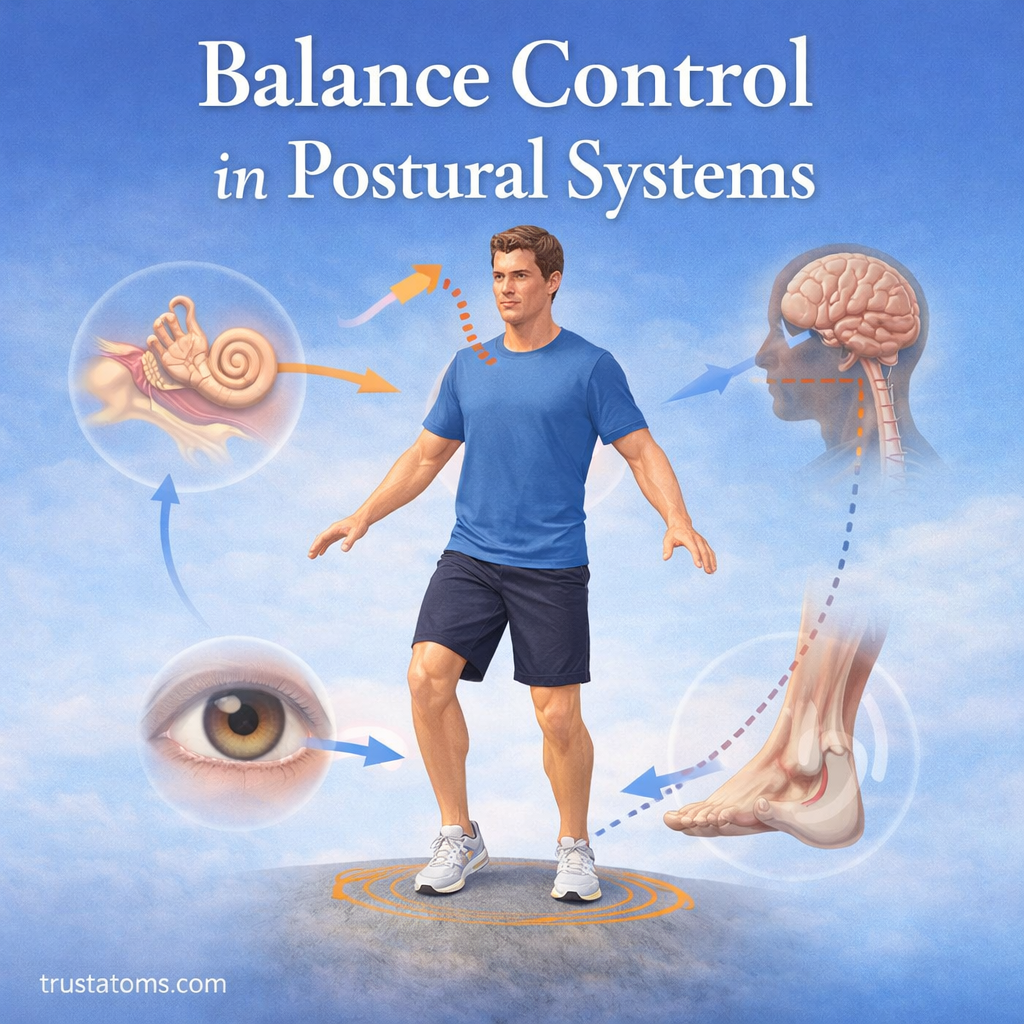
Balance relies on three primary systems:
- Sensory input – Detects body position and movement
- Central processing – Interprets signals in the brain
- Motor output – Activates muscles to correct posture
The Three Main Sensory Systems
Your body uses multiple systems to gather information about position and movement.
1. Visual System
Your eyes provide information about your surroundings and orientation.
- Helps you detect motion and direction
- Assists with depth perception
- Provides external reference points
2. Vestibular System
Located in the inner ear, this system detects head movement and spatial orientation.
- Senses acceleration and rotation
- Maintains equilibrium
- Plays a key role when visual input is limited
3. Proprioceptive System
This system involves sensors in muscles, joints, and tendons.
- Detects body position without looking
- Provides feedback about joint angles and pressure
- Helps coordinate movement
How the Brain Processes Balance
The brain acts as the control center for balance.
Key Brain Areas Involved
- Cerebellum – Coordinates movement and fine-tunes balance
- Brainstem – Regulates automatic postural adjustments
- Motor cortex – Initiates voluntary movement
These areas work together to analyze sensory input and send rapid signals to muscles.
Types of Postural Control
Balance control can be categorized into different types depending on the situation.
Static Balance
- Maintaining stability while not moving
- Example: Standing still
Dynamic Balance
- Maintaining stability during movement
- Example: Walking or running
Reactive Balance
- Responding to unexpected disturbances
- Example: Catching yourself when you trip
Postural Strategies the Body Uses
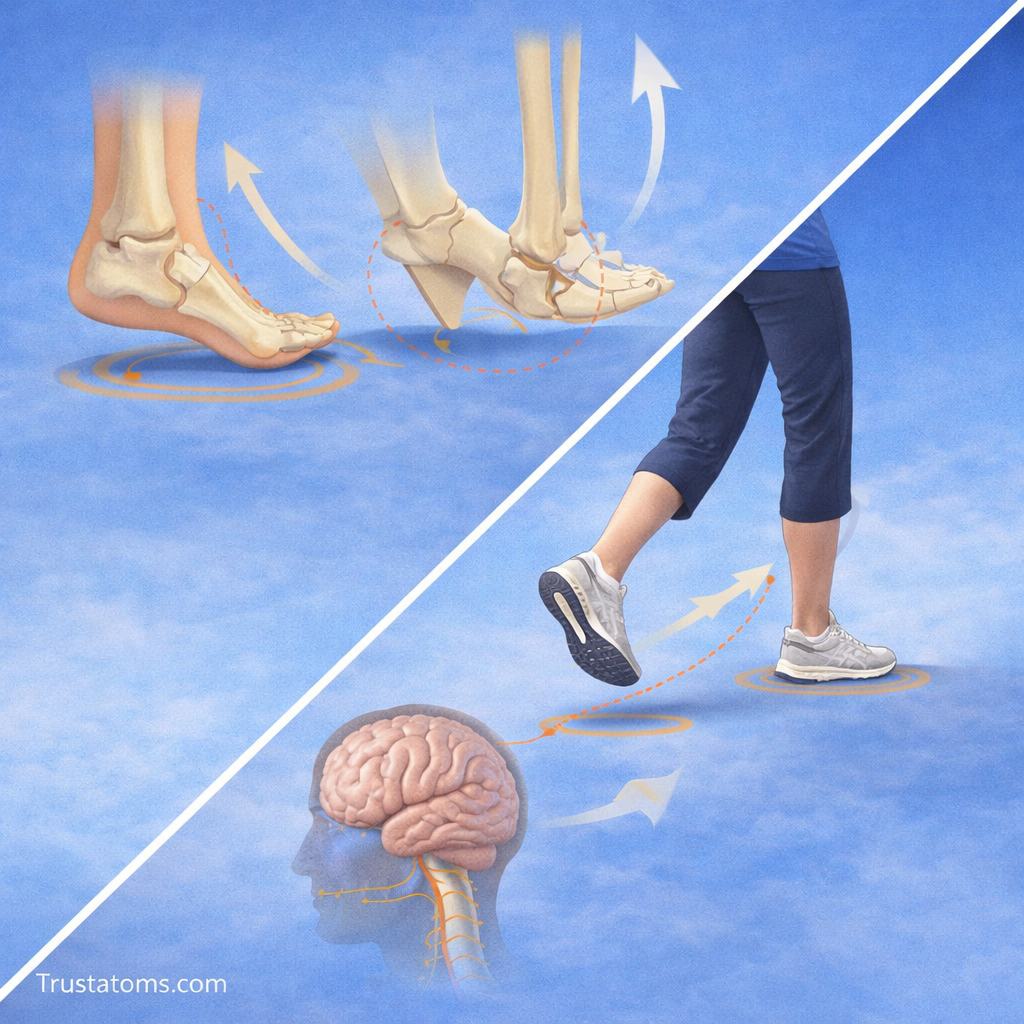
When your balance is challenged, your body uses specific strategies to stay upright.
Common Strategies
- Ankle Strategy
- Small adjustments at the ankle
- Used for minor disturbances
- Hip Strategy
- Larger movements at the hips
- Used for moderate instability
- Stepping Strategy
- Taking a step to regain balance
- Used for major disturbances
These strategies often work together depending on the situation.
Factors That Affect Balance
Balance is influenced by both internal and external factors.
Internal Factors
- Muscle strength
- Joint mobility
- Reaction time
- Age-related changes
External Factors
- Uneven surfaces
- Poor lighting
- Footwear
- Environmental hazards
Why Balance Control Is Important
Good balance is essential for both everyday function and long-term health.
Benefits of Strong Balance Control
- Reduces risk of falls and injuries
- Improves coordination and movement efficiency
- Enhances athletic performance
- Supports independence in daily activities
How to Improve Balance
Balance can be trained and improved with consistent practice.
Effective Exercises
- Single-leg stands
- Heel-to-toe walking
- Balance board training
- Yoga and tai chi movements
Training Tips
- Start with stable surfaces and progress gradually
- Use support if needed (wall or chair)
- Practice regularly for best results
- Combine balance work with strength training
Common Mistakes to Avoid
When working on balance, avoid these common issues:
- Skipping warm-ups
- Ignoring weak muscle groups
- Training only in easy conditions
- Not challenging your stability over time
- Rushing progress
Balance in Everyday Life
Balance plays a role in nearly every activity:
- Walking up stairs
- Carrying objects
- Standing in line
- Turning quickly
Even small improvements in balance can make daily tasks safer and easier.
Final Thoughts
Balance control in postural systems is a complex but essential function of the human body. By combining sensory input, brain processing, and muscular responses, your body maintains stability in constantly changing environments.
Improving balance doesn’t require advanced equipment—just consistent practice and awareness. Over time, stronger balance can lead to better movement, fewer injuries, and greater confidence in everyday life.