Bone mineral density (BMD) is a key indicator of bone health and strength. It reflects the amount of minerals—primarily calcium and phosphorus—contained within bone tissue. Higher bone mineral density generally means stronger bones, while lower density increases the risk of fractures and conditions like osteoporosis.
Understanding how bone mineral density works helps explain how bones maintain their structure, adapt to stress, and protect the body throughout life.
What Is Bone Mineral Density?
Bone mineral density refers to the concentration of minerals in a given volume of bone.
It is commonly measured using specialized imaging tests and is used to:
- Assess bone strength
- Detect early signs of bone loss
- Evaluate fracture risk
- Monitor the effectiveness of treatments for bone-related conditions
BMD is often compared to standardized values to determine whether bone density is normal, low, or indicative of disease.
How Bone Structure Supports Strength
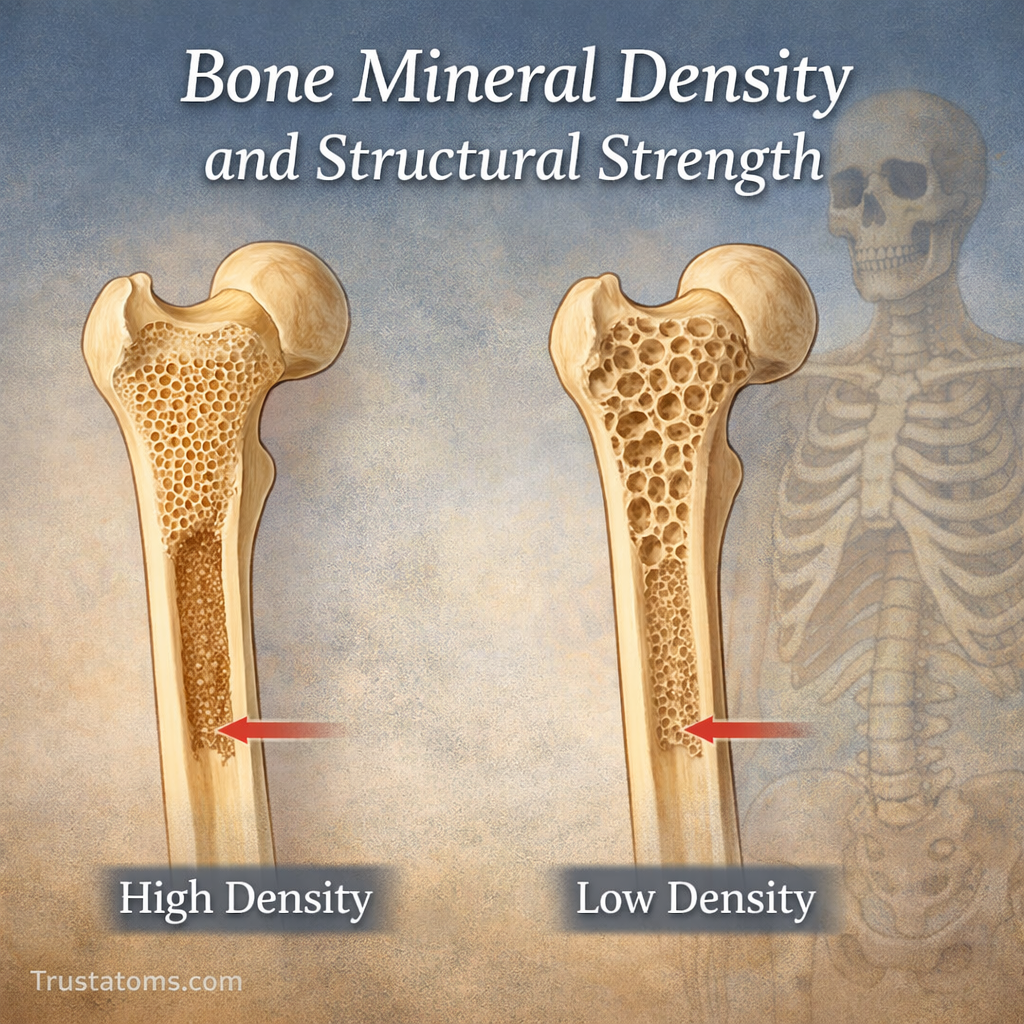
Bone strength is not determined by density alone. It also depends on how bone tissue is organized.
There are two primary types of bone tissue:
Compact Bone
- Dense and tightly packed
- Forms the outer layer of bones
- Provides rigidity and resistance to bending
Spongy Bone (Cancellous Bone)
- Porous and lightweight
- Found inside bones, especially at the ends of long bones
- Helps absorb shock and distribute forces
The combination of these two types allows bones to be both strong and flexible, reducing the likelihood of fractures under stress.
The Relationship Between Density and Strength
Bone mineral density and structural strength are closely related but not identical.
Higher BMD generally means:
- Greater resistance to fractures
- Stronger support for body weight
- Improved ability to handle physical stress
However, bone strength also depends on:
- Bone shape and geometry
- Internal structure (trabecular patterns in spongy bone)
- Quality of bone matrix (collagen and mineral balance)
This means that two people with similar BMD levels may still have different fracture risks.
Factors That Influence Bone Mineral Density
Bone density is affected by a combination of biological, lifestyle, and environmental factors.
Age
- Peak bone mass is typically reached in early adulthood
- Bone density gradually declines with age
- Loss accelerates later in life, especially after hormonal changes
Nutrition
Proper nutrition is essential for maintaining strong bones.
Key nutrients include:
- Calcium (supports bone mineralization)
- Vitamin D (helps absorb calcium)
- Protein (supports bone structure)
- Magnesium and phosphorus (contribute to bone composition)
Physical Activity
Weight-bearing and resistance exercises help strengthen bones.
Examples include:
- Walking or jogging
- Strength training
- Jumping or impact-based activities
These activities stimulate bone remodeling, encouraging the body to build stronger bone tissue.
Hormones
Hormones play a major role in regulating bone density.
- Estrogen helps maintain bone mass (especially in women)
- Testosterone supports bone strength in men
- Hormonal imbalances can accelerate bone loss
Lifestyle Factors
Certain habits can negatively impact bone density:
- Smoking
- Excessive alcohol consumption
- Sedentary lifestyle
These factors can weaken bone structure over time.
Bone Remodeling and Density Maintenance
Bone is constantly being renewed through a process called remodeling.
This involves two types of cells:
- Osteoblasts: build new bone
- Osteoclasts: break down old bone
Healthy bone remodeling maintains a balance between these processes.
When this balance is disrupted:
- Bone loss may exceed bone formation
- Bone density decreases
- Structural strength weakens
How Bone Mineral Density Is Measured
The most common method for measuring BMD is a bone density scan.
This test:
- Uses low-level imaging to assess bone mass
- Often focuses on the hip and spine
- Provides a score comparing bone density to standard values
Results are typically categorized as:
- Normal bone density
- Low bone density (osteopenia)
- Osteoporosis
These categories help guide prevention and treatment strategies.
Why Bone Strength Matters
Strong bones are essential for everyday function and long-term health.
Benefits of healthy bone density include:
- Reduced risk of fractures
- Better mobility and balance
- Protection of vital organs
- Support for muscles and joints
Weak bones, on the other hand, can lead to:
- Increased fracture risk from minor falls
- Chronic pain and reduced mobility
- Loss of independence in older adults
How to Support Healthy Bone Density
Maintaining bone mineral density is a lifelong process.
Here are practical strategies:
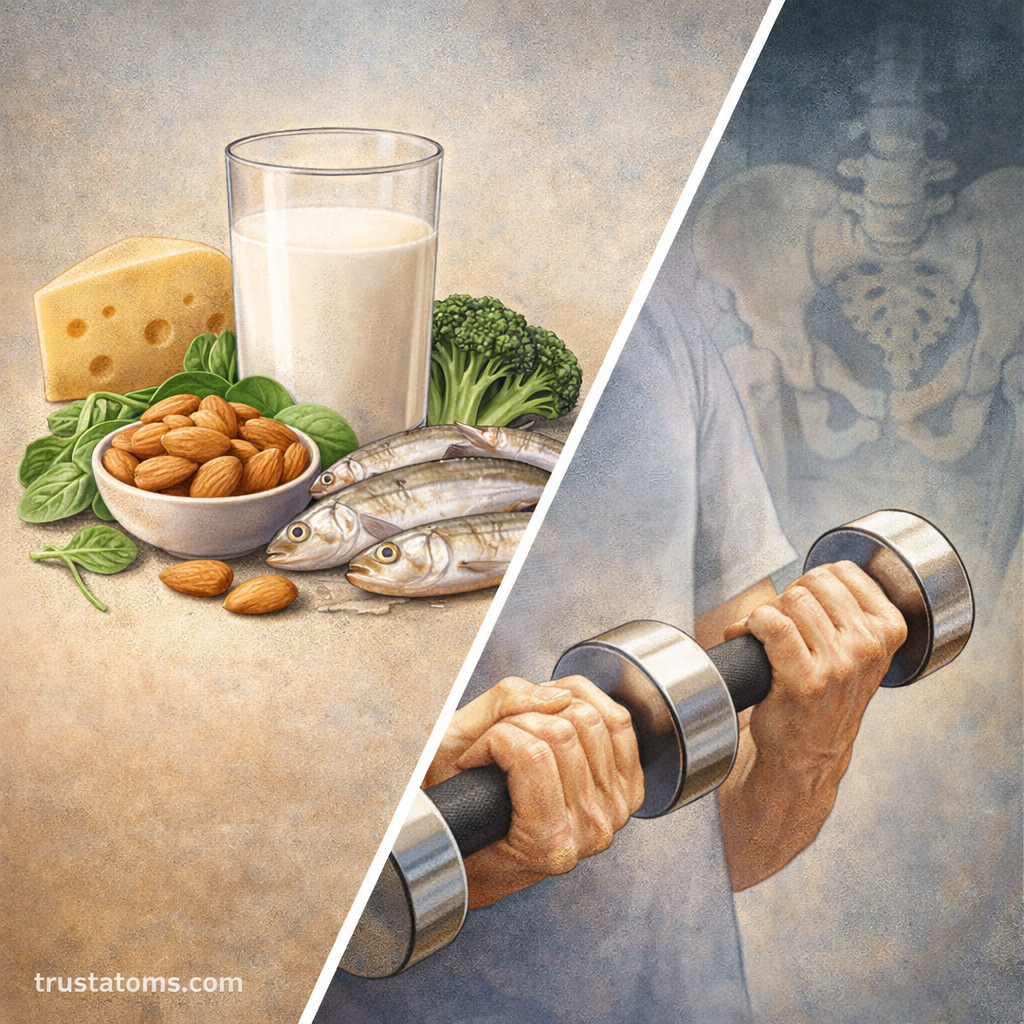
1. Eat a Bone-Healthy Diet
- Include calcium-rich foods (dairy, leafy greens)
- Ensure adequate vitamin D intake
- Maintain balanced nutrition with protein and minerals
2. Stay Physically Active
- Engage in regular weight-bearing exercise
- Incorporate strength training
- Avoid prolonged inactivity
3. Maintain Healthy Lifestyle Habits
- Avoid smoking
- Limit alcohol intake
- Get regular sunlight exposure for vitamin D
4. Monitor Bone Health
- Consider bone density testing when appropriate
- Follow medical guidance for supplements or treatments
- Stay proactive as you age
Key Takeaways
- Bone mineral density measures the concentration of minerals in bones and is a key indicator of strength
- Strong bones depend on both density and internal structure
- Factors like age, nutrition, exercise, and hormones all influence BMD
- Bone remodeling helps maintain density, but imbalances can lead to bone loss
- Maintaining healthy habits is essential for preserving bone strength over time
Final Thoughts
Bone mineral density plays a crucial role in determining how strong and resilient your bones are. While it naturally changes throughout life, the choices you make—such as staying active, eating well, and maintaining a healthy lifestyle—can significantly influence long-term bone health.
By understanding how bone density and structural strength work together, you can take proactive steps to support a stronger, more stable body at every stage of life.