Your heart works continuously to pump blood throughout your body, delivering oxygen and nutrients while removing waste. Two key measurements help explain how efficiently your heart performs this task: cardiac output and stroke volume.
Understanding these concepts provides insight into how your heart adapts to rest, exercise, and different health conditions.
What Is Cardiac Output?
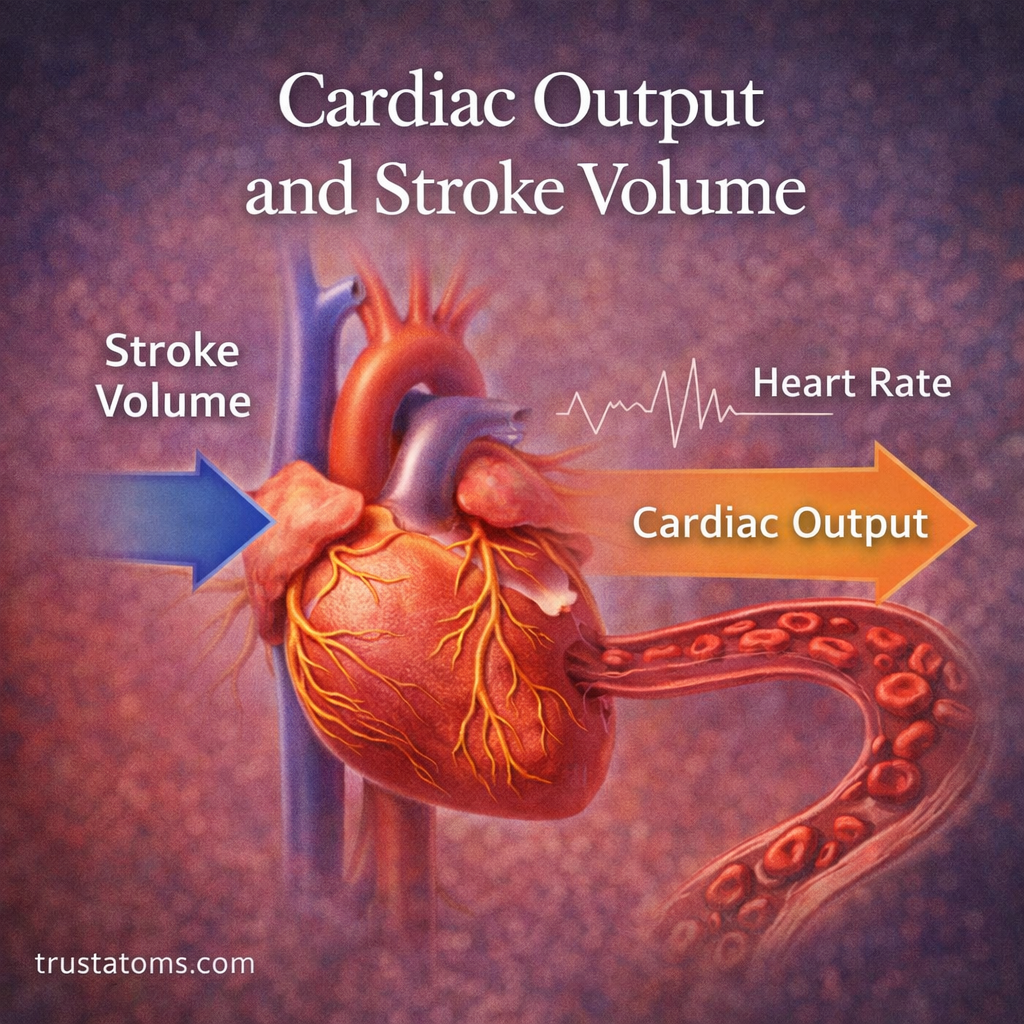
Cardiac output is the total volume of blood the heart pumps per minute.
It is calculated as:
- Cardiac Output = Heart Rate × Stroke Volume
Key points:
- Measured in liters per minute (L/min)
- Average resting value is about 5 liters per minute in adults
- Increases during physical activity
Cardiac output reflects how well your heart meets the body’s demands.
What Is Stroke Volume?
Stroke volume is the amount of blood pumped by the heart with each beat.
Key characteristics:
- Measured in milliliters per beat (mL/beat)
- Average resting value is about 60–100 mL per beat
- Changes based on activity level and heart condition
Stroke volume determines how much blood is ejected with every contraction.
Relationship Between Cardiac Output and Stroke Volume
Cardiac output depends directly on stroke volume and heart rate.
Example:
- If stroke volume increases, cardiac output rises
- If heart rate increases, cardiac output also rises
This relationship allows the body to quickly adjust blood flow when needed.
Factors That Affect Stroke Volume
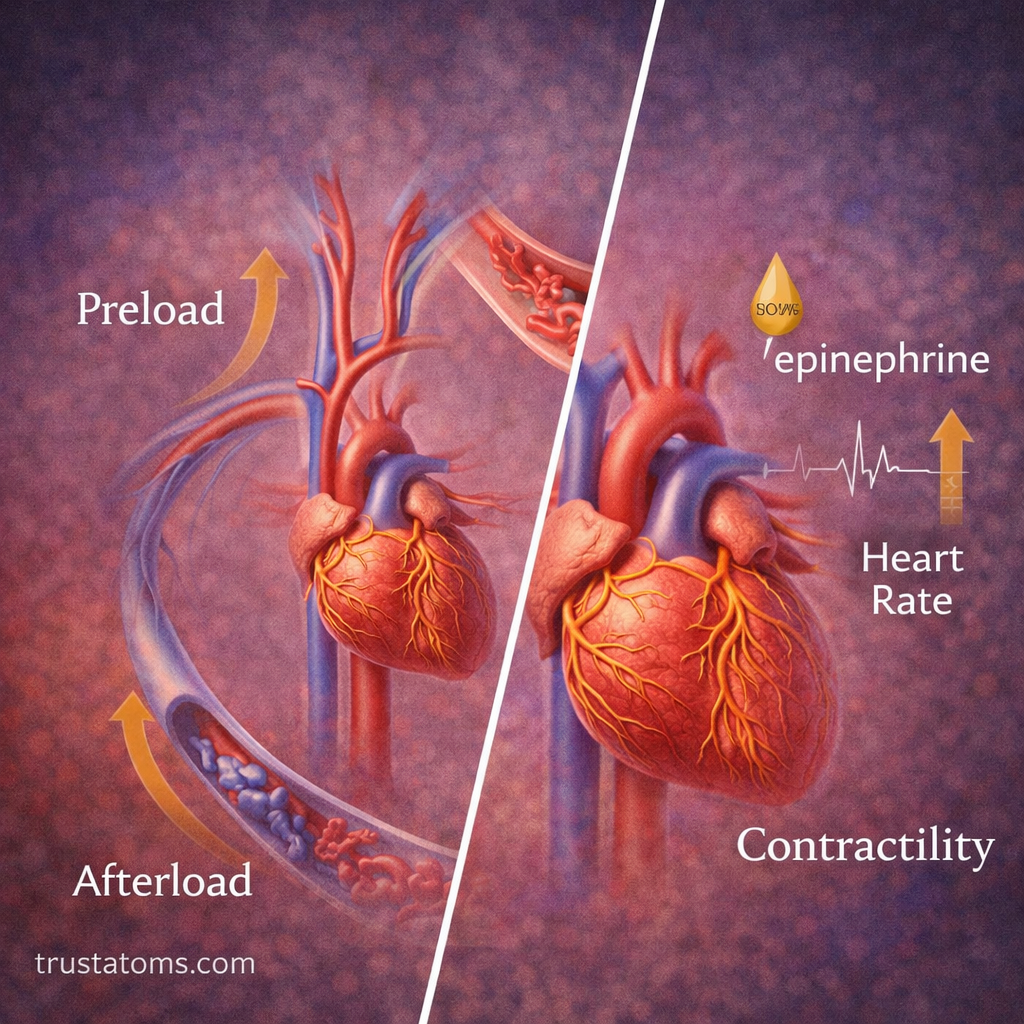
Stroke volume is influenced by three main factors:
1. Preload
Preload refers to the amount of blood filling the heart before contraction.
- More filling → stronger contraction
- Related to venous return (blood returning to the heart)
2. Contractility
Contractility is the strength of the heart’s contraction.
- Stronger contractions pump more blood
- Influenced by hormones and nervous system signals
3. Afterload
Afterload is the resistance the heart must overcome to pump blood.
- Higher resistance → lower stroke volume
- Often related to blood pressure
How Heart Rate Influences Cardiac Output
Heart rate plays a major role in determining cardiac output.
Key points:
- Increased heart rate → higher cardiac output (to a limit)
- Extremely high heart rates may reduce filling time
- Lower heart rates can reduce overall output
The body balances heart rate and stroke volume for optimal performance.
Changes During Exercise
During physical activity, the body demands more oxygen and nutrients.
The heart responds by:
- Increasing heart rate
- Increasing stroke volume
- Boosting cardiac output significantly
Example:
- Resting cardiac output: ~5 L/min
- During intense exercise: up to 20–25 L/min or more
This allows muscles to function efficiently under stress.
Regulation of Cardiac Output
The body uses several systems to regulate cardiac output.
Nervous system:
- Sympathetic stimulation increases heart rate and contractility
- Parasympathetic stimulation slows heart rate
Hormones:
- Epinephrine (adrenaline) increases output
- Other hormones influence blood volume and pressure
Local factors:
- Oxygen demand in tissues
- Carbon dioxide levels
These mechanisms ensure blood flow matches the body’s needs.
What Happens When Cardiac Output Is Too Low or Too High?
Maintaining proper cardiac output is essential for health.
Low cardiac output:
- Fatigue
- Dizziness
- Poor organ function
- Seen in heart failure
High cardiac output:
- Can occur during exercise or certain conditions
- May strain the heart over time if persistent
Balance is key to maintaining efficient circulation.
Simple Summary
Cardiac Output:
- Total blood pumped per minute
- Depends on heart rate and stroke volume
Stroke Volume:
- Blood pumped per heartbeat
- Influenced by preload, contractility, and afterload
Together, these measurements describe how effectively the heart supports the body.
Final Thoughts
Cardiac output and stroke volume are essential concepts for understanding how the heart functions. They show how the body adjusts blood flow to meet changing demands, whether at rest or during intense activity.
By working together, heart rate and stroke volume ensure that every cell receives the oxygen and nutrients it needs to function properly.