Chemical Topology in Molecular Networks

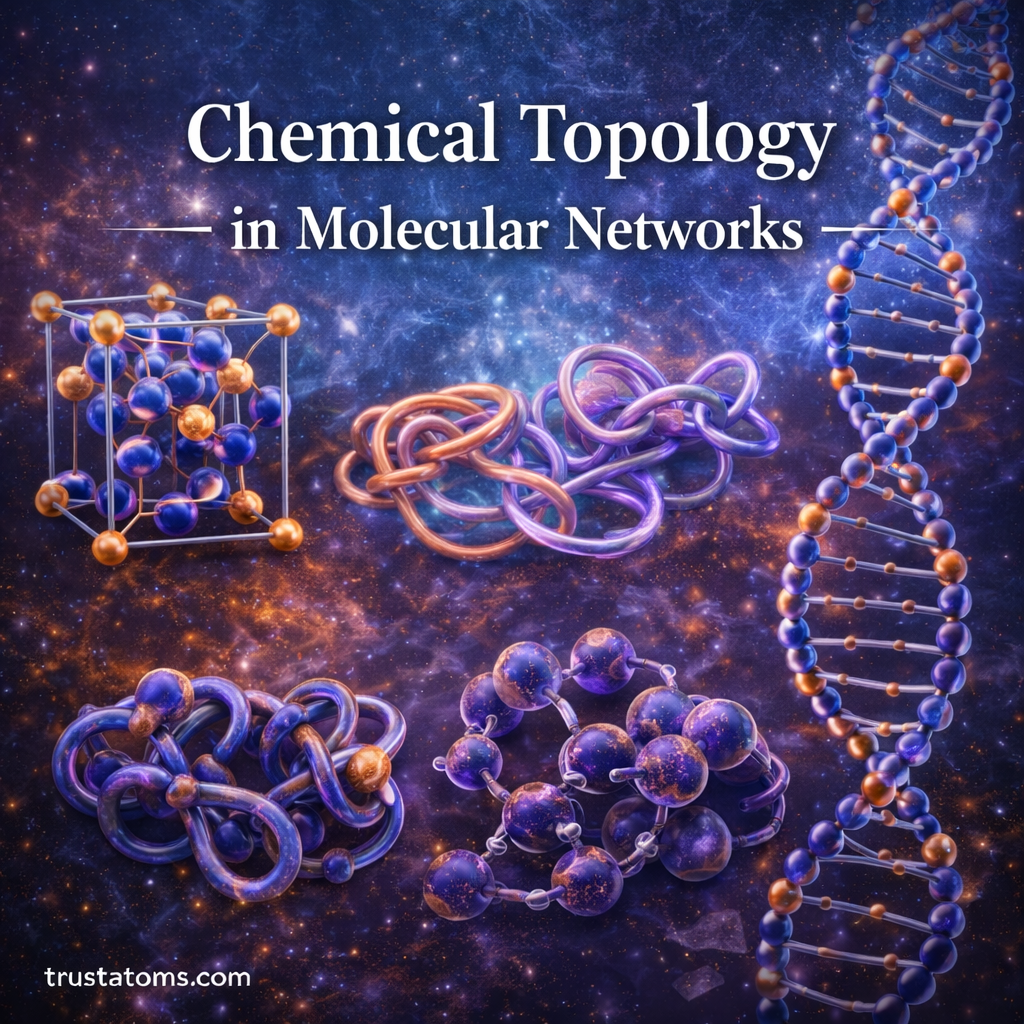
Illustration of interconnected molecular structures representing chemical topology in molecular networks.
Illustration depicting interconnected molecular networks and structures studied in chemical topology. trustatoms.com.

Chemical topology is a field of chemistry that studies how atoms connect and organize within molecular systems. Instead of focusing only on distances and angles between atoms, chemical topology examines the connectivity patterns that form molecular networks.

These patterns can reveal how molecules behave, how materials form complex structures, and how chemical systems organize themselves at both small and large scales.

Chemical topology plays an important role in fields such as materials science, polymer chemistry, nanotechnology, and biological chemistry. By understanding how molecules connect in networks, scientists can design new materials and predict how chemical systems will behave.

Continue reading “Chemical Topology in Molecular Networks”
Solid State Chemistry in Crystalline Materials

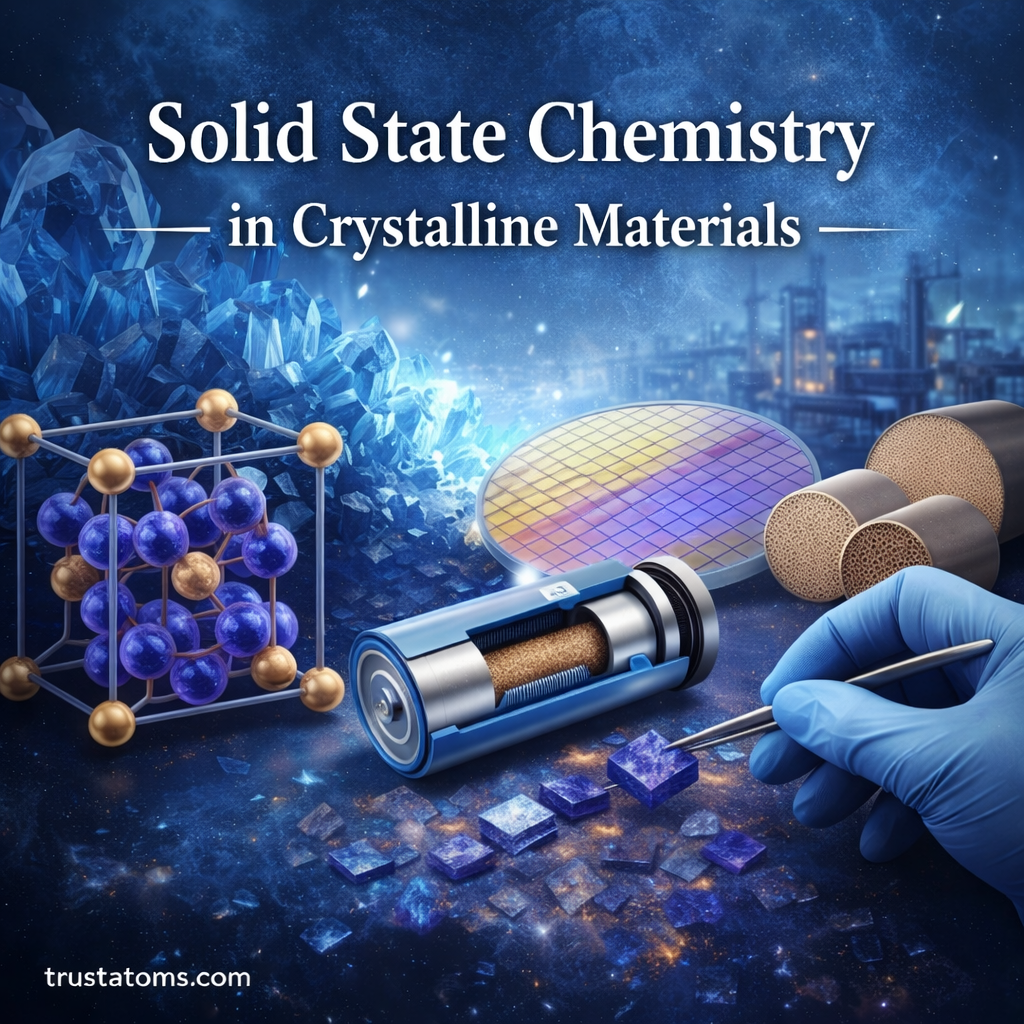
Illustration of crystal lattice structures and materials used in solid state chemistry.
Illustration showing crystal lattice structures and technological materials studied in solid state chemistry. trustatoms.com.

Solid state chemistry focuses on the structure, properties, and behavior of solid materials, particularly those with organized atomic arrangements. One of the most important areas within this field is the study of crystalline materials—solids in which atoms, ions, or molecules are arranged in highly ordered repeating patterns.

Understanding crystalline structures helps scientists explain why materials behave the way they do. From semiconductors used in electronics to minerals found in nature, crystalline materials play a vital role in chemistry, physics, engineering, and materials science.

This article explores the fundamentals of solid state chemistry and how crystalline structures influence the properties of materials.

Continue reading “Solid State Chemistry in Crystalline Materials”

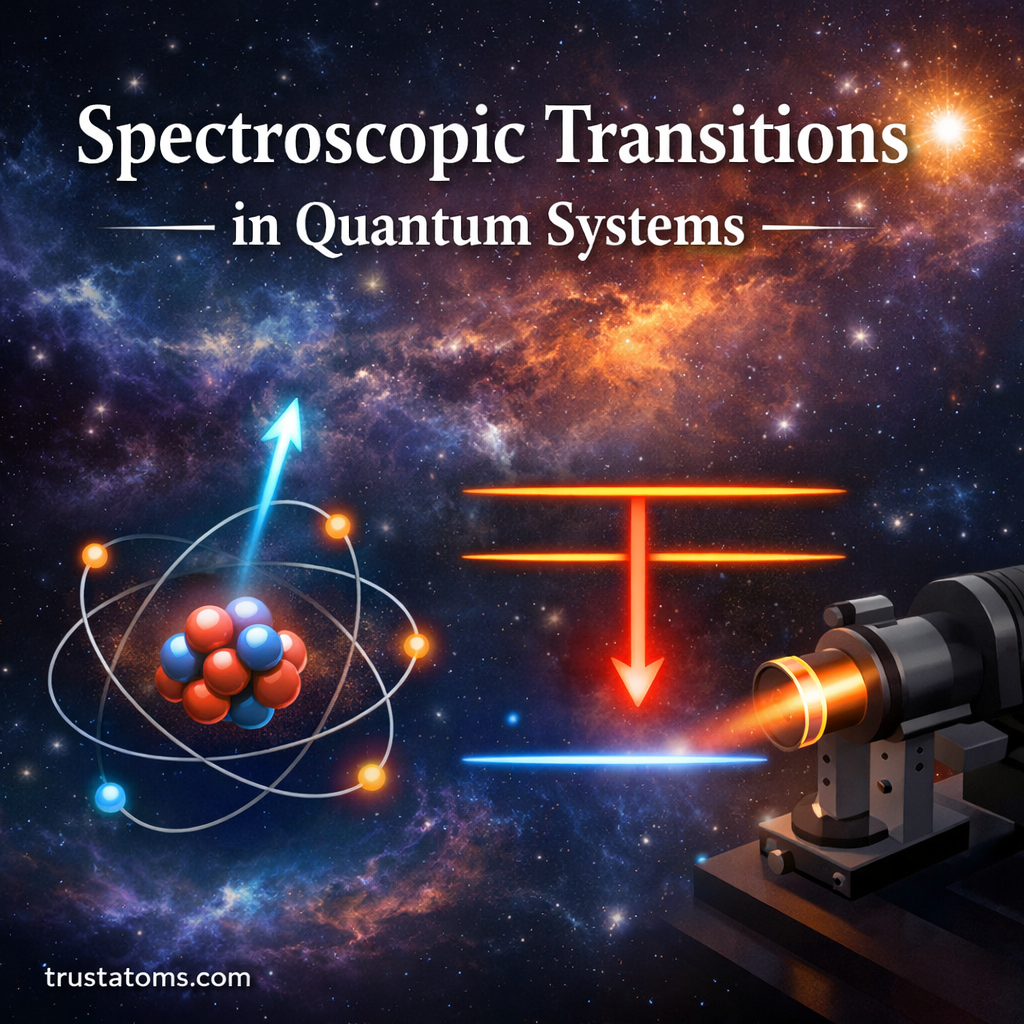
Spectroscopic Transitions in Quantum Systems

Illustration showing atomic energy level transitions and spectroscopy concept in quantum systems.
Illustration representing spectroscopic transitions between quantum energy levels in atoms and molecules. trustatoms.com.

Spectroscopic transitions are fundamental processes that occur when atoms, molecules, or other quantum systems absorb or emit energy. These transitions reveal how electrons move between discrete energy levels, producing the spectral lines scientists observe in spectroscopy experiments.

From identifying elements in distant stars to understanding molecular structures in chemistry labs, spectroscopic transitions provide a powerful window into the quantum world.

In this guide, we’ll explore how spectroscopic transitions work, why they occur, and why they are essential in modern chemistry and physics.

Continue reading “Spectroscopic Transitions in Quantum Systems”

Charge Transfer Complexes in Molecular Chemistry

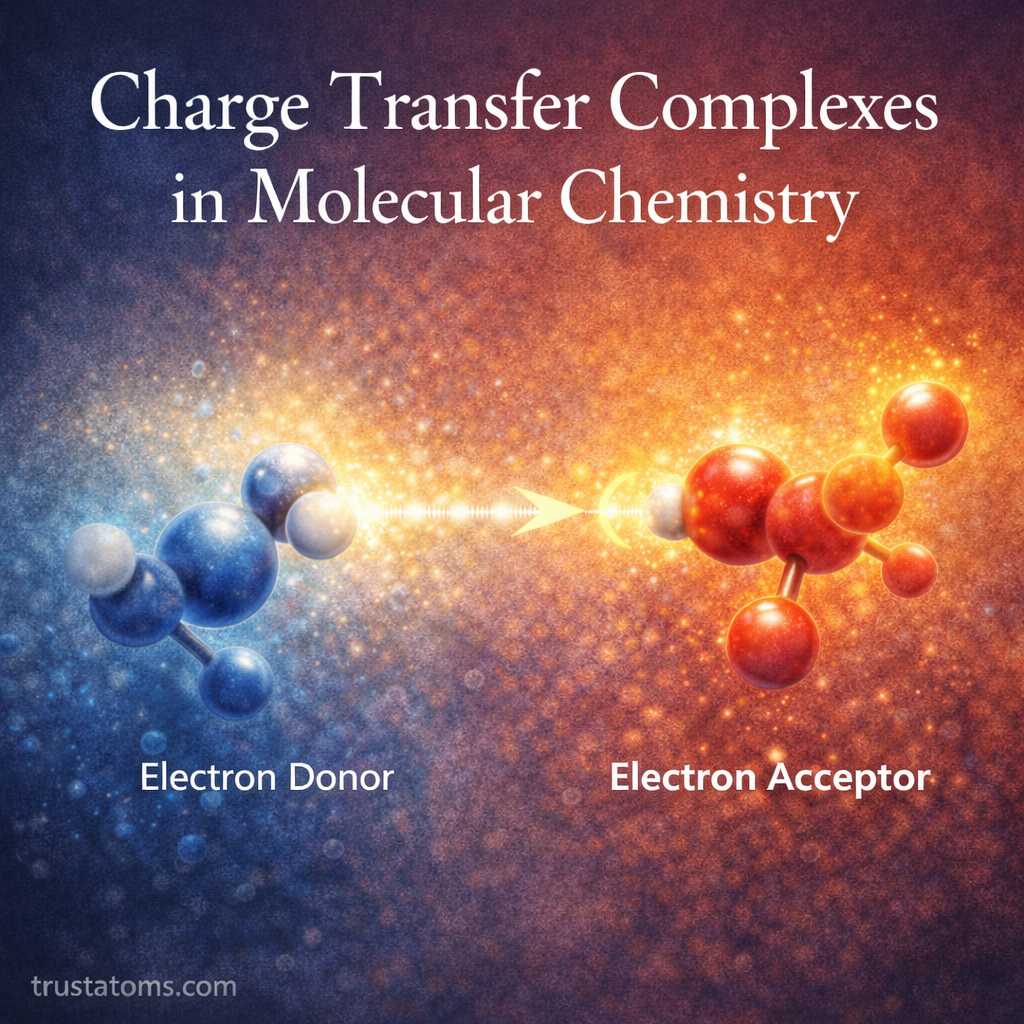
Illustration showing an electron donor transferring partial electron density to an electron acceptor in a charge transfer complex.
Conceptual illustration of a charge transfer complex where an electron donor interacts with an electron acceptor through partial electron transfer. trustatoms.com.

In molecular chemistry, many reactions involve the movement of electrons between molecules. One interesting phenomenon that occurs during these interactions is the formation of charge transfer complexes. These complexes arise when one molecule donates a small amount of electron density to another molecule without forming a fully stable chemical bond.

Charge transfer complexes play an important role in fields such as organic chemistry, materials science, spectroscopy, and molecular electronics. They help explain how molecules interact, how certain reactions occur, and why some compounds exhibit unusual optical or electrical properties.

Understanding charge transfer interactions allows chemists to predict molecular behavior and design new functional materials.

Continue reading “Charge Transfer Complexes in Molecular Chemistry”

Electrode Kinetics in Electrochemical Systems

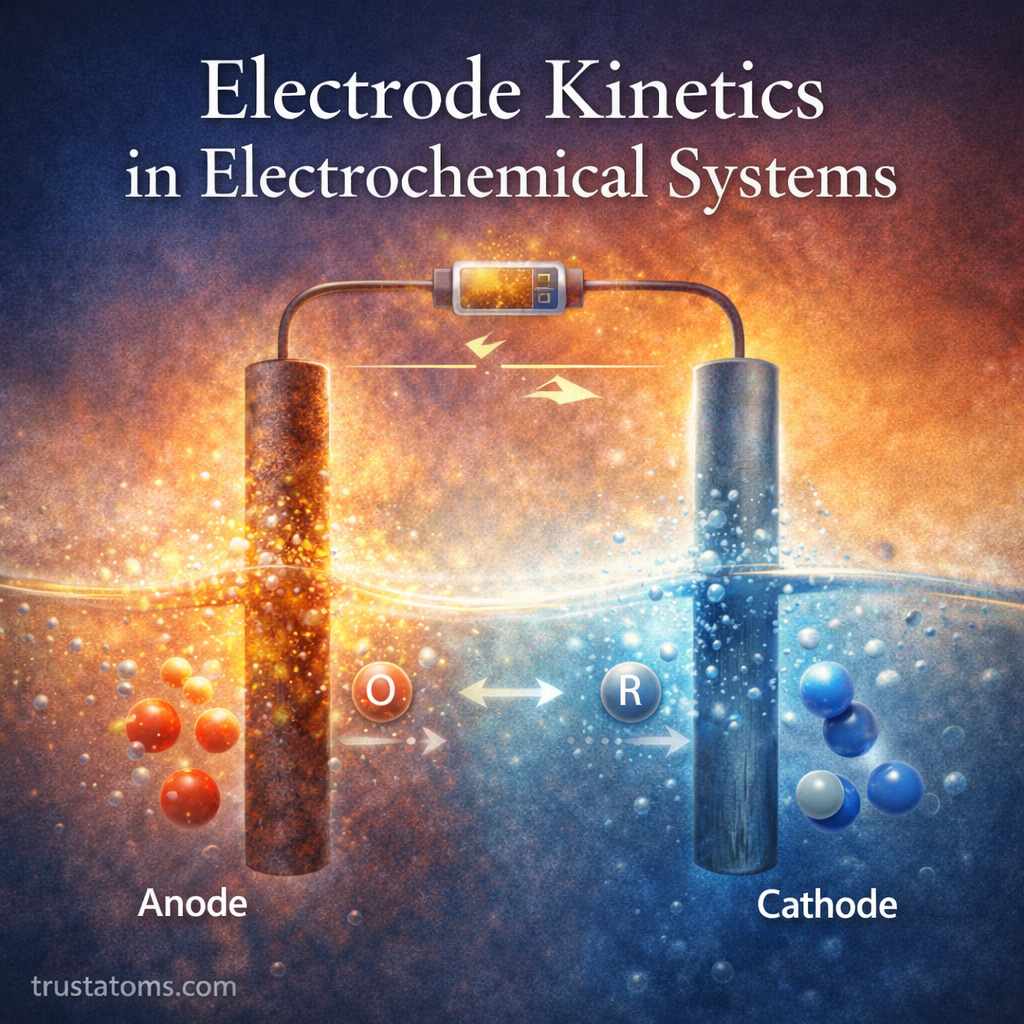
Illustration of electrode kinetics in an electrochemical system showing electron transfer between anode and cathode in an electrolyte solution.
Conceptual illustration of electrode kinetics showing electron transfer between anode and cathode within an electrochemical system. trustatoms.com.

Electrochemical systems play a critical role in modern technology, powering devices such as batteries, fuel cells, corrosion protection systems, and electrolysis equipment. At the center of these processes are electrodes, where chemical reactions involving electron transfer occur.

Electrode kinetics focuses on the rate at which electrochemical reactions occur at the electrode surface. By studying these reaction rates, scientists and engineers can improve energy storage devices, optimize industrial electrochemical processes, and better understand corrosion and material degradation.

Understanding electrode kinetics is essential for designing efficient electrochemical systems and predicting how they behave under different conditions.

Continue reading “Electrode Kinetics in Electrochemical Systems”

Transition State Theory in Reaction Modeling

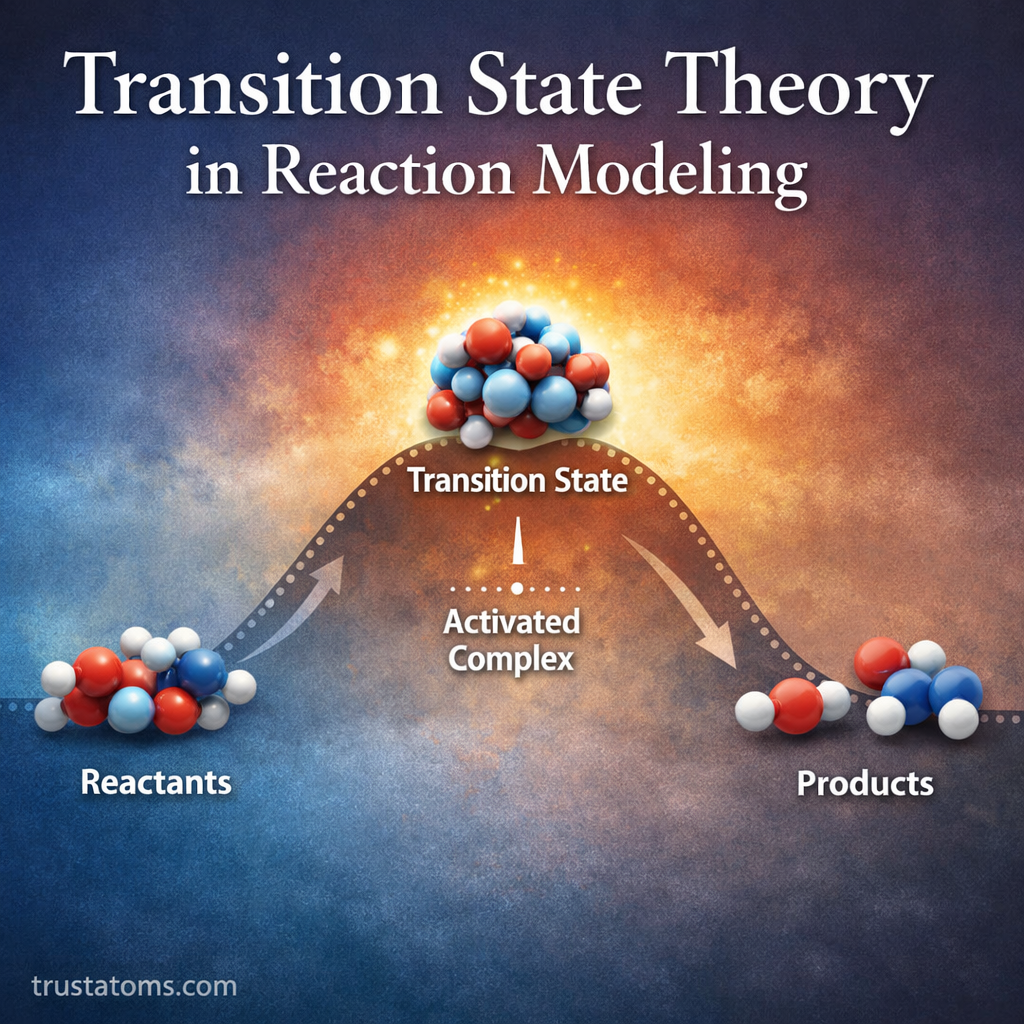
Simple diagram illustration showing transition state theory in reaction modeling with reactants moving through a high-energy transition state to form products.
Conceptual illustration of transition state theory showing reactants passing through a high-energy transition state during a chemical reaction. trustatoms.com.

Chemical reactions are rarely instantaneous. Instead, they pass through a series of energetic changes as reactants transform into products. Understanding this process is essential for predicting how fast reactions occur and why certain reactions proceed more easily than others.

Transition State Theory (TST) provides a framework for modeling these processes. Developed in the 1930s, it helps chemists estimate reaction rates by examining the short-lived, high-energy configuration known as the transition state. This theory plays a key role in fields such as chemical kinetics, catalysis, atmospheric chemistry, and enzyme reactions.

Continue reading “Transition State Theory in Reaction Modeling”

Reaction Coordinate Diagrams in Chemical Kinetics

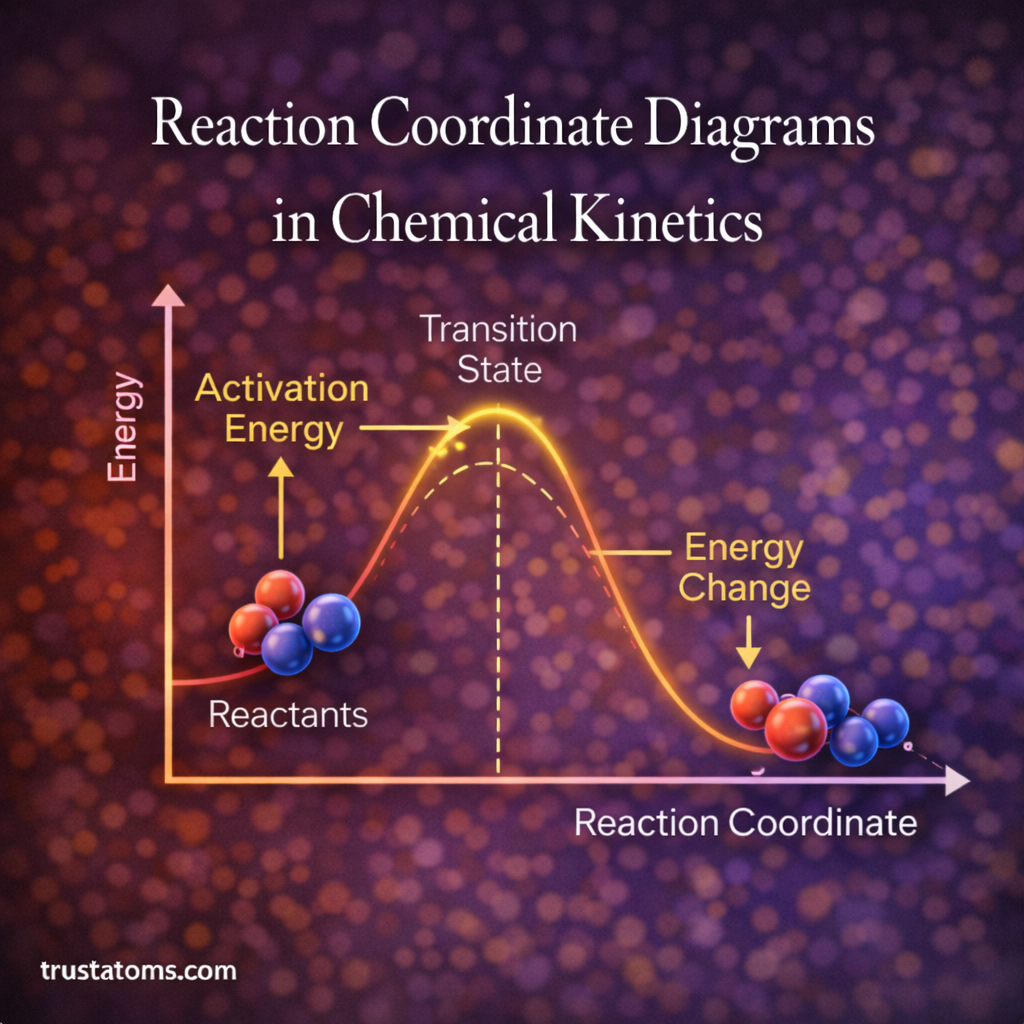
Illustration showing a simple reaction coordinate energy curve with reactants, transition state, and products representing chemical kinetics. trustatoms.com.
Illustration showing a reaction coordinate energy profile used to explain activation energy and reaction pathways in chemical kinetics. trustatoms.com.

Reaction coordinate diagrams are visual tools used in chemical kinetics to illustrate how energy changes during a chemical reaction. These diagrams help scientists understand the progress of a reaction, including the energy required to initiate it and the formation of intermediate species along the pathway.

By mapping the energy of reactants, transition states, and products along a reaction pathway, reaction coordinate diagrams provide valuable insight into reaction mechanisms, activation energy, and catalytic effects. They are widely used in chemistry education, research, and computational modeling.

Continue reading “Reaction Coordinate Diagrams in Chemical Kinetics”

Surface Energy in Catalytic Interfaces

Illustration showing molecules adsorbing onto a catalyst surface representing surface energy effects in catalytic interfaces. trustatoms.com.
Illustration representing molecular adsorption and surface interactions at catalytic interfaces in heterogeneous catalysis. trustatoms.com.

Surface energy plays a critical role in catalytic processes. In many chemical reactions, especially those occurring in heterogeneous catalysis, reactions take place at the interface between a catalyst surface and reacting molecules. The energy associated with these surfaces strongly influences how molecules adsorb, react, and detach.

Understanding surface energy helps chemists design catalysts that are more efficient, selective, and stable. From industrial chemical production to environmental applications and energy technologies, surface energy is a key factor in catalytic performance.

Continue reading “Surface Energy in Catalytic Interfaces”

Biophysical Chemistry in Molecular Interaction

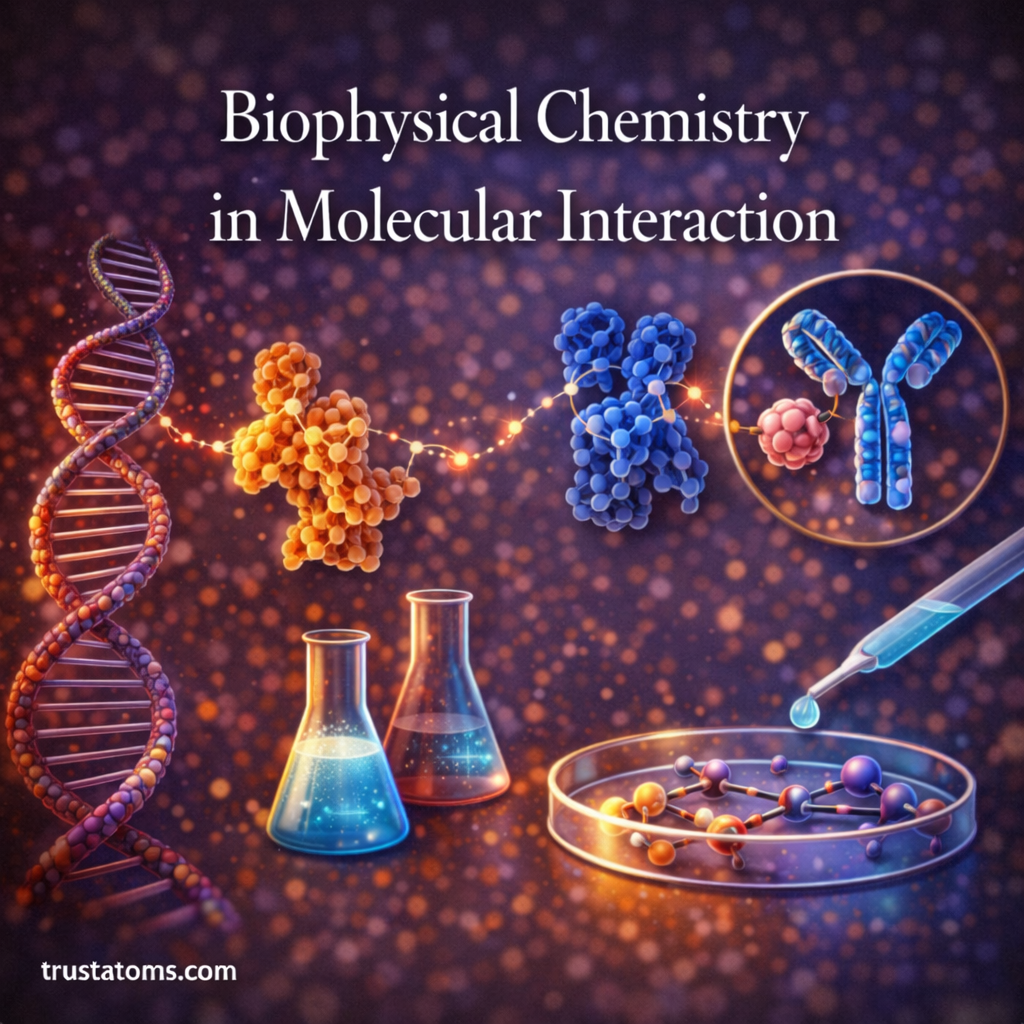
Illustration showing DNA, proteins, and antibody–antigen binding representing biophysical chemistry and molecular interactions in biological systems. trustatoms.com.
Illustration representing molecular interactions between DNA, proteins, and biological molecules studied in biophysical chemistry. trustatoms.com.

Biophysical chemistry explores how physical principles such as thermodynamics, kinetics, and molecular structure influence chemical behavior in biological systems. One of its central focuses is molecular interaction—how molecules recognize, bind, and influence each other.

These interactions are essential for life. Processes such as enzyme activity, DNA replication, protein folding, and cellular signaling all rely on highly specific molecular interactions. By studying these interactions, scientists gain insight into biological mechanisms and develop technologies used in medicine, biotechnology, and molecular engineering.

Continue reading “Biophysical Chemistry in Molecular Interaction”

Organocatalysis in Modern Synthesis

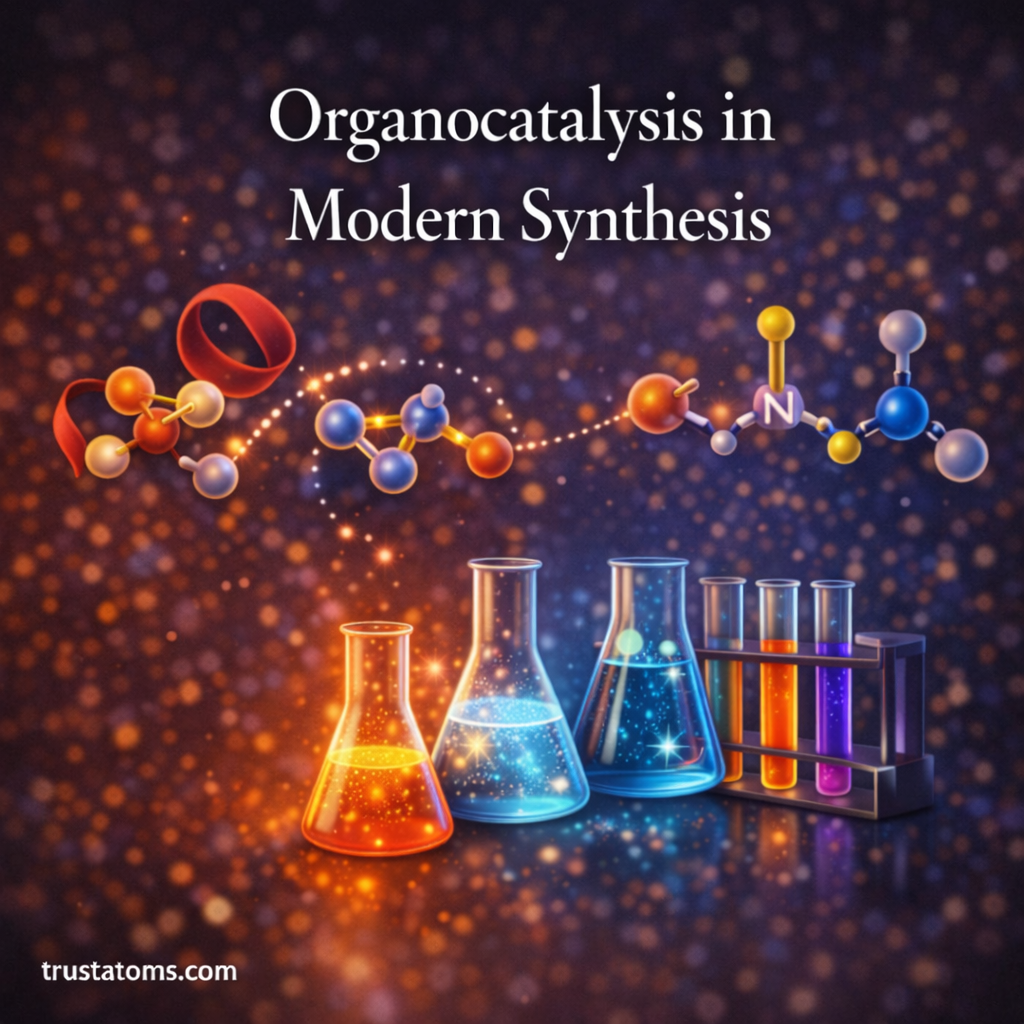
Illustration showing organic molecule catalysts and laboratory glassware representing organocatalysis in modern chemical synthesis. trustatoms.com.
Illustration representing organic molecule catalysts used in modern synthetic chemistry reactions. trustatoms.com.

Organocatalysis has become an important tool in modern chemical synthesis. Unlike traditional catalysis that relies on metals or enzymes, organocatalysis uses small organic molecules to accelerate chemical reactions. These catalysts often contain elements such as carbon, hydrogen, nitrogen, oxygen, sulfur, or phosphorus.

Because organocatalysts are typically stable, inexpensive, and environmentally friendly, they have gained significant attention in organic chemistry. Today, organocatalysis is widely used in pharmaceutical synthesis, materials science, and green chemistry applications.

Continue reading “Organocatalysis in Modern Synthesis”