Earth’s Internal Heat and Energy Sources

Earth is not a cold, inactive planet. Beneath the surface lies a vast reservoir of heat that drives many of the geological processes shaping our world. From volcanic eruptions to plate tectonics, this internal energy plays a crucial role in how Earth evolves over time.

Understanding where this heat comes from—and how it moves—helps explain everything from mountain formation to earthquakes and even the structure of Earth’s layers.

Continue reading “Earth’s Internal Heat and Energy Sources”
Radiometric Dating in Geology

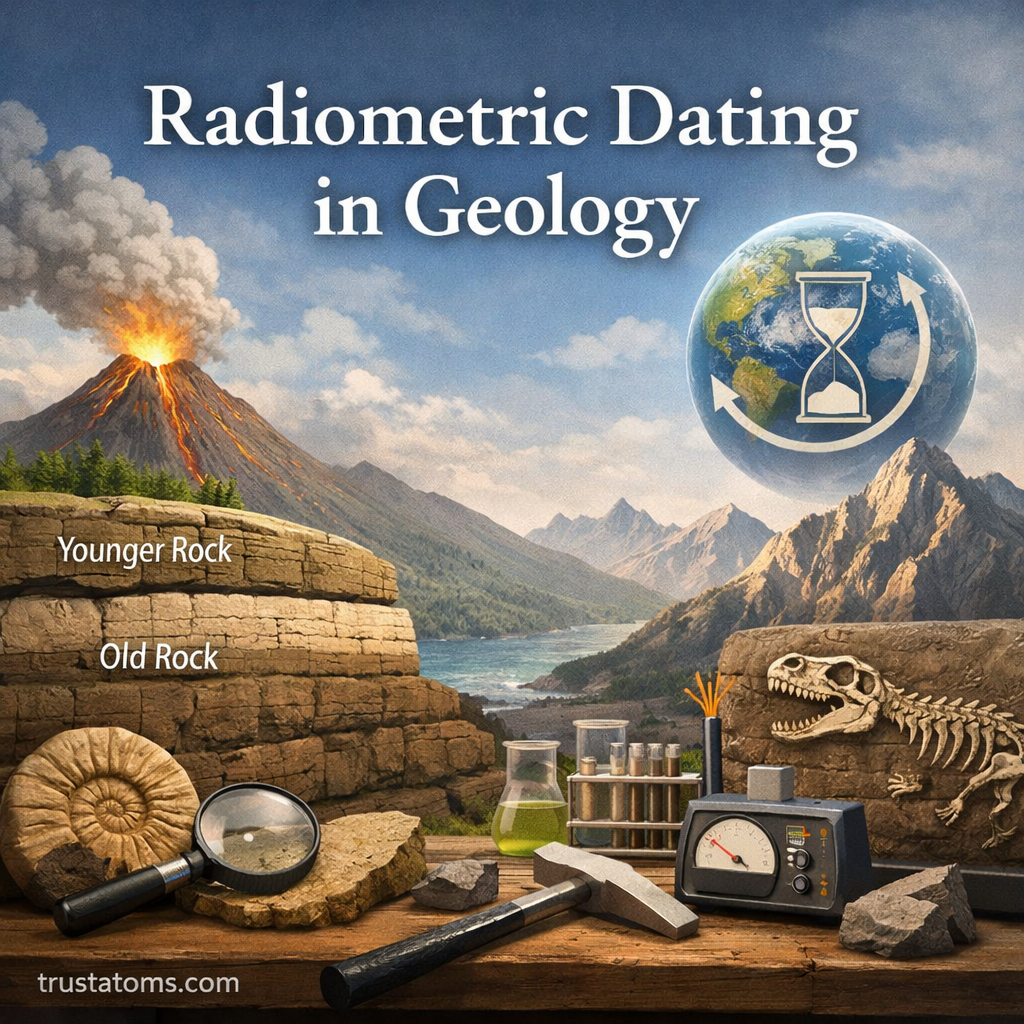
Illustration showing radiometric dating in geology with rock layers, volcanic activity, fossils, and scientific tools.
Illustration of radiometric dating in geology showing rock layers, fossils, and dating processes. trustatoms.com

Radiometric dating is one of the most important tools geologists use to understand Earth’s history. It allows scientists to estimate the age of rocks, minerals, and geological events by measuring naturally occurring changes in certain elements over time.

Rather than relying on guesswork, this method uses consistent, measurable processes built into the structure of matter itself. As a result, it provides a reliable framework for interpreting the timeline of Earth’s formation, major geological events, and the development of landscapes we see today.

Continue reading “Radiometric Dating in Geology”

Geologic Time Scale and Earth History

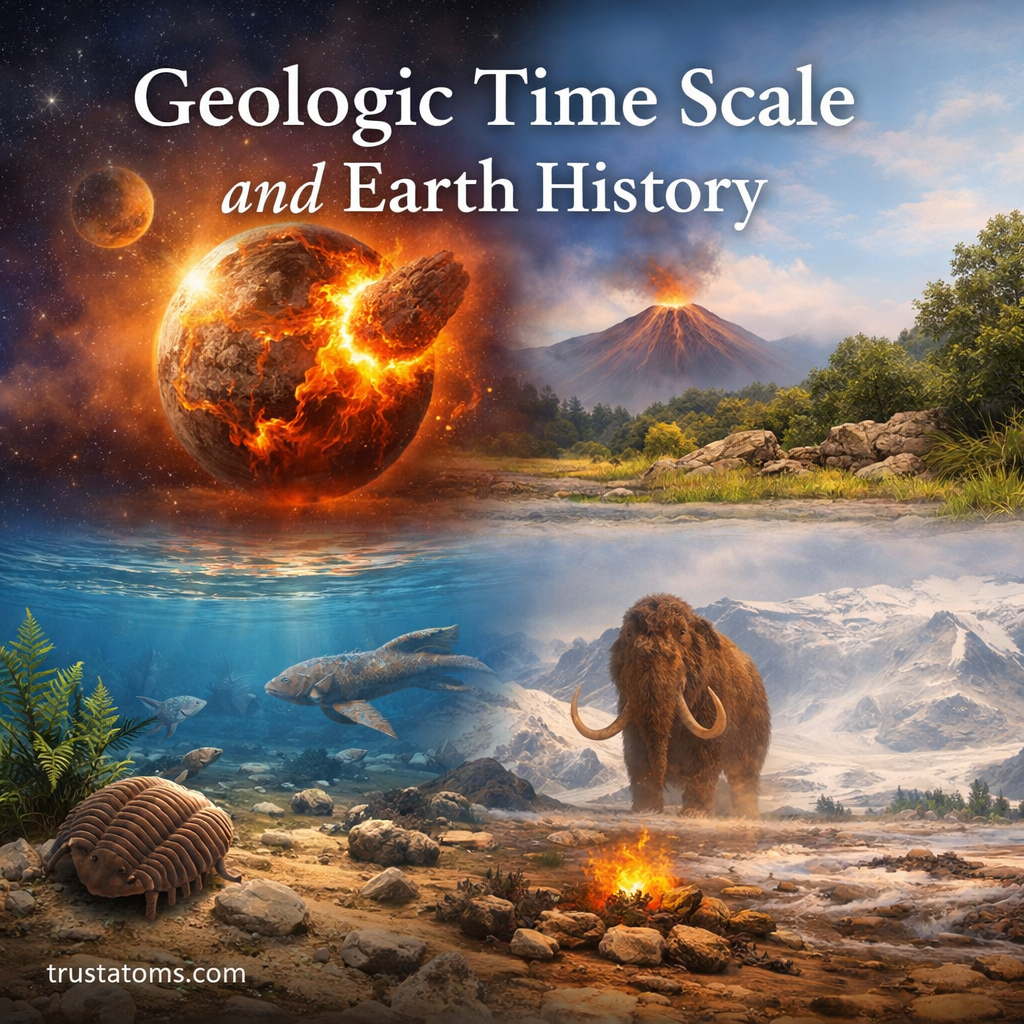
Illustration showing Earth’s geologic time scale with early molten Earth, volcanic landscape, ocean life, and ice age mammoth.
Illustration of Earth’s geologic time scale showing major environmental stages and natural processes. trustatoms.com

The geologic time scale is a system used to organize Earth’s history into structured segments. It helps explain how the planet’s surface, climate, and natural features have changed over time based on evidence found in rock layers, landforms, and fossil records.

While interpretations of Earth’s history can vary, the geologic time scale remains a useful framework for studying the order of events and the processes that shaped the world we see today.

Continue reading “Geologic Time Scale and Earth History”

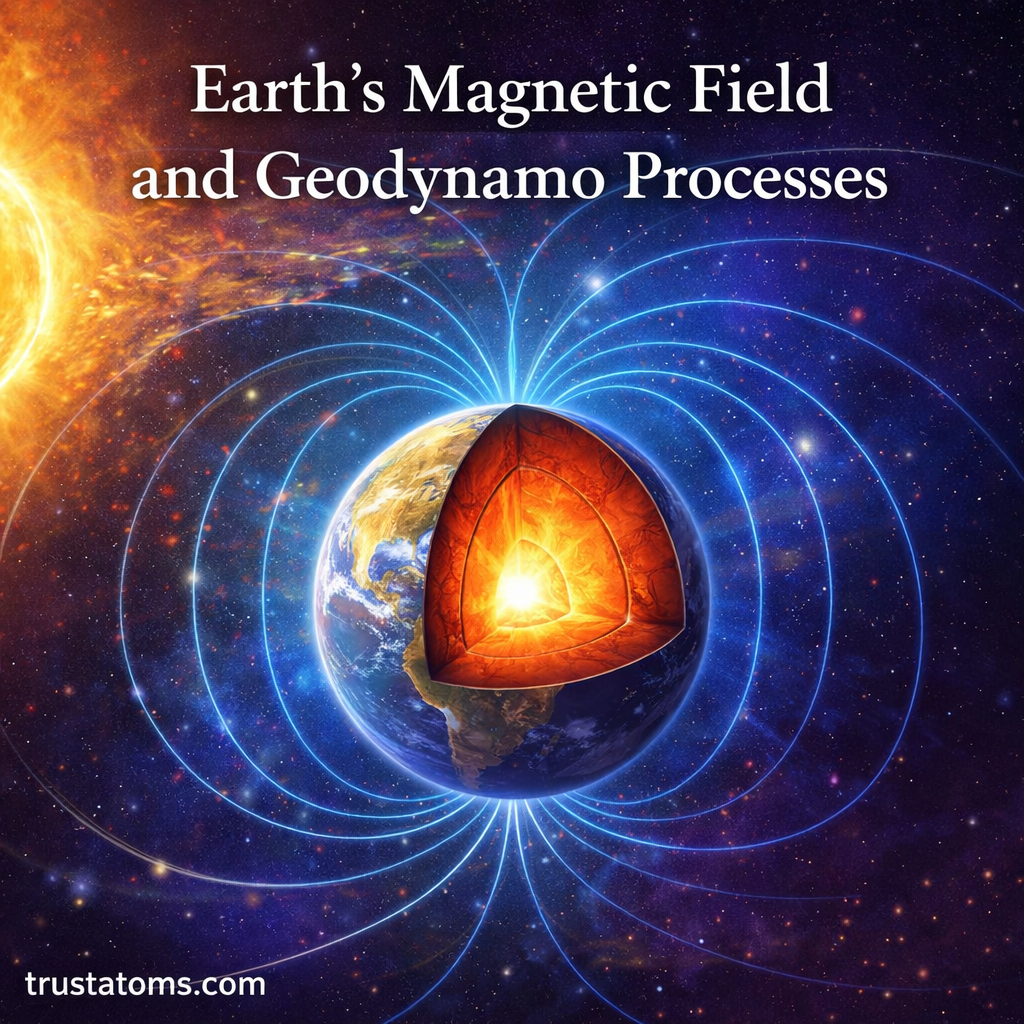
Earth’s Magnetic Field and Geodynamo Processes

Illustration showing Earth’s magnetic field lines around a cutaway view of the core and geodynamo process.
Illustration of Earth’s magnetic field and geodynamo process inside the core. trustatoms.com.

Earth’s magnetic field is an invisible force that surrounds the planet, protecting life from harmful solar radiation and helping guide navigation systems. This magnetic field is generated deep within Earth through a process known as the geodynamo.

Understanding how the magnetic field works—and how it is created—reveals important insights about Earth’s interior and its interaction with space.

Continue reading “Earth’s Magnetic Field and Geodynamo Processes”

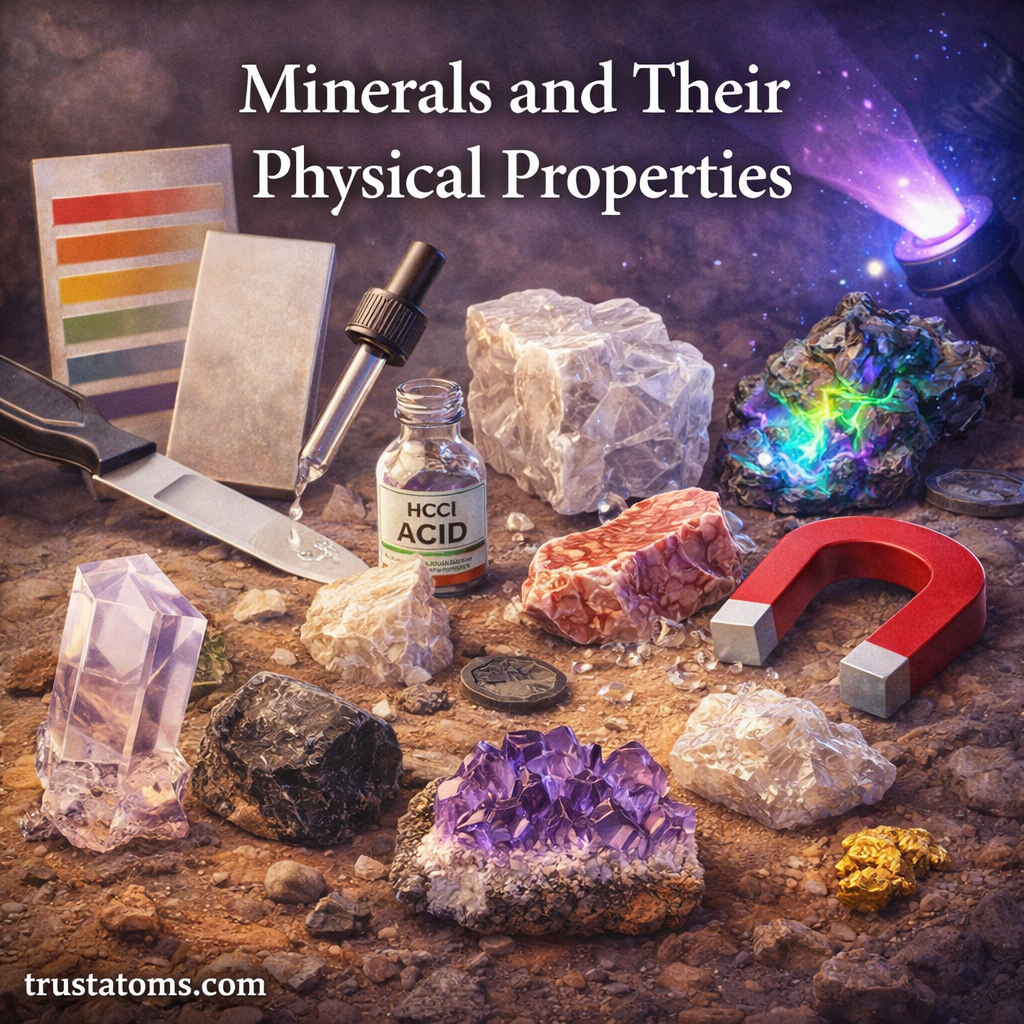
Minerals and Their Physical Properties

Illustration showing different minerals and tools used to test physical properties like hardness, streak, and magnetism.
Illustration of minerals and tools used to identify physical properties such as hardness, luster, and streak. trustatoms.com.

Minerals are the basic building blocks of rocks and play a key role in shaping Earth’s surface. From the quartz in sand to the iron in steel, minerals are everywhere—and understanding their properties helps scientists identify, classify, and use them.

In earth science, minerals are studied based on their physical properties, which can be observed or measured without changing the mineral’s composition.

Continue reading “Minerals and Their Physical Properties”

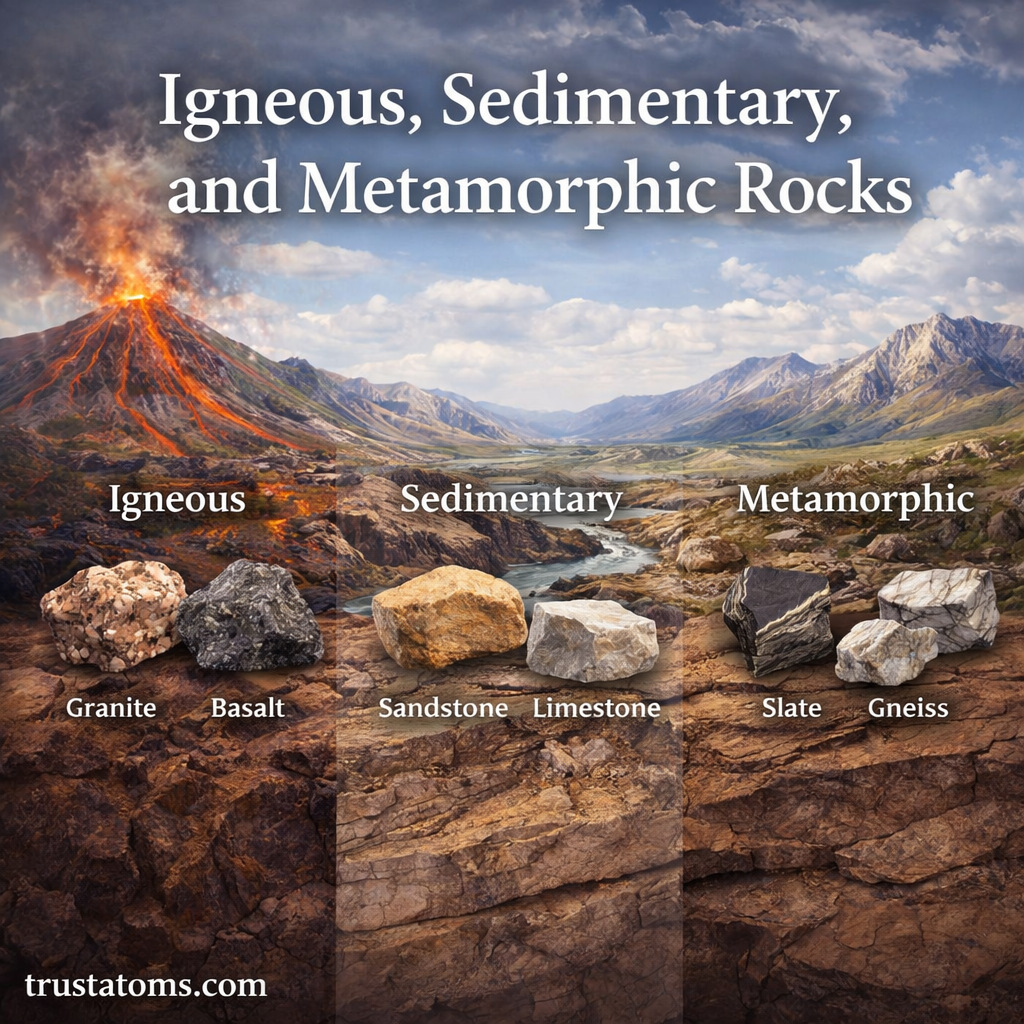
Igneous, Sedimentary, and Metamorphic Rocks

Illustration showing igneous, sedimentary, and metamorphic rocks with examples like granite, sandstone, and gneiss.
Illustration comparing igneous, sedimentary, and metamorphic rocks with common examples. trustatoms.com.

Rocks are the building blocks of Earth’s surface, and they come in three main types: igneous, sedimentary, and metamorphic. Each type forms in a different way and provides important clues about Earth’s history and processes.

Understanding these rock types helps explain how landscapes form, how natural resources develop, and how the planet changes over time.

Continue reading “Igneous, Sedimentary, and Metamorphic Rocks”

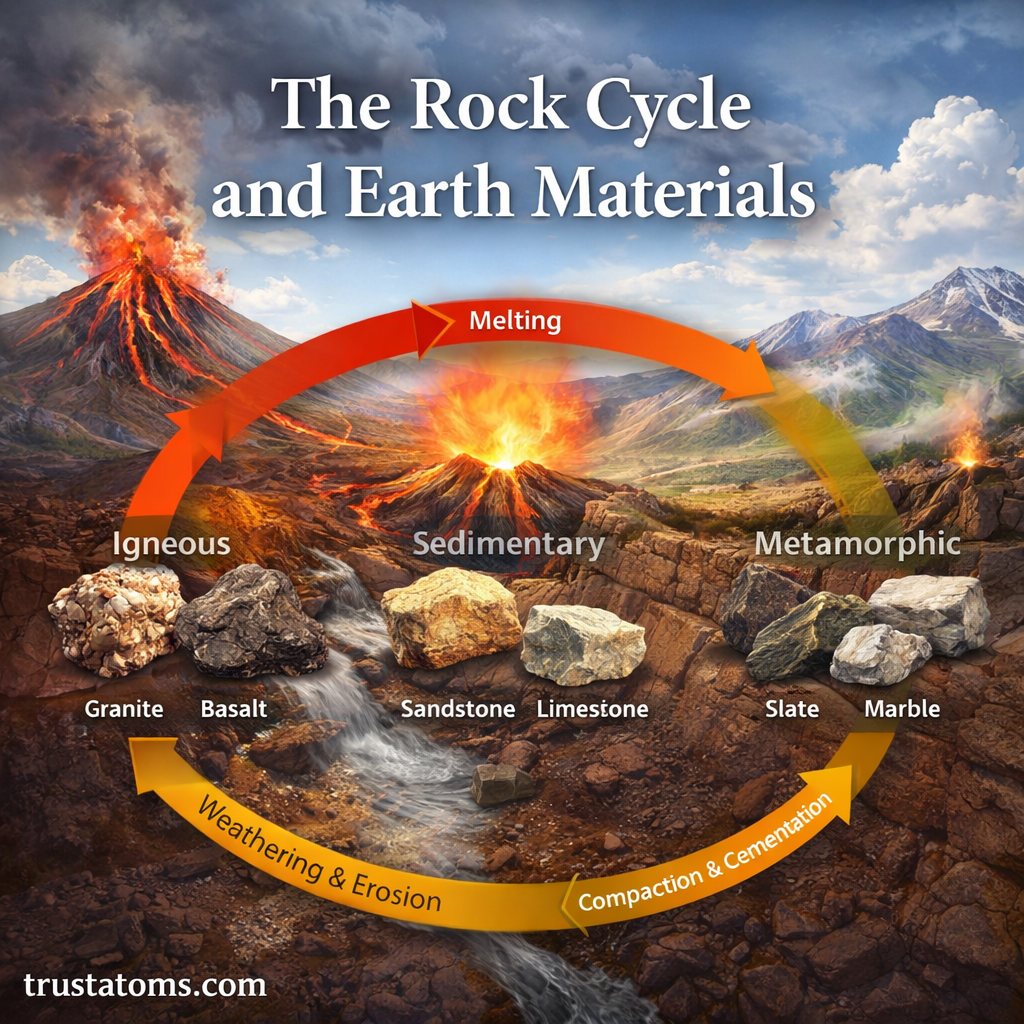
The Rock Cycle and Earth Materials

Rock cycle diagram showing igneous, sedimentary, and metamorphic rocks with processes like melting, weathering, erosion, and compaction and cementation.
Rock cycle illustration showing how Earth materials transform between igneous, sedimentary, and metamorphic rocks. trustatoms.com.

The rock cycle is the continuous process that forms, breaks down, and transforms rocks on Earth. It explains how different types of rocks—igneous, sedimentary, and metamorphic—are created and recycled over time.

This cycle is driven by natural forces such as heat, pressure, weathering, and erosion. Understanding the rock cycle helps explain how Earth’s surface changes and how materials move through different layers of the planet.

Continue reading “The Rock Cycle and Earth Materials”

Layers of the Earth: Crust, Mantle, and Core

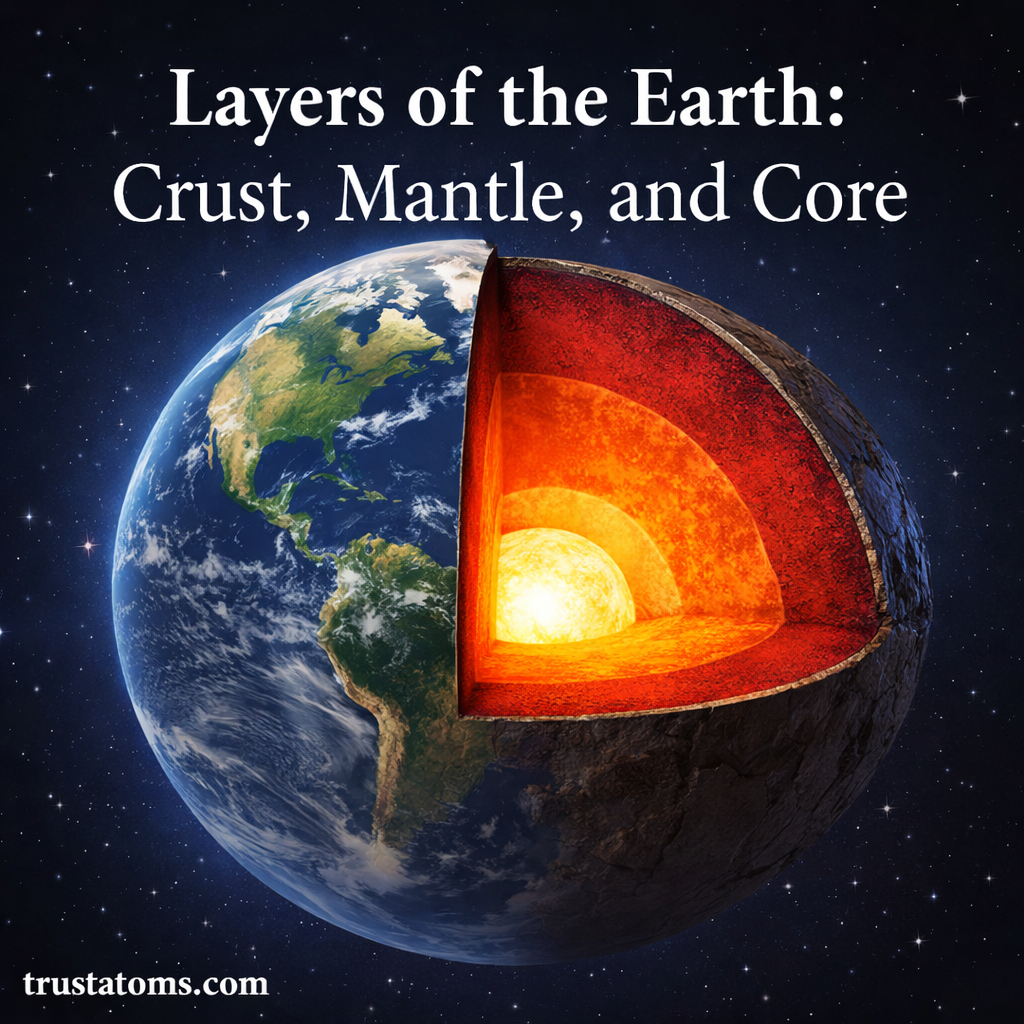
Diagram illustration of Earth showing crust, mantle, and core layers with a cutaway view of the planet.
Cutaway illustration of Earth highlighting the crust, mantle, and core layers. trustatoms.com.

The Earth is made up of several layers, each with its own unique composition, structure, and role in shaping the planet. These layers—known as the crust, mantle, and core—work together to drive processes like earthquakes, volcanic activity, and plate tectonics.

Understanding Earth’s layers helps explain how the planet formed, how it continues to change, and why natural events occur.

Continue reading “Layers of the Earth: Crust, Mantle, and Core”

What Is Earth Science?

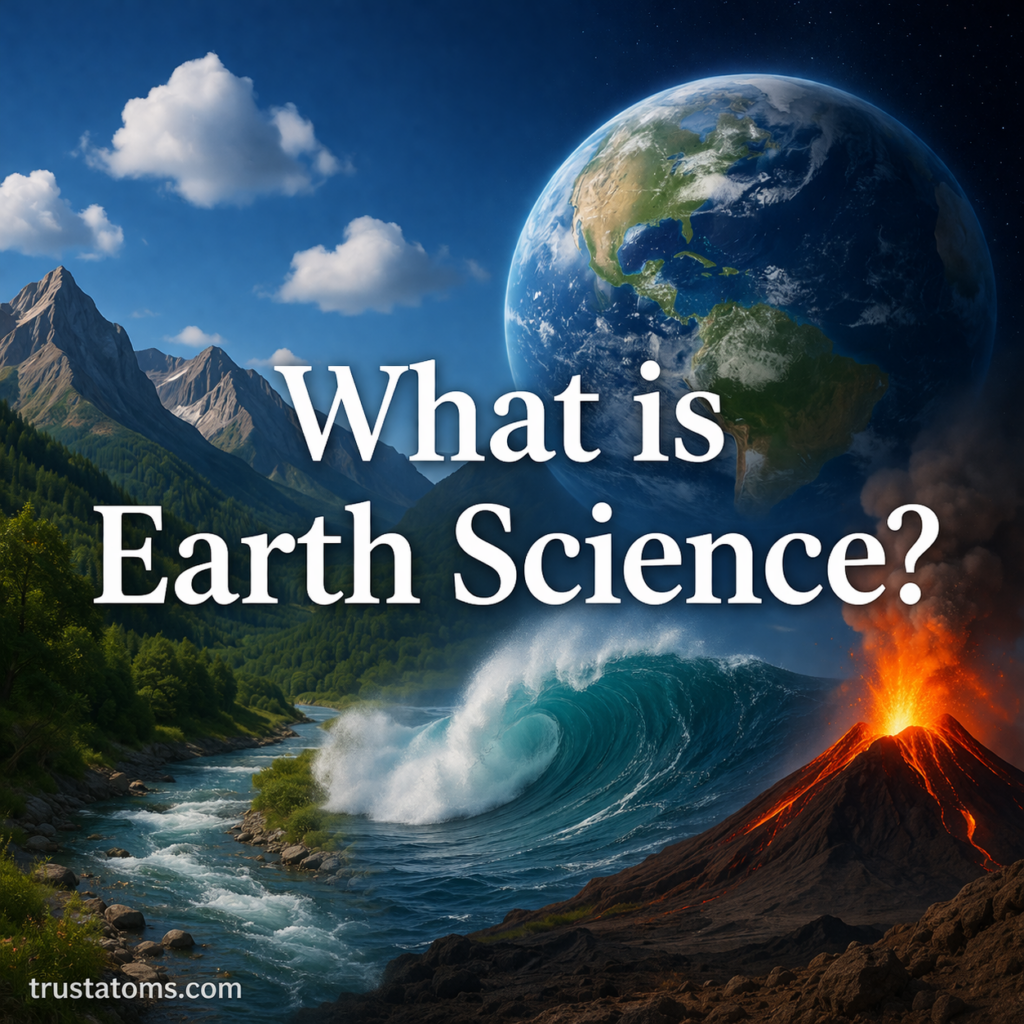
Illustration showing Earth systems including mountains, ocean waves, atmosphere, and volcano with the title What is Earth Science.
Illustration representing Earth science concepts including land, water, atmosphere, and geological activity. trustatoms.com.

Earth science is the study of our planet—its structure, systems, processes, and history. It explores everything from the ground beneath your feet to the atmosphere above, and even extends to how Earth interacts with space.

At its core, earth science helps us understand how Earth works as a dynamic, interconnected system. It explains natural phenomena like earthquakes, weather patterns, ocean currents, and climate change—making it one of the most practical and relevant scientific fields.

Continue reading “What Is Earth Science?”