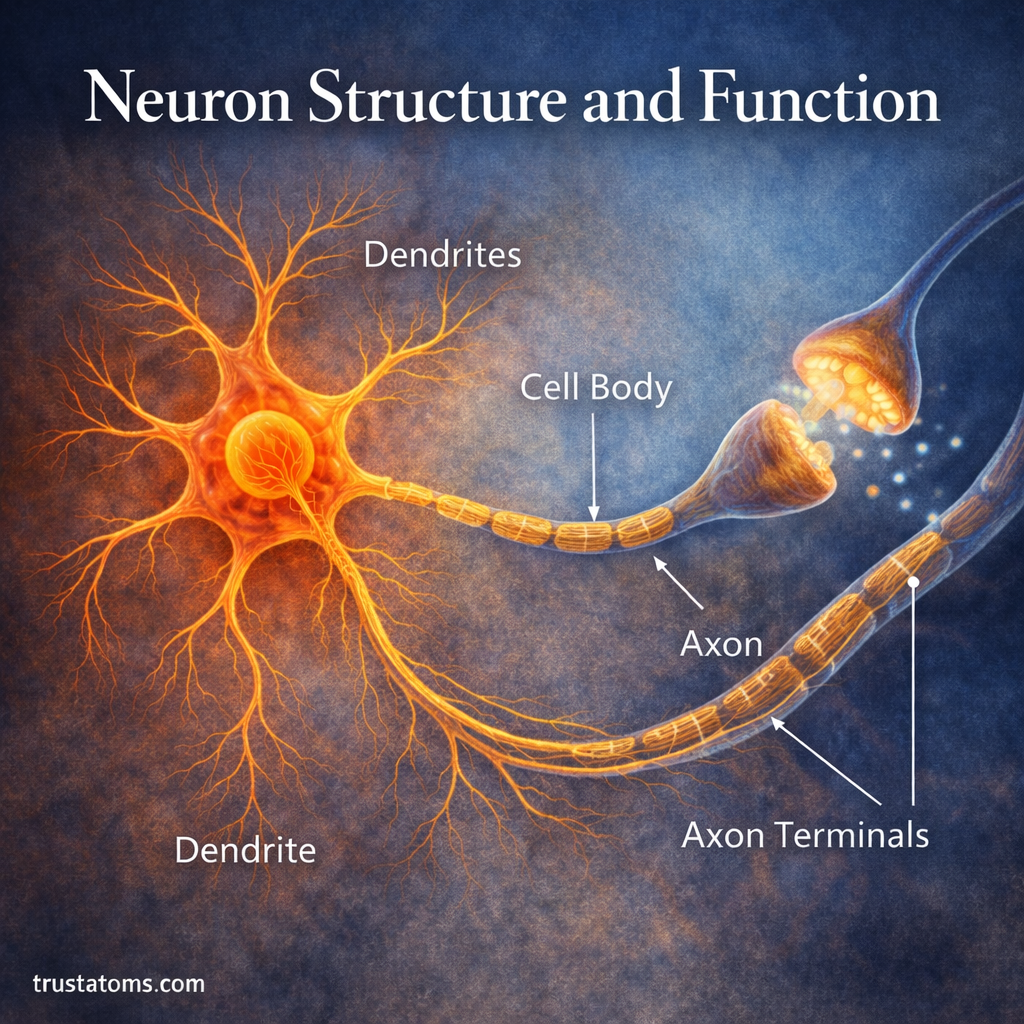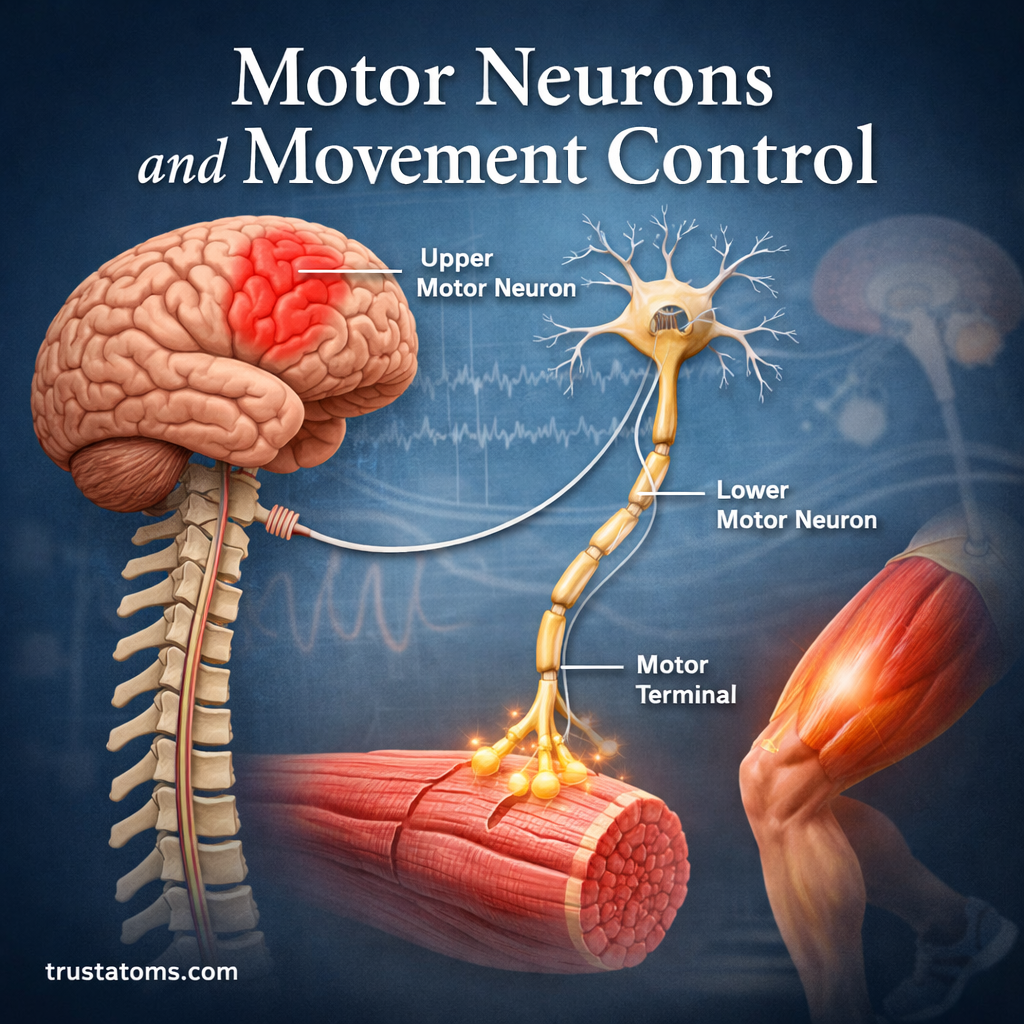
Movement is one of the most essential abilities of the human body. From walking and breathing to writing and speaking, nearly every voluntary action depends on specialized nerve cells called motor neurons. These cells transmit signals from the brain and spinal cord to muscles, allowing them to contract and produce movement.
Motor neurons form a crucial part of the nervous system’s communication network. They convert electrical signals generated in the central nervous system into muscle activity, coordinating everything from simple reflexes to complex athletic movements.
Understanding how motor neurons work helps explain how the body controls movement, maintains posture, and adapts to changing physical demands.
Continue reading “Motor Neurons and Movement Control”