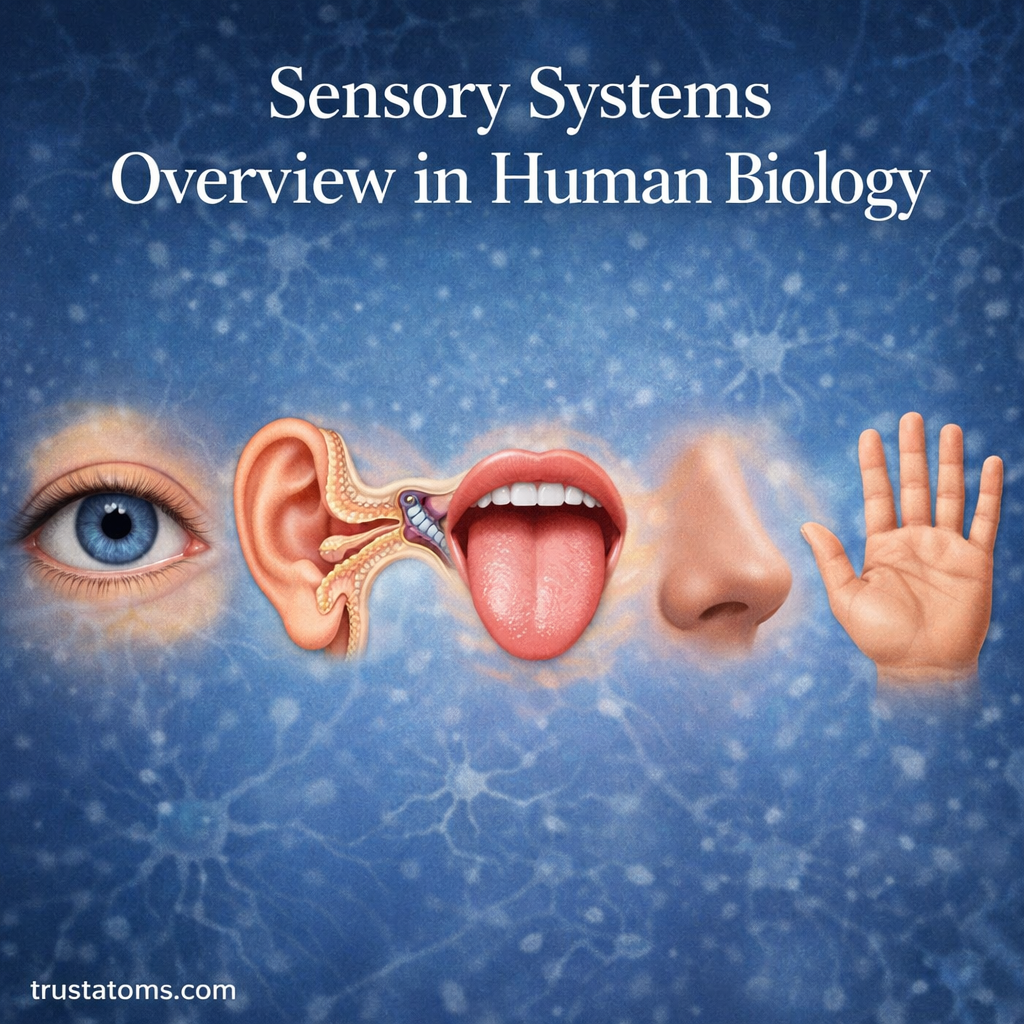
Sensory Systems Overview in Human Biology

Illustration of the five human senses including eye, ear, tongue, nose, and hand representing sensory systems.
Overview of the human sensory systems highlighting the five primary senses and their organs. trustatoms.com.

The human body constantly gathers information from the environment and internal conditions to help you respond, adapt, and survive. This process is made possible by the sensory systems—specialized structures that detect stimuli and send signals to the brain for interpretation.

From seeing light to feeling touch and maintaining balance, sensory systems play a critical role in everyday life.

Continue reading “Sensory Systems Overview in Human Biology”
Thermoregulation Through Skin Blood Flow

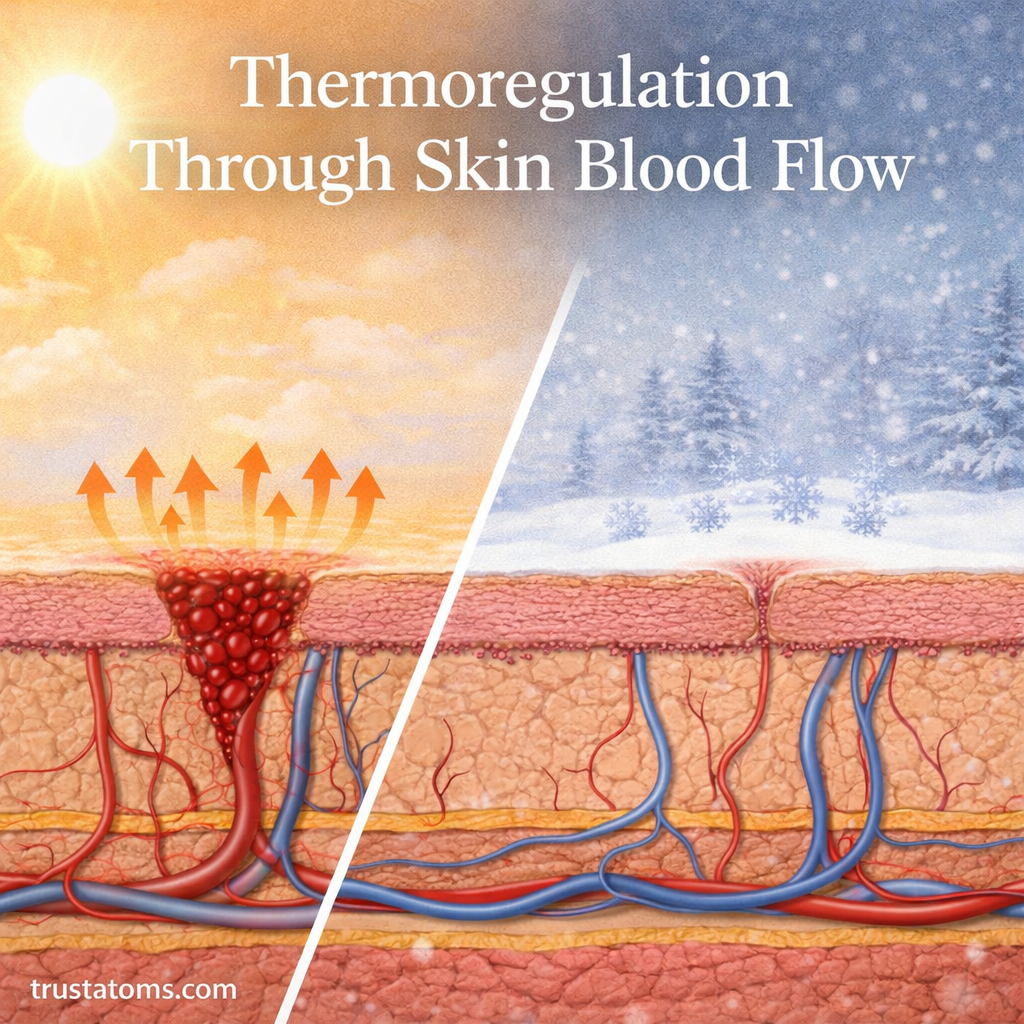
Illustration showing thermoregulation through skin blood flow with vasodilation in heat and vasoconstriction in cold conditions.
How the body regulates temperature through skin blood flow in hot and cold environments. trustatoms.com.

The human body must maintain a stable internal temperature to function properly. One of the most important systems responsible for this balance is thermoregulation—the process of controlling body temperature.

A key player in this system is the skin, specifically how blood flows through it. By adjusting blood flow, the body can release or conserve heat, helping you stay cool in hot conditions and warm in cold environments.

Continue reading “Thermoregulation Through Skin Blood Flow”

Wound Healing Phases in Skin Repair

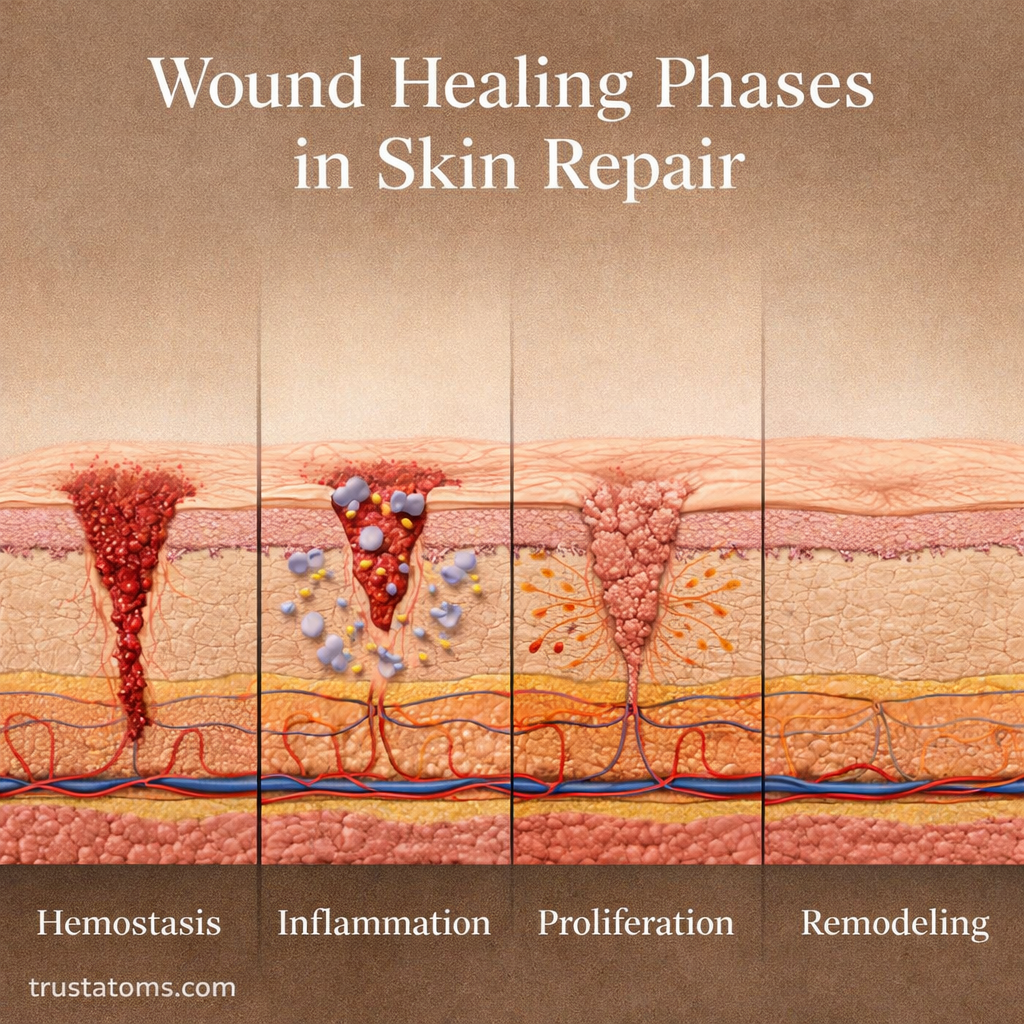
Diagram illustrating the four phases of wound healing: hemostasis, inflammation, proliferation, and remodeling in skin tissue.
The four stages of wound healing showing how the skin repairs itself over time. trustatoms.com.

The human body has an incredible ability to repair itself, and nowhere is this more visible than in the healing of the skin. Whether it’s a small cut, scrape, or deeper injury, the body follows a highly organized process to restore damaged tissue.

Wound healing is not a single event—it occurs in a series of overlapping phases, each with a specific purpose. Understanding these phases helps explain how the skin repairs itself and why proper care is essential for optimal healing.

Continue reading “Wound Healing Phases in Skin Repair”

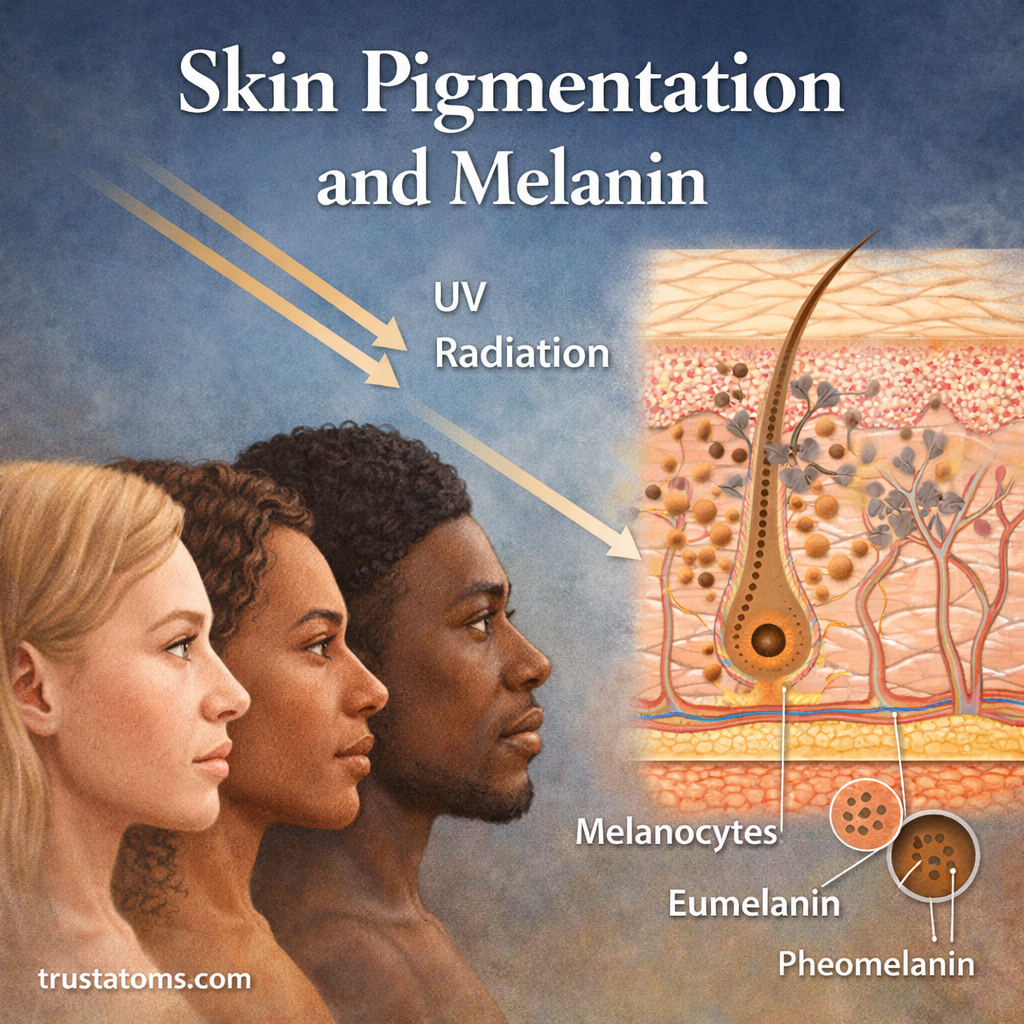
Skin Pigmentation and Melanin

Illustration showing different skin tones alongside a diagram of melanocytes and melanin production in human skin.
Skin pigmentation explained through melanin production and variation in human skin tones. trustatoms.com.

Skin color is one of the most visible human traits, yet it is controlled by a complex biological process involving specialized cells and pigments. At the center of this process is melanin, a natural substance that determines the color of your skin, hair, and eyes while also protecting your body from environmental damage.

In this guide, we’ll explore how skin pigmentation works, the role of melanin, and why variations in skin color occur across individuals and populations.

Continue reading “Skin Pigmentation and Melanin”

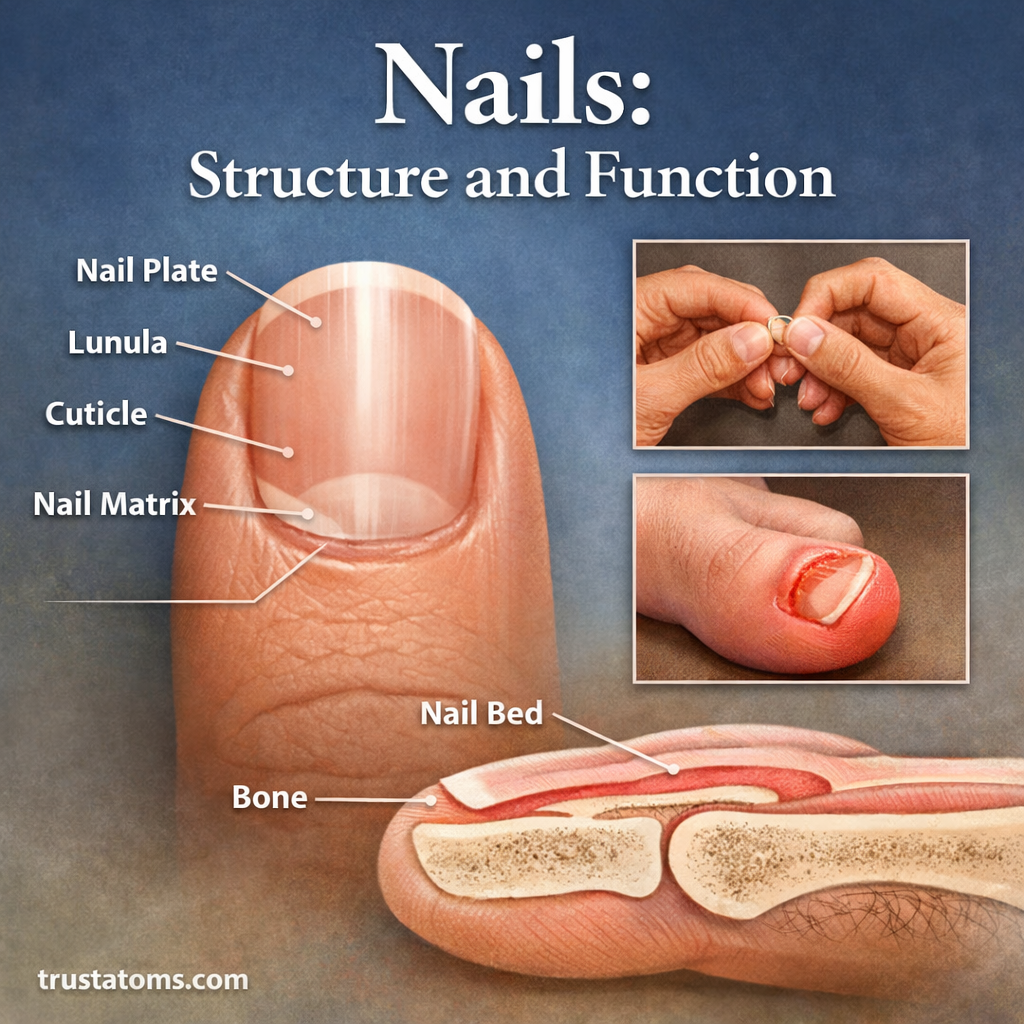
Nails: Structure and Function

Illustration showing nail structure including nail plate, lunula, cuticle, nail matrix, and nail bed.
Anatomy of the human nail highlighting structure and function. trustatoms.com.

Human nails may seem simple, but they are highly specialized structures that protect your fingers and toes while supporting everyday tasks. From gripping objects to detecting fine touch, nails play a bigger role in daily life than most people realize.

In this guide, we’ll break down the anatomy of nails, how they grow, and why they matter for both function and health.

Continue reading “Nails: Structure and Function”

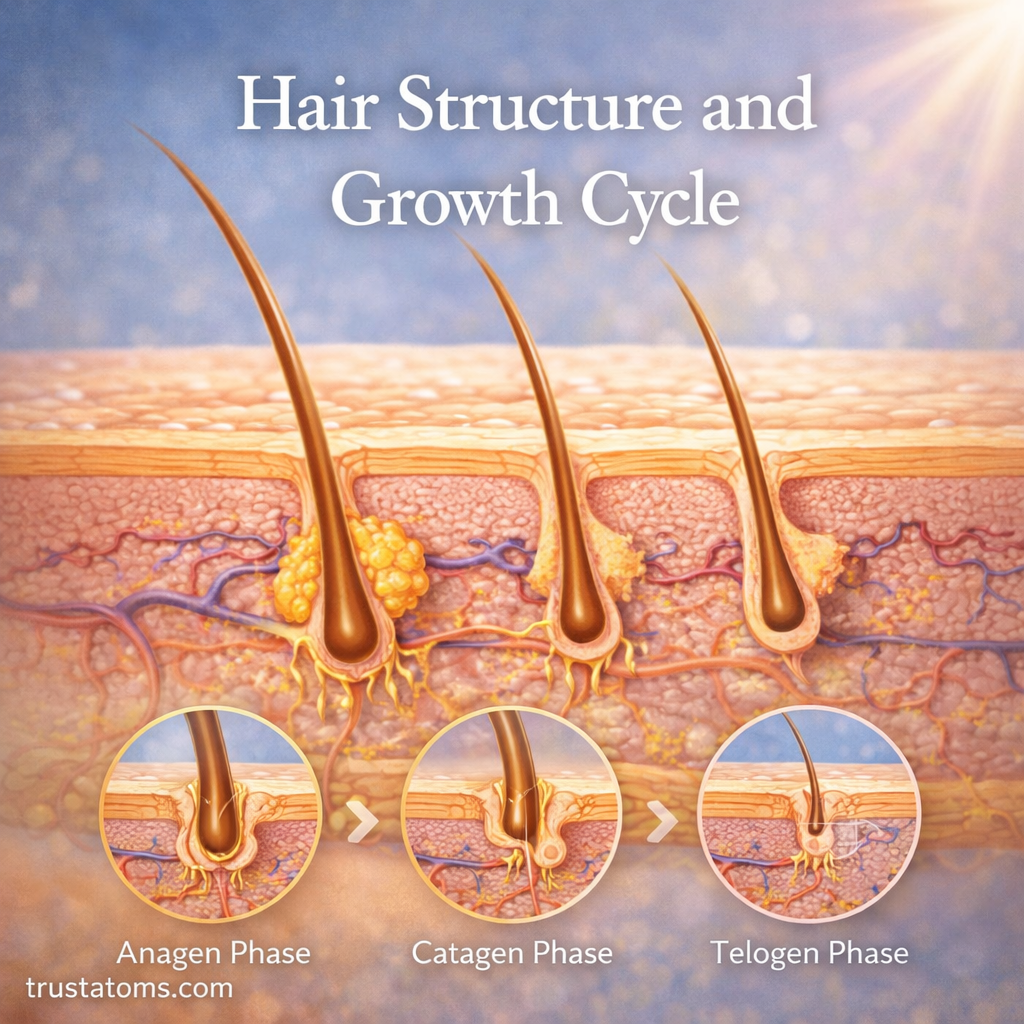
Hair Structure and Growth Cycle

Illustration of hair follicles showing hair structure and the three phases of the hair growth cycle: anagen, catagen, and telogen.
Diagram of hair structure and growth cycle highlighting anagen, catagen, and telogen phases. trustatoms.com.

Hair is a defining feature of the human body, serving both functional and aesthetic purposes. Beyond appearance, hair plays roles in protection, temperature regulation, and sensory perception.

Understanding hair structure and the hair growth cycle helps explain why hair grows, sheds, and changes over time.

Continue reading “Hair Structure and Growth Cycle”

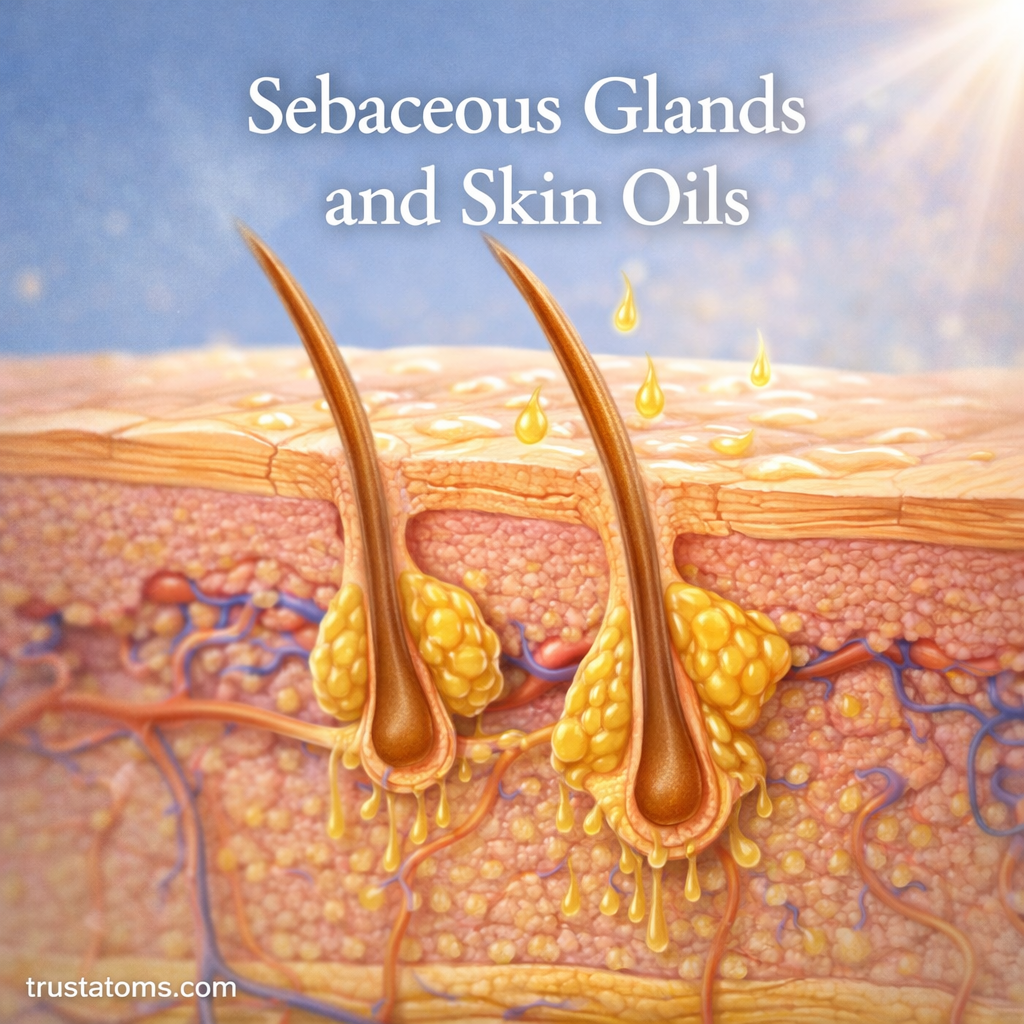
Sebaceous Glands and Skin Oils

Illustration of sebaceous glands connected to hair follicles releasing sebum onto the skin surface.
Illustration showing sebaceous glands producing skin oils (sebum) to protect and moisturize the skin. trustatoms.com.

Sebaceous glands are small but essential components of the skin that play a major role in maintaining moisture, protection, and overall skin health. These glands produce sebum, a natural oil that helps keep the skin and hair hydrated while forming part of the skin’s protective barrier.

Understanding how sebaceous glands function provides insight into common skin conditions like acne, dryness, and oil imbalance.

Continue reading “Sebaceous Glands and Skin Oils”

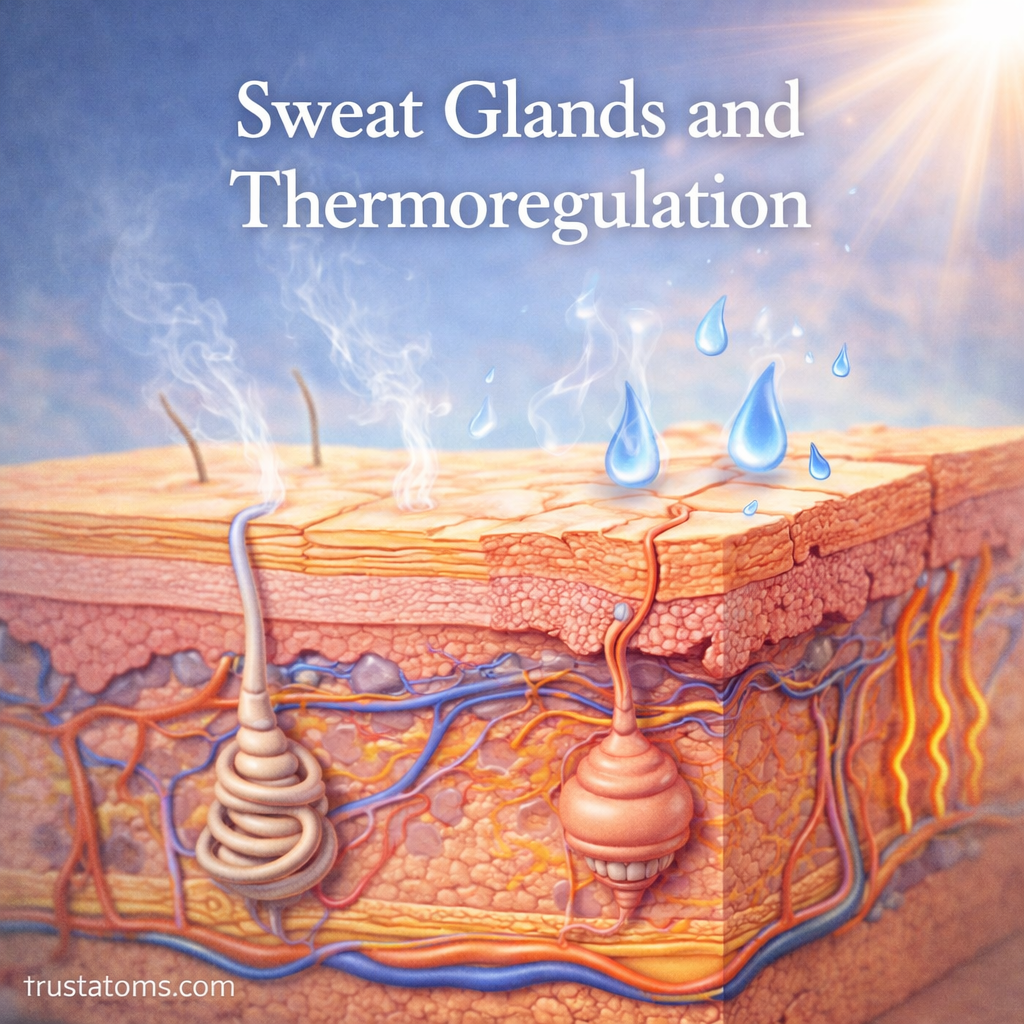
Sweat Glands and Thermoregulation

Illustration of sweat glands in the skin showing sweat release and heat regulation through evaporation and blood vessels.
Illustration showing how sweat glands help regulate body temperature through evaporation. trustatoms.com.

The human body is designed to maintain a stable internal temperature, even when external conditions change. One of the most important systems responsible for this balance is thermoregulation—and sweat glands play a central role in this process.

By producing sweat and working with the circulatory system, the body can cool itself efficiently and prevent overheating.

Continue reading “Sweat Glands and Thermoregulation”

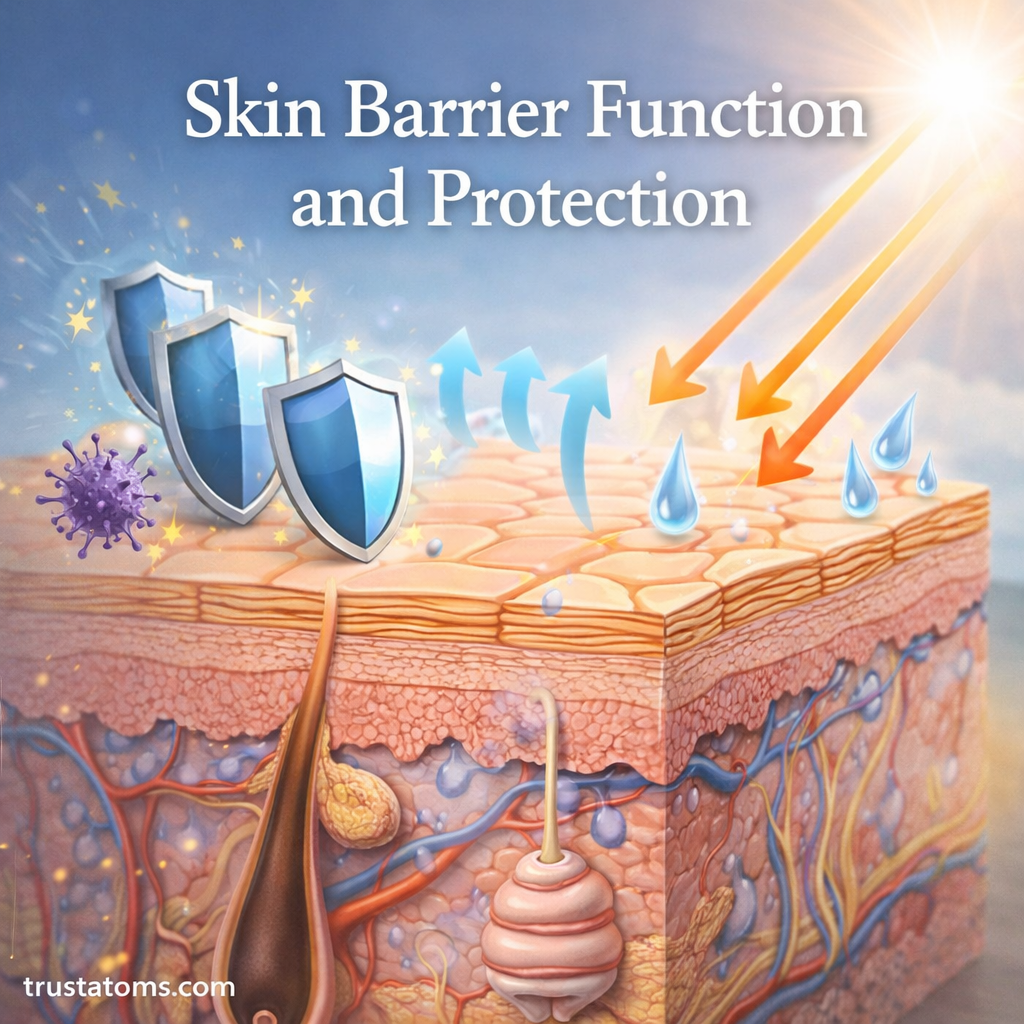
Skin Barrier Function and Protection

Illustration of skin barrier function showing epidermis layers protecting against UV rays, bacteria, and water loss.
Illustration showing how the skin barrier protects against environmental damage and moisture loss. trustatoms.com.

The skin is more than just a covering—it is a highly specialized barrier that protects the body from environmental threats while maintaining internal balance. This protective role is known as the skin barrier function, and it is essential for overall health and survival.

Understanding how the skin barrier works helps explain everything from hydration and immunity to how skin conditions develop.

Continue reading “Skin Barrier Function and Protection”

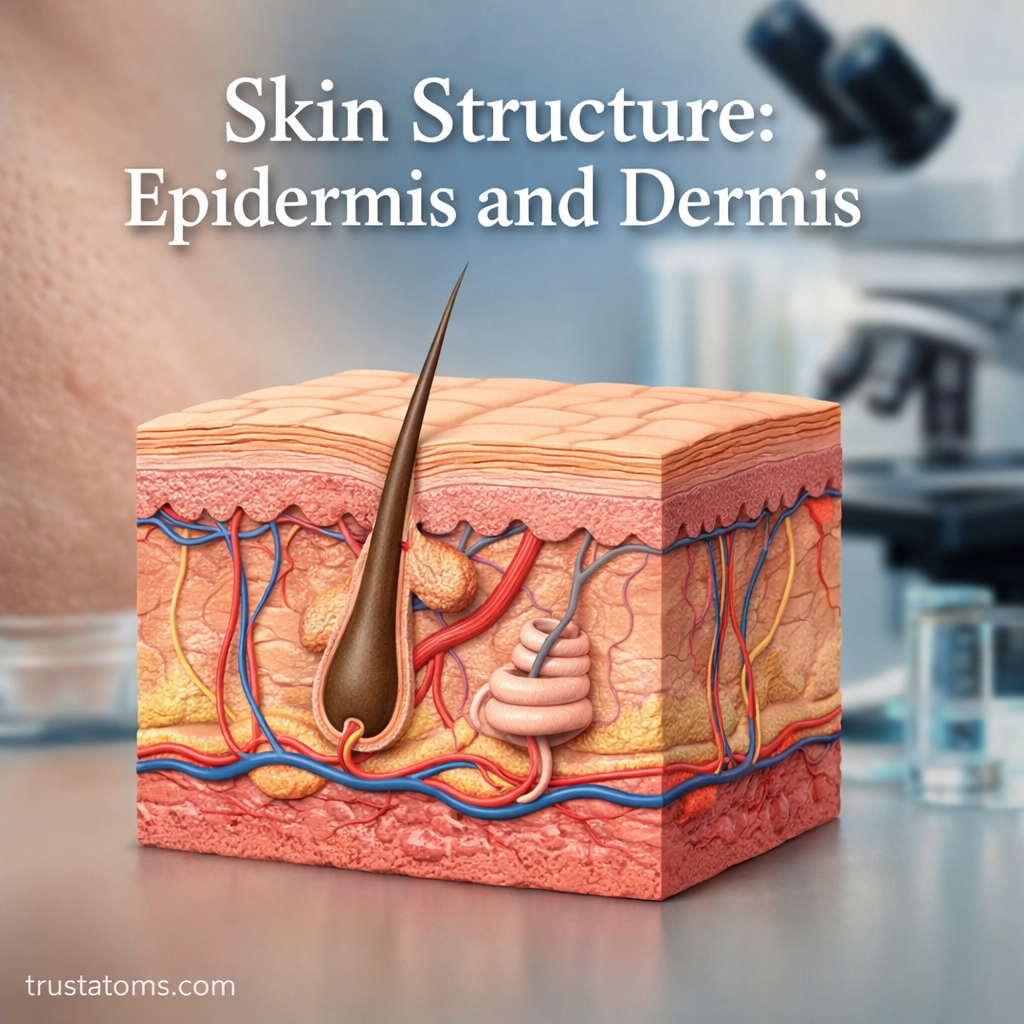
Skin Structure: Epidermis and Dermis

Cross-sectional illustration of human skin showing the epidermis and dermis layers with hair follicle, glands, and blood vessels.
Illustration of skin structure highlighting the epidermis and dermis layers. trustatoms.com.

The skin is the body’s largest organ, acting as a protective barrier between your internal systems and the external environment. It plays a vital role in protection, temperature regulation, sensation, and immune defense.

Understanding the structure of the skin—specifically the epidermis and dermis—helps explain how it performs these essential functions every day.

Continue reading “Skin Structure: Epidermis and Dermis”