Reaction Energetics in Chemical Systems

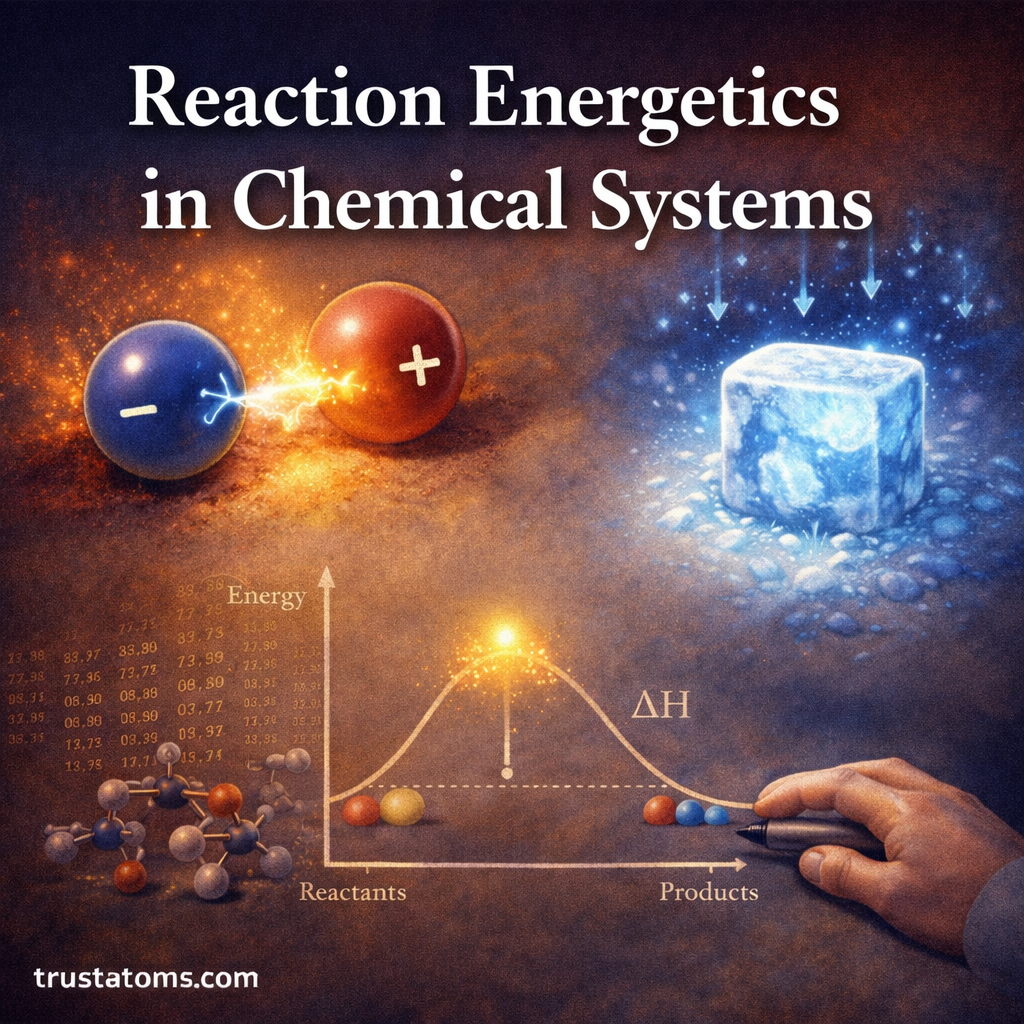
Illustration showing energy changes in chemical reactions with molecular interactions and a simplified reaction energy pathway concept.
Illustration representing reaction energetics in chemical systems, highlighting energy changes during chemical reactions. trustatoms.com.

Chemical reactions involve the transformation of substances into new products. While these transformations may appear simple on the surface, they are governed by complex energy changes at the atomic and molecular level.

The study of reaction energetics focuses on how energy is absorbed, released, and redistributed during chemical reactions. Understanding these energy changes allows chemists to predict whether reactions will occur, how fast they will proceed, and how conditions such as temperature and pressure influence them.

Reaction energetics is a central topic in chemistry because it explains everything from fuel combustion and battery operation to biological metabolism and industrial manufacturing.

Continue reading “Reaction Energetics in Chemical Systems”
Computational Chemistry in Molecular Modeling

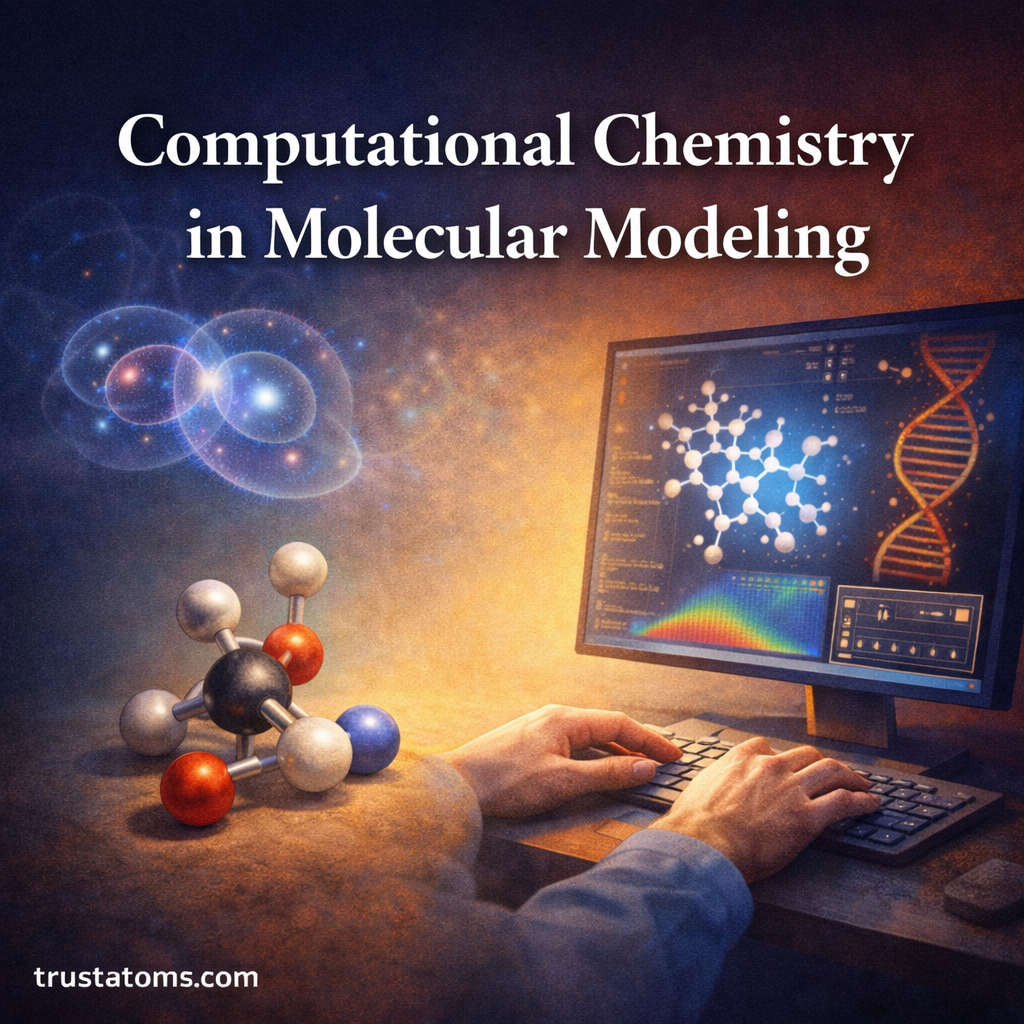
Illustration showing a scientist using computer software to model molecular structures, representing computational chemistry and digital molecular modeling.
Illustration depicting computational chemistry used to simulate and analyze molecular structures through computer-based modeling. trustatoms.com.

Computational chemistry has transformed how scientists study molecules and chemical reactions. Instead of relying only on laboratory experiments, researchers now use powerful computer simulations to analyze molecular behavior, predict chemical properties, and design new compounds.

This field combines chemistry, physics, mathematics, and computer science to model atoms and molecules digitally. By applying quantum mechanics and molecular physics through algorithms, computational chemistry allows scientists to explore chemical systems that may be difficult or expensive to study experimentally.

Today, computational chemistry plays an important role in areas such as drug discovery, materials science, environmental chemistry, and nanotechnology.

Continue reading “Computational Chemistry in Molecular Modeling”

Chemical Bonding Models in Modern Theory

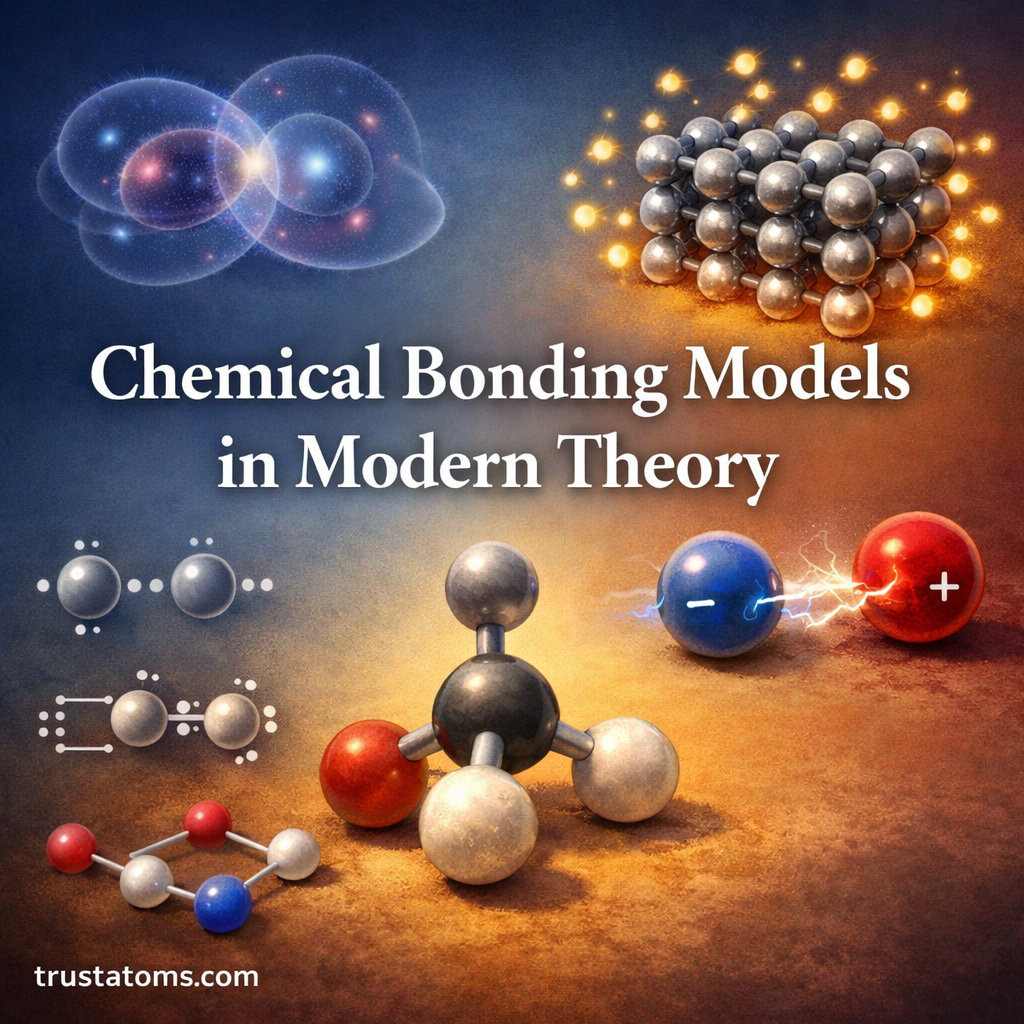
Illustration showing conceptual representations of chemical bonding models including orbital overlap, molecular structures, ionic interaction, and metallic lattice used in modern chemistry theory.
Illustration representing different chemical bonding models used in modern chemistry, including orbital overlap, molecular structures, and ionic interactions. trustatoms.com

Chemical bonding is one of the most fundamental concepts in chemistry. It explains how atoms connect to form molecules and materials, shaping everything from water and proteins to metals and semiconductors.

Early scientists understood that atoms combine in predictable ratios, but modern chemistry goes much deeper. Today, several chemical bonding models help scientists explain how and why atoms share or transfer electrons. These models provide different perspectives on the same underlying reality of atomic interactions.

Understanding these bonding models helps students and researchers interpret molecular structure, predict chemical behavior, and design new materials.

Continue reading “Chemical Bonding Models in Modern Theory”

Chemical Sensors in Analytical Systems

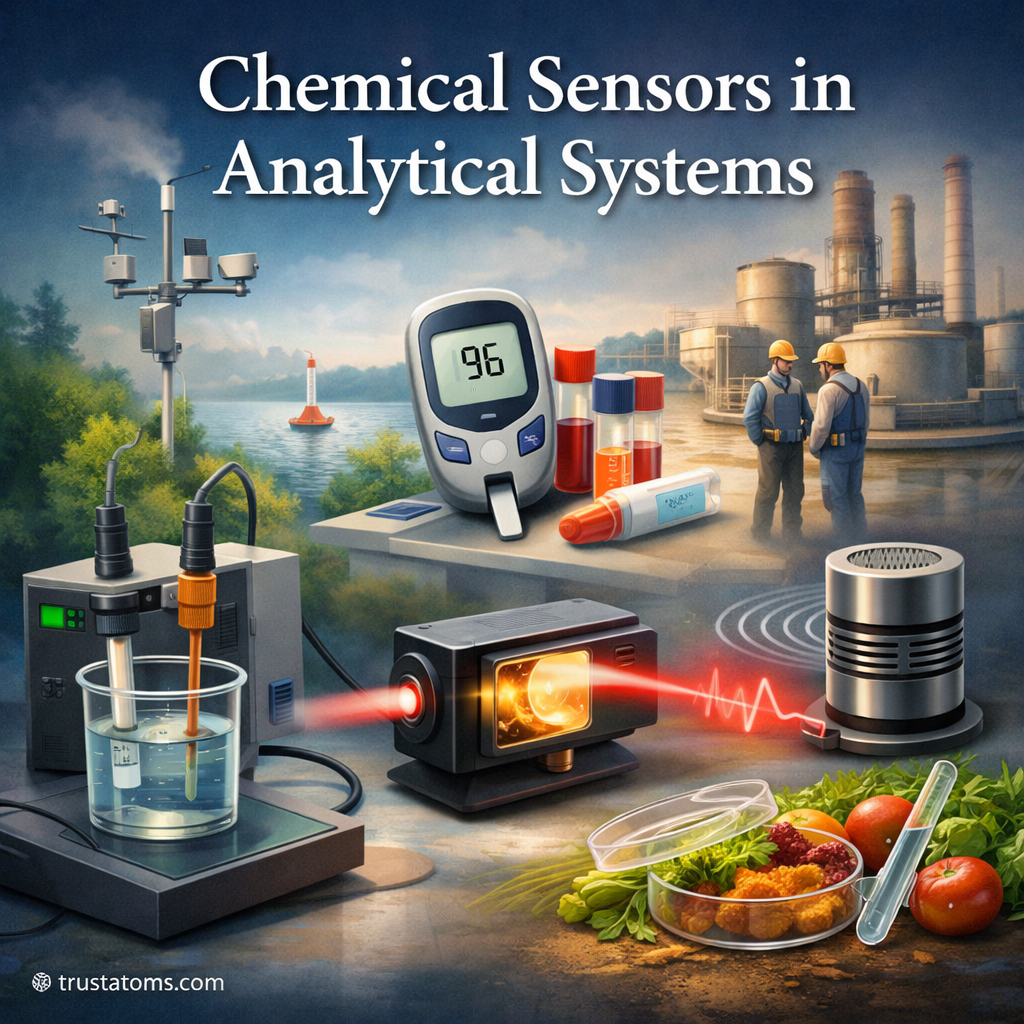
Illustration diagram showing chemical sensors used in analytical systems, including environmental, laboratory, industrial, and medical detection technologies.
Illustration showing how chemical sensors detect substances in environmental, laboratory, and industrial analytical systems. trustatoms.com.

Chemical sensors play a vital role in modern analytical systems. These devices detect and measure specific chemical substances in gases, liquids, or solids, helping scientists monitor environmental conditions, ensure food safety, analyze medical samples, and control industrial processes.

From detecting air pollutants to measuring glucose levels in the body, chemical sensors provide rapid and precise information about chemical composition. Their ability to convert chemical interactions into measurable signals makes them essential tools in laboratories, manufacturing facilities, healthcare, and environmental monitoring.

Continue reading “Chemical Sensors in Analytical Systems”

Polymer Chemistry in Synthetic Materials

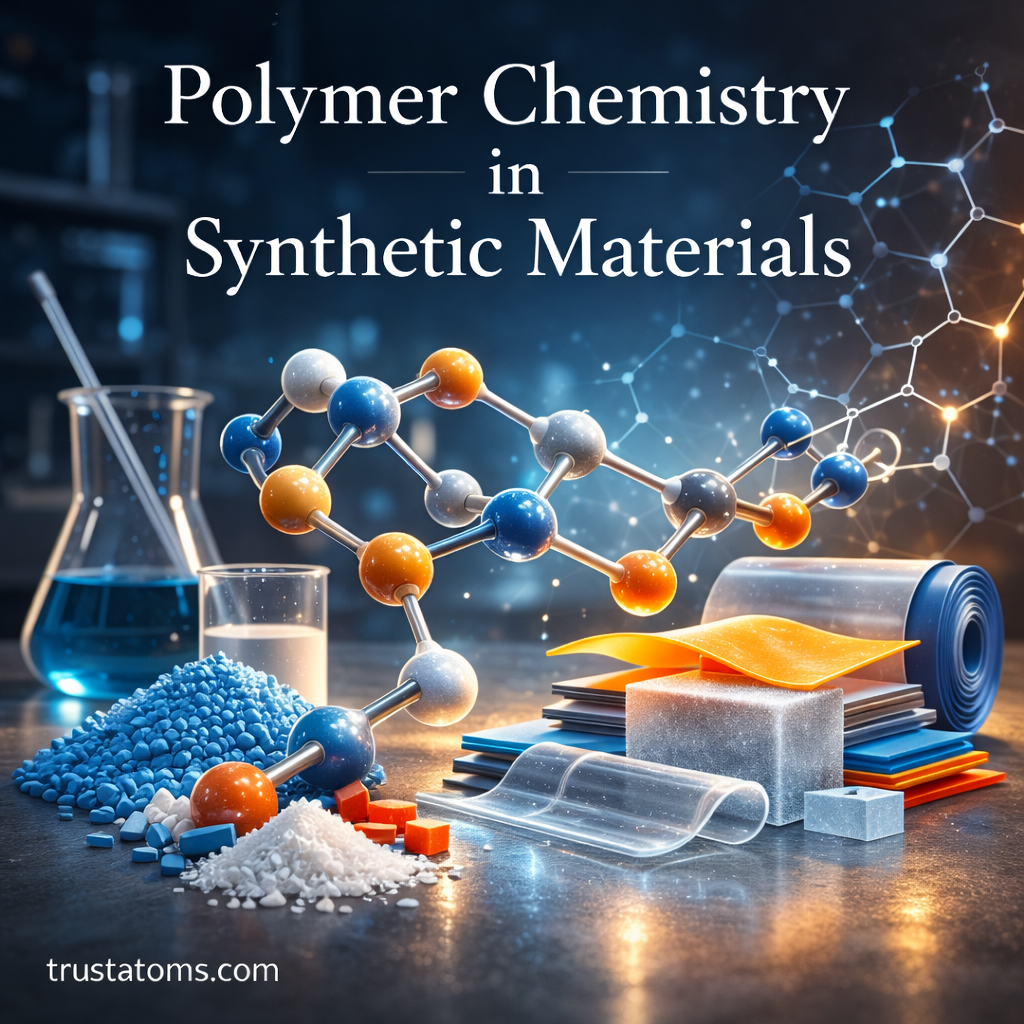
Illustration showing polymer chemistry concepts including molecular chains and synthetic materials like plastics, fibers, and rubber products.
Illustration representing polymer chemistry in synthetic materials including plastics, fibers, elastomers, and industrial polymer applications. trustatoms.com

Polymer chemistry is a branch of chemistry that focuses on the structure, synthesis, and properties of polymers—large molecules made from repeating units called monomers. These materials form the foundation of many synthetic products used in everyday life, from plastics and fibers to adhesives and coatings.

Synthetic polymers have transformed industries such as packaging, construction, healthcare, and electronics. By carefully designing polymer structures and chemical compositions, scientists can create materials with specific mechanical strength, flexibility, durability, and chemical resistance.

Understanding polymer chemistry helps explain how these versatile materials are developed and how they continue to shape modern technology and manufacturing.

Continue reading “Polymer Chemistry in Synthetic Materials”

Nanochemistry in Molecular Engineering

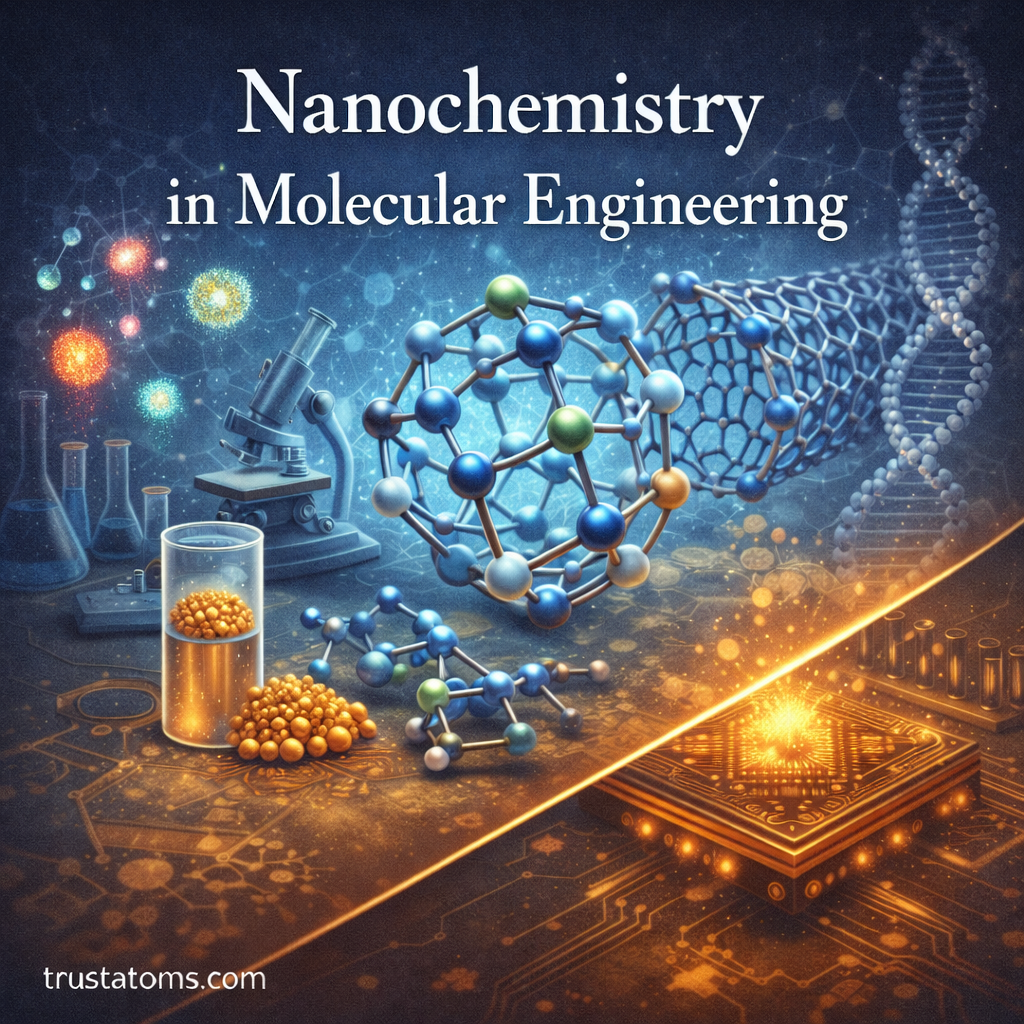
Illustration showing nanochemistry concepts including molecular structures, nanoparticles, and nanoscale materials used in molecular engineering.
Illustration representing nanochemistry in molecular engineering with nanoscale materials, molecular structures, and advanced technology applications. trustatoms.com

Nanochemistry is a branch of chemistry that focuses on the design, synthesis, and manipulation of materials at the nanoscale. At this extremely small scale—typically between 1 and 100 nanometers—materials often display unique chemical and physical properties that differ significantly from their bulk counterparts.

Molecular engineering uses these nanoscale principles to create precisely designed molecules and structures that perform specific functions. By controlling atoms and molecular arrangements, scientists can engineer materials with new capabilities in electronics, medicine, energy, and advanced manufacturing.

Nanochemistry has become a major driver of modern technological innovation, enabling breakthroughs that were not possible with traditional materials and chemical processes.

Continue reading “Nanochemistry in Molecular Engineering”

Materials Chemistry in Advanced Compounds

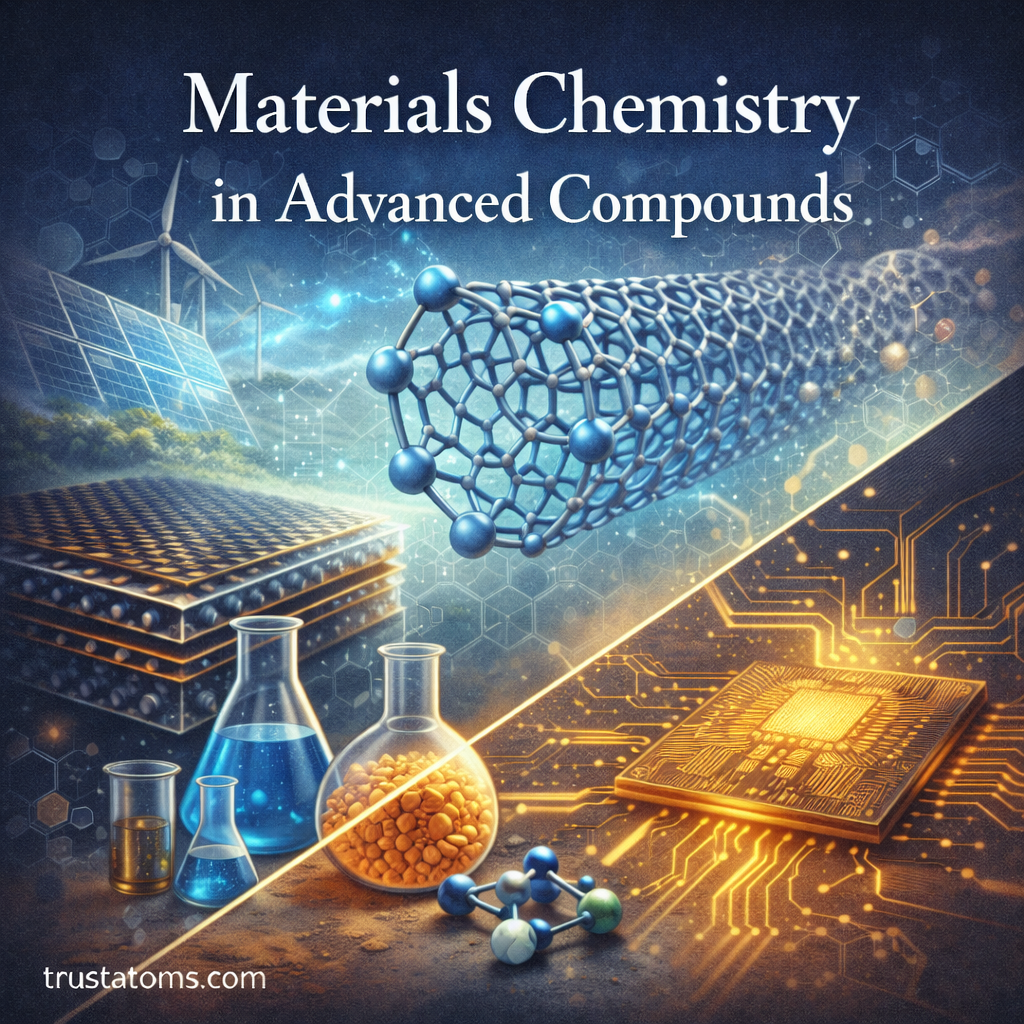
Illustration showing advanced materials chemistry concepts including nanomaterials, layered materials, and semiconductor technology.
Illustration representing materials chemistry in advanced compounds including nanostructures, layered materials, and modern electronic components. trustatoms.com

Materials chemistry focuses on the design, structure, and synthesis of substances with specific physical or chemical properties. It plays a central role in developing advanced compounds used in modern technology, medicine, electronics, and energy systems.

Unlike traditional chemistry, which often focuses on individual reactions or substances, materials chemistry studies how atoms and molecules combine to create materials with useful functions. These materials may be designed for strength, conductivity, flexibility, durability, or chemical stability.

Understanding materials chemistry helps scientists develop innovative compounds that improve technologies ranging from smartphones and batteries to aerospace materials and medical implants.

Continue reading “Materials Chemistry in Advanced Compounds”

Green Chemistry in Sustainable Systems

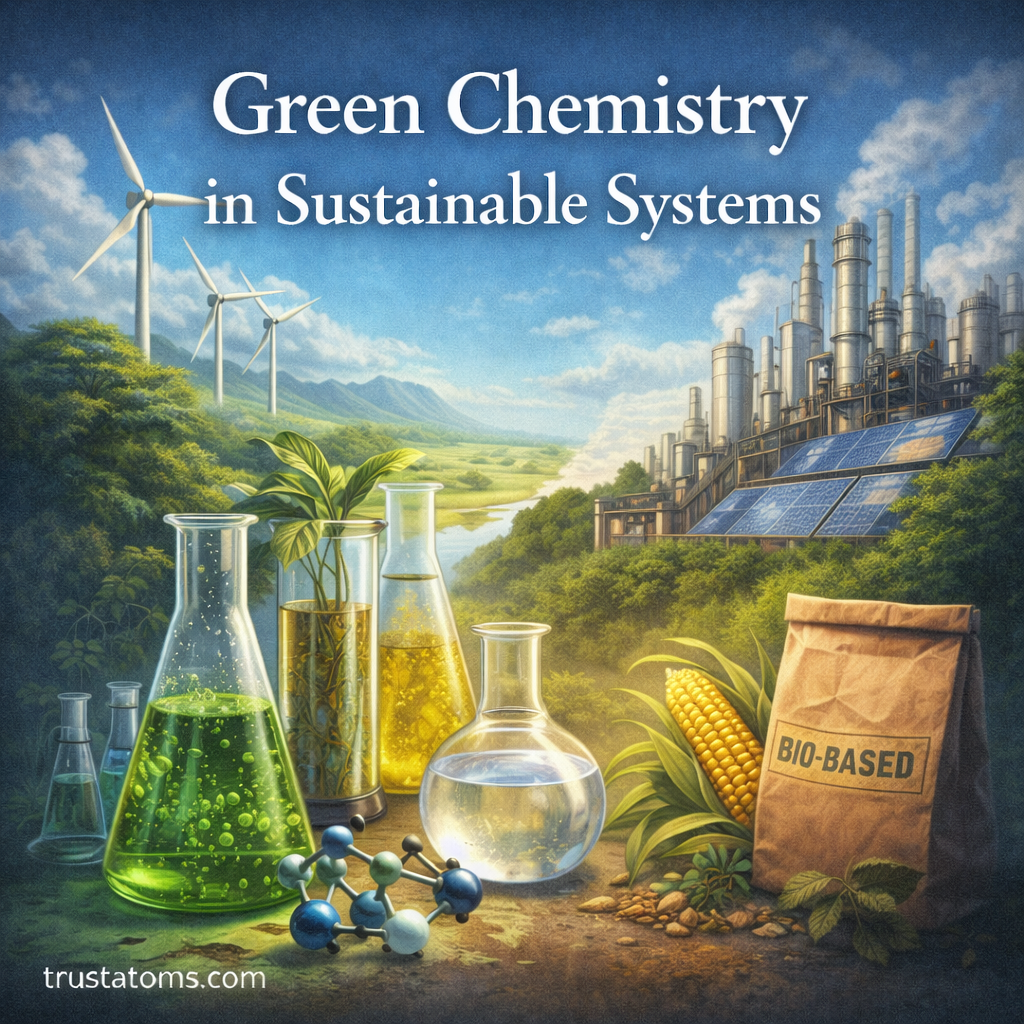
Illustration showing green chemistry concepts with renewable energy, plant-based materials, and laboratory glassware.
Illustration representing green chemistry and sustainable systems using renewable resources and environmentally friendly chemical processes. trustatoms.com

Green chemistry is an approach to chemical design and production that prioritizes environmental protection, resource efficiency, and human safety. Instead of focusing only on producing chemical products, green chemistry aims to reduce pollution, waste, and hazardous substances throughout the entire chemical lifecycle.

In modern science and industry, sustainability has become a major goal. Green chemistry helps industries create processes that use fewer resources, generate less waste, and minimize environmental impact. By designing safer chemicals and cleaner production methods, scientists can support both technological progress and environmental responsibility.

Understanding green chemistry provides insight into how chemical science contributes to building more sustainable systems in energy, manufacturing, agriculture, and materials development.

Continue reading “Green Chemistry in Sustainable Systems”

Industrial Chemistry in Process Engineering

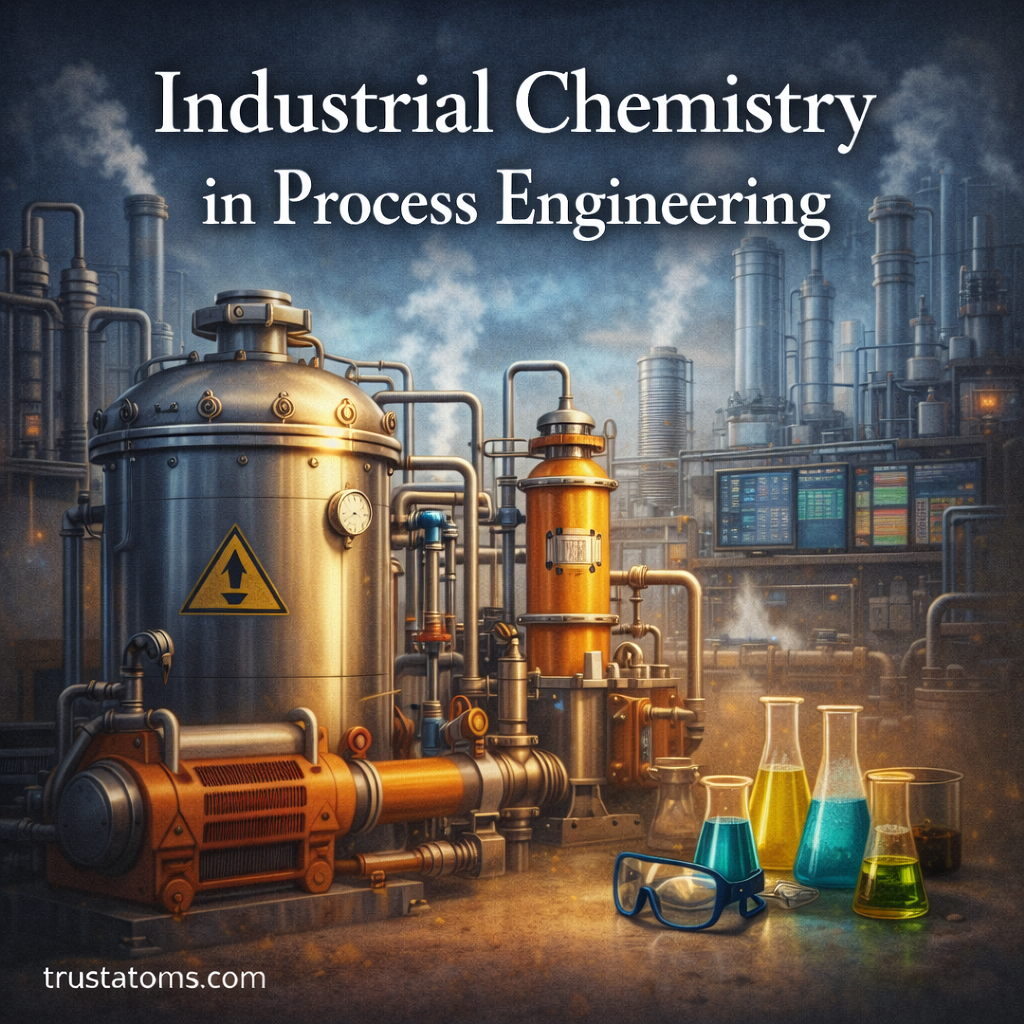
Illustration of an industrial chemical plant with reactors, pipelines, and laboratory equipment representing process engineering systems.
Illustration representing industrial chemistry and process engineering with chemical reactors, pipelines, and laboratory equipment. trustatoms.com

Industrial chemistry plays a critical role in modern manufacturing and production systems. It focuses on transforming raw materials into useful products through controlled chemical processes. In large-scale industries such as pharmaceuticals, energy, agriculture, and materials production, chemical reactions must be carefully managed to ensure efficiency, safety, and economic viability.

Process engineering bridges the gap between laboratory chemistry and full-scale industrial production. It applies chemistry, physics, and engineering principles to design systems that can safely produce chemicals at large volumes while maintaining consistent quality.

Understanding industrial chemistry within process engineering helps explain how everyday products—from fuels and plastics to fertilizers and medicines—are manufactured on a massive scale.

Continue reading “Industrial Chemistry in Process Engineering”

Chemical Safety in Laboratory Systems

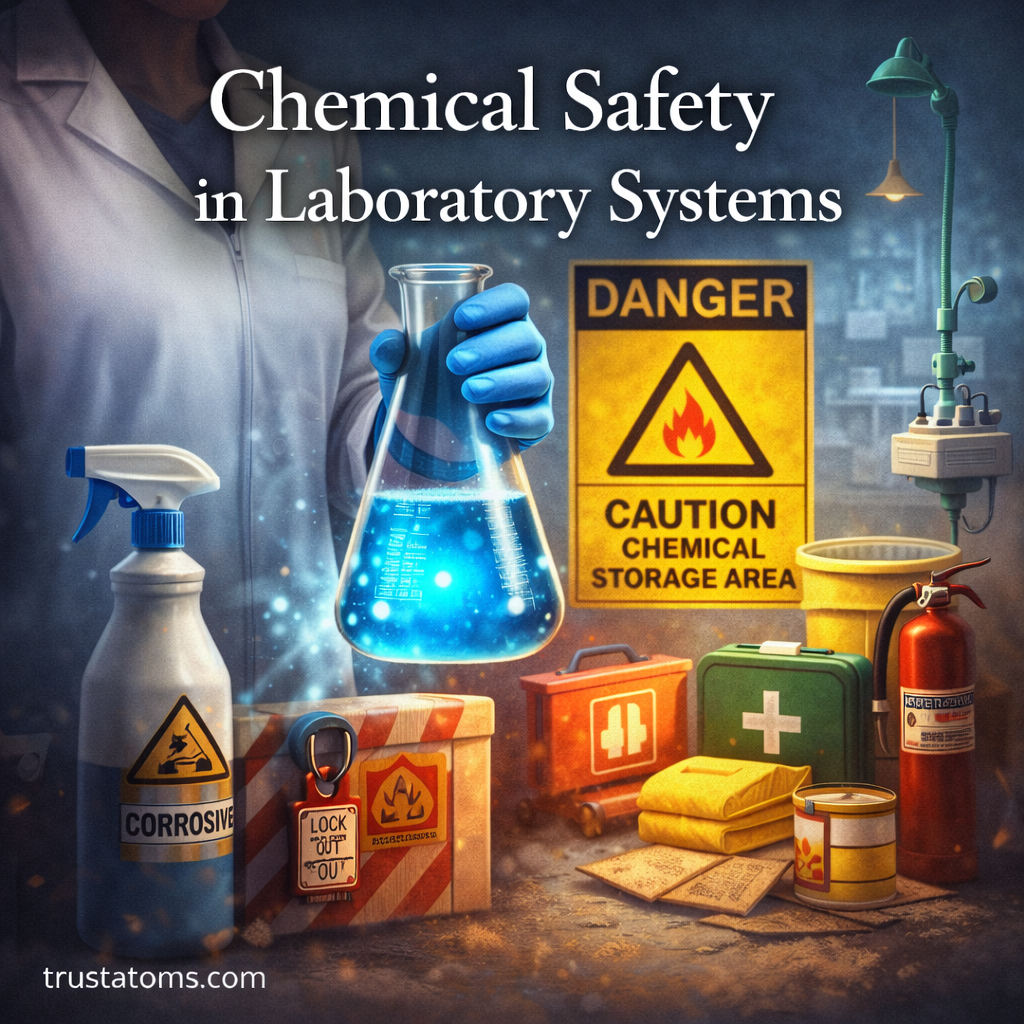
Illustration showing chemical safety practices in a laboratory with protective equipment, hazard signs, and lab tools.
Illustration highlighting chemical safety practices in laboratory environments, including protective equipment and hazard awareness. trustatoms.com

Chemical laboratories are designed to support controlled experimentation, analysis, and research. However, working with chemicals also introduces potential hazards such as toxic exposure, fire risks, corrosive materials, and reactive substances. For this reason, chemical safety is a foundational part of laboratory systems.

Chemical safety in laboratories involves proper training, protective equipment, safe storage, hazard awareness, and emergency preparedness. When these systems are implemented effectively, laboratories can minimize risk while maintaining productive scientific work.

Understanding laboratory chemical safety helps students, researchers, and professionals create environments where scientific discovery can occur responsibly and safely.

Continue reading “Chemical Safety in Laboratory Systems”