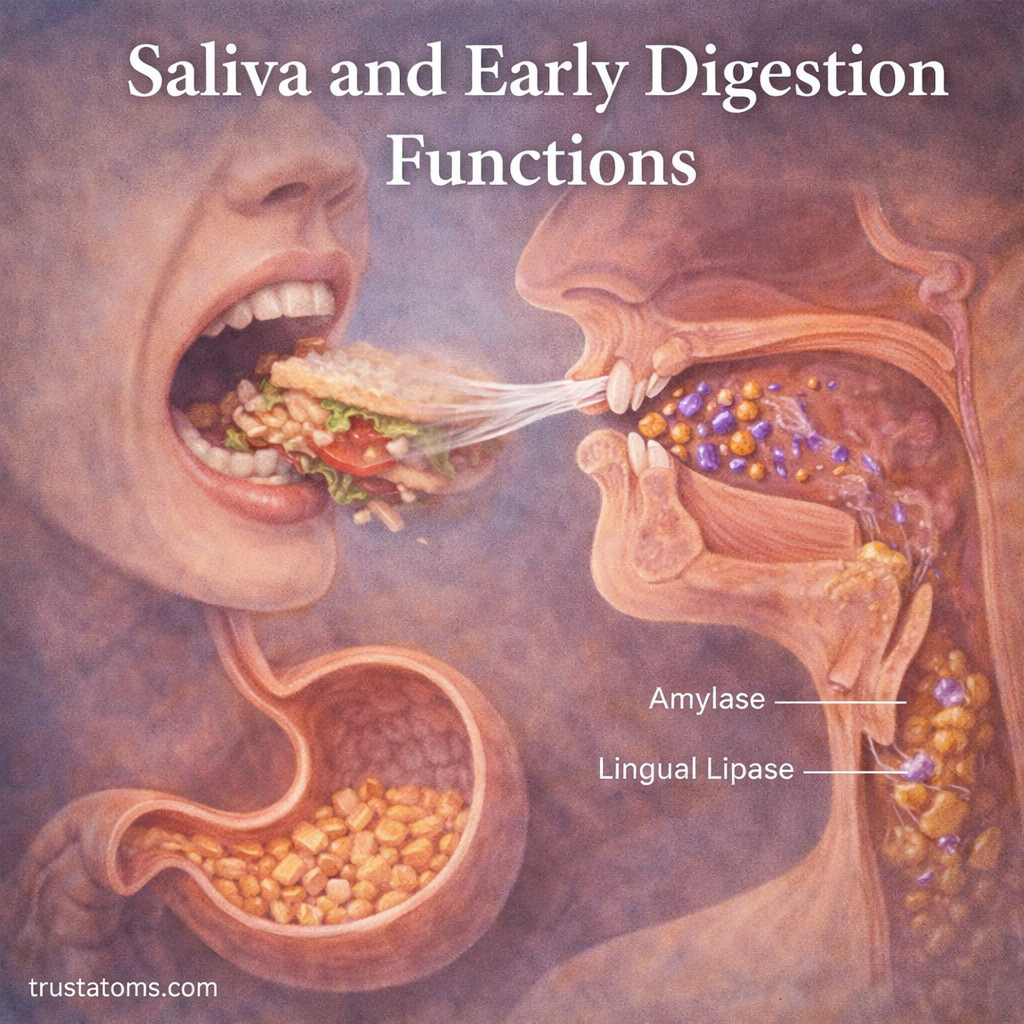
Saliva and Early Digestion Functions

Illustration showing saliva mixing with food in the mouth and beginning digestion before reaching the stomach.
Diagram showing how saliva starts the digestion process in the mouth. trustatoms.com.

Digestion begins the moment food enters your mouth. While it may seem simple, the early stages of digestion are essential for preparing food for the rest of the digestive process. One of the key players in this stage is saliva.

Saliva is more than just moisture—it contains enzymes and compounds that begin breaking down food, making swallowing easier and supporting overall digestive efficiency.

Continue reading “Saliva and Early Digestion Functions”
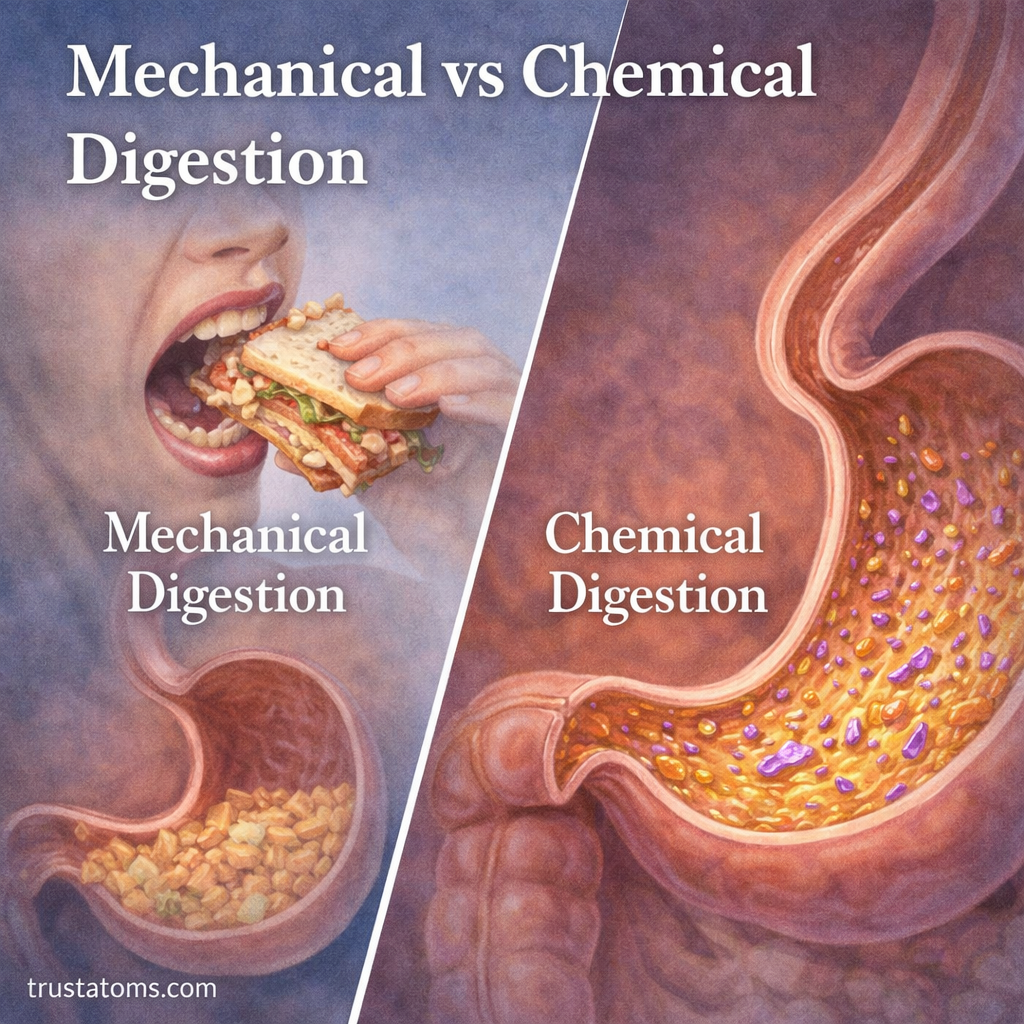
Mechanical vs Chemical Digestion

Split illustration comparing mechanical digestion in the mouth and stomach with chemical digestion in the stomach and intestines.
Visual comparison of mechanical and chemical digestion processes in the human digestive system. trustatoms.com.

Digestion is the process by which the body breaks down food into nutrients that can be absorbed and used for energy, growth, and repair. This process occurs in two main ways: mechanical digestion and chemical digestion.

While both work together seamlessly, they serve different roles. Mechanical digestion physically breaks food into smaller pieces, while chemical digestion uses enzymes and acids to break food down at the molecular level.

Understanding the difference between these two processes helps explain how the body efficiently extracts nutrients from everything you eat.

Continue reading “Mechanical vs Chemical Digestion”

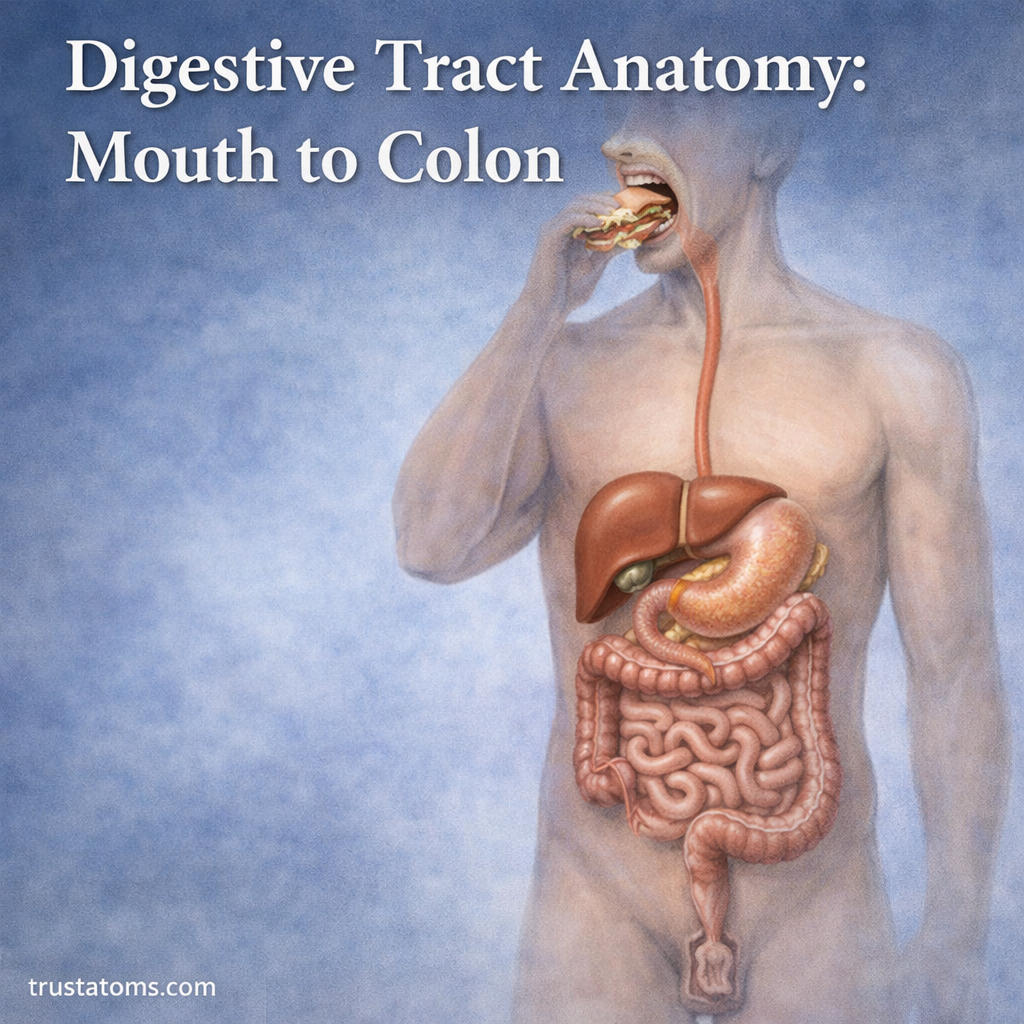
Digestive Tract Anatomy: Mouth to Colon

Illustration of digestive tract anatomy from mouth to colon showing major organs including stomach, small intestine, and large intestine.
Diagram of the digestive tract from mouth to colon highlighting the flow of food through key organs. trustatoms.com.

The digestive tract, also known as the gastrointestinal (GI) tract, is a continuous tube that runs from the mouth to the colon. Its primary role is to process food, absorb nutrients, and eliminate waste.

Each section of the digestive tract has a specialized structure and function, working together in a coordinated system that supports overall health and energy production.

Continue reading “Digestive Tract Anatomy: Mouth to Colon”

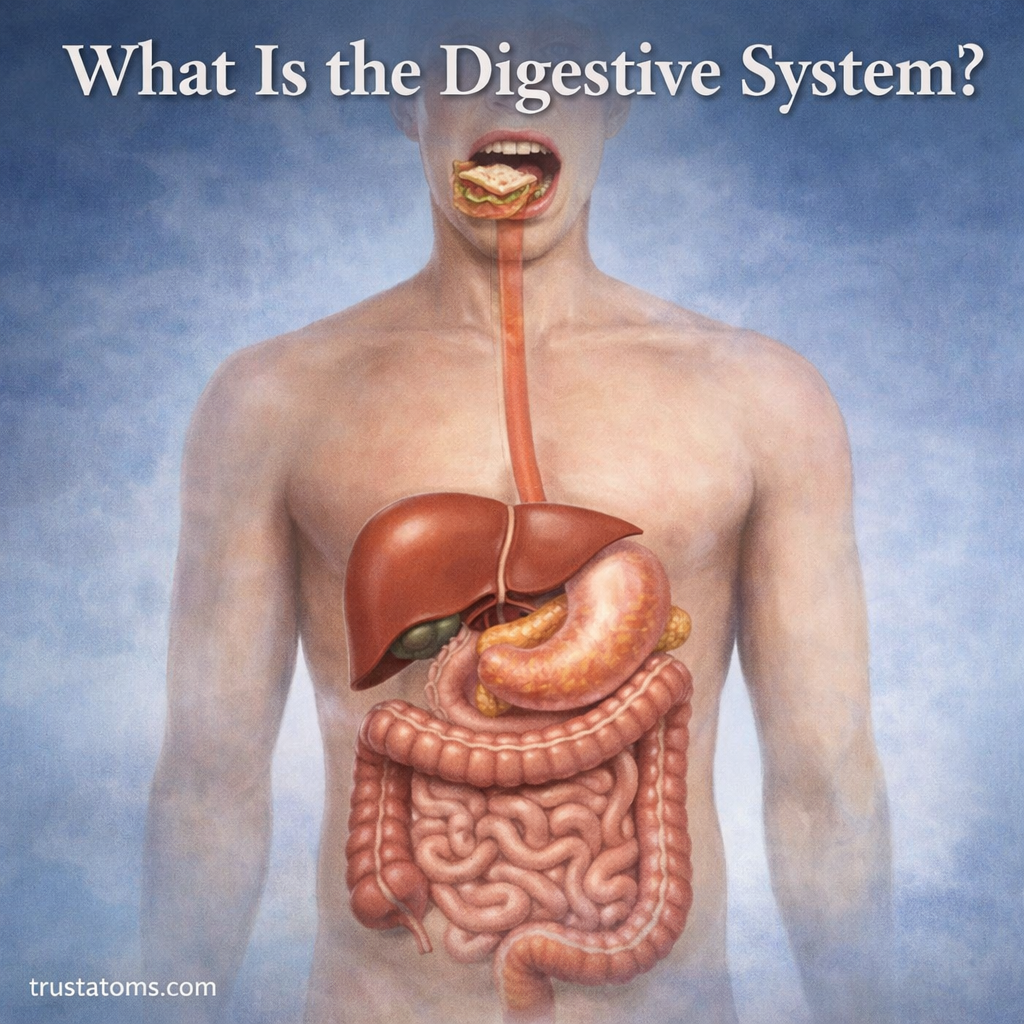
What Is the Digestive System?

Illustration of the human digestive system showing the mouth, esophagus, stomach, liver, and intestines.
Overview diagram of the human digestive system highlighting key organs involved in digestion. trustatoms.com.

The digestive system is a complex network of organs that work together to break down food, absorb nutrients, and eliminate waste. It plays a vital role in keeping the body energized, nourished, and functioning properly.

Every time you eat, your digestive system begins a coordinated process that transforms food into usable fuel for cells, tissues, and organs.

Continue reading “What Is the Digestive System?”

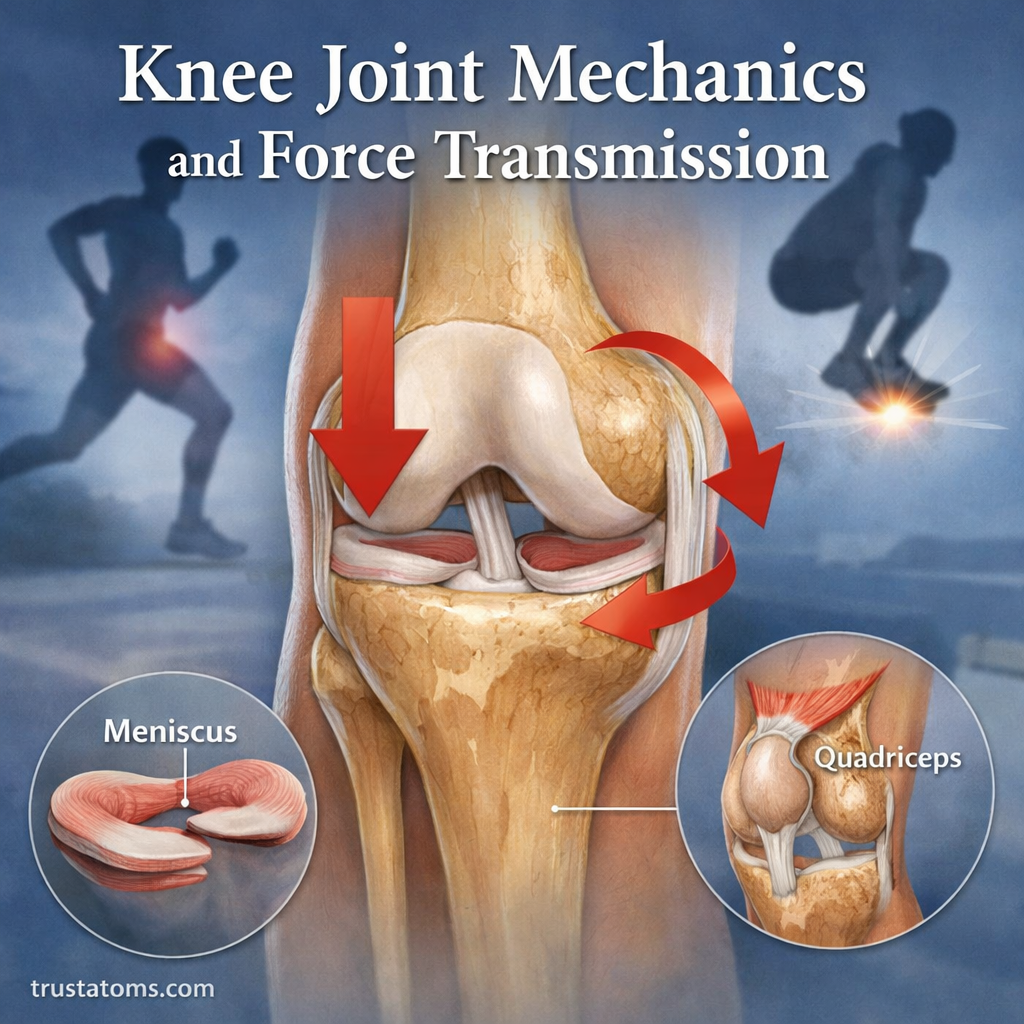
Knee Joint Mechanics and Force Transmission

Illustration of knee joint mechanics showing force transmission through the femur, tibia, and patella with directional arrows.
Simple diagram illustrating how forces move through the knee joint during movement. trustatoms.com

The knee joint is one of the most complex and heavily used structures in the human body. It must balance mobility and stability while transmitting forces between the upper and lower limbs during everyday activities like walking, running, and jumping.

Understanding how the knee works mechanically—and how it handles force—can help explain everything from athletic performance to common injuries.

Continue reading “Knee Joint Mechanics and Force Transmission”

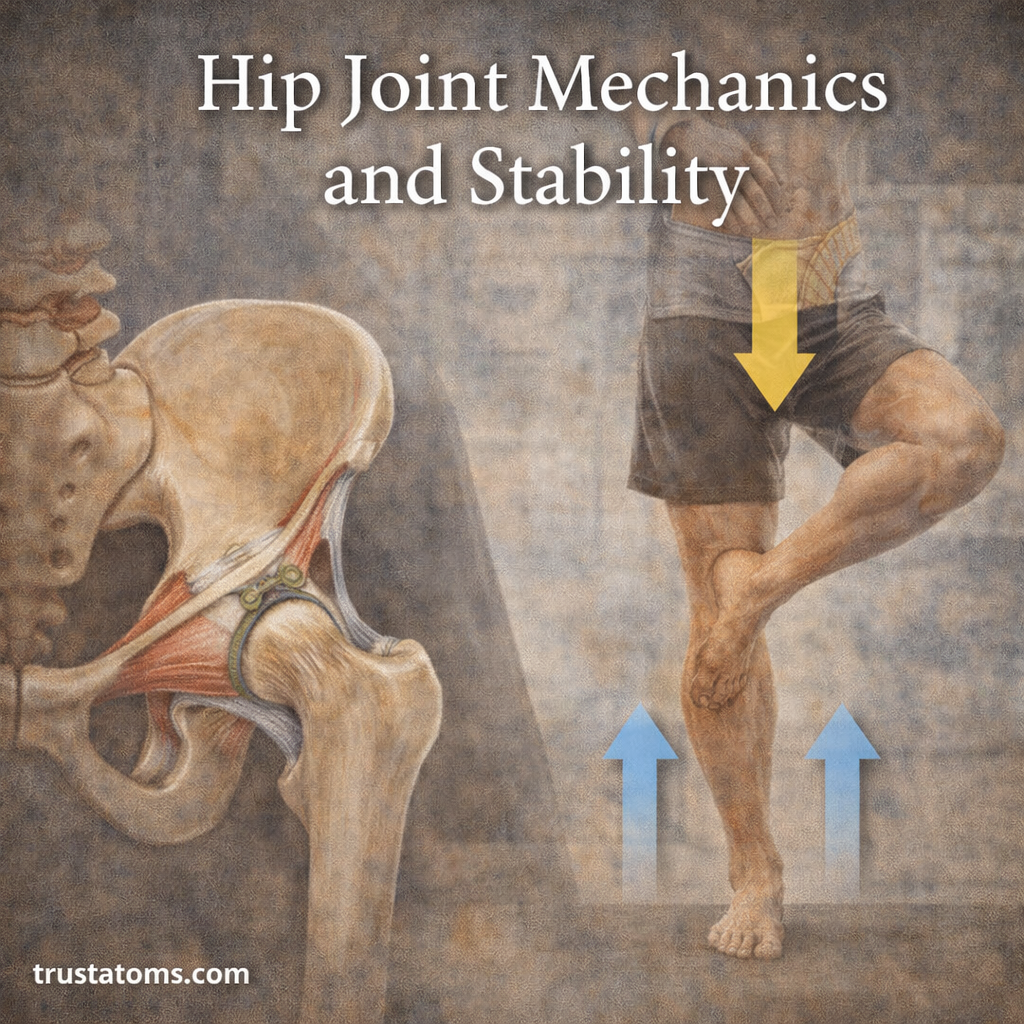
Hip Joint Mechanics and Stability

Illustration of the hip joint showing anatomy and load distribution during single-leg balance.
Visual overview of hip joint mechanics and stability during weight-bearing movement. trustatoms.com.

The hip joint is one of the most important structures in the human body, responsible for supporting body weight, enabling movement, and maintaining balance. Unlike the shoulder, which prioritizes mobility, the hip is designed to provide both strength and stability while still allowing a wide range of motion.

Understanding hip joint mechanics and stability helps explain how we walk, run, lift, and maintain posture—and why hip health is essential for overall movement.

Continue reading “Hip Joint Mechanics and Stability”

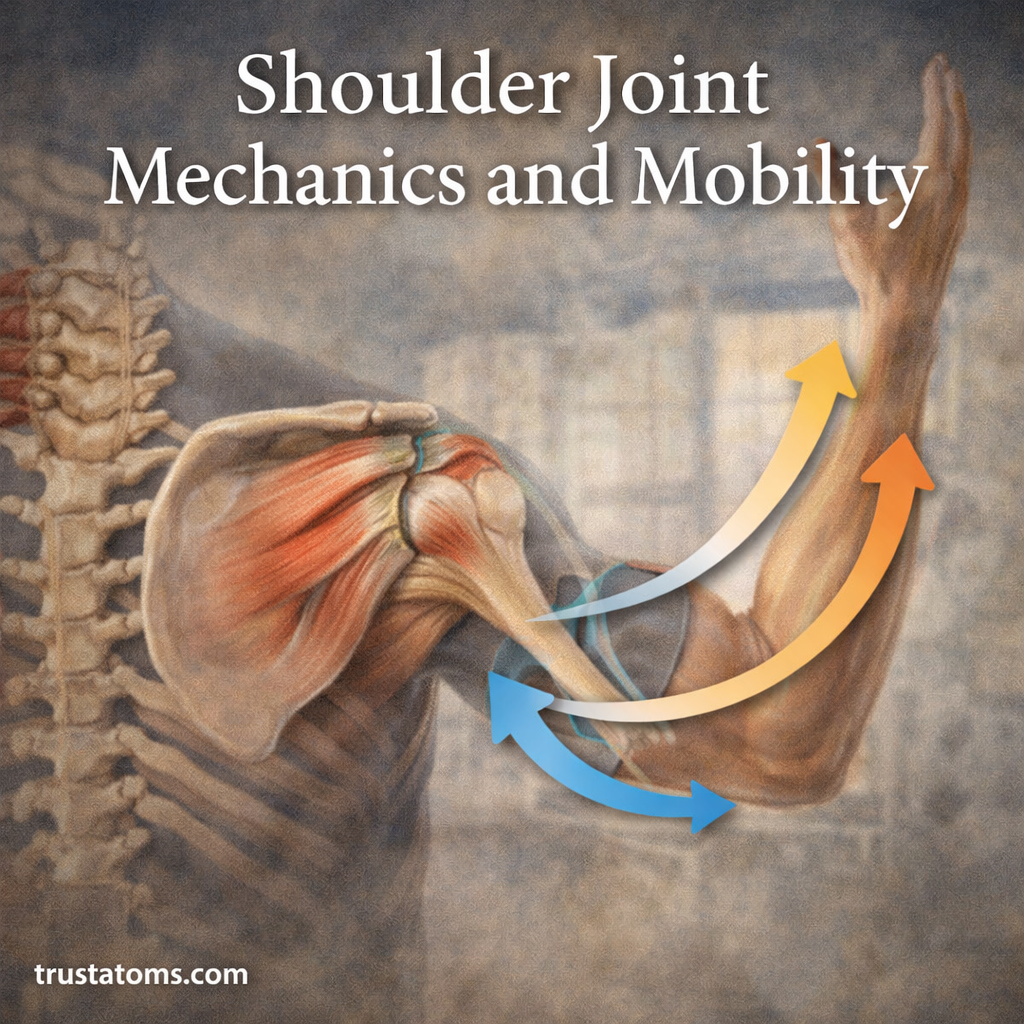
Shoulder Joint Mechanics and Mobility

Illustration of the shoulder joint showing muscles, bones, and movement directions during arm motion.
Visual overview of shoulder joint mechanics and mobility during arm movement. trustatoms.com.

The shoulder joint is one of the most mobile and complex joints in the human body. It allows a wide range of motion necessary for daily activities such as reaching, lifting, throwing, and pushing. However, this high level of mobility comes with a trade-off—reduced stability compared to other joints.

Understanding shoulder joint mechanics and mobility helps explain how movement is produced, how injuries occur, and how to maintain long-term joint health.

Continue reading “Shoulder Joint Mechanics and Mobility”

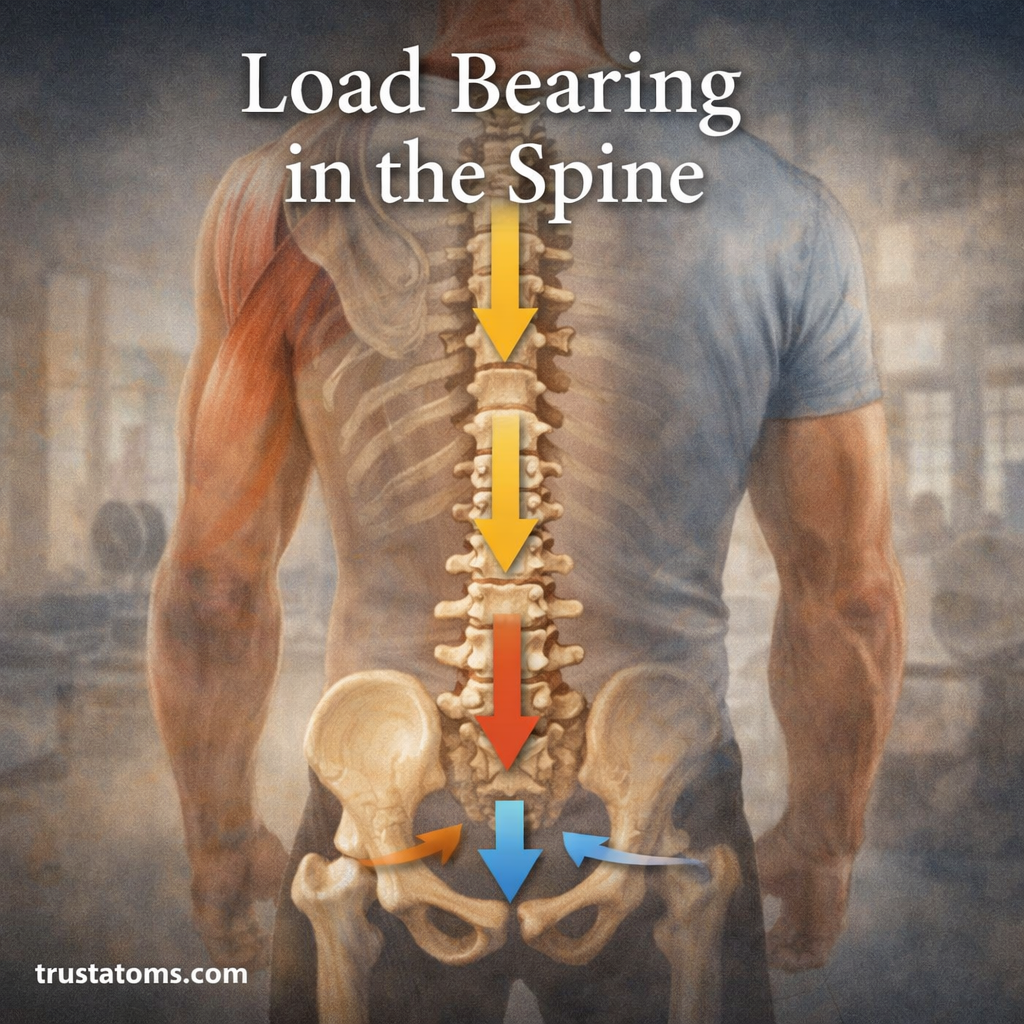
Load Bearing in the Spine

Illustration of the human spine showing load distribution from the upper back through the lumbar region into the pelvis.
Visual representation of how the spine distributes and transfers load through the body. trustatoms.com.

Load bearing in the spine refers to how the vertebral column supports, distributes, and transfers weight throughout the body. Every time you stand, sit, walk, or lift, your spine manages forces from gravity, body mass, and external loads.

Understanding how the spine handles these forces is essential for maintaining posture, preventing injury, and improving overall movement efficiency.

Continue reading “Load Bearing in the Spine”

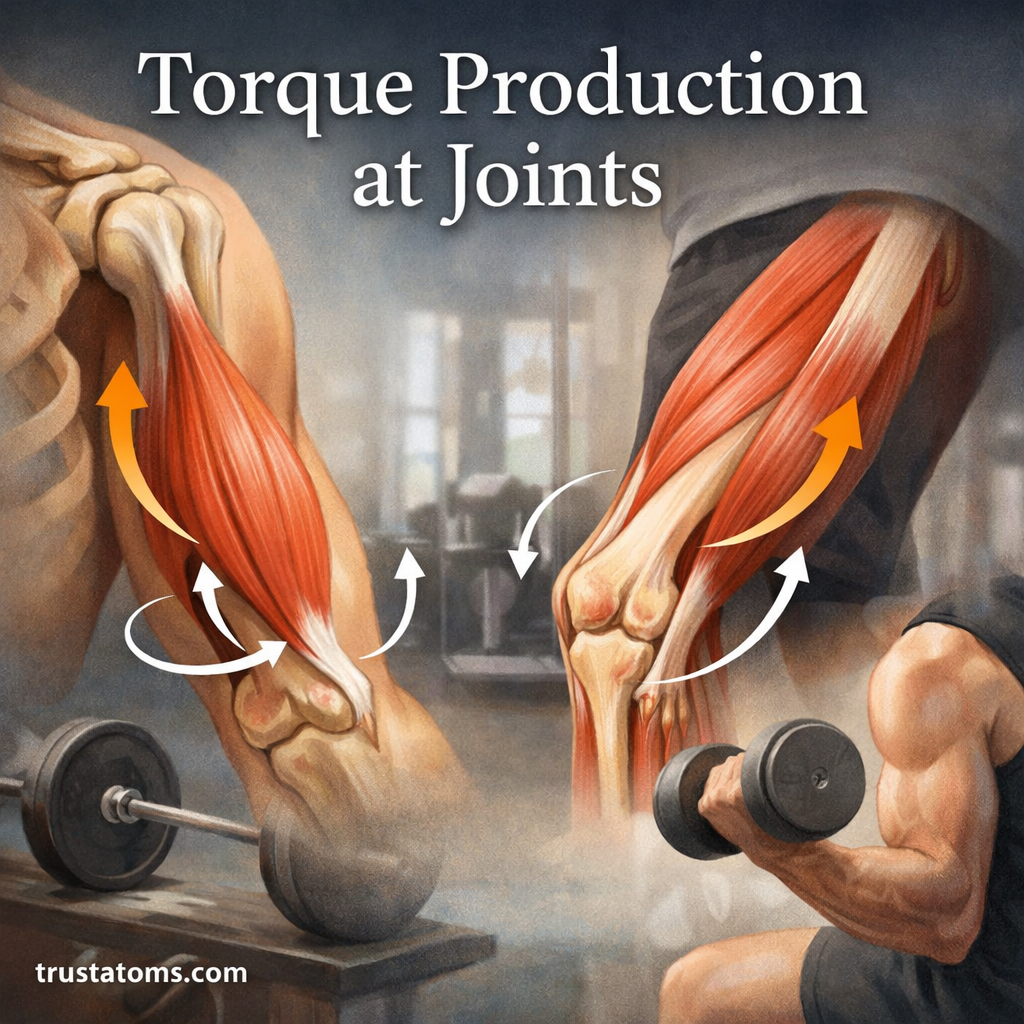
Torque Production at Joints

Illustration showing torque production at joints with muscles generating rotational force at the elbow and knee.
Visual representation of how muscles generate torque to create movement at joints. trustatoms.com.

Torque production at joints is a fundamental concept in human movement, explaining how muscles generate rotational force to move bones around joints. Whether you’re lifting a weight, walking up stairs, or throwing a ball, torque is the key mechanical principle that allows your body to create motion.

Understanding how torque works in the body helps explain strength, efficiency, injury risk, and performance in both everyday activities and athletic movements.

Continue reading “Torque Production at Joints”

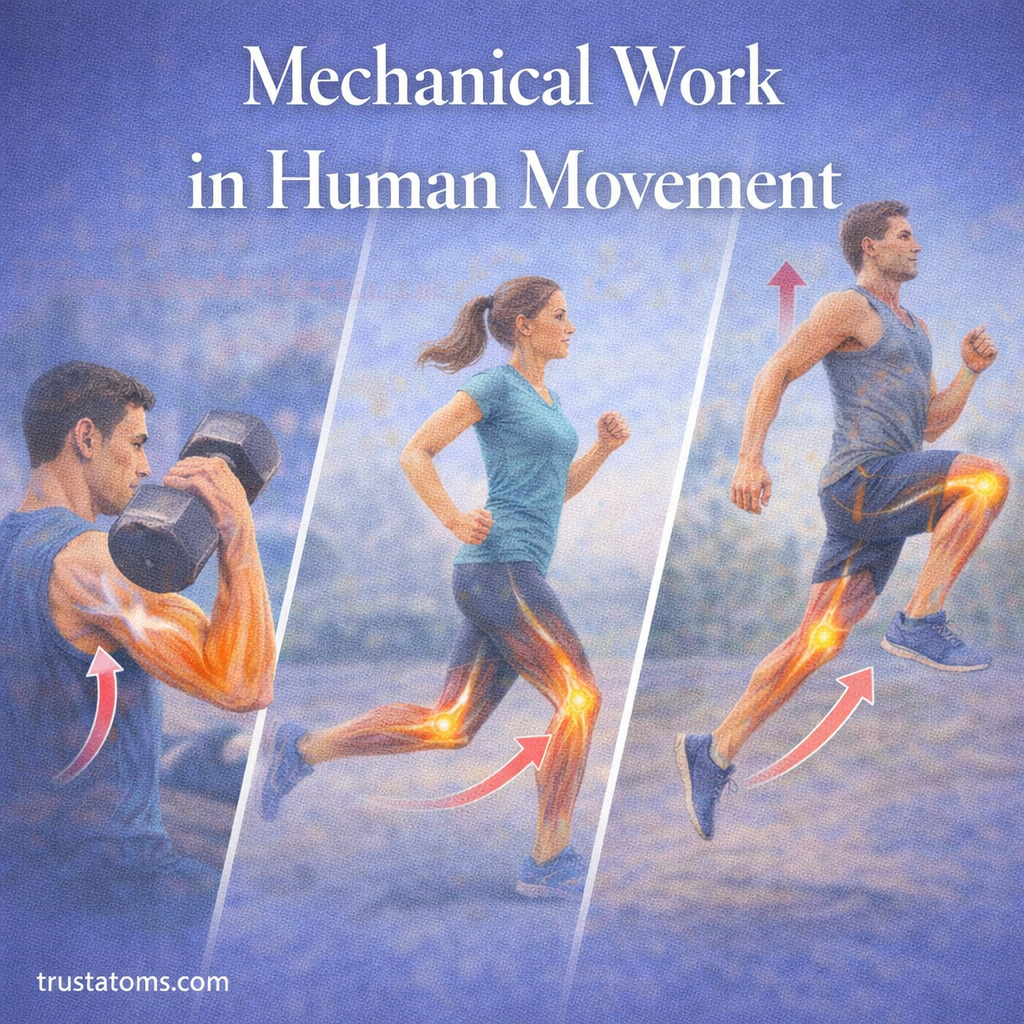
Mechanical Work in Human Movement: How the Body Produces Force and Motion

Illustration showing mechanical work in human movement with examples of weightlifting, running, and jumping highlighting muscle activity.
Mechanical work in human movement demonstrated through lifting, running, and jumping actions.

Every time you walk, lift an object, or climb stairs, your body is performing mechanical work. This concept comes from physics but applies directly to human anatomy and movement. Understanding mechanical work helps explain how muscles generate force, how energy is used, and how movement becomes more efficient.

Continue reading “Mechanical Work in Human Movement: How the Body Produces Force and Motion”