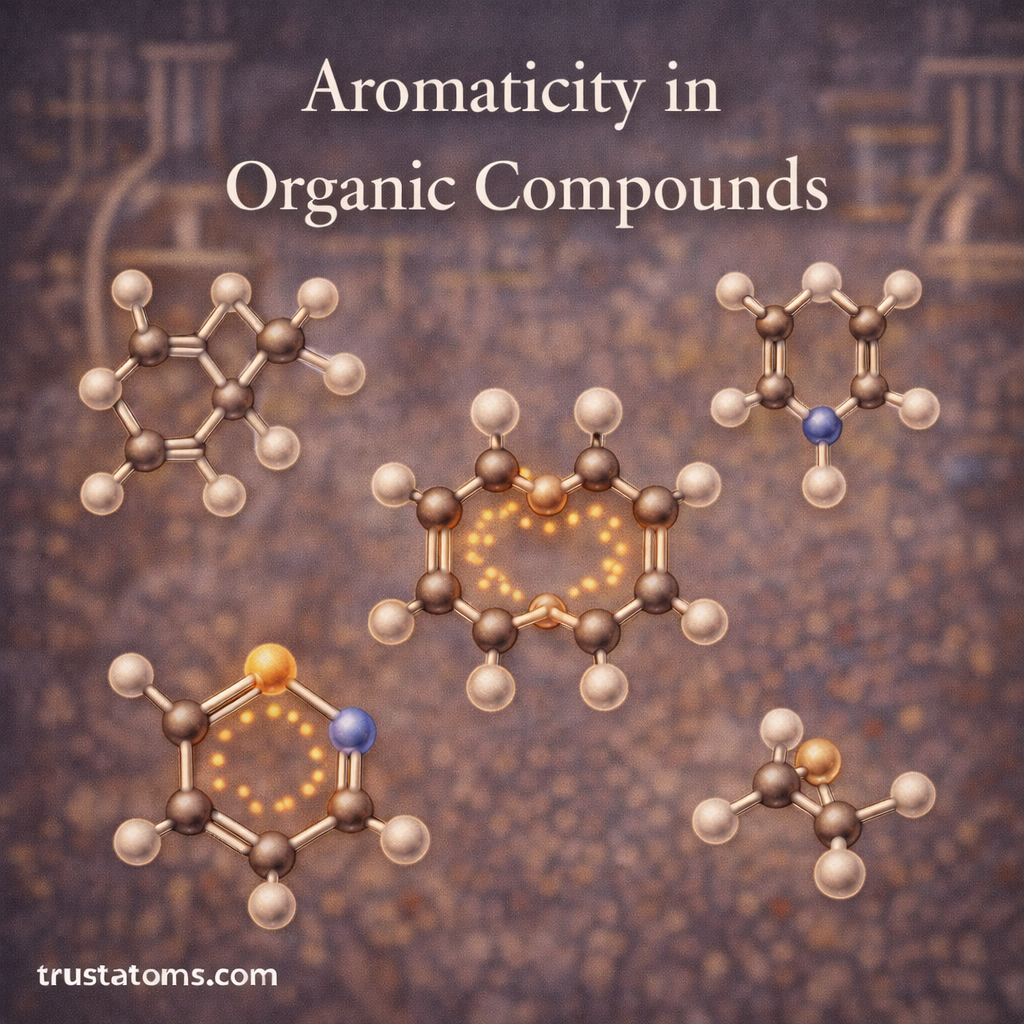
Aromaticity in Organic Compounds

Illustration showing aromatic organic compounds with ring structures and delocalized electron clouds representing aromatic stability.
Illustration representing aromaticity in organic compounds, highlighting ring structures with delocalized electrons that create molecular stability. trustatoms.com

Aromaticity is a fundamental concept in organic chemistry that explains the unusual stability and chemical behavior of certain cyclic molecules. Aromatic compounds contain a special type of electron arrangement that allows electrons to move freely around a ring-shaped structure.

This unique electron distribution creates molecules that are more stable than similar non-aromatic compounds. Aromaticity plays an important role in many areas of chemistry, including pharmaceuticals, materials science, and biological molecules.

Understanding aromaticity helps chemists explain the properties of compounds such as benzene and many other ring-based molecules.

Continue reading “Aromaticity in Organic Compounds”
Reaction Mechanisms in Organic Chemistry

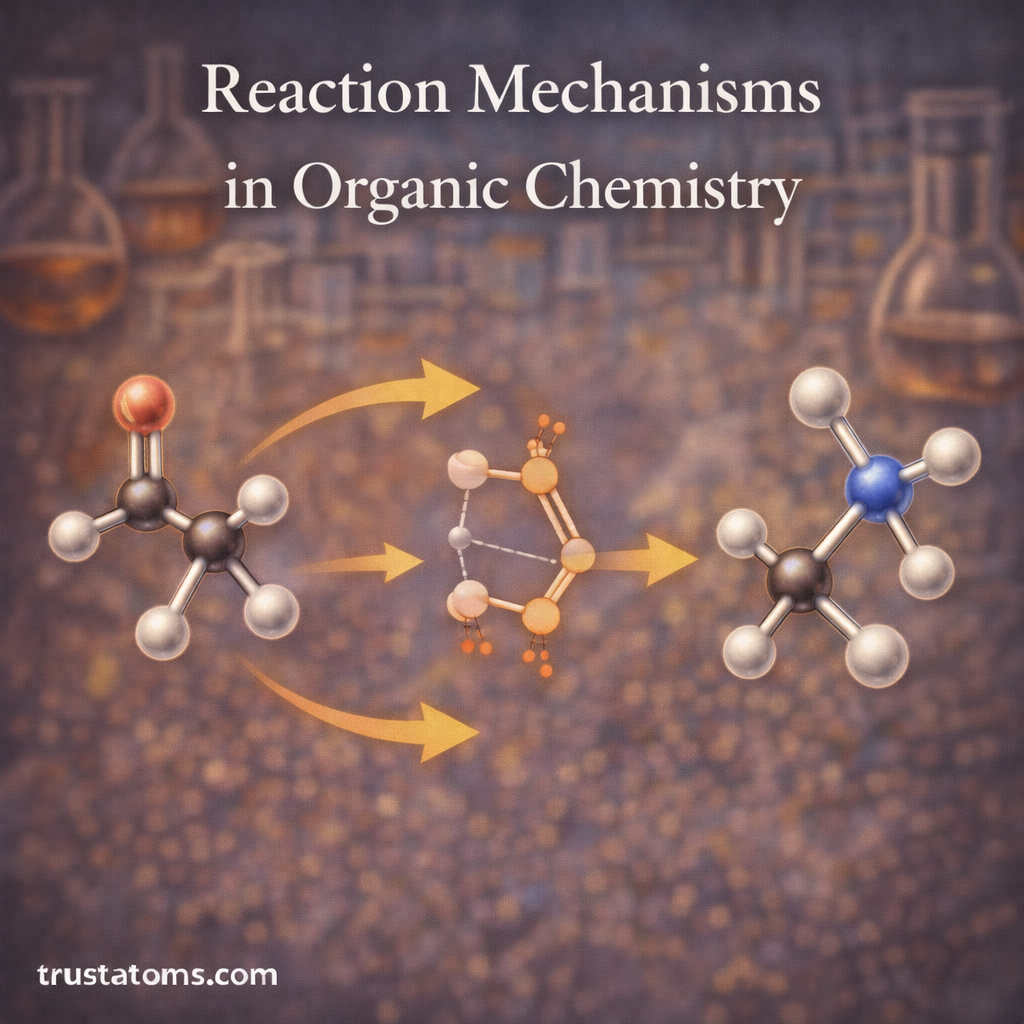
Illustration showing an organic chemistry reaction mechanism with reactants transforming into products through intermediate stages.
Illustration representing reaction mechanisms in organic chemistry, showing how molecules transform through intermediate steps. trustatoms.com

Reaction mechanisms are a core concept in organic chemistry that explain how chemical reactions occur step by step at the molecular level. Instead of only showing the starting materials and final products, reaction mechanisms reveal the detailed sequence of bond-breaking and bond-forming events that take place during a reaction.

Understanding reaction mechanisms helps chemists predict reaction outcomes, design new synthetic pathways, and control how molecules transform in laboratory and industrial processes.

By studying these mechanisms, scientists gain deeper insight into molecular behavior and chemical reactivity.

Continue reading “Reaction Mechanisms in Organic Chemistry”

Isomerism in Organic Molecules

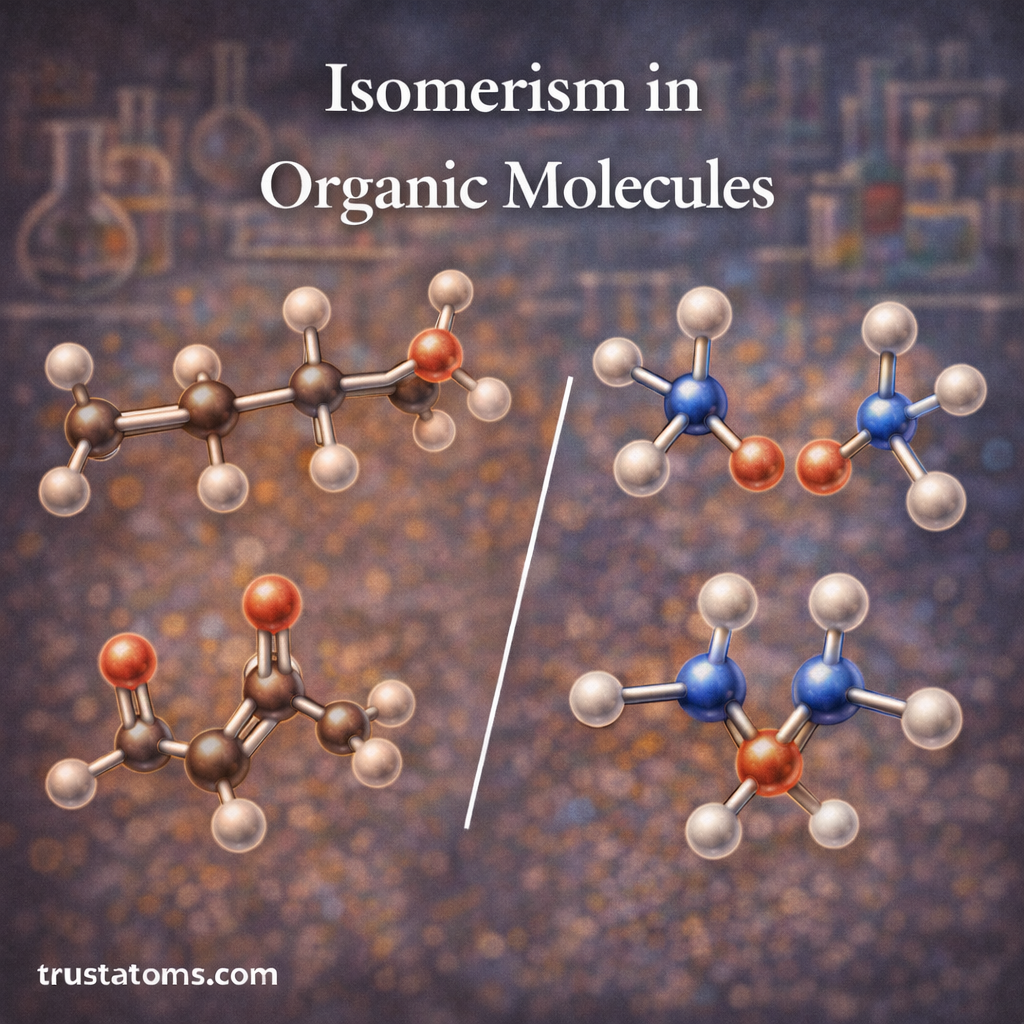
Illustration showing structural and stereoisomerism in organic molecules with different molecular arrangements representing isomers.
Illustration demonstrating isomerism in organic molecules, showing different structural and spatial arrangements of the same molecular formula. trustatoms.com

Isomerism is a fundamental concept in organic chemistry that explains how molecules with the same molecular formula can have different structures and properties. These variations arise because atoms in a molecule can be arranged in multiple ways while still maintaining the same overall chemical composition.

Isomers often display different chemical behaviors, physical properties, and biological effects, even though they contain the same types and numbers of atoms. Understanding isomerism helps chemists analyze molecular structure, design new compounds, and predict how substances will react.

Continue reading “Isomerism in Organic Molecules”

Functional Groups in Organic Chemistry

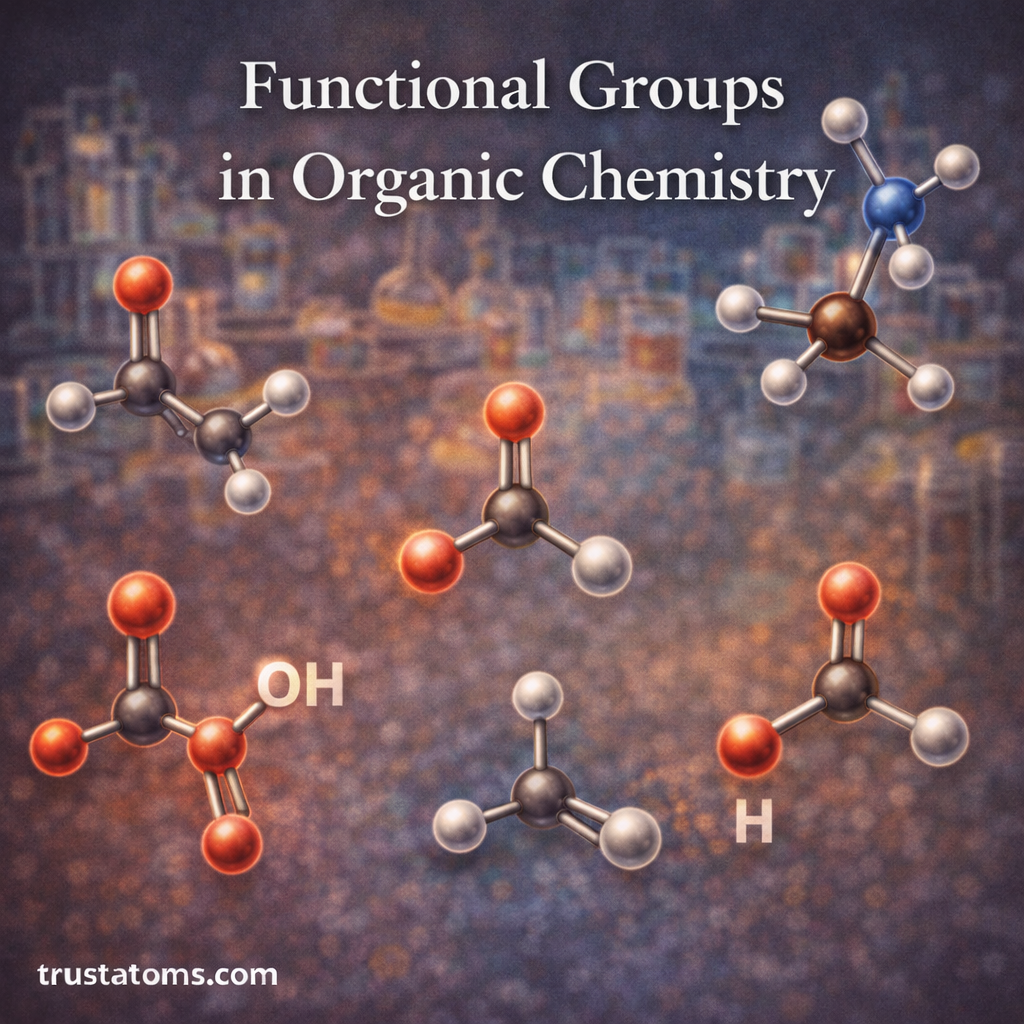
Illustration showing common functional groups in organic chemistry represented by molecular models used to explain chemical reactivity.
Illustration representing common functional groups in organic chemistry and how they influence molecular structure and chemical reactions. trustatoms.com

Functional groups are one of the most important concepts in organic chemistry. They are specific groups of atoms within a molecule that determine how the molecule behaves in chemical reactions. By identifying the functional groups present in a compound, chemists can predict its chemical properties, reactivity, and potential uses.

Organic molecules can contain one or more functional groups, and these groups largely control how molecules interact with other substances. Understanding functional groups helps explain everything from biological molecules to industrial chemicals and pharmaceuticals.

Continue reading “Functional Groups in Organic Chemistry”

Organometallic Compounds in Catalysis

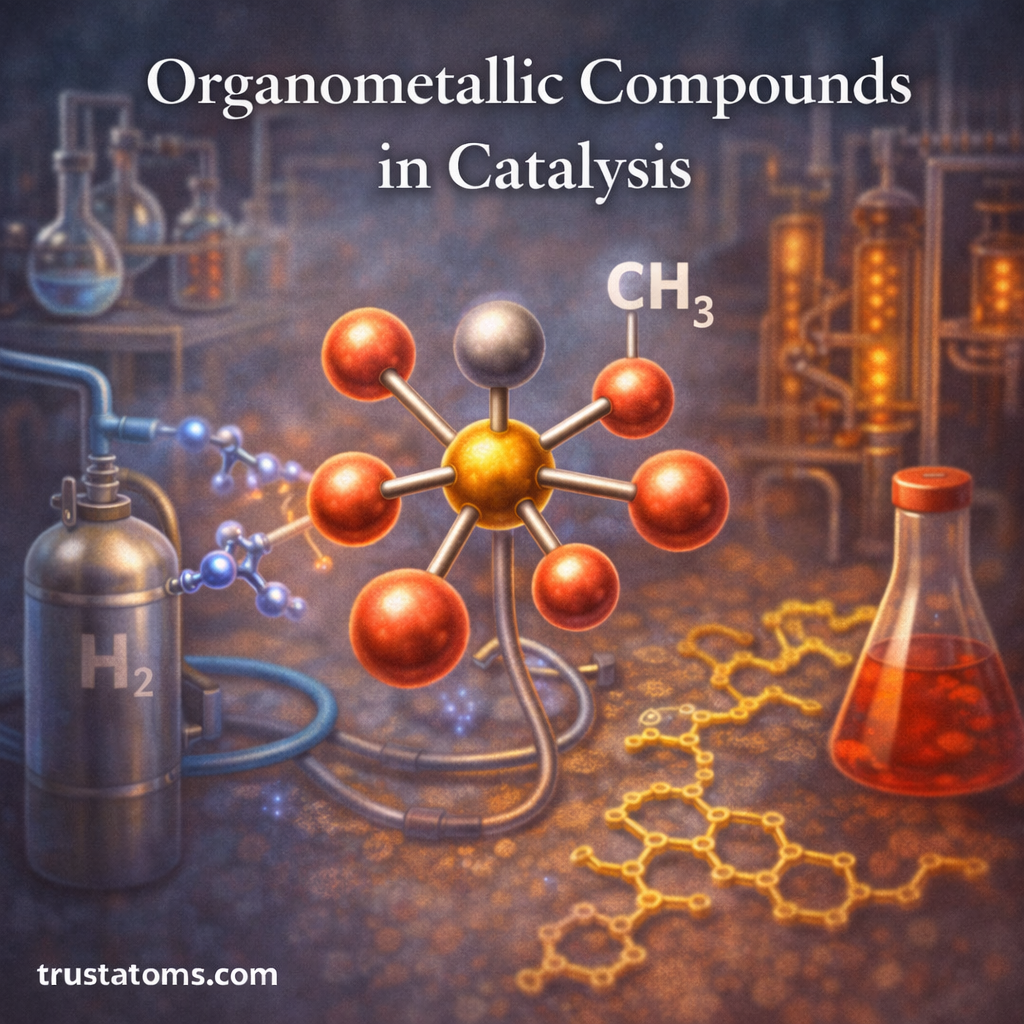
Illustration showing an organometallic catalyst with a metal center bonded to organic groups used in chemical reactions and industrial catalysis.
Illustration representing organometallic compounds used as catalysts in chemical reactions and industrial processes. trustatoms.com

Organometallic compounds are a fascinating class of substances that play a critical role in modern chemical reactions. These compounds contain metal–carbon bonds, linking a metal atom directly to an organic molecule. Because of this unique structure, organometallic compounds often serve as highly effective catalysts in chemical processes.

In catalysis, organometallic compounds help accelerate reactions, improve efficiency, and enable transformations that might otherwise be difficult or impossible. They are widely used in industries such as pharmaceuticals, plastics manufacturing, energy production, and environmental chemistry.

Understanding how organometallic compounds function in catalytic systems is an important topic in inorganic and industrial chemistry.

Continue reading “Organometallic Compounds in Catalysis”

Crystal Field Theory in Inorganic Systems

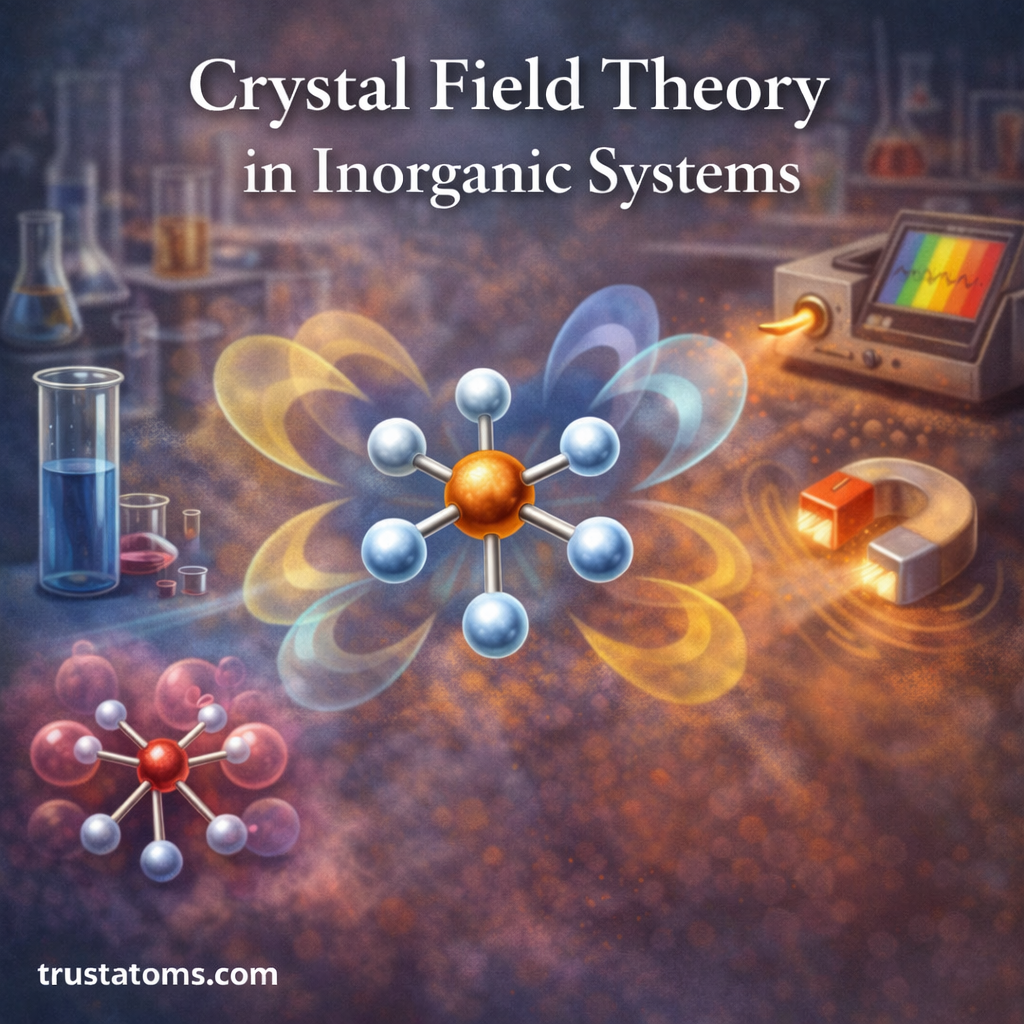
Illustration explaining crystal field theory in inorganic systems with a transition metal ion surrounded by ligands showing orbital interactions.
Illustration of crystal field theory showing a transition metal ion surrounded by ligands and the resulting orbital interactions in inorganic chemistry. trustatoms.com

Crystal Field Theory (CFT) is an important concept in inorganic chemistry that explains how transition metal ions interact with surrounding molecules or ions called ligands. The theory helps chemists understand the structure, color, magnetism, and stability of coordination compounds.

By analyzing how ligands influence the energy levels of a metal ion’s d-orbitals, Crystal Field Theory provides insight into the behavior of many inorganic systems. It is widely used to explain the properties of metal complexes found in laboratory chemistry, industrial catalysis, and biological molecules.

Understanding Crystal Field Theory allows scientists to predict how metal complexes will behave in chemical reactions and materials.

Continue reading “Crystal Field Theory in Inorganic Systems”

Transition Metals in Chemical Reactions

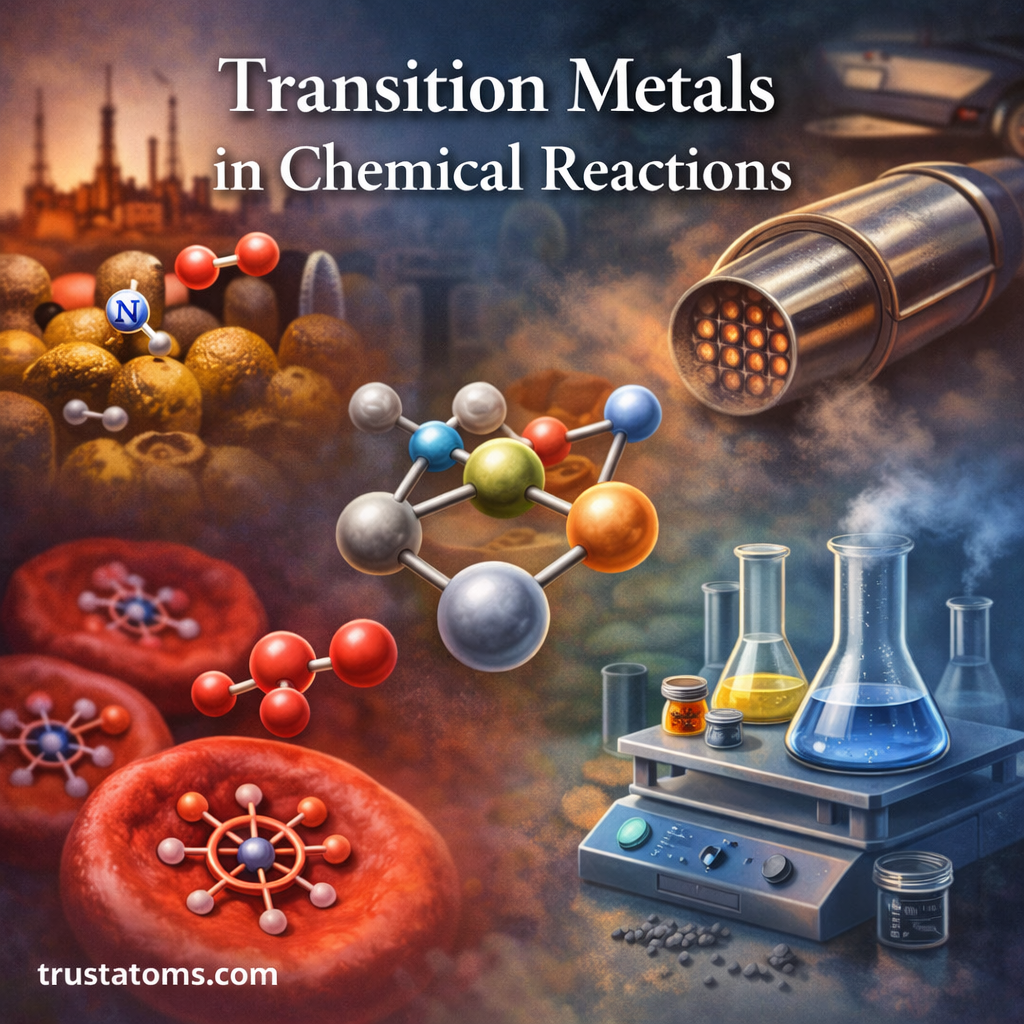
Illustration showing transition metals in chemical reactions, including catalytic processes in industry, laboratory chemistry, and biological systems.
Illustration representing transition metals driving chemical reactions in laboratories, industrial catalysis, and biological systems. trustatoms.com

Transition metals play a central role in many chemical reactions across nature, industry, and modern technology. Found in the middle of the periodic table, these metals have unique electronic structures that allow them to participate in complex chemical transformations.

Because transition metals can exist in multiple oxidation states and form strong interactions with other molecules, they are widely used as catalysts and reactive centers in chemical systems. From industrial manufacturing to biological processes, transition metals help drive reactions that would otherwise occur slowly or inefficiently.

Understanding how transition metals behave in chemical reactions is an essential part of inorganic chemistry and helps explain many real-world chemical processes.

Continue reading “Transition Metals in Chemical Reactions”

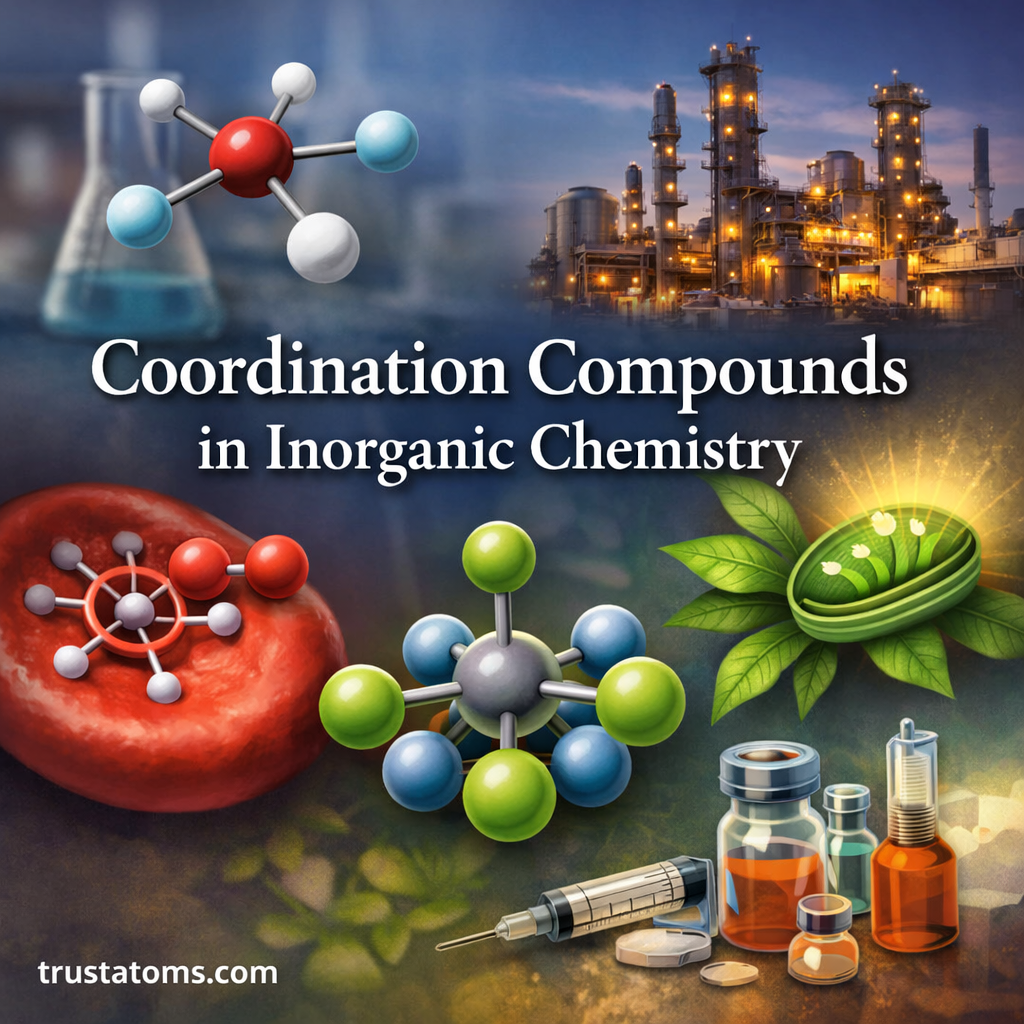
Coordination Compounds in Inorganic Chemistry

Illustration showing coordination compounds in inorganic chemistry with a central metal atom surrounded by ligands, highlighting biological and industrial applications.
Illustration representing coordination compounds with a central metal atom bonded to surrounding ligands, used in biological systems and industrial chemistry. trustatoms.com

Coordination compounds are an essential part of inorganic chemistry, playing a major role in biological systems, industrial processes, and modern materials science. These compounds consist of a central metal atom or ion bonded to surrounding molecules or ions known as ligands.

From oxygen transport in blood to catalysts used in chemical manufacturing, coordination compounds appear in many natural and technological systems. Understanding how these compounds form, behave, and interact helps chemists design new medicines, improve industrial reactions, and develop advanced materials.

Continue reading “Coordination Compounds in Inorganic Chemistry”

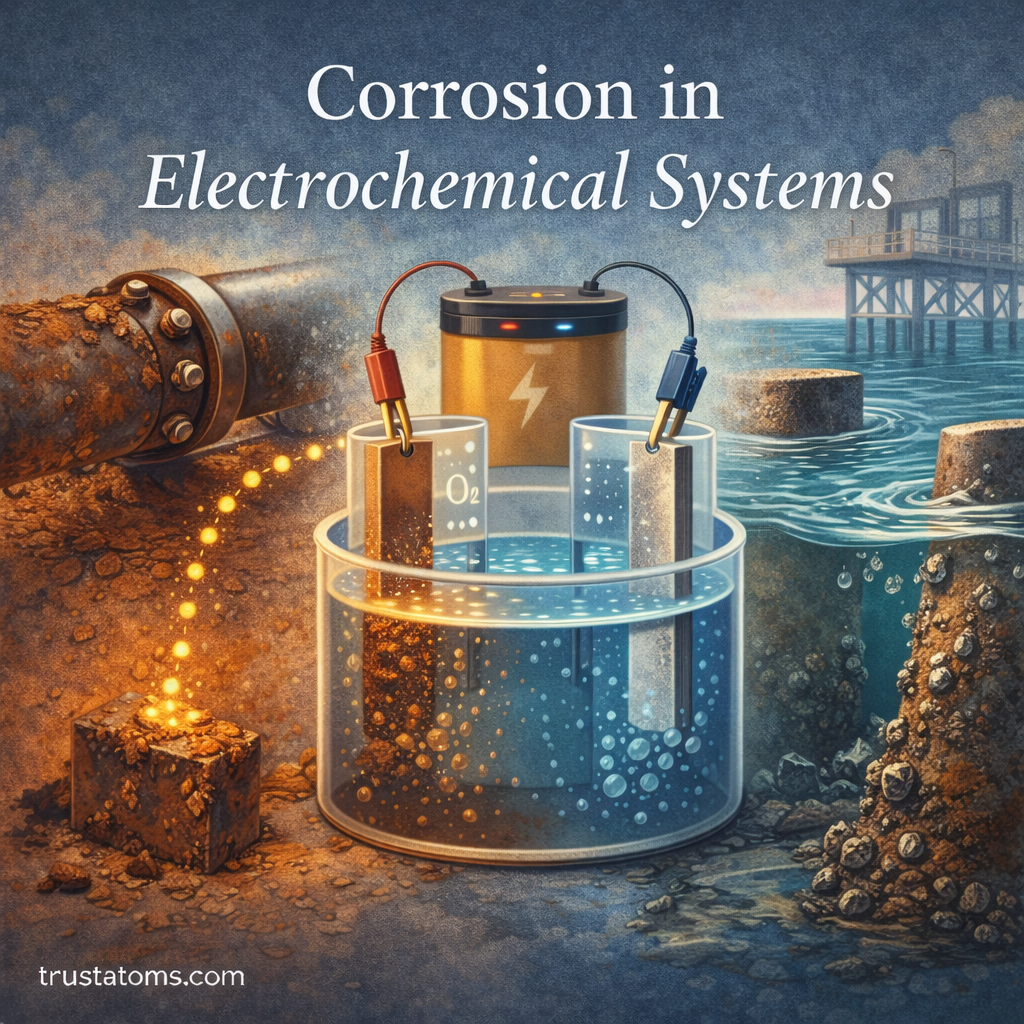
Corrosion in Electrochemical Systems

Illustration showing corrosion processes in electrochemical systems, including rusting metal, an electrochemical corrosion cell, and marine corrosion on metal structures.
Illustration explaining how corrosion occurs in electrochemical systems, including rust formation, electrode reactions, and environmental corrosion. trustatoms.com

Corrosion is a natural electrochemical process that gradually degrades metals through chemical reactions with their environment. It affects everything from bridges and pipelines to vehicles and electronic components.

In electrochemical systems, corrosion occurs when metals lose electrons and form compounds such as oxides, hydroxides, or sulfides. Understanding corrosion from an electrochemical perspective helps scientists and engineers design better materials, improve infrastructure durability, and develop strategies to prevent damage.

Because corrosion can lead to structural failure, economic loss, and safety risks, it is a major focus of research in chemistry, materials science, and engineering.

Continue reading “Corrosion in Electrochemical Systems”

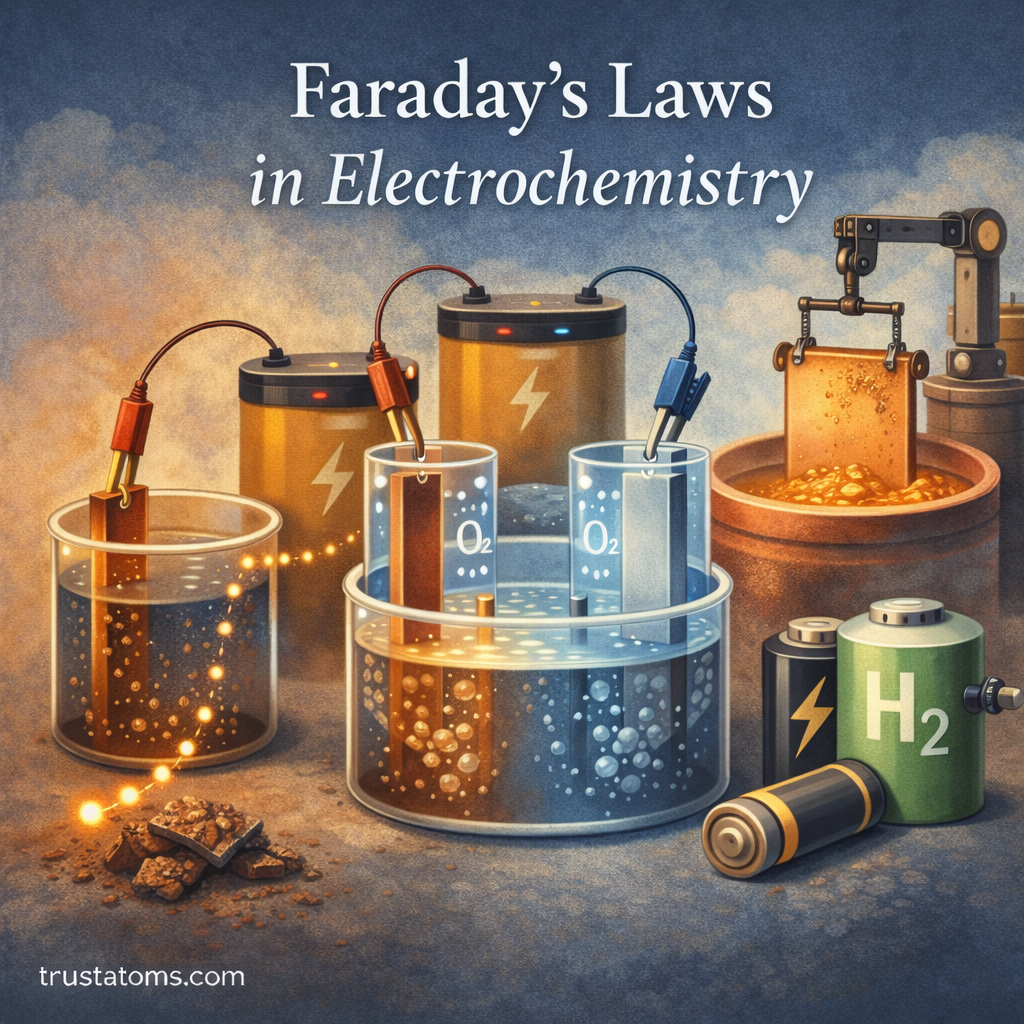
Faraday’s Laws in Electrochemistry

Illustration showing electrolysis processes used to demonstrate Faraday’s Laws in electrochemistry, including metal deposition, water electrolysis, and electron flow between electrodes.
Illustration demonstrating electrolysis processes used to explain Faraday’s Laws in electrochemistry, including metal deposition and water splitting. trustatoms.com

Faraday’s Laws of Electrolysis are foundational principles in electrochemistry that describe how electrical energy drives chemical reactions. These laws explain the relationship between the amount of electric charge passing through a substance and the amount of chemical change that occurs.

First formulated by the scientist Michael Faraday in the 19th century, these laws remain essential for understanding processes such as electroplating, metal refining, battery charging, and hydrogen production.

By linking electricity and chemical reactions quantitatively, Faraday’s work helped establish electrochemistry as a major scientific field and continues to influence modern energy technologies.

Continue reading “Faraday’s Laws in Electrochemistry”