What Is a Covalent Compound?

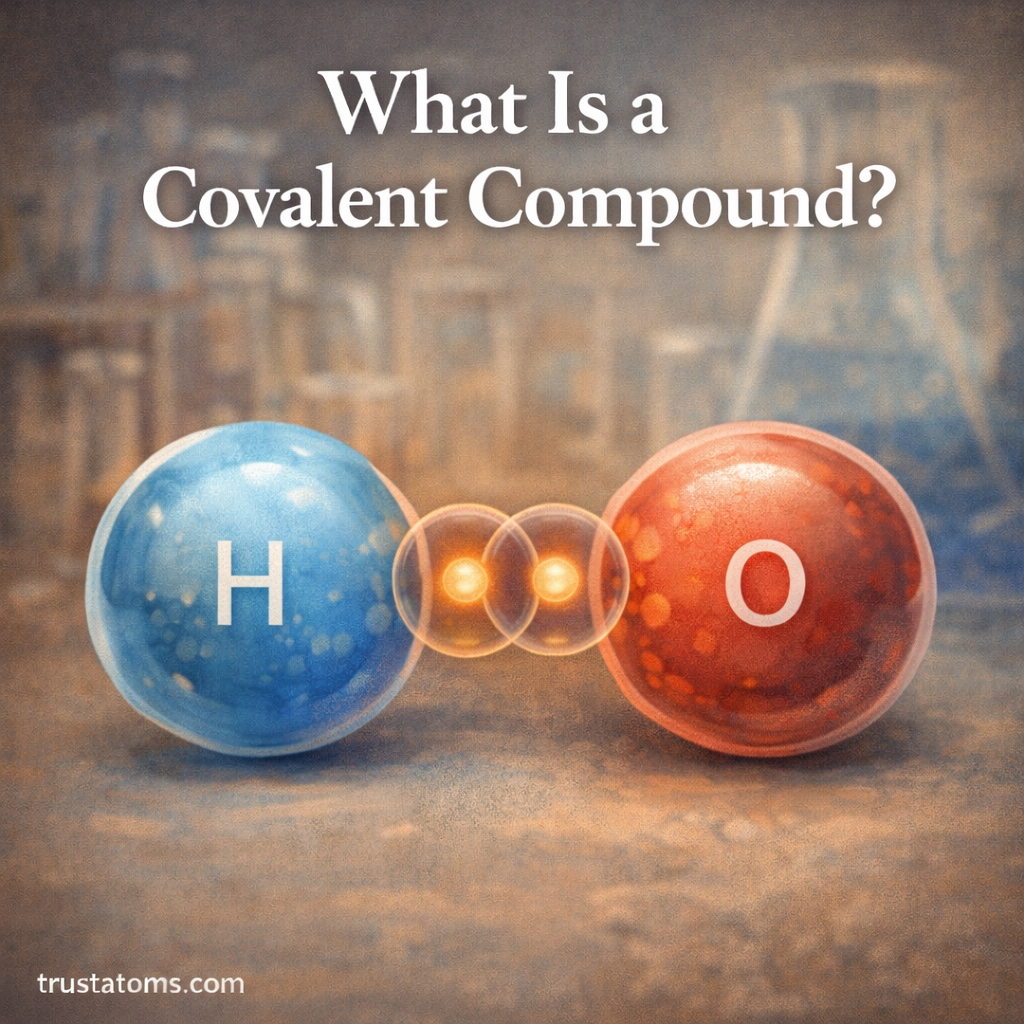
Illustration showing atoms sharing electrons to form a covalent compound molecule in basic chemistry.
Illustration demonstrating how atoms share electrons to form a covalent compound molecule. trustatoms.com

A covalent compound is a chemical compound formed when two or more nonmetal atoms share electrons. Instead of transferring electrons like ionic compounds do, covalent compounds are created through shared electron pairs that hold atoms together in stable molecules.

Covalent compounds make up many of the substances we encounter every day, including water, carbon dioxide, and methane. They are essential to biological systems, environmental chemistry, and many industrial processes.

Understanding covalent compounds helps explain how atoms bond together and how molecules form the building blocks of matter.

Continue reading “What Is a Covalent Compound?”
What Is a Neutralization Reaction?

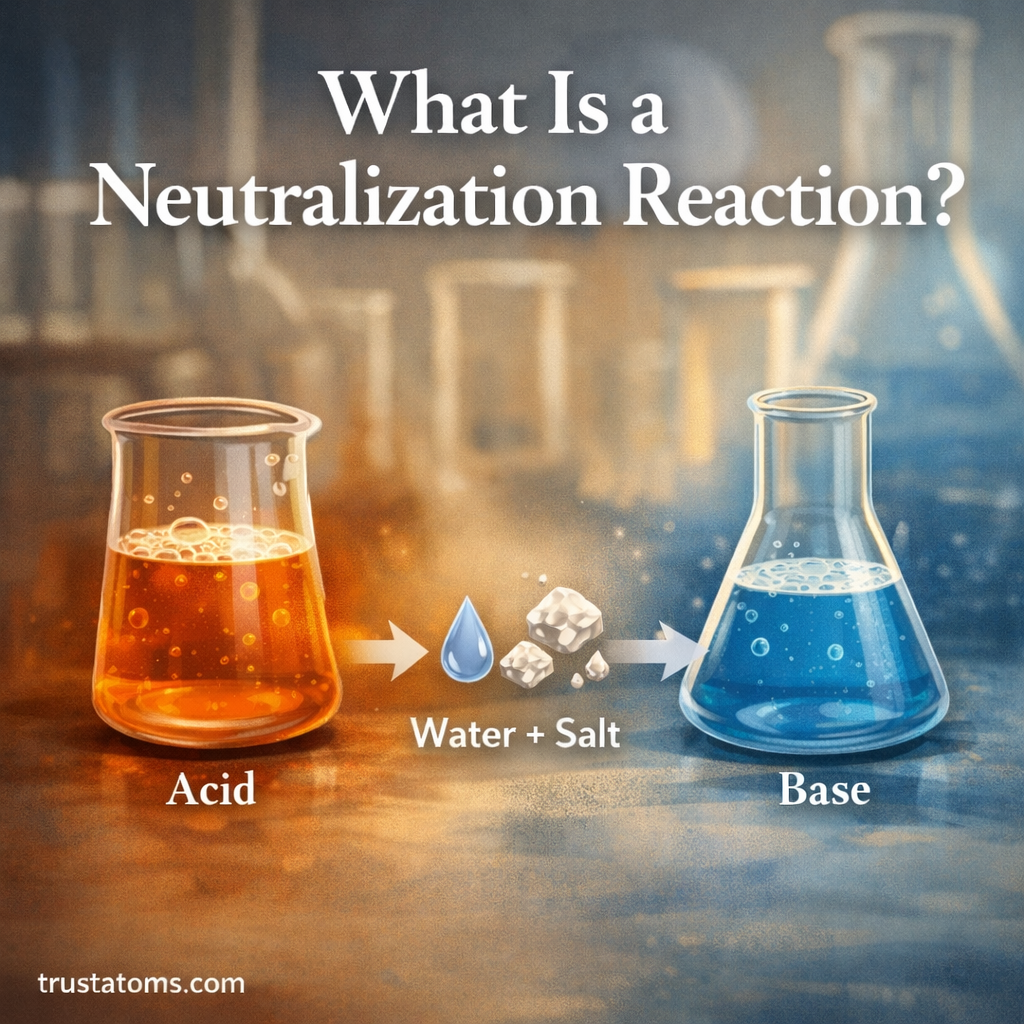
Illustrated diagram showing an acid and a base reacting to form water and salt, explaining a neutralization reaction in chemistry.
Simple chemistry diagram showing how acids and bases react to produce water and salt in a neutralization reaction. trustatoms.com

A neutralization reaction is a type of chemical reaction in which an acid and a base combine to produce water and a salt. This process reduces the acidic or basic properties of the substances involved, often bringing the solution closer to a neutral pH.

Neutralization reactions are an important part of chemistry because they occur in many natural processes, industrial applications, and everyday situations—from digestion in the human body to soil treatment in agriculture.

Understanding neutralization reactions helps explain how acids and bases interact and how chemical balance can be restored when solutions become too acidic or too basic.

Continue reading “What Is a Neutralization Reaction?”

What Is an Acid–Base Reaction?

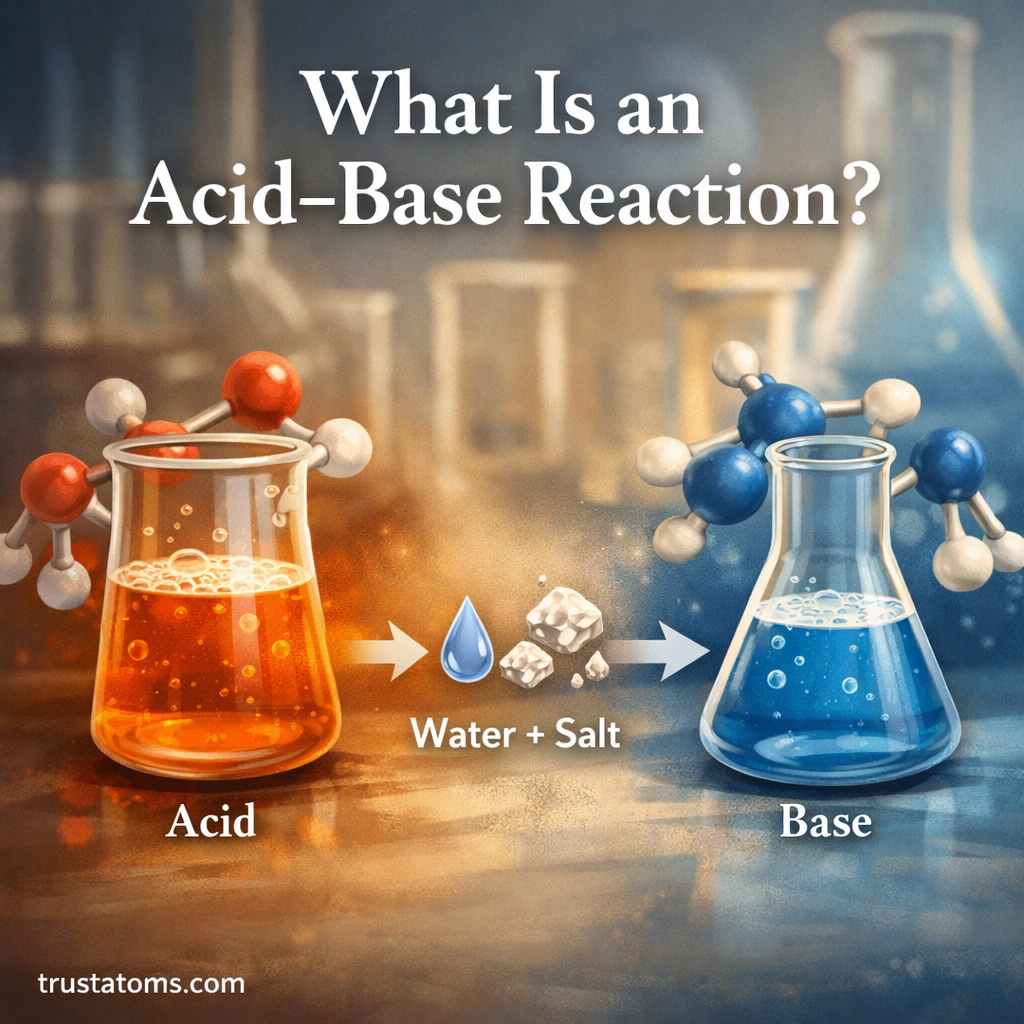
Illustrated diagram showing an acid and a base reacting to form water and salt, explaining the concept of an acid–base reaction in chemistry.
Simple illustration explaining how acids and bases react to form water and salt. trustatoms.com

Acid–base reactions are among the most fundamental chemical reactions in nature. They occur when an acid interacts with a base, typically resulting in the transfer of a proton (hydrogen ion) from one substance to another.

These reactions are responsible for many everyday processes—from digestion in the human body to the effectiveness of cleaning products and even the chemistry of soil that supports plant growth.

Understanding acid–base reactions helps explain how substances neutralize each other and how chemical balance is maintained in both natural and industrial systems.

Continue reading “What Is an Acid–Base Reaction?”

What Is a Redox Reaction?

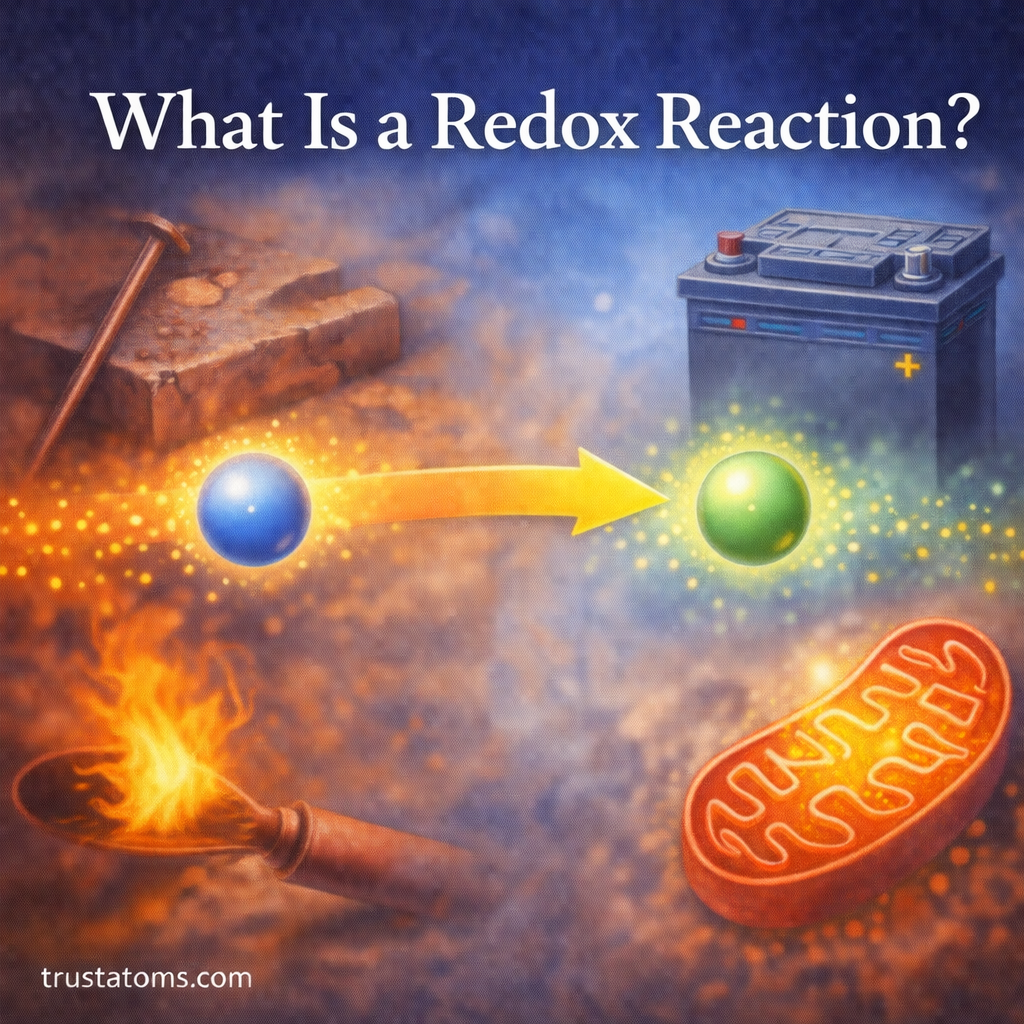
Illustration explaining a redox reaction with electron transfer between substances and real-world examples like rusting, combustion, and batteries.
Illustration showing the concept of oxidation and reduction through electron transfer with examples such as rusting metal, combustion, and battery energy. trustatoms.com.

A redox reaction is one of the most important types of chemical reactions in science. These reactions are responsible for many natural processes, from how batteries produce electricity to how living organisms generate energy.

The term redox comes from two words: reduction and oxidation. In every redox reaction, one substance loses electrons while another substance gains electrons.

In simple terms, a redox reaction is a chemical reaction in which electrons are transferred between substances. This movement of electrons causes changes in the oxidation states of the reacting molecules.

Redox reactions are essential in chemistry, biology, environmental science, and industrial processes.

Continue reading “What Is a Redox Reaction?”

What Is Polymerization?

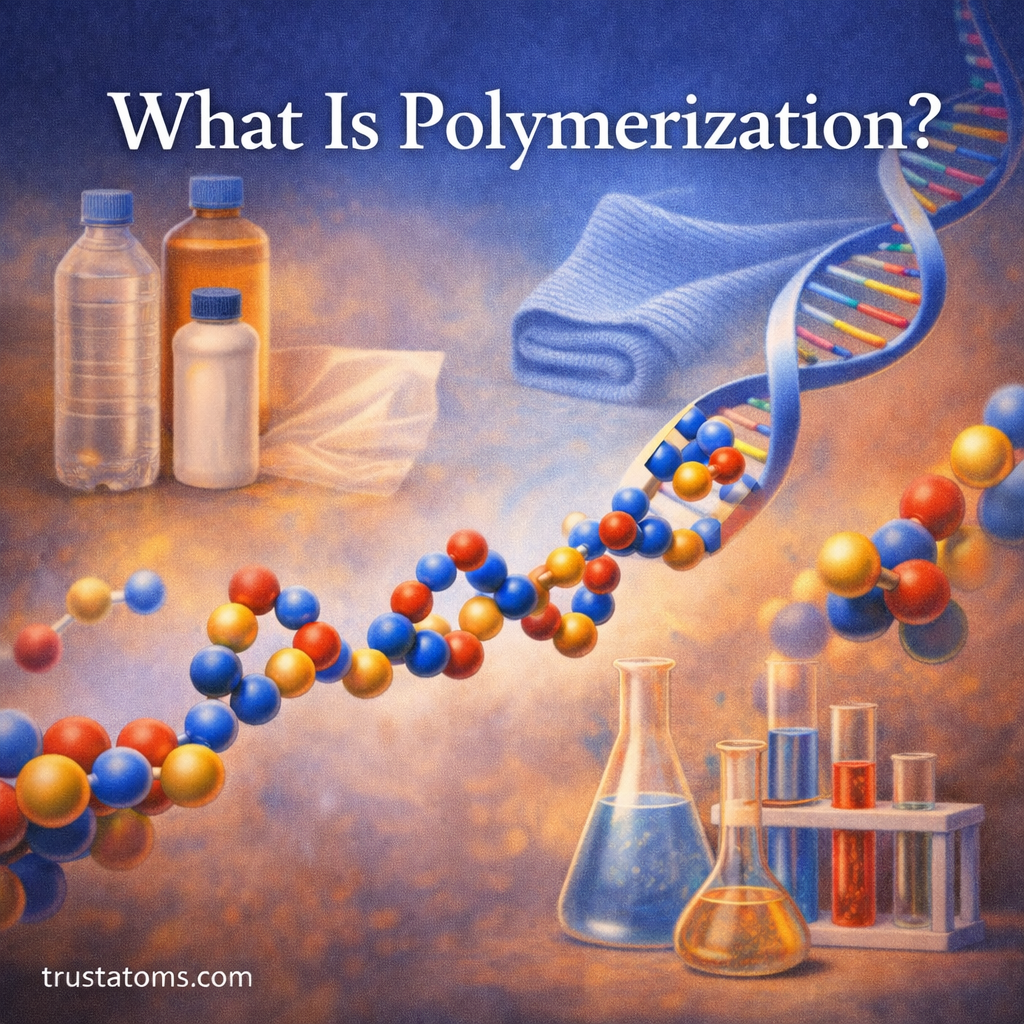
Educational illustration showing polymer chains forming from smaller molecules with examples like plastics, fabrics, DNA, and laboratory chemistry.
Illustration explaining polymerization by showing small molecules joining into long chains and the everyday materials created from polymers. trustatoms.com.

Polymerization is a fundamental process in chemistry that explains how small molecules combine to form much larger structures. This process is responsible for creating many materials used in everyday life, including plastics, synthetic fibers, rubber, and even biological molecules.

In simple terms, polymerization is the chemical process where small repeating molecules join together to form a larger chain-like molecule called a polymer. These large molecules can contain hundreds, thousands, or even millions of repeating units.

Understanding polymerization helps explain how many modern materials are created and why polymers are essential in industries such as packaging, medicine, electronics, and manufacturing.

Continue reading “What Is Polymerization?”

What Is an Alcohol in Chemistry?

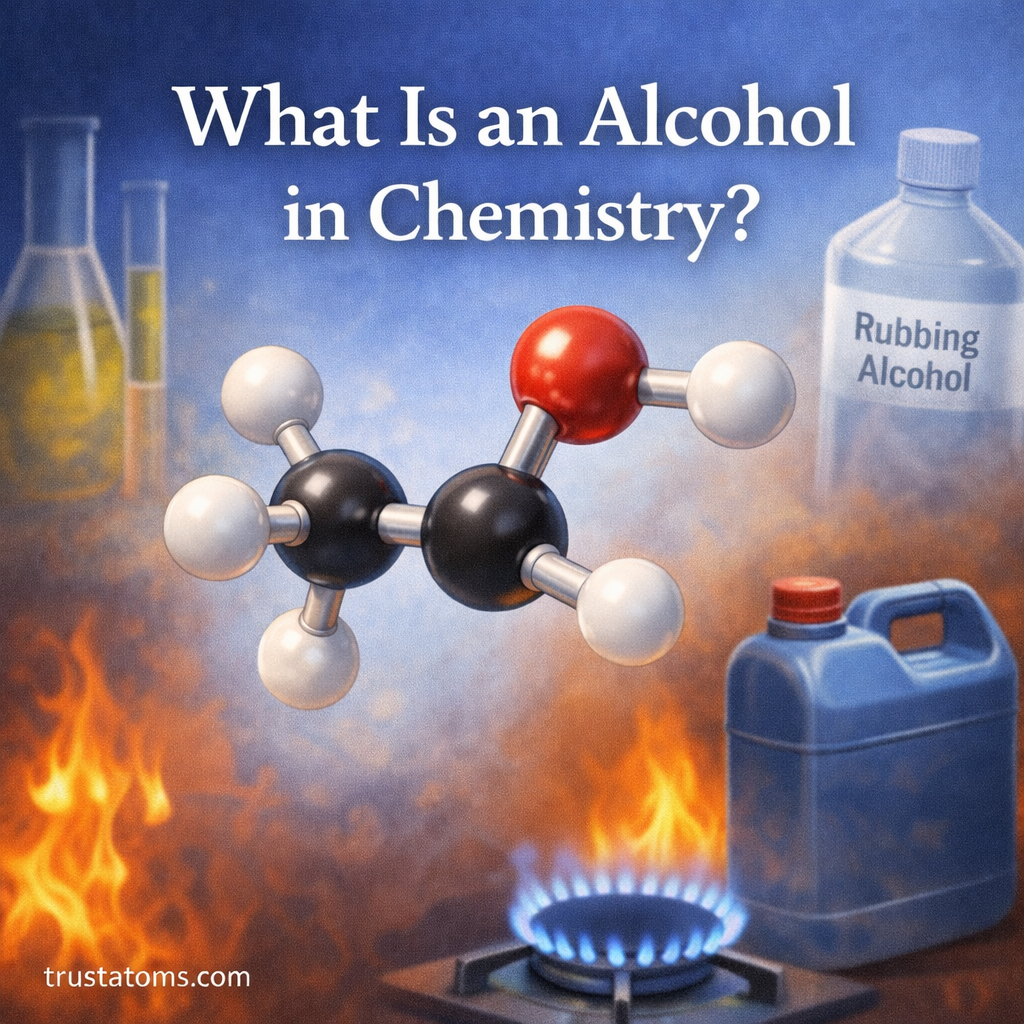
Educational illustration showing an alcohol molecule with a hydroxyl group and real-world examples like disinfectant, fuel, and laboratory chemistry.
Illustration explaining the concept of alcohol molecules in chemistry and their connection to disinfectants, fuels, and laboratory science. trustatoms.com.

In chemistry, the term alcohol refers to a specific group of organic compounds that contain a characteristic functional group. While the word often brings to mind beverages like ethanol in drinks, alcohols are actually a broad class of chemicals used in medicine, fuels, cleaning products, and industrial manufacturing.

An alcohol in chemistry is an organic compound that contains a hydroxyl group (-OH) attached to a carbon atom. This small structural feature gives alcohols many unique chemical and physical properties.

Alcohols play an important role in organic chemistry, biology, and industry, making them one of the most commonly studied functional groups.

Continue reading “What Is an Alcohol in Chemistry?”

What Is an Alkene?

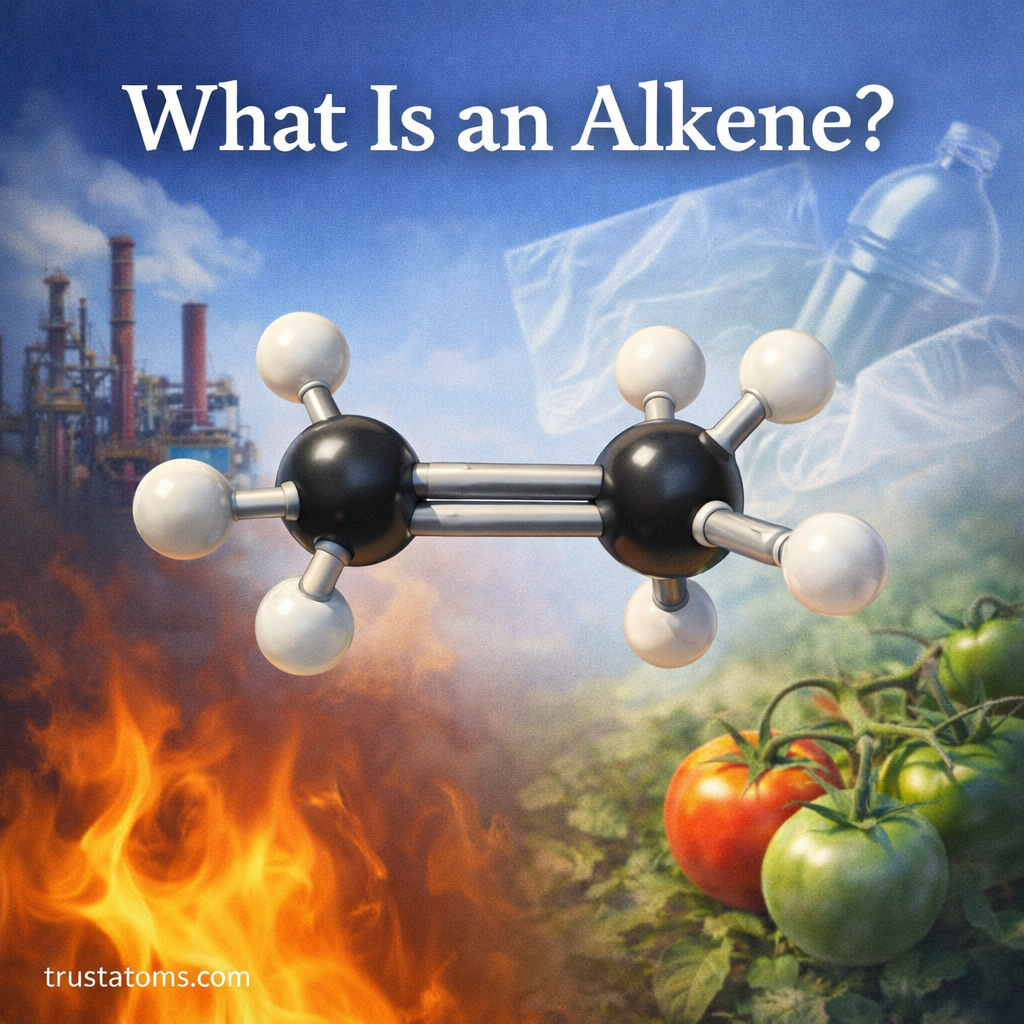
Illustration showing an alkene molecule with a carbon double bond and real-world examples such as plastics, industrial refining, and plant processes.
Illustration explaining the concept of alkenes and their role in plastics, industry, and natural plant processes. trustatoms.com.

Alkenes are an important class of organic compounds widely studied in chemistry. They are closely related to alkanes but differ in one key structural feature that makes them much more chemically reactive.

An alkene is a hydrocarbon that contains at least one carbon–carbon double bond. This double bond changes the chemical behavior of the molecule, allowing it to participate in many reactions used in chemical manufacturing and biological processes.

Because of this structure, alkenes are often described as unsaturated hydrocarbons, meaning the carbon atoms are not bonded to the maximum possible number of hydrogen atoms.

Continue reading “What Is an Alkene?”

What Is an Alkane?

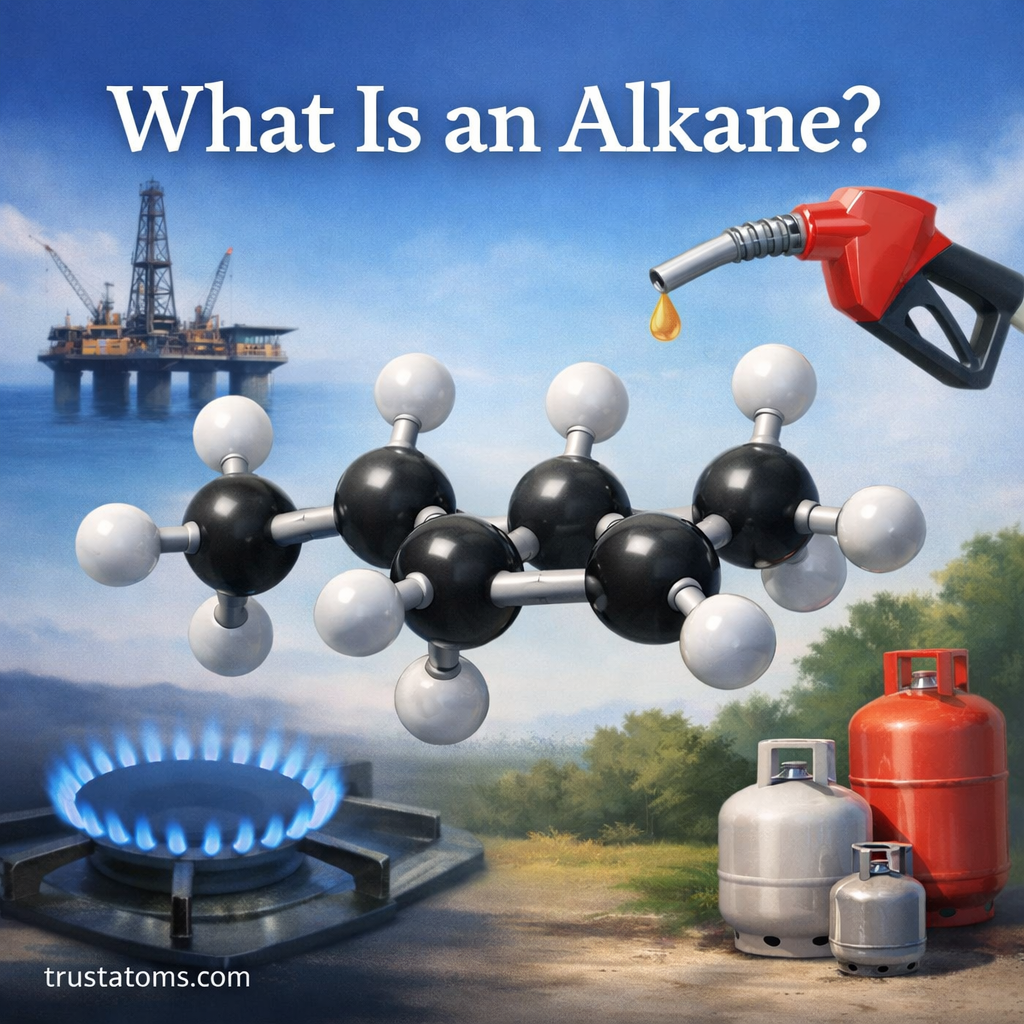
Simple illustration showing an alkane hydrocarbon chain and common fuel sources like natural gas, propane, and petroleum.
Illustration showing the basic concept of alkanes and their connection to common fuels. trustatoms.com.

Alkanes are one of the most fundamental groups of organic compounds in chemistry. They form the basic framework of many fuels, materials, and everyday chemical products.

In simple terms, an alkane is a hydrocarbon that contains only single bonds between carbon atoms. Because of this structure, alkanes are often described as saturated hydrocarbons, meaning the carbon atoms hold the maximum number of hydrogen atoms possible.

Understanding alkanes is important because they are the simplest organic molecules and serve as the starting point for learning about more complex organic chemistry reactions.

Continue reading “What Is an Alkane?”

What Is Organic Chemistry?

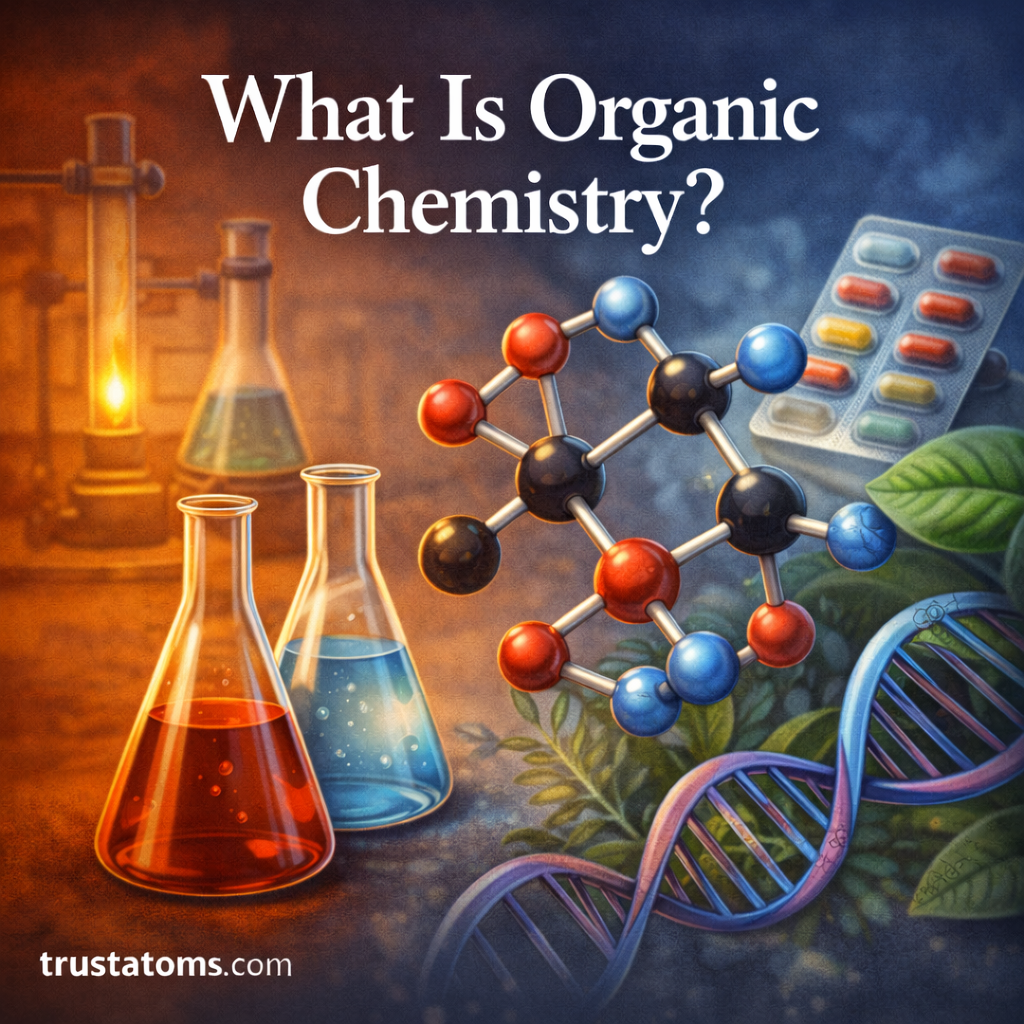
Illustration representing organic chemistry with laboratory glassware, a carbon-based molecular structure, plants, and DNA to show carbon compounds in science and life.
Illustration showing the foundations of organic chemistry through carbon molecules, laboratory experiments, and biological compounds. trustatoms.com.

Organic chemistry is a major branch of chemistry that focuses on the study of carbon-containing compounds. These compounds form the basis of life and appear in countless materials used in everyday life, from medicines and plastics to fuels and food.

At its core, organic chemistry examines how carbon atoms bond with other elements to form molecules with unique structures and properties. Because carbon can form complex chains and rings, it is capable of creating an enormous variety of chemical compounds.

Today, organic chemistry plays a vital role in science, medicine, technology, and industry.

Continue reading “What Is Organic Chemistry?”

What Is a Buffer Solution?

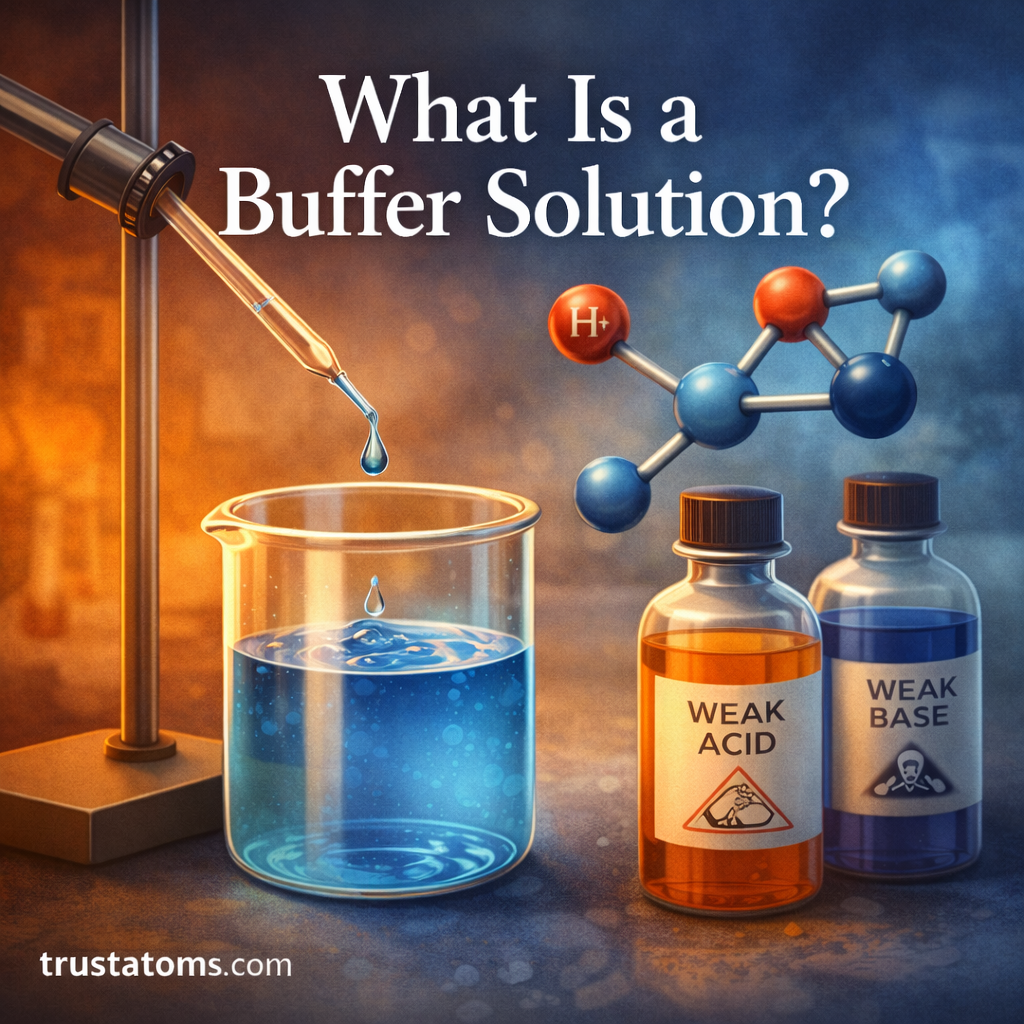
Illustration explaining a buffer solution in chemistry with a beaker, pipette adding liquid, and bottles representing weak acid and weak base that stabilize pH.
Illustration showing how a buffer solution works by combining a weak acid and weak base to stabilize pH in a chemical system. trustatoms.com.

In chemistry, many reactions depend on the pH of a solution, which measures how acidic or basic it is. Some chemical systems require a stable pH to function properly. This is where buffer solutions play an important role.

A buffer solution is a special type of solution that resists changes in pH when small amounts of acid or base are added. Instead of allowing the solution to quickly become more acidic or more basic, a buffer stabilizes the pH and keeps it within a relatively narrow range.

Buffer solutions are essential in chemistry, biology, medicine, and many industrial processes.

Continue reading “What Is a Buffer Solution?”