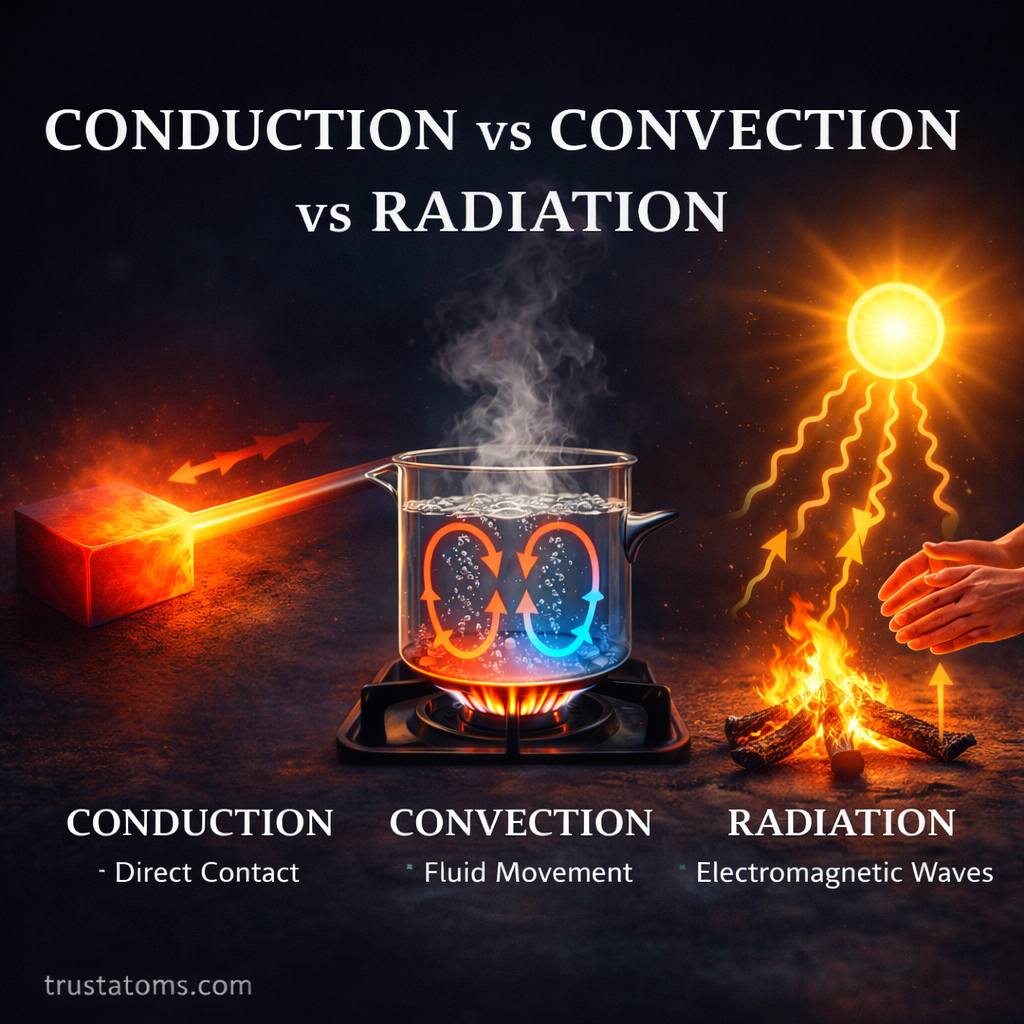
Conduction vs Convection vs Radiation

Diagram comparing conduction, convection, and radiation with examples of heat transfer through direct contact, fluid movement, and electromagnetic waves.
Visual comparison of conduction, convection, and radiation showing how heat moves through contact, fluids, and electromagnetic waves. trustatoms.com

Heat moves in predictable ways. Whether you’re cooking food, feeling sunlight on your skin, or turning on a heater in winter, you’re witnessing heat transfer in action.

In physics, heat transfer occurs through three main mechanisms:

  1. Conduction
  2. Convection
  3. Radiation

Understanding the difference between conduction vs convection vs radiation helps explain everything from weather systems to engine design.

Let’s break them down clearly and compare how each works.

Continue reading “Conduction vs Convection vs Radiation”
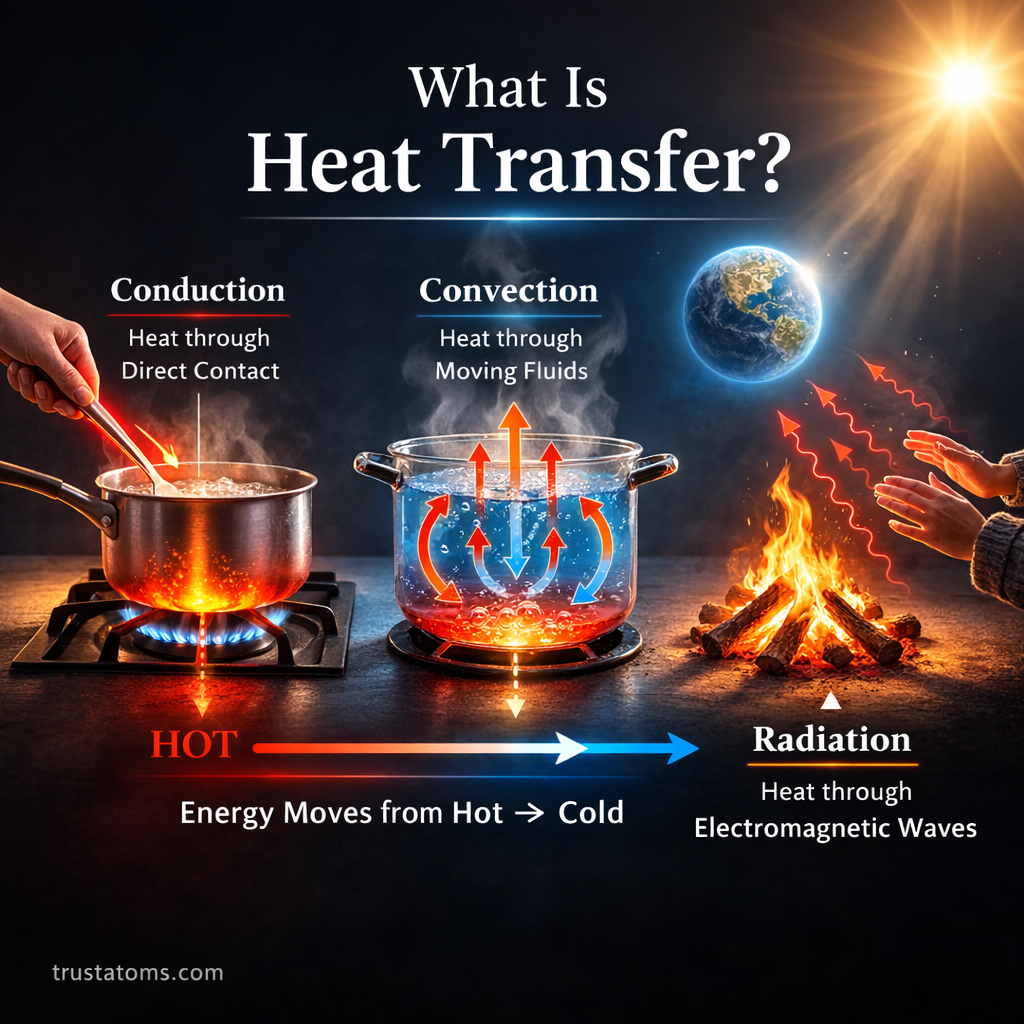

What Is Heat Transfer?

Illustrated diagram explaining what heat transfer is, showing conduction, convection, and radiation with energy moving from hot to cold.
Educational diagram illustrating conduction, convection, and radiation as the three types of heat transfer. trustatoms.com

Heat transfer is the movement of thermal energy from one object or system to another due to a temperature difference. In simple terms, heat always flows from something warmer to something cooler until both reach the same temperature.

Understanding heat transfer is essential in physics because it explains everyday experiences — from why a metal spoon gets hot in soup to how the Sun warms Earth. It also plays a critical role in engineering, climate science, space exploration, and modern technology.

Continue reading “What Is Heat Transfer?”

What Is Entropy?

Illustrated diagram showing melting ice, broken clock, steam engine, glowing light bulb, and spiral galaxy representing the concept of entropy in physics.
Conceptual illustration representing entropy in physics, including melting ice, time, energy loss, and cosmic evolution. trustatoms.com

Entropy is one of the most important — and most misunderstood — concepts in physics. It explains why ice melts, why engines lose efficiency, why time seems to move in one direction, and even how the universe evolves.

In simple terms, entropy measures disorder — or more accurately, the number of possible ways a system can be arranged.

But that short definition only scratches the surface.

Let’s break it down clearly.

Continue reading “What Is Entropy?”

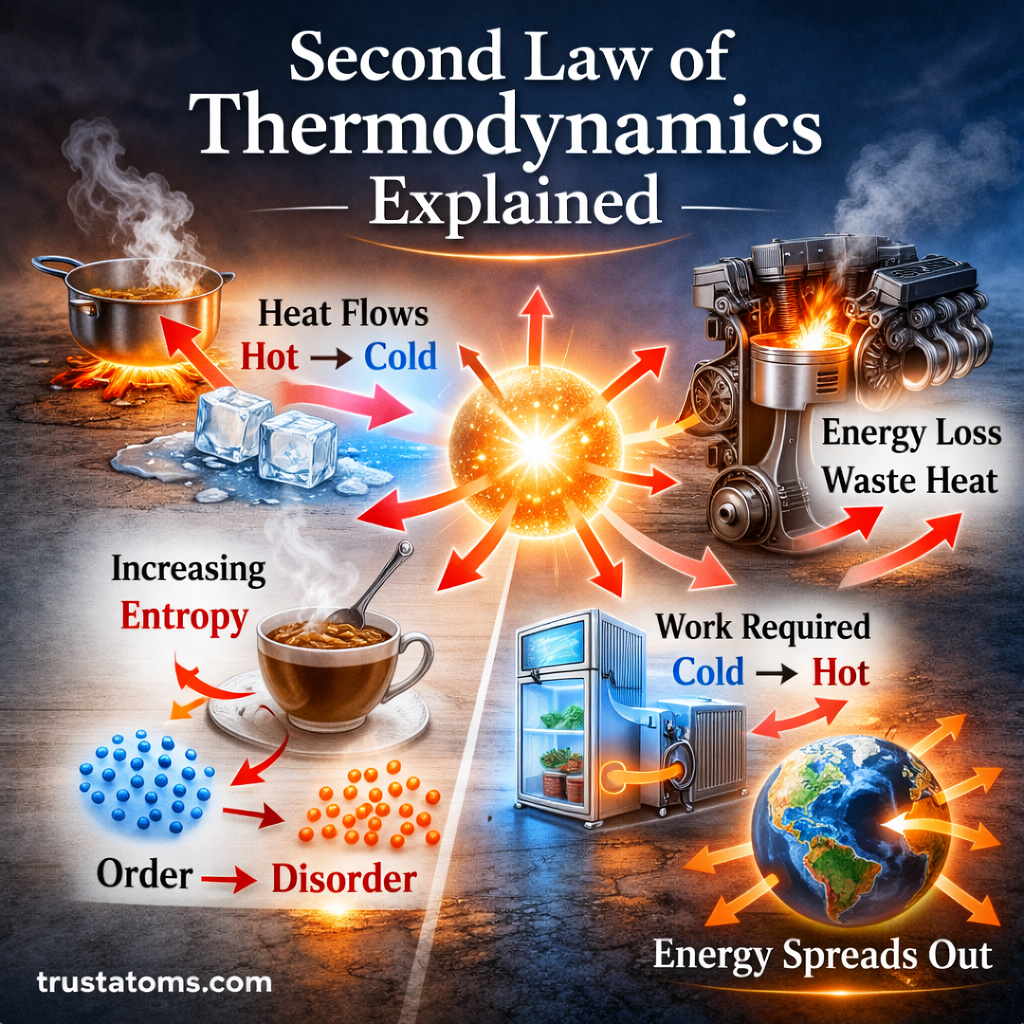
Second Law of Thermodynamics Explained

Illustration showing the Second Law of Thermodynamics with heat flowing from hot to cold, increasing entropy, engine waste heat, and energy spreading outward.
Visual explanation of the Second Law of Thermodynamics showing heat flow, entropy increase, and energy loss as waste heat. trustatoms.com

The Second Law of Thermodynamics explains why energy spreads out and why no process is perfectly efficient.

In simple terms:

Heat flows naturally from hot to cold, and disorder (entropy) tends to increase over time.

While the First Law tells us energy is conserved, the Second Law tells us how energy behaves.

It explains:

  • Why coffee cools down
  • Why engines waste heat
  • Why perpetual motion machines are impossible
  • Why the universe moves toward greater disorder

This law shapes everything from power plants to the fate of the cosmos.

Continue reading “Second Law of Thermodynamics Explained”

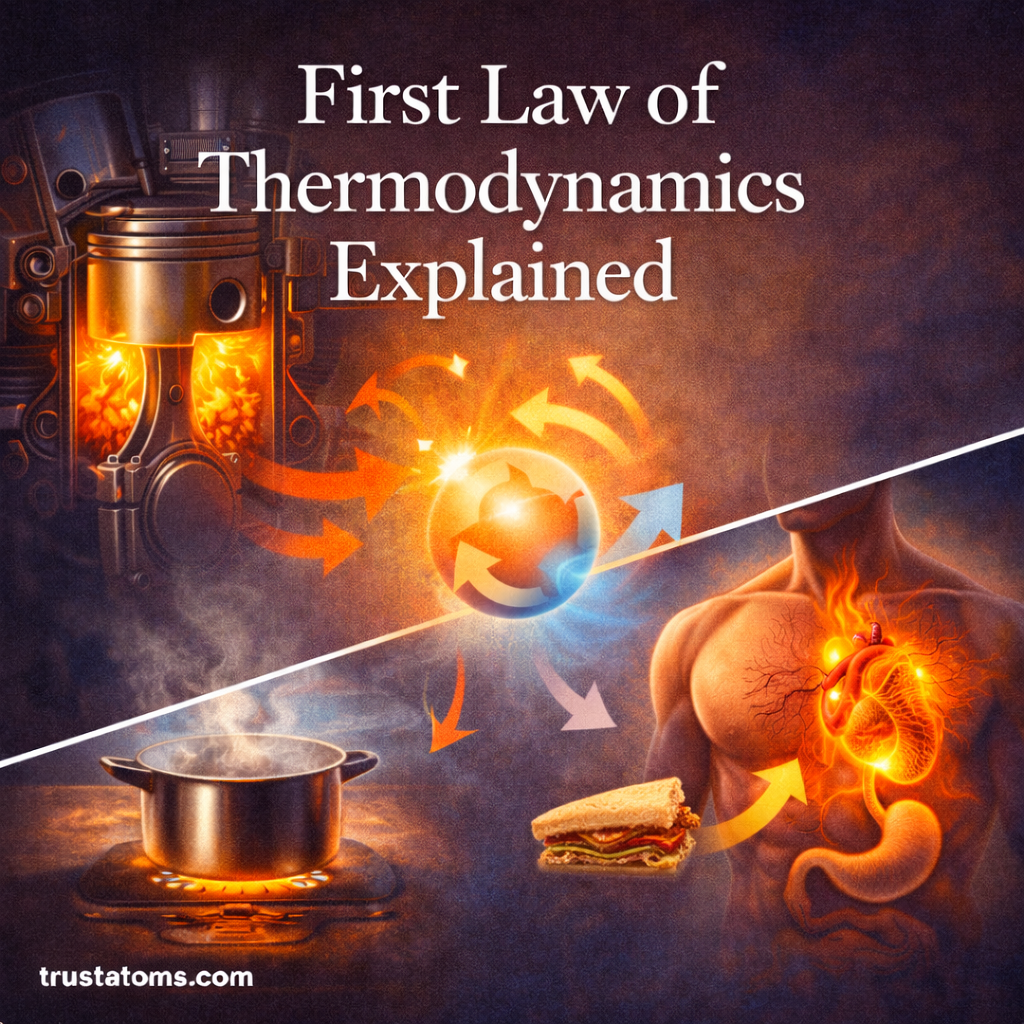
First Law of Thermodynamics Explained

Illustration showing the First Law of Thermodynamics with energy transfer in a car engine, boiling pot, and human metabolism, connected by arrows representing energy conservation.
Visual explanation of the First Law of Thermodynamics showing energy conservation across engines, heating, and metabolism. trustatoms.com

The First Law of Thermodynamics states:

Energy cannot be created or destroyed — only transferred or transformed.

This is the principle of energy conservation applied to heat and work.

In simple terms:

The total energy in a closed system remains constant.

If energy enters a system, something inside must change. If energy leaves, something inside must decrease.

This law explains how engines run, why refrigerators need electricity, and how your body uses food for fuel.

Continue reading “First Law of Thermodynamics Explained”

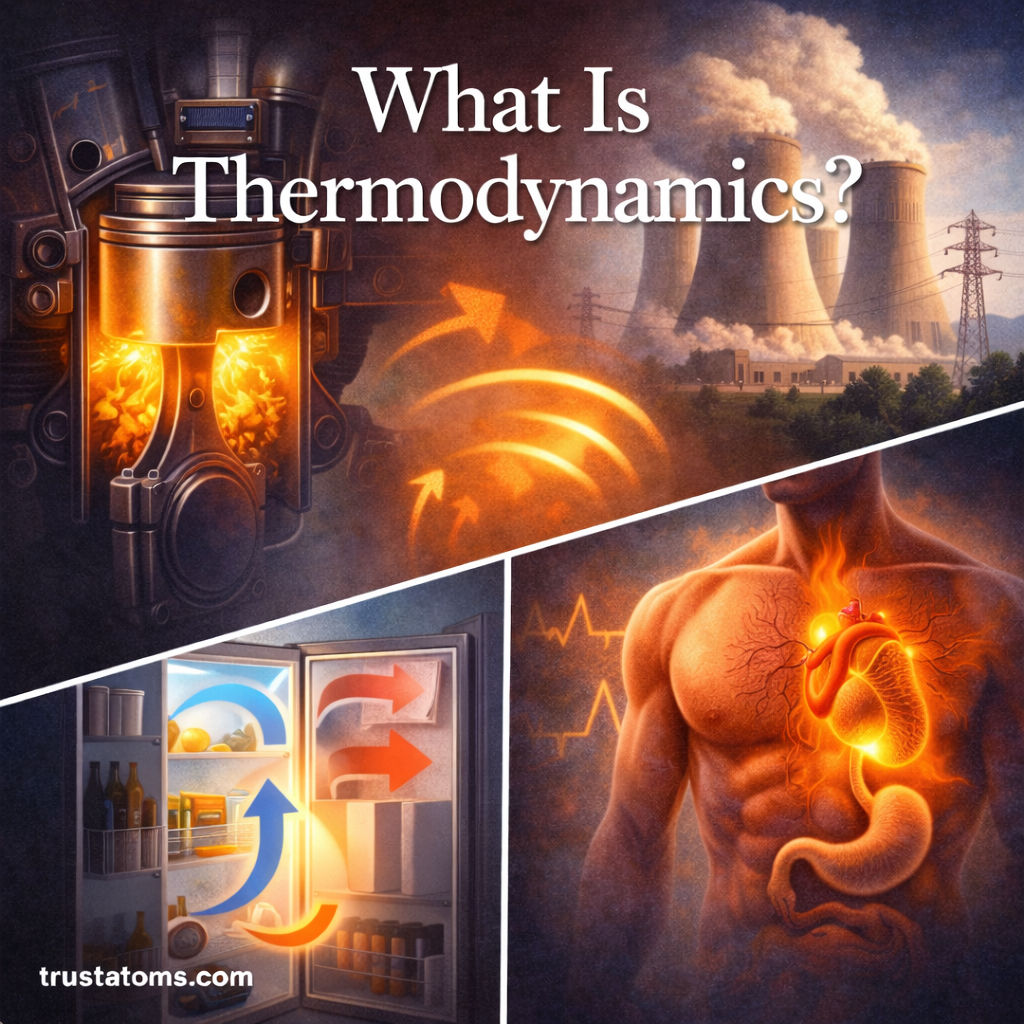
What Is Thermodynamics?

Illustration showing thermodynamics concepts including a car engine piston with heat, power plant cooling towers, refrigerator heat flow, and human metabolism energy transfer.
Visual overview of thermodynamics showing energy transfer in engines, power plants, refrigeration, and the human body. trustatoms.com

Thermodynamics is the branch of physics that studies heat, energy, temperature, and how they relate to work and matter.

In simple terms:

Thermodynamics explains how energy moves and transforms.

It helps us understand engines, refrigerators, power plants, the human body, and even the universe itself.

In this guide, you’ll learn:

  • What thermodynamics is
  • The four laws of thermodynamics
  • Real-world examples
  • Why it matters in science and engineering
Continue reading “What Is Thermodynamics?”

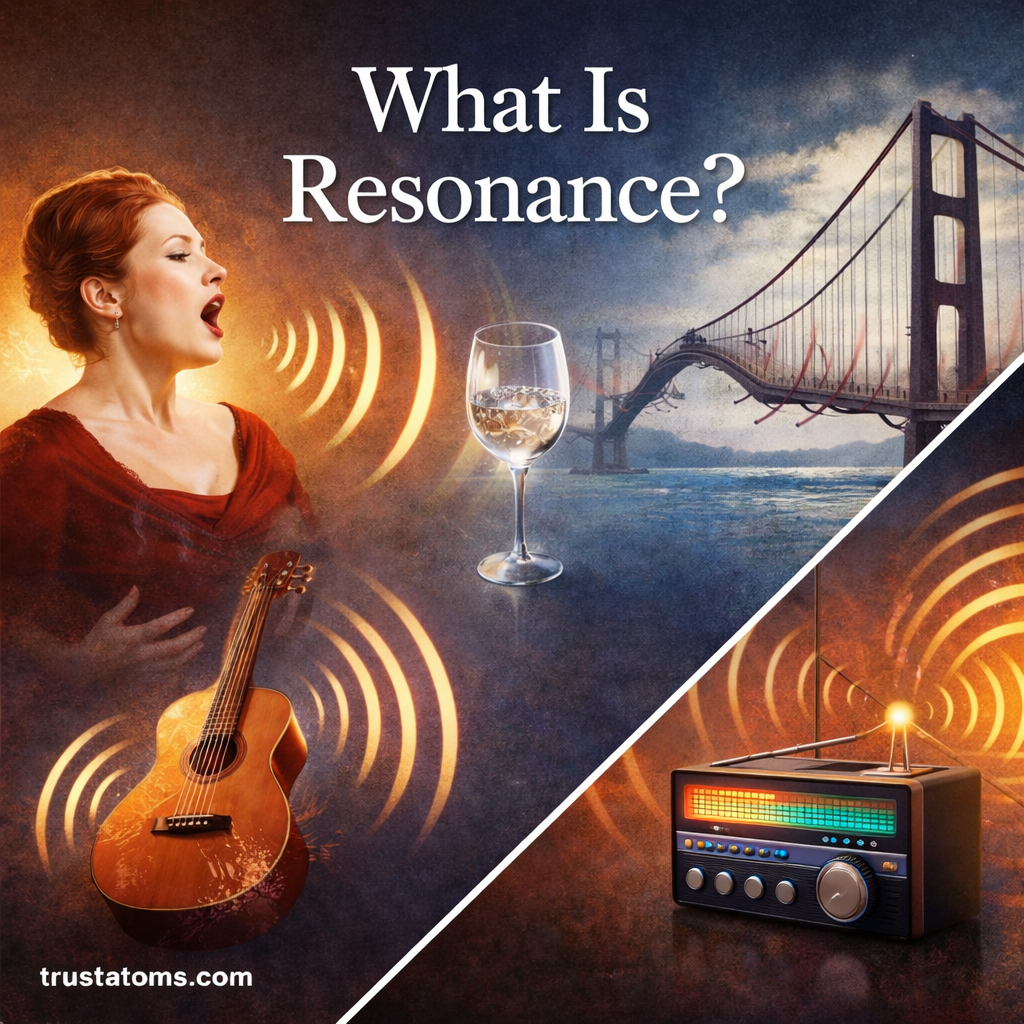
What Is Resonance?

Illustration showing resonance with a singer causing a glass to vibrate, a swaying bridge, a guitar body amplifying sound, and a radio tuned to a frequency.
Visual explanation of resonance showing amplified vibrations in sound, structures, and radio tuning. trustatoms.com

Resonance is the phenomenon that occurs when an object vibrates at its natural frequency after being exposed to matching vibrations from an external source.

In simple terms:

When something is pushed at just the right rhythm, it vibrates more strongly.

Resonance explains why a singer can shatter glass, why bridges can wobble dramatically, and why musical instruments produce rich sound.

In this guide, you’ll learn:

  • What resonance means in physics
  • What natural frequency is
  • Everyday examples
  • Why resonance can be powerful — and sometimes dangerous
  • How resonance is used in science and engineering
Continue reading “What Is Resonance?”

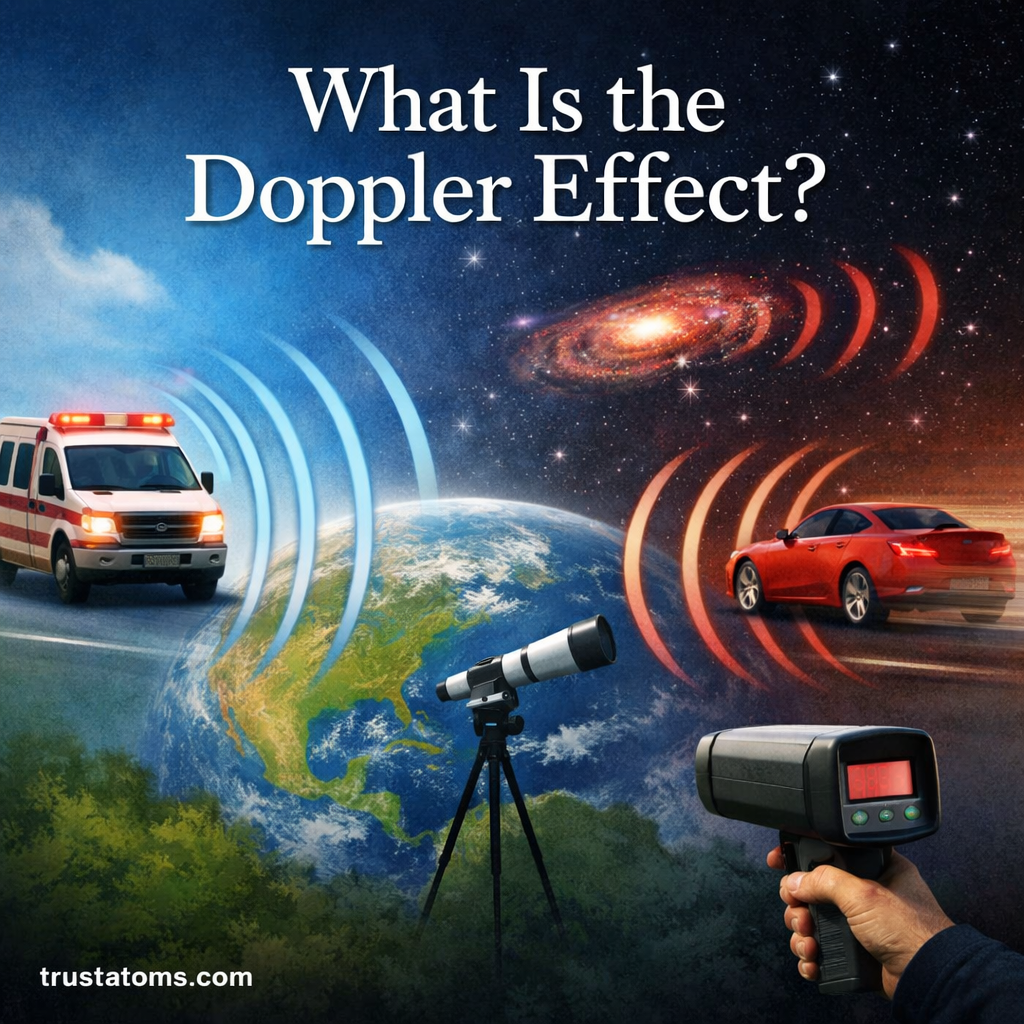
What Is the Doppler Effect?

Illustrated diagram explaining the Doppler Effect with compressed waves in front of a moving ambulance and stretched waves behind a moving car, showing frequency shift.
Illustration demonstrating the Doppler Effect with compressed and stretched waves from moving objects. trustatoms.com

The Doppler Effect is the change in frequency (or wavelength) of a wave as the source of the wave and the observer move relative to each other.

You’ve experienced it many times — even if you didn’t realize it.

When an ambulance drives past you, the siren sounds higher-pitched as it approaches and lower-pitched as it moves away. That shift in sound is the Doppler Effect in action.

In this guide, you’ll learn:

  • What the Doppler Effect is
  • Why it happens
  • Real-life examples
  • How it applies to sound and light
  • Why it matters in astronomy, weather, and medicine
Continue reading “What Is the Doppler Effect?”

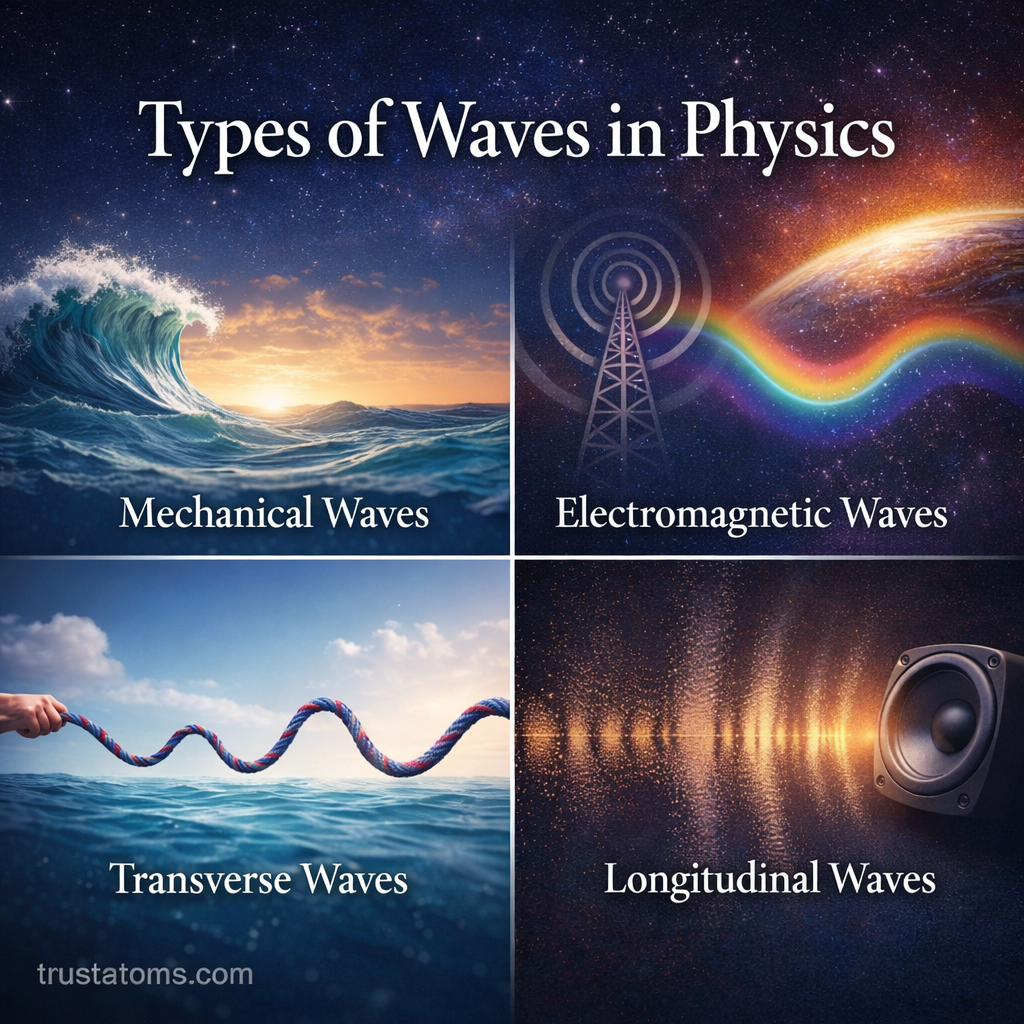
Types of Waves in Physics

Illustration showing types of waves in physics including mechanical waves, electromagnetic waves, transverse waves, and longitudinal waves.
Visual overview of the main types of waves in physics. trustatoms.com

Waves are one of the most important concepts in physics because they explain how energy travels through space and matter.

From ocean swells and sound vibrations to light from distant stars, waves allow energy to move without permanently transporting material.

In this guide, you’ll learn:

  • The main types of waves in physics
  • How waves are classified
  • Real-world examples of each type
  • Why understanding wave types matters
Continue reading “Types of Waves in Physics”

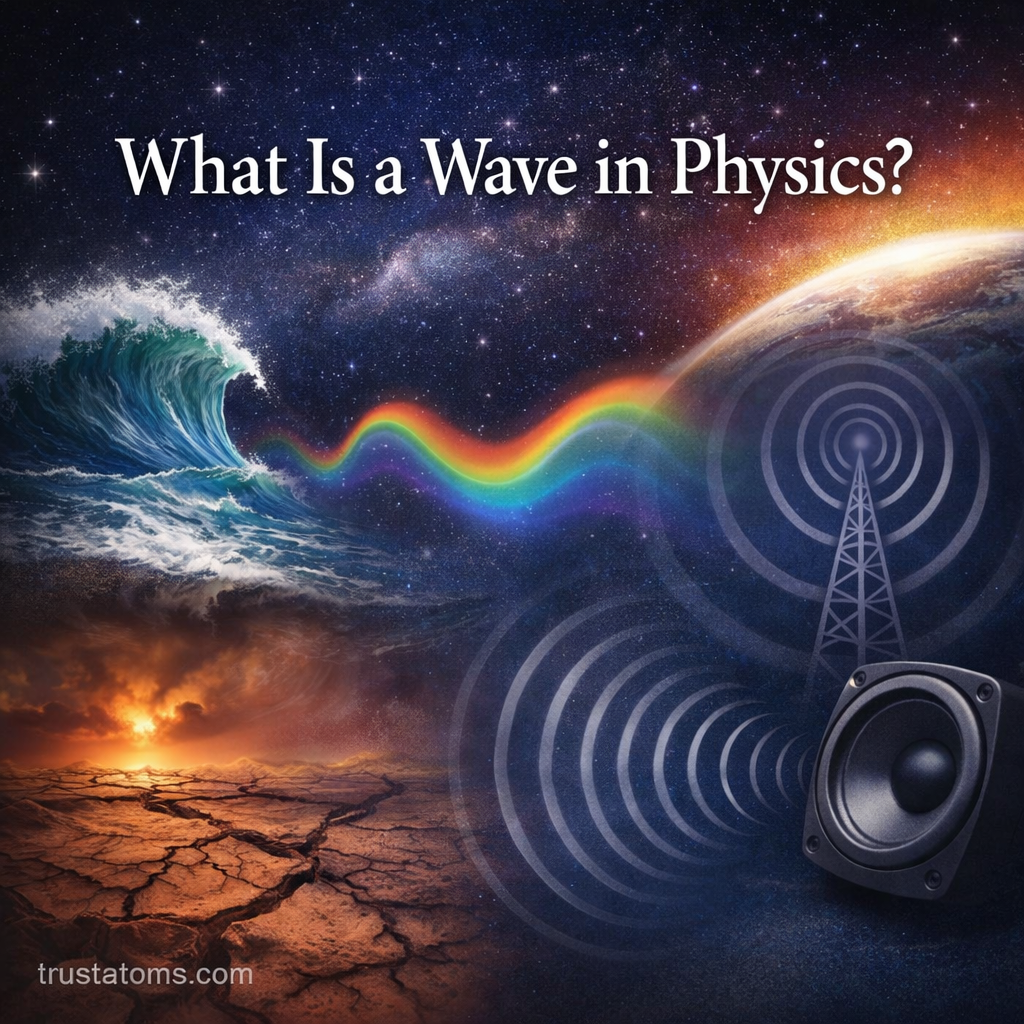
What Is a Wave in Physics?

Illustration explaining waves in physics with ocean waves, sound waves from a speaker, radio waves, and light waves in space.
Visual overview of mechanical and electromagnetic waves in physics. trustatoms.com

A wave is one of the most fundamental concepts in physics. From ocean swells and sound vibrations to light from the Sun, waves are everywhere.

In simple terms, a wave is a way that energy moves through space or through a medium without permanently moving the material itself.

In this guide, you’ll learn:

  • The definition of a wave in physics
  • The different types of waves
  • How waves transfer energy
  • Key wave properties
  • Real-world examples
Continue reading “What Is a Wave in Physics?”