Wave Interference and Superposition

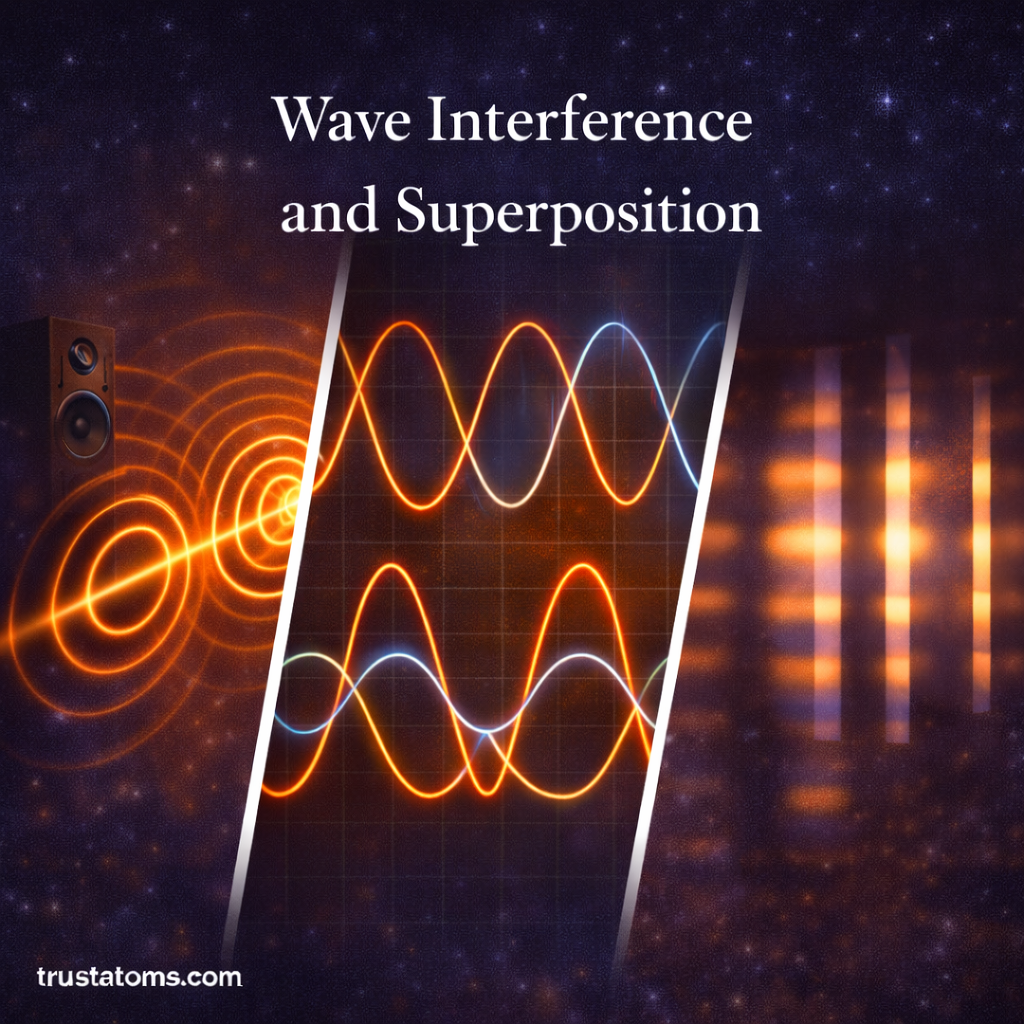
Illustration showing sound waves from speakers overlapping, sinusoidal wave patterns combining, and light interference bands demonstrating wave interference and superposition.
Visualization of wave interference and superposition in sound, mechanical waves, and light patterns. trustatoms.com

When waves meet, they don’t collide like solid objects. Instead, they pass through one another and combine. This interaction is governed by one of the most fundamental principles in physics: the principle of superposition.

Wave interference and superposition explain everything from noise-canceling headphones and musical harmonics to light patterns and quantum behavior. In this guide, we’ll break down how waves interact and why interference is so important in physics.

Continue reading “Wave Interference and Superposition”
Phase Relationships in Wave Motion

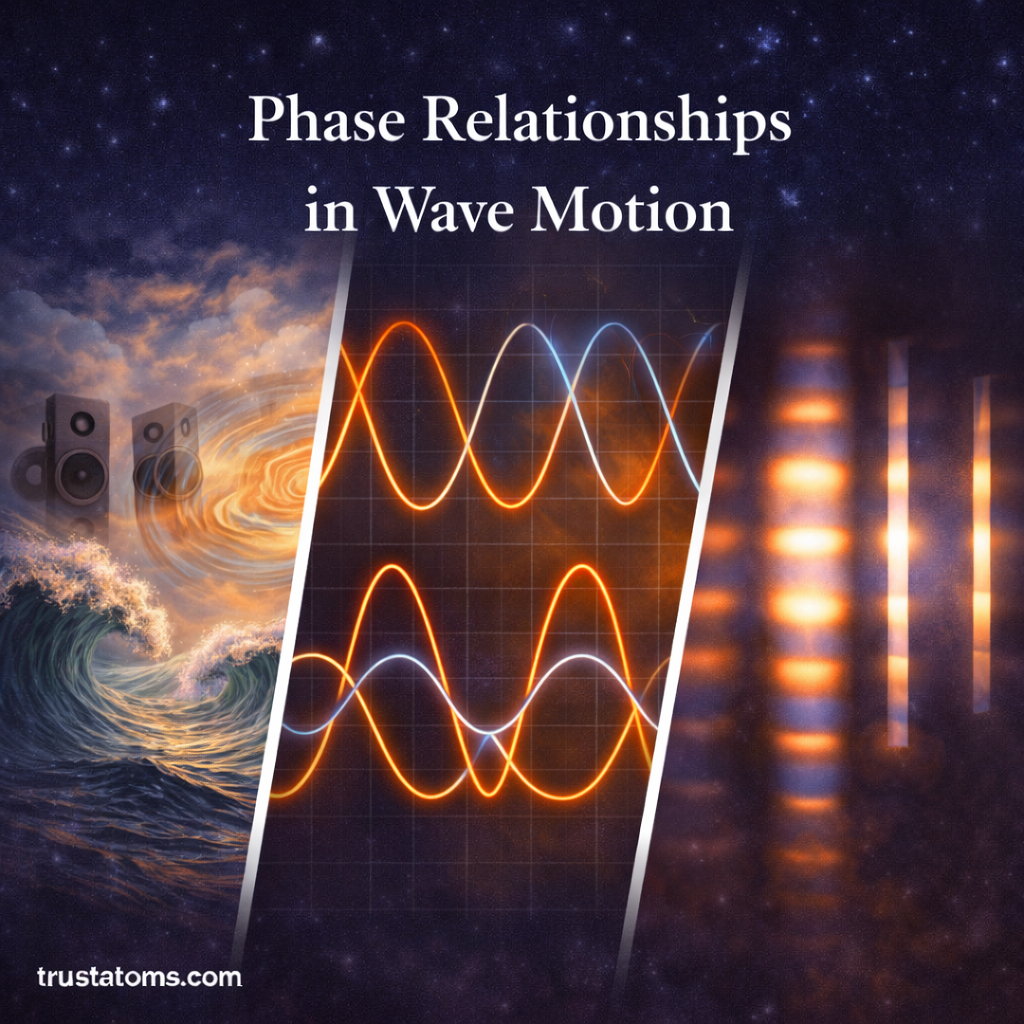
Illustration showing ocean waves, sound wave interference patterns, and light interference bands to represent phase relationships in wave motion.
Examples of phase relationships in wave motion including water waves, sound interference, and light wave patterns. trustatoms.com

Waves are everywhere — in ocean tides, sound vibrations, light from the Sun, and even electrical signals. But one of the most important concepts in understanding waves is phase.

Phase relationships in wave motion determine how waves combine, interfere, amplify, or cancel each other. Whether you’re studying sound engineering, optics, or quantum physics, understanding phase is essential.

In this guide, we’ll explore what phase means, how phase differences arise, and why they matter in real-world systems.

Continue reading “Phase Relationships in Wave Motion”

Mechanical Oscillations in Harmonic Systems

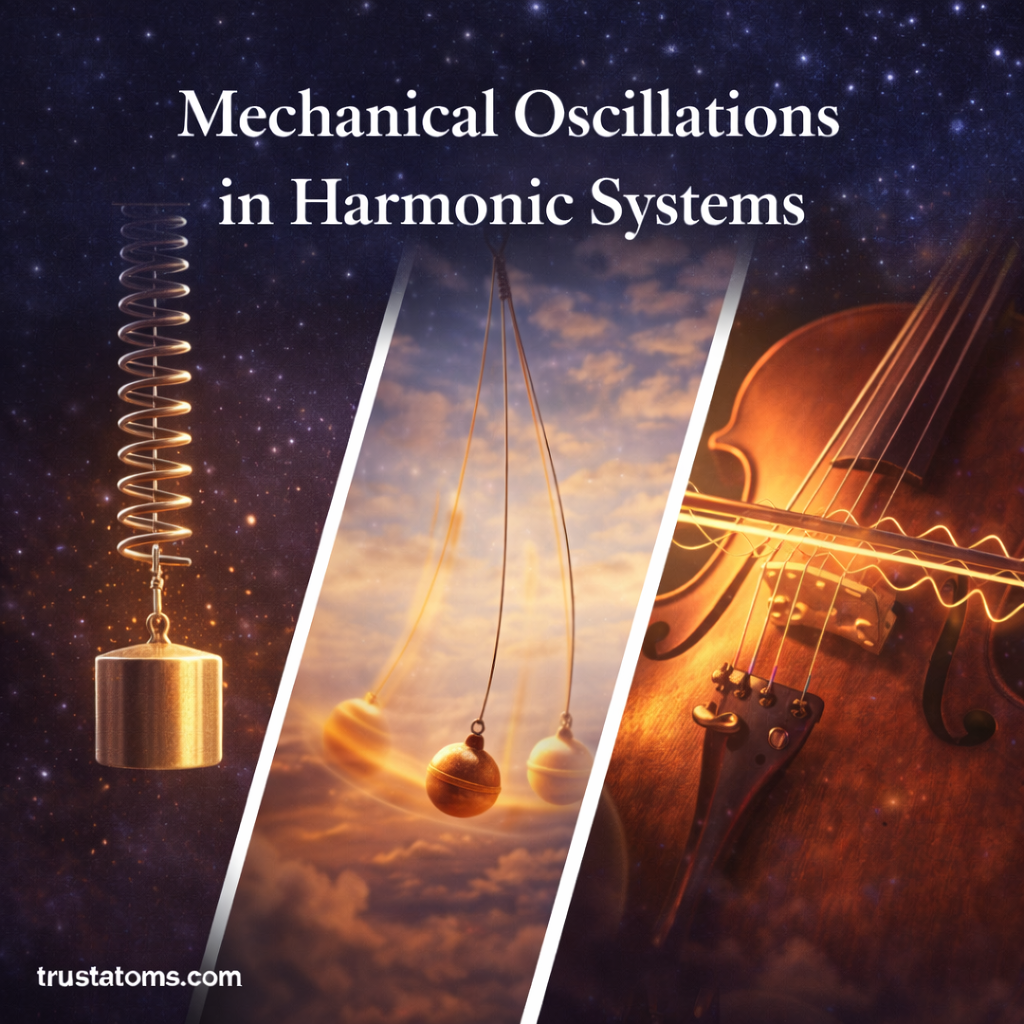
Illustration showing a mass–spring system, a swinging pendulum, and vibrating violin strings representing mechanical oscillations in harmonic systems.
Examples of harmonic motion including a spring–mass system, pendulum swing, and vibrating string. trustatoms.com

Mechanical oscillations are everywhere in physics. From a swinging pendulum to a vibrating guitar string, many systems move back and forth around an equilibrium position. When this motion follows a predictable and restoring pattern, it is called harmonic motion.

Mechanical oscillations in harmonic systems are fundamental to understanding waves, sound, energy transfer, and even atomic behavior. In this guide, we’ll break down how harmonic systems work and why they are so important in physics and engineering.

Continue reading “Mechanical Oscillations in Harmonic Systems”

Energy Dissipation in Non-Conservative Systems

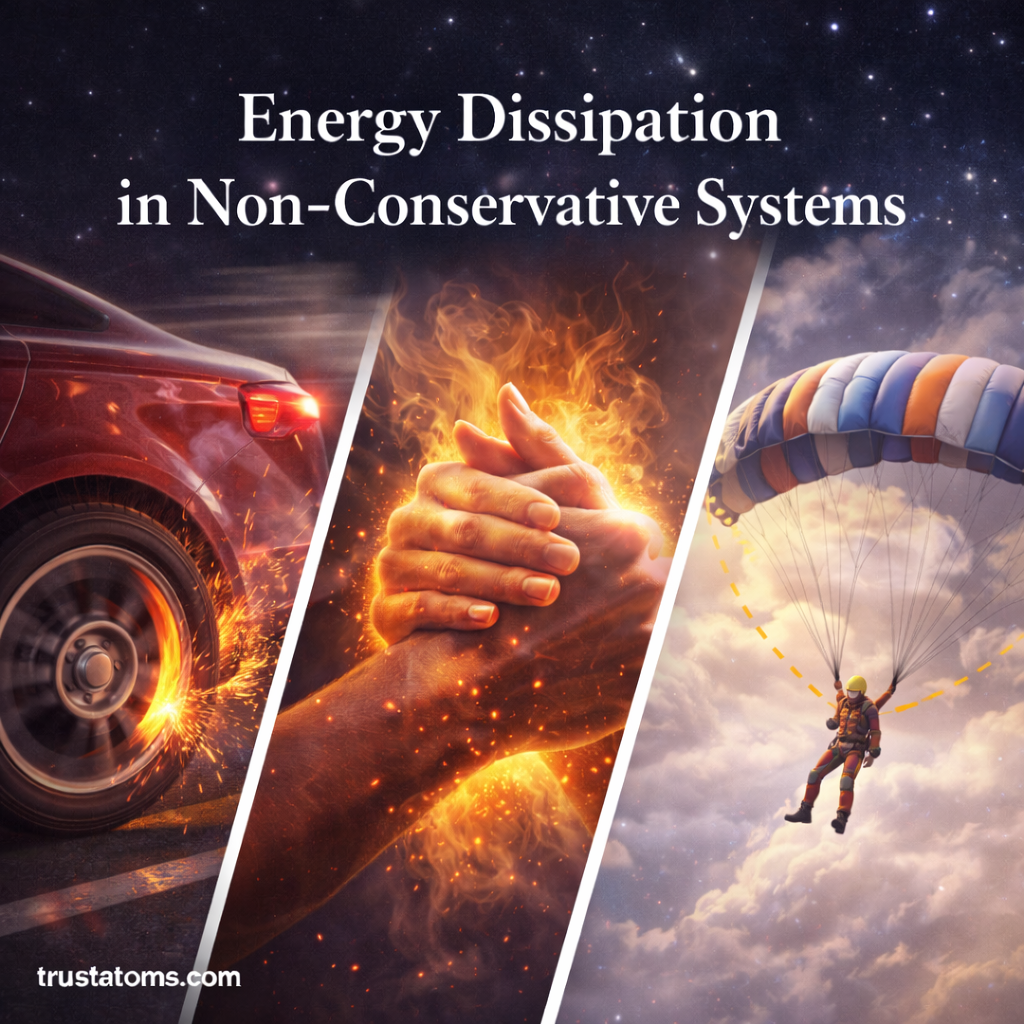
Illustration showing a car brake generating heat, hands rubbing together from friction, and a parachute slowing descent to represent energy dissipation in non-conservative systems.
Examples of energy dissipation through friction, heat, and air resistance in real-world systems. trustatoms.com

In ideal physics problems, energy is often perfectly conserved. But in the real world, energy rarely stays neatly within mechanical systems. Instead, it spreads, transforms, and dissipates.

Energy dissipation in non-conservative systems explains why machines heat up, why objects slow down due to friction, and why perpetual motion machines are impossible. Understanding this concept is essential in physics, engineering, thermodynamics, and real-world system design.

Continue reading “Energy Dissipation in Non-Conservative Systems”

Orbital Motion in Central Force Systems

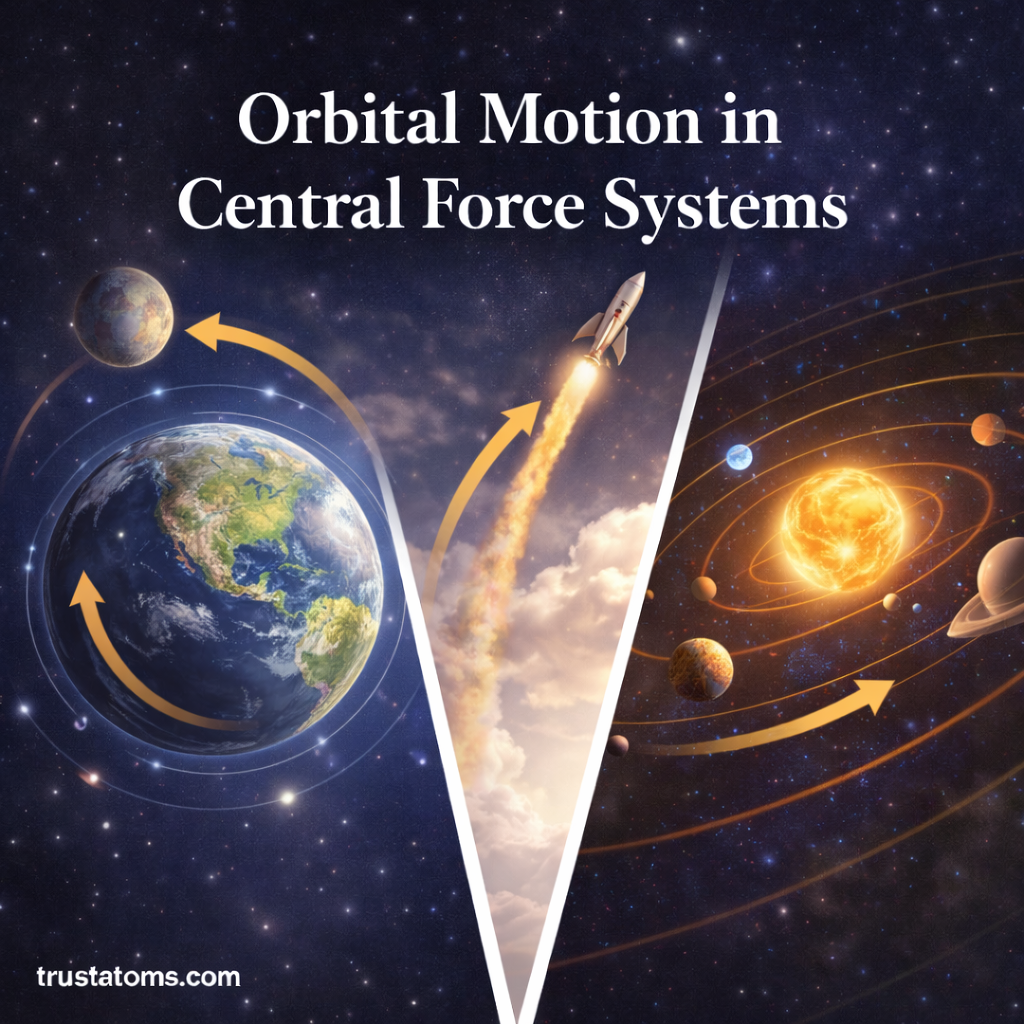
Illustration showing Earth orbiting in space, a rocket launching outward, and planets orbiting the Sun to represent orbital motion in central force systems.
Examples of orbital motion in central force systems, including Earth–Moon interaction, rocket escape, and planetary orbits. trustatoms.com

Orbital motion is one of the most fascinating phenomena in physics. From satellites circling Earth to planets orbiting the Sun, these motions are governed by a powerful principle: central forces.

Understanding orbital motion in central force systems helps explain planetary systems, space travel, atomic models, and gravitational interactions across the universe.

In this guide, we’ll explore how central forces create stable orbits and what determines the motion of objects in space.

Continue reading “Orbital Motion in Central Force Systems”

Gravitational Fields and Potential Energy

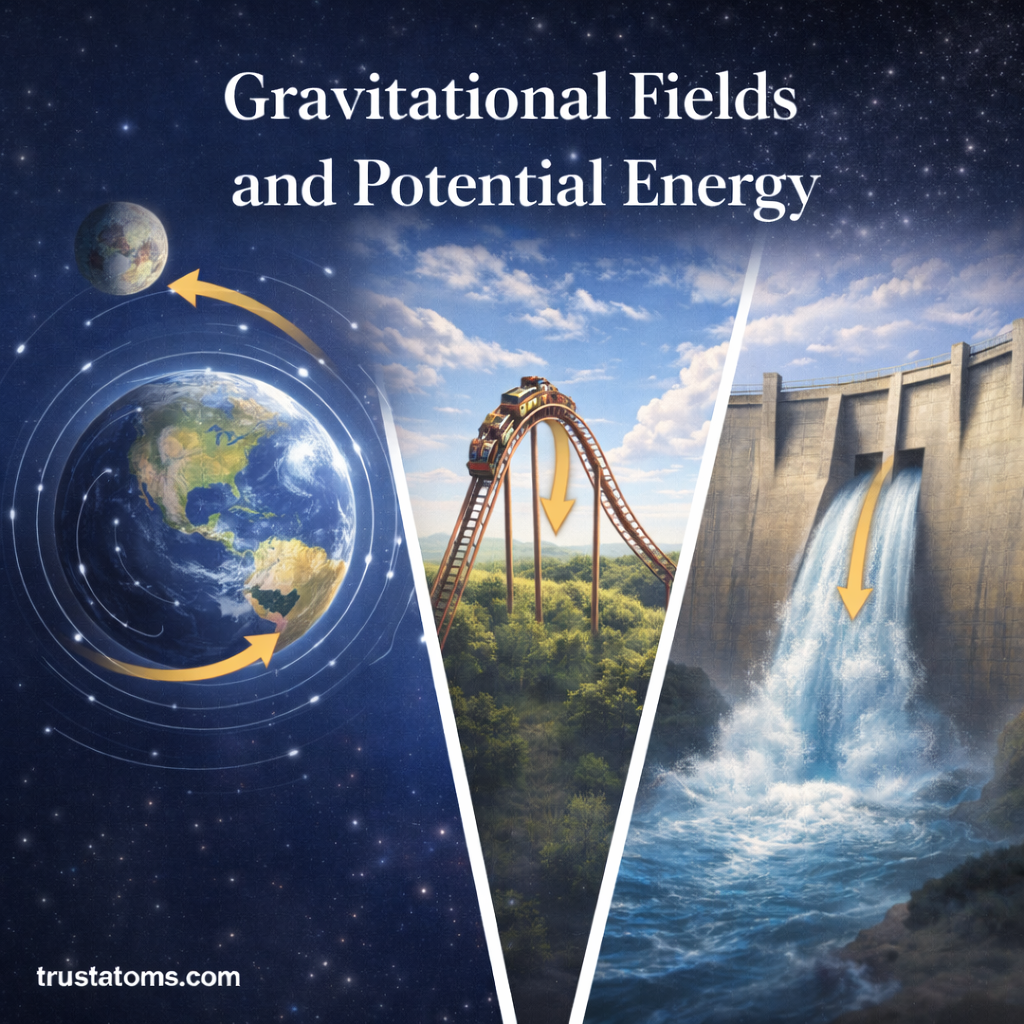
Illustration showing Earth and Moon gravitational interaction, a roller coaster at height, and a dam releasing water to represent gravitational fields and potential energy.
Examples of gravitational fields and potential energy in space, roller coaster motion, and hydroelectric systems. trustatoms.com

Gravity is one of the most familiar forces in everyday life. It keeps our feet on the ground, governs planetary motion, and shapes the structure of the universe. But behind this familiar force lies a powerful concept in physics: gravitational fields and gravitational potential energy.

Understanding how gravitational fields work — and how they store energy — is essential for studying mechanics, astronomy, engineering, and space science.

Continue reading “Gravitational Fields and Potential Energy”

Torque and Rotational Equilibrium

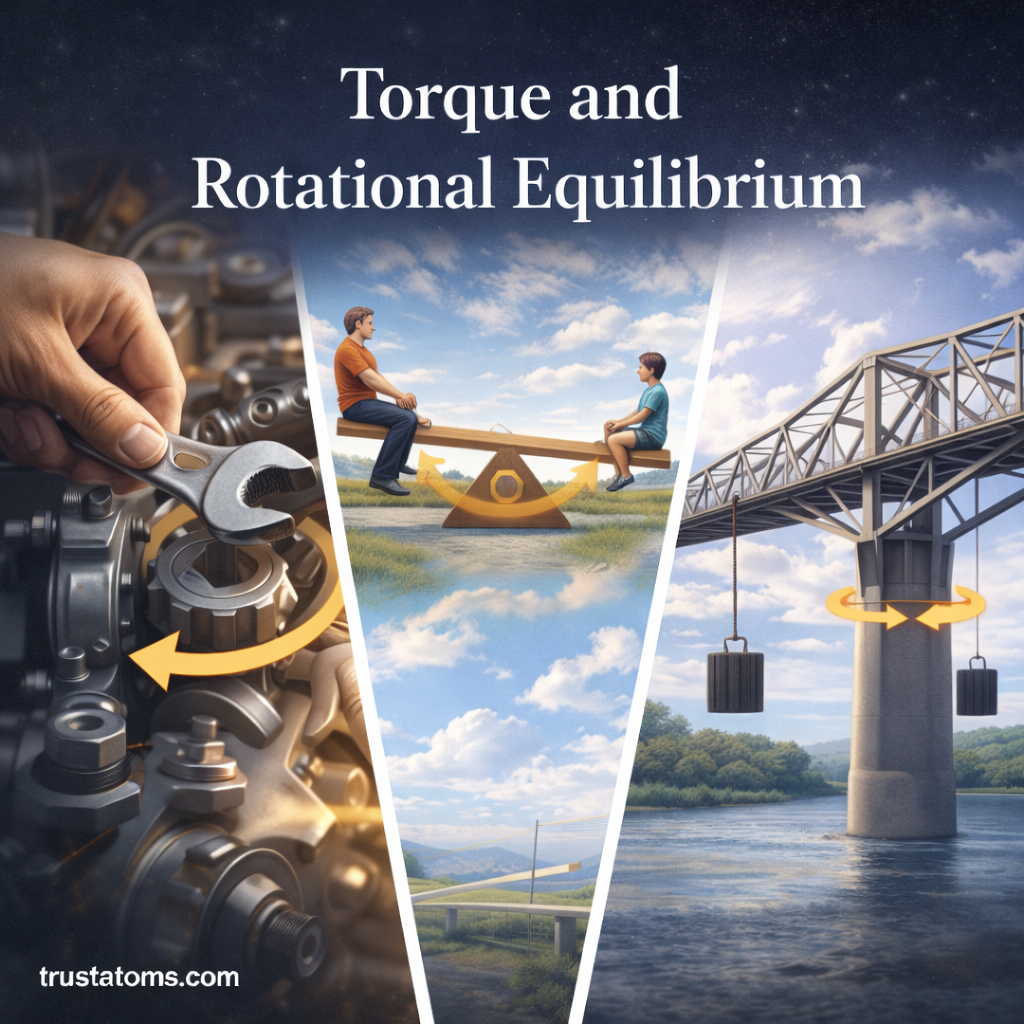
Illustration showing a wrench applying torque, a balanced seesaw, and a bridge structure demonstrating rotational equilibrium in mechanical systems.
Real-world examples of torque and rotational equilibrium, including tools, levers, and structural balance. trustatoms.com

Torque is the rotational equivalent of force. Just as force causes linear acceleration, torque causes rotational motion. Understanding torque and rotational equilibrium is essential for analyzing levers, bridges, engines, and nearly every mechanical system involving rotation.

In this guide, we’ll break down what torque is, how it works, and how objects remain balanced when rotational forces cancel out.

Continue reading “Torque and Rotational Equilibrium”

Angular Acceleration in Rotational Motion

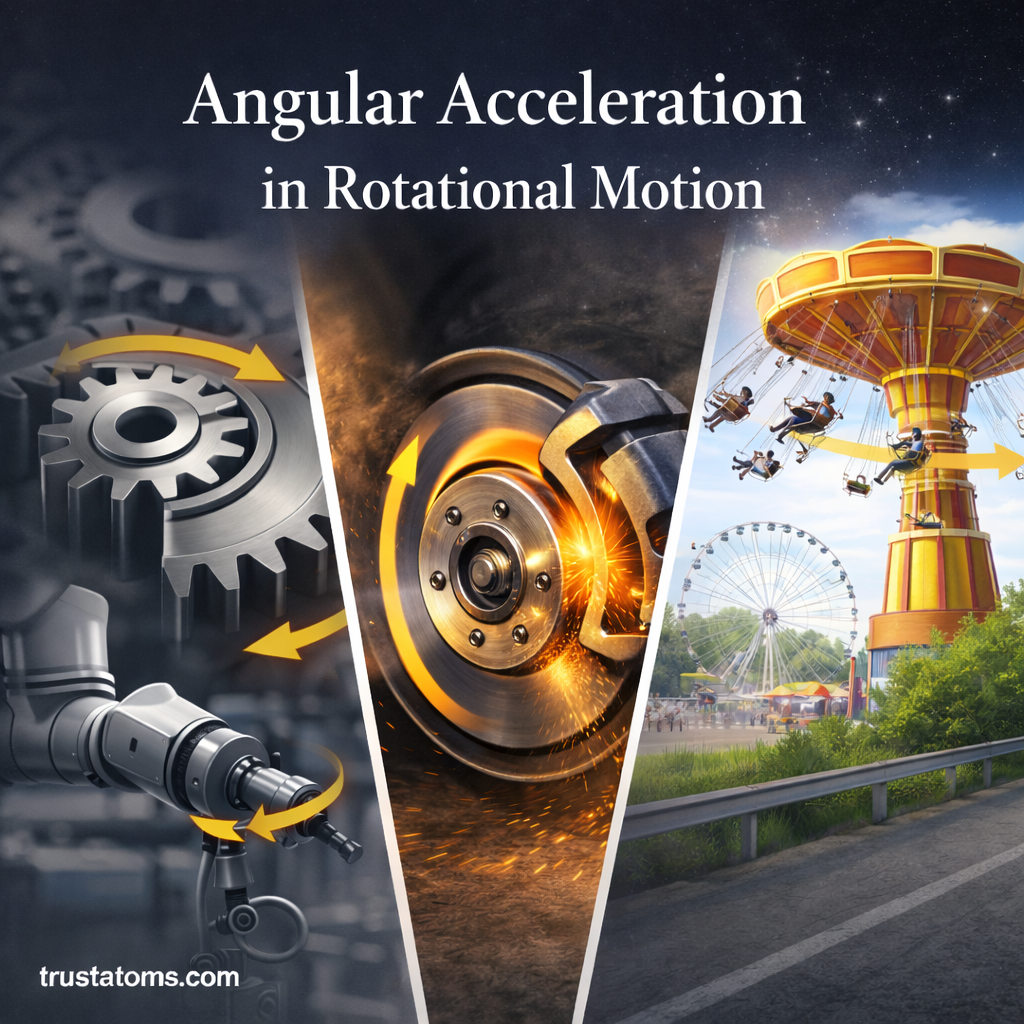
Illustration showing rotating gears, a braking system slowing down, and an amusement ride accelerating to represent angular acceleration in rotational motion.
Real-world examples of angular acceleration in rotating systems, including gears, braking mechanisms, and amusement rides. trustatoms.com

Angular acceleration is one of the core concepts in rotational physics. It describes how quickly a rotating object changes its angular velocity over time.

From car wheels speeding up at a traffic light to turbines gradually slowing down after shutdown, angular acceleration plays a central role in understanding how rotating systems behave.

In this guide, we’ll break down angular acceleration clearly, connect it to linear motion, and explore how it applies in real mechanical systems.

Continue reading “Angular Acceleration in Rotational Motion”

Rotational Kinematics in Rigid Bodies

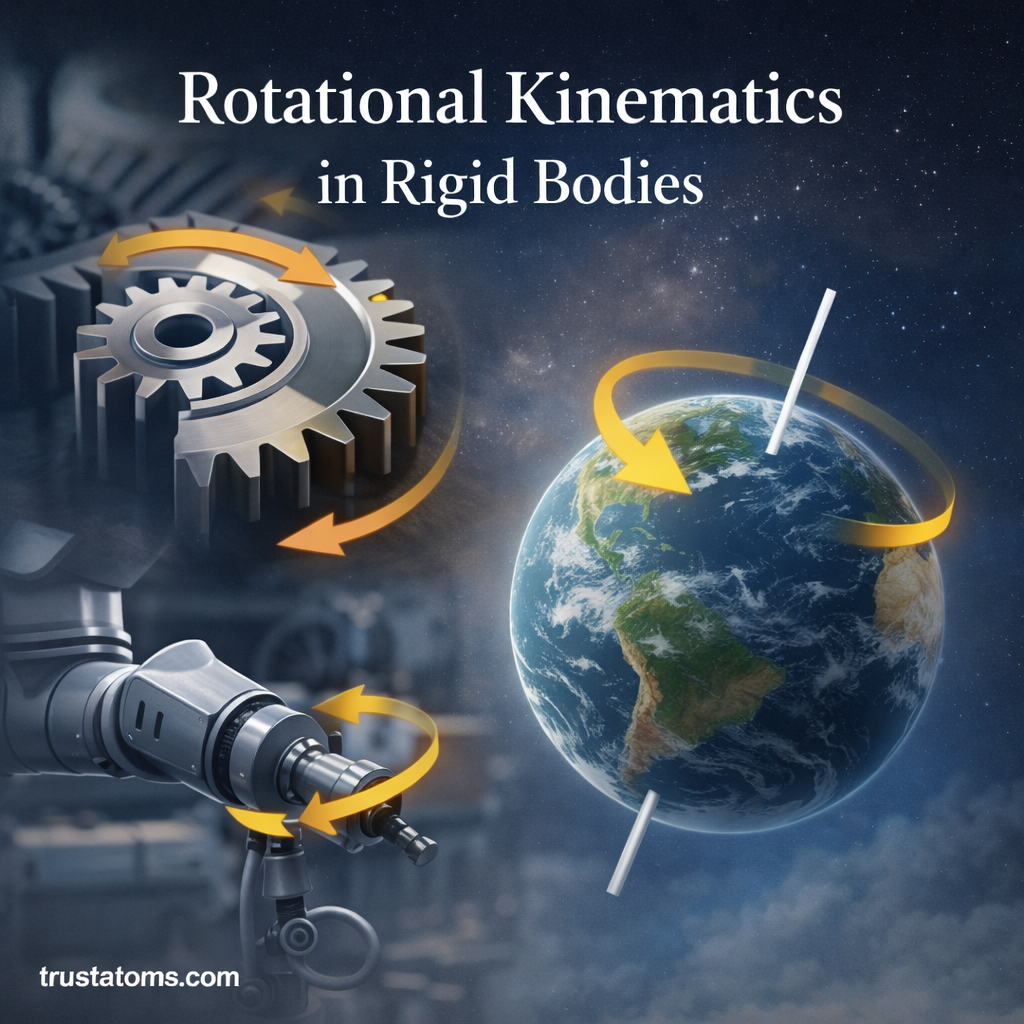
Illustration showing rotating gears, a robotic arm joint, and Earth spinning to represent rotational kinematics in rigid bodies.
Examples of rotational motion in rigid bodies including gears, robotic systems, and planetary rotation. trustatoms.com

Rotational motion is everywhere — from spinning wheels and rotating gears to planets orbiting stars. While linear motion describes objects moving in straight lines, rotational kinematics focuses on how rigid bodies rotate around an axis.

Understanding rotational kinematics in rigid bodies is essential in physics, engineering, robotics, aerospace, and mechanical system design. In this guide, we’ll break it down clearly and connect it to real-world systems.

Continue reading “Rotational Kinematics in Rigid Bodies”

Work–Energy Theorem in Mechanical Systems

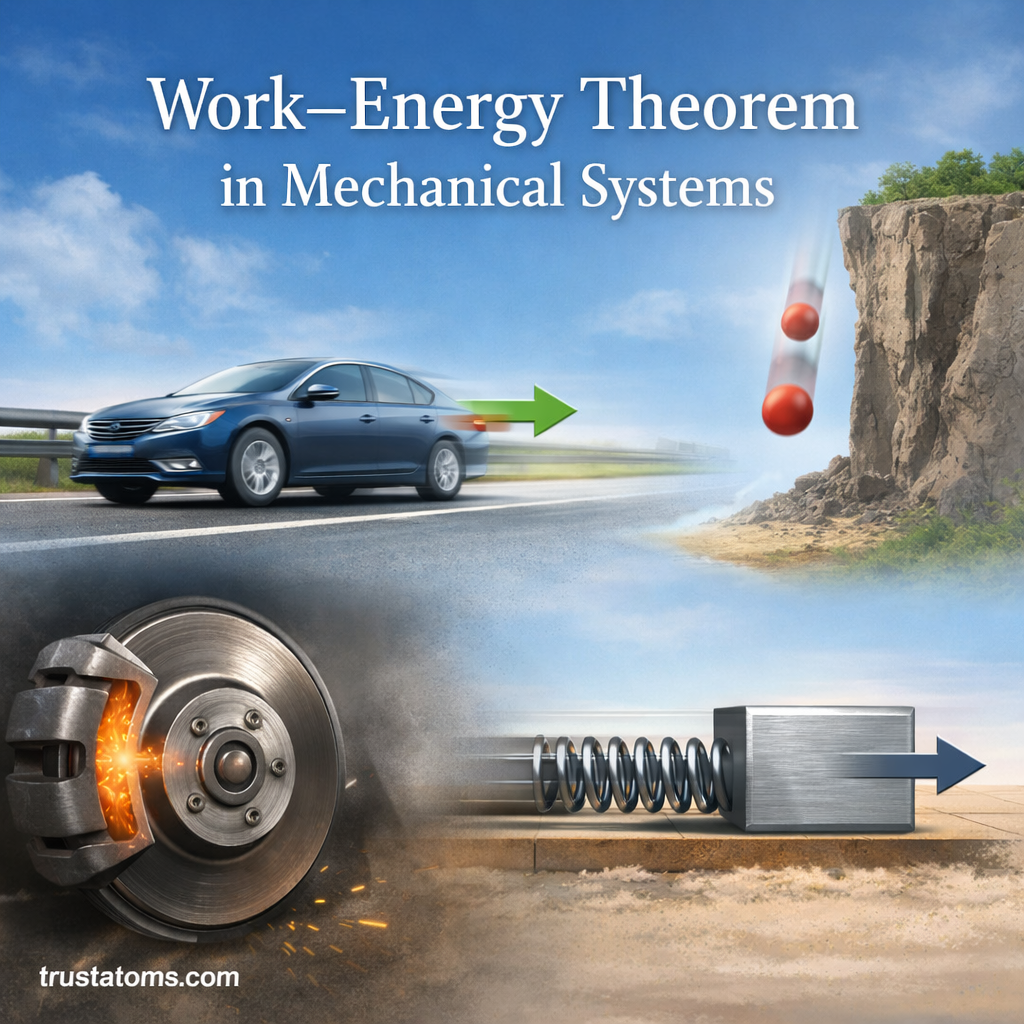
Contextual illustration showing car acceleration, braking system, falling object, and spring system representing the Work–Energy Theorem in mechanical systems.
Illustration showing real-world examples of the Work–Energy Theorem in mechanical systems. trustatoms.com

The work–energy theorem is one of the most powerful and practical ideas in classical physics. It connects two fundamental concepts—work and kinetic energy—into a single, elegant relationship that explains how forces change motion.

Whether you’re analyzing a rolling car, a falling object, or a machine in motion, the work–energy theorem provides a simpler alternative to using Newton’s laws step by step.

In this guide, we’ll break it down clearly and show how it applies to real mechanical systems.

Continue reading “Work–Energy Theorem in Mechanical Systems”