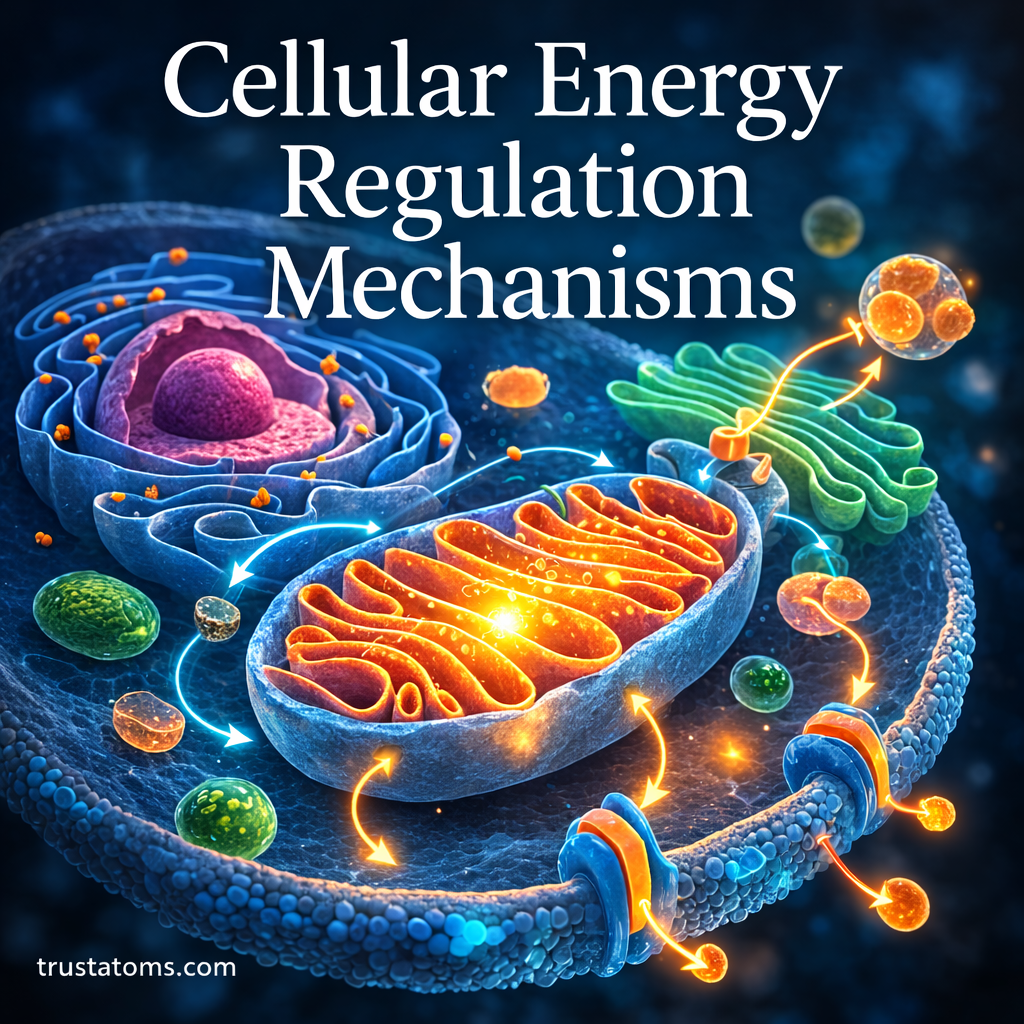
Cells require a continuous supply of energy to perform essential biological processes such as growth, repair, movement, and reproduction. To maintain proper function, cells must carefully balance energy production, storage, and consumption. This balance is maintained through cellular energy regulation mechanisms, a network of biochemical pathways and signaling systems that control how energy is generated and used.
Energy regulation ensures that cells produce sufficient energy during periods of high demand while conserving resources when energy needs are low. These mechanisms allow cells to adapt to changing environmental conditions, nutrient availability, and metabolic requirements.
Understanding cellular energy regulation is a fundamental part of cell biology and helps scientists study metabolism, disease development, and physiological responses to stress.
The Role of Energy in Cellular Function
Energy is required for nearly every activity within a cell. The primary energy carrier used by cells is adenosine triphosphate (ATP), a molecule that stores and transfers energy between biochemical reactions.
ATP powers many cellular processes, including:
- Active transport across membranes
- Muscle contraction
- Protein synthesis
- DNA replication
- Cellular signaling
Cells continuously produce and consume ATP, which means energy regulation systems must constantly monitor and adjust energy production.
Major Cellular Energy Sources
Cells obtain energy from nutrients and convert these molecules into usable chemical energy through metabolic pathways.
Primary energy sources include:
- Glucose and other carbohydrates
- Fatty acids
- Amino acids
These molecules are broken down through metabolic processes that release energy and generate ATP.
Key Pathways in Cellular Energy Production
Energy regulation depends on several interconnected metabolic pathways.
Glycolysis
Glycolysis is the first stage of cellular respiration and occurs in the cytoplasm.
During glycolysis:
- Glucose molecules are broken down into smaller compounds
- A small amount of ATP is produced
- Metabolic intermediates are generated for later pathways
Glycolysis provides energy quickly and can occur with or without oxygen.
The Citric Acid Cycle
The citric acid cycle, also known as the Krebs cycle, takes place in the mitochondria.
In this pathway:
- Metabolites from glycolysis are further oxidized
- Energy carriers such as NADH and FADH₂ are produced
- Carbon dioxide is released as a byproduct
These energy carriers then deliver electrons to the next stage of cellular respiration.
Oxidative Phosphorylation
Oxidative phosphorylation occurs in the inner membrane of mitochondria and produces the majority of cellular ATP.
This process involves:
- Electron transport chains
- Proton gradients across mitochondrial membranes
- ATP synthase enzymes that generate ATP
Oxidative phosphorylation is highly efficient and generates large amounts of cellular energy.
Mitochondria and Energy Regulation
Mitochondria are central to cellular energy regulation.
These organelles perform several key functions:
- Generating ATP through oxidative phosphorylation
- Regulating metabolic pathways
- Controlling cellular responses to energy stress
- Producing signaling molecules that influence metabolism
Because of these roles, mitochondria are often described as the energy centers of the cell.
Energy Sensing Systems in Cells
Cells possess specialized molecular sensors that monitor energy levels and adjust metabolism accordingly.
AMP-Activated Protein Kinase (AMPK)
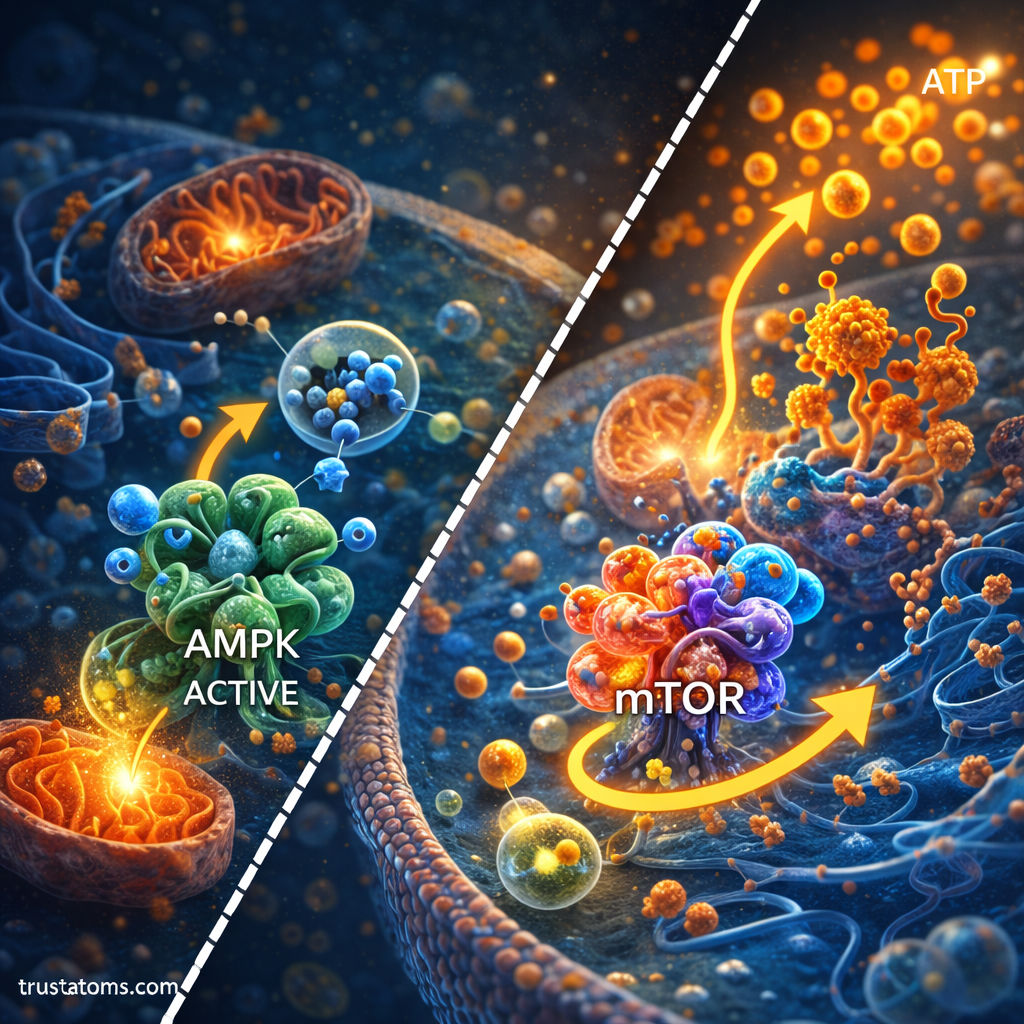
AMPK is one of the most important cellular energy sensors.
When cellular energy levels drop:
- AMP concentrations increase
- AMPK becomes activated
- Energy-producing pathways are stimulated
- Energy-consuming processes are reduced
AMPK helps restore energy balance during metabolic stress.
mTOR Signaling Pathway
The mammalian target of rapamycin (mTOR) pathway regulates cell growth and metabolism.
When nutrients and energy are abundant:
- mTOR promotes protein synthesis
- Cells increase growth and biosynthetic activity
When energy is limited, mTOR activity decreases to conserve cellular resources.
Energy Storage Mechanisms
Cells also regulate energy by storing excess nutrients for future use.
Glycogen Storage
Glucose can be stored in the form of glycogen, a branched carbohydrate polymer.
Glycogen storage allows cells to quickly access glucose when energy demand increases.
Major glycogen storage tissues include:
- Liver cells
- Muscle cells
Lipid Storage
Fatty acids can be stored as triglycerides in specialized lipid droplets.
Lipids serve as long-term energy reserves because they contain large amounts of stored chemical energy.
During periods of energy demand, fatty acids can be broken down to generate ATP.
Regulation Through Hormonal Signals
Cellular energy metabolism is also influenced by hormones that coordinate energy use across tissues.
Important metabolic hormones include:
- Insulin, which promotes energy storage and nutrient uptake
- Glucagon, which stimulates energy release during fasting
- Adrenaline, which increases energy availability during stress
These hormones allow the body to maintain overall metabolic balance.
Cellular Adaptation to Energy Stress
Cells must adapt when energy supplies become limited.
Energy stress may occur during:
- Nutrient deprivation
- Intense physical activity
- Oxygen shortage
- Environmental stress
Adaptive responses include:
- Increasing ATP production
- Activating energy conservation pathways
- Recycling cellular components through autophagy
These responses help maintain survival during challenging conditions.
Energy Imbalance and Disease
Disruptions in cellular energy regulation can contribute to many diseases.
Examples include:
- Metabolic disorders such as diabetes
- Obesity and insulin resistance
- Neurodegenerative diseases
- Mitochondrial dysfunction
Understanding how cells regulate energy can help researchers develop treatments for these conditions.
Advances in Energy Metabolism Research
Modern scientific techniques are helping researchers better understand cellular energy regulation.
Key research tools include:
- Metabolomics to measure metabolic molecules
- Advanced imaging of mitochondria
- Genetic engineering to study metabolic genes
- Computational models of metabolic networks
These technologies are revealing new insights into how cells manage energy production and consumption.
Conclusion
Cellular energy regulation mechanisms ensure that cells maintain a balance between energy production, storage, and consumption. Through metabolic pathways such as glycolysis, the citric acid cycle, and oxidative phosphorylation, cells generate ATP to power biological activities.
At the same time, regulatory systems involving mitochondria, molecular energy sensors, and hormonal signals adjust metabolic activity based on cellular needs and environmental conditions. This coordinated control allows cells to respond to stress, maintain homeostasis, and support essential biological functions.
As research continues, scientists are gaining deeper insights into energy regulation and its role in health, disease, and cellular adaptation.