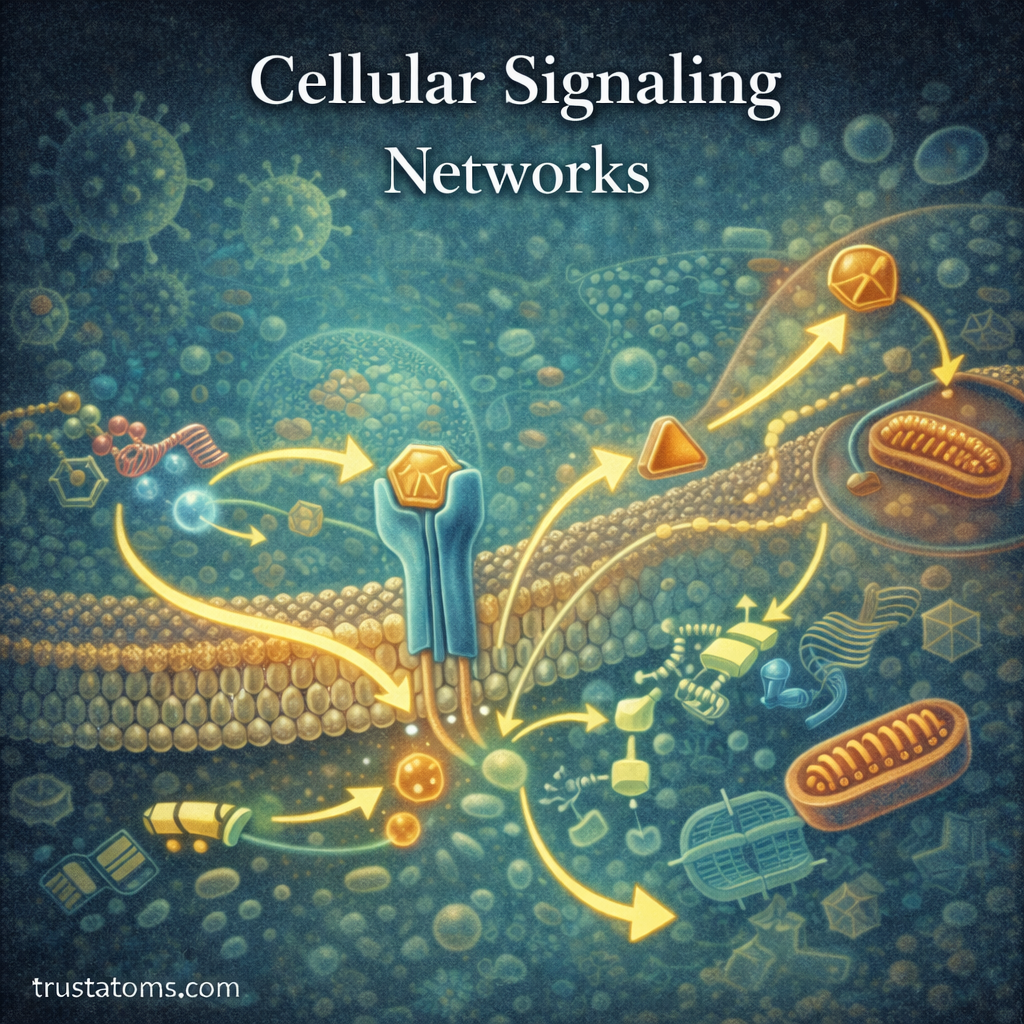
Cells constantly receive and process information from their surroundings. Whether responding to nutrients, stress, hormones, or neighboring cells, organisms rely on sophisticated communication systems that allow cells to detect signals and respond appropriately. These systems are known as cellular signaling networks.
Cellular signaling networks consist of interconnected pathways that transmit signals from receptors to internal molecular targets. These pathways regulate processes such as cell growth, metabolism, immune responses, and gene expression.
Understanding how these signaling networks function is essential for studying development, disease mechanisms, and modern biomedical research.
What Are Cellular Signaling Networks?
Cellular signaling networks are complex systems of interacting molecules that allow cells to communicate and coordinate activities.
These networks transmit information through a sequence of molecular events known as a signal transduction pathway.
A typical signaling pathway involves:
- Detection of a signal outside the cell
- Activation of a receptor protein
- Transmission of the signal through intracellular molecules
- A cellular response such as gene expression or metabolic change
Because many pathways interact with each other, cells form integrated signaling networks rather than isolated communication routes.
Why Cellular Signaling Is Important
Cells must respond rapidly and accurately to changes in their environment. Signaling networks enable these responses.
Key functions of cellular signaling include:
- Regulating cell division and growth
- Controlling metabolism and energy use
- Coordinating immune responses
- Managing stress responses
- Controlling cell death and survival
Without proper signaling, cells cannot maintain homeostasis or adapt to changing conditions.
Components of Cellular Signaling Pathways
Cellular signaling networks rely on several major types of molecules that work together to transmit signals.
Signaling Molecules (Ligands)
Signaling molecules, also called ligands, initiate communication between cells.
Examples include:
- Hormones
- Neurotransmitters
- Growth factors
- Cytokines
- Environmental signals
These molecules bind to receptors on target cells to begin the signaling process.
Receptor Proteins
Receptors are specialized proteins that detect incoming signals.
They are typically located:
- On the cell membrane
- Inside the cytoplasm
- Within the cell nucleus
When a signaling molecule binds to a receptor, the receptor changes shape and activates downstream signaling pathways.
Common receptor types include:
- G protein–coupled receptors (GPCRs)
- Receptor tyrosine kinases (RTKs)
- Ion channel receptors
- Intracellular hormone receptors
Intracellular Signaling Proteins
Once a receptor is activated, intracellular signaling proteins carry the signal through the cell.
These molecules include:
- Protein kinases
- Phosphatases
- Adaptor proteins
- Secondary messengers
These signaling molecules often modify other proteins through chemical changes such as phosphorylation.
Second Messengers
Second messengers are small molecules that amplify signals inside the cell.
Examples include:
- Cyclic AMP (cAMP)
- Calcium ions (Ca²⁺)
- Inositol triphosphate (IP3)
- Diacylglycerol (DAG)
These molecules spread signals rapidly throughout the cell, increasing the strength of the response.
Types of Cellular Signaling
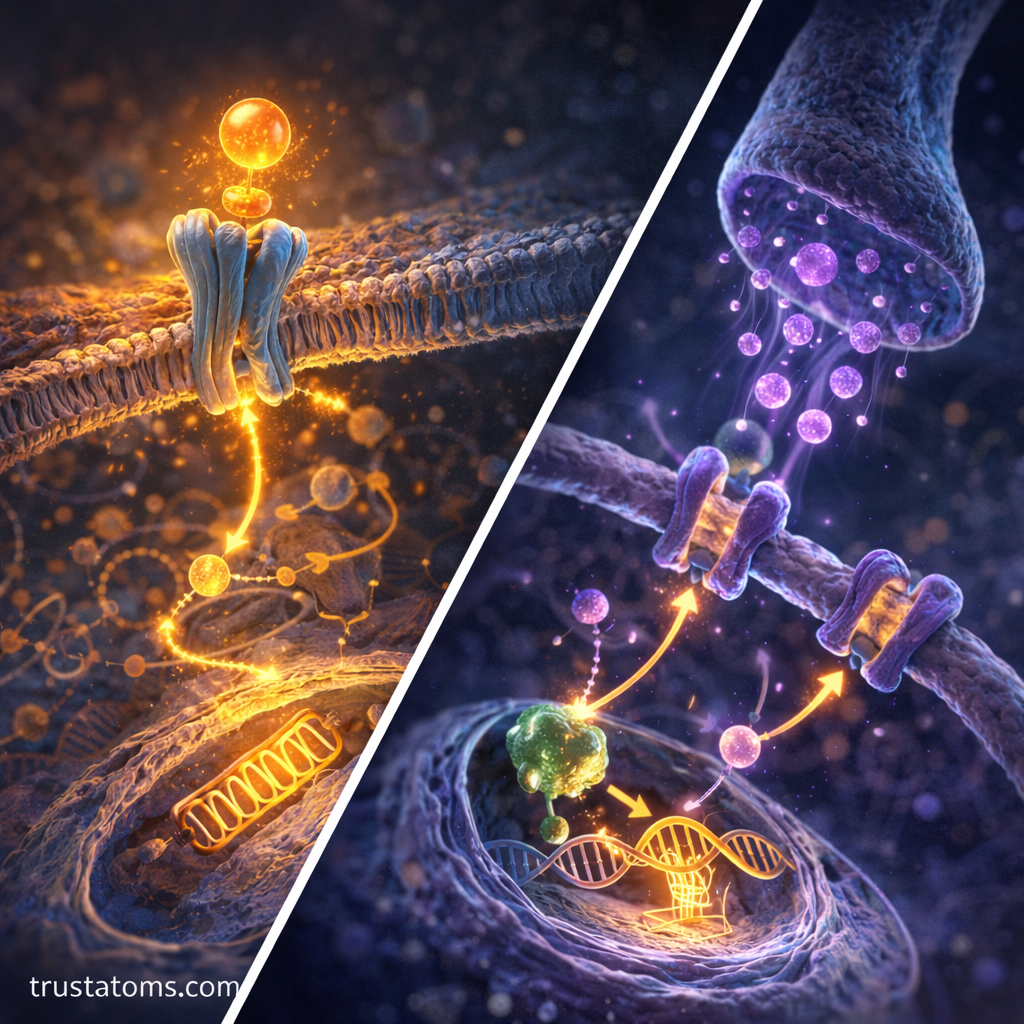
Cells communicate through several signaling strategies depending on the distance between signaling cells.
Autocrine Signaling
In autocrine signaling, cells respond to signals they release themselves.
This type of signaling is common in:
- Immune system regulation
- Cancer cell growth
- Cellular self-regulation
Paracrine Signaling
Paracrine signaling occurs when cells communicate with nearby cells.
Examples include:
- Growth factors influencing nearby tissue cells
- Local immune signaling
- Developmental signaling during embryogenesis
Signals typically diffuse short distances in this form of communication.
Endocrine Signaling
Endocrine signaling involves hormones that travel long distances through the bloodstream.
Examples include hormones produced by:
- The thyroid gland
- The adrenal glands
- The pancreas
Endocrine signaling coordinates body-wide processes such as metabolism and growth.
Synaptic Signaling
Synaptic signaling occurs in the nervous system.
Neurons release neurotransmitters at specialized junctions called synapses to transmit signals rapidly between nerve cells.
This type of signaling enables fast communication across neural networks.
Signal Amplification in Cellular Networks
One of the remarkable features of cellular signaling is signal amplification.
A small number of signaling molecules can trigger large cellular responses.
Amplification occurs because:
- One receptor can activate many signaling proteins
- Each signaling protein can activate multiple downstream targets
- Second messengers can spread signals rapidly throughout the cell
This cascade effect allows cells to respond efficiently even to very small signals.
Feedback Regulation in Signaling Networks
Cellular signaling networks include regulatory mechanisms that maintain balance.
Positive Feedback
Positive feedback strengthens or prolongs signaling activity.
This mechanism can amplify signals during important processes such as:
- Cell differentiation
- Developmental pathways
- Immune activation
Negative Feedback
Negative feedback reduces signaling activity to prevent excessive responses.
Examples include:
- Deactivation of receptors
- Degradation of signaling molecules
- Activation of inhibitory proteins
These mechanisms help maintain cellular stability.
Cellular Signaling and Disease
Disruptions in signaling networks can lead to a wide range of diseases.
Cancer
Cancer often results from abnormal signaling pathways that cause uncontrolled cell growth.
Mutations may cause signaling proteins to remain permanently active.
Examples include:
- Growth factor receptor mutations
- Overactive kinase signaling
- Loss of regulatory feedback mechanisms
Metabolic Disorders
Signaling pathways regulate metabolism and energy balance.
Disruptions in hormone signaling can lead to conditions such as:
- Diabetes
- Obesity
- Metabolic syndrome
These disorders often involve impaired insulin signaling.
Immune System Disorders
The immune system relies on signaling networks to coordinate responses.
Improper signaling can lead to:
- Autoimmune diseases
- Chronic inflammation
- Immunodeficiency
Understanding these pathways helps researchers develop targeted treatments.
Methods Used to Study Signaling Networks
Scientists use several experimental approaches to analyze cellular signaling systems.
Molecular Biology Techniques
Researchers investigate signaling pathways using tools such as:
- Gene editing
- Protein expression analysis
- RNA sequencing
These methods reveal how signaling genes and proteins function.
Imaging Technologies
Advanced microscopy allows scientists to observe signaling processes inside living cells.
Techniques include:
- Fluorescence microscopy
- Live-cell imaging
- Confocal microscopy
These methods track molecular activity in real time.
Systems Biology Approaches
Because signaling networks are complex, researchers often analyze them using computational models.
Systems biology helps scientists:
- Map signaling networks
- Identify key regulatory nodes
- Predict cellular responses to signals
These models improve understanding of biological systems.
Future Research in Cellular Signaling
Research in cellular signaling continues to evolve with new technologies and computational tools.
Emerging research areas include:
- Single-cell signaling analysis
- AI-driven pathway modeling
- Precision medicine targeting signaling networks
- Integration of signaling with genomic and proteomic data
These advances will help scientists better understand how signaling networks regulate cellular behavior.
Final Thoughts
Cellular signaling networks allow cells to communicate, coordinate activities, and respond to environmental changes. Through complex interactions between receptors, signaling proteins, and regulatory mechanisms, cells can process information and generate precise biological responses.
Disruptions in these networks can lead to disease, while understanding signaling pathways provides powerful opportunities for developing targeted therapies.
As research continues, cellular signaling networks remain one of the most important areas of study in modern biology.