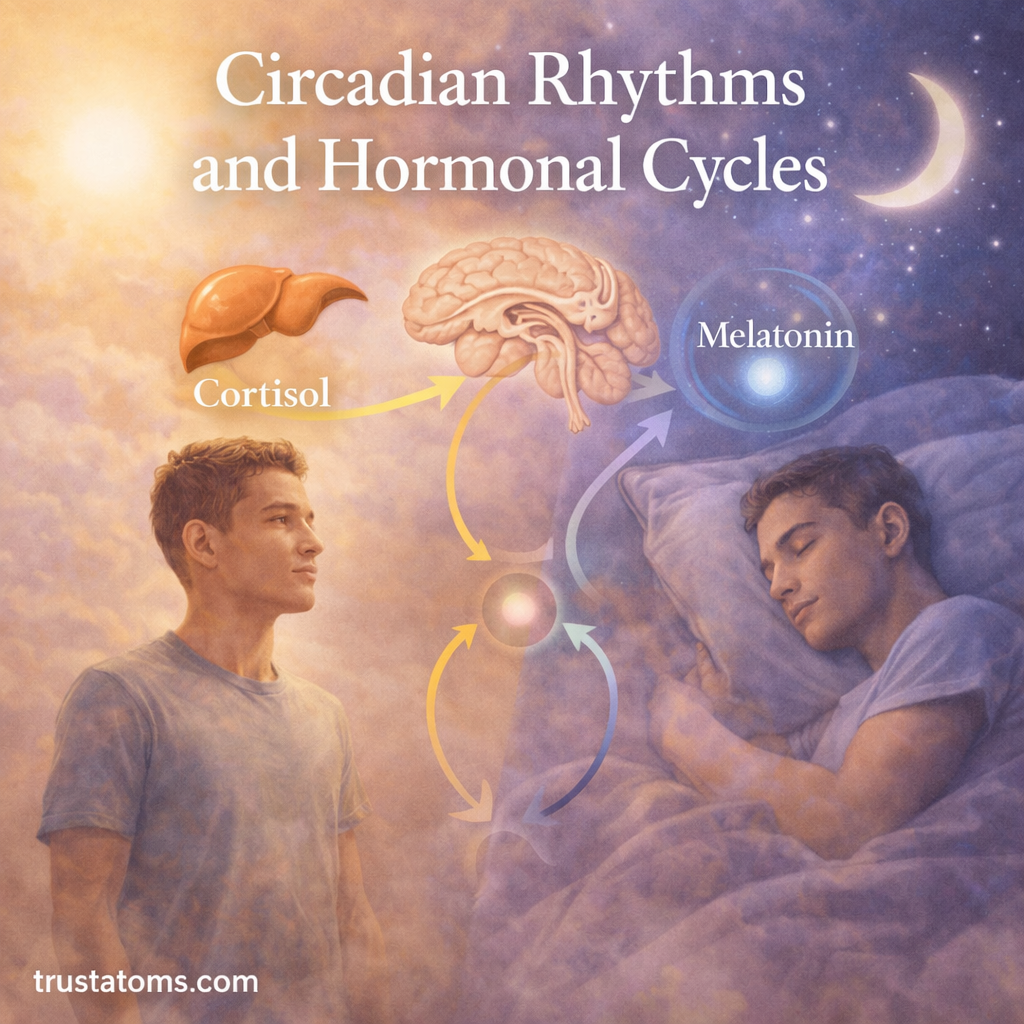
The human body operates on an internal clock that regulates sleep, energy levels, metabolism, and hormone release. This timing system is known as the circadian rhythm. It plays a crucial role in coordinating hormonal cycles that keep the body functioning efficiently.
This article explains how circadian rhythms work and how they influence hormone production and overall health.
What Are Circadian Rhythms?
Circadian rhythms are natural, 24-hour cycles that control various physiological processes in the body. These rhythms are influenced primarily by light and darkness in the environment.
Key Characteristics
- Follow a roughly 24-hour cycle
- Regulate sleep-wake patterns
- Affect hormone release, body temperature, and metabolism
- Reset daily based on light exposure
The body’s main “clock” is located in the hypothalamus, specifically in a region called the suprachiasmatic nucleus (SCN).
How the Biological Clock Works
The suprachiasmatic nucleus (SCN) receives signals from the eyes based on light exposure and adjusts the body’s internal timing accordingly.
Daily Cycle Overview
- Morning light signals the brain to wake up
- Alertness hormones increase
- Body temperature rises during the day
- Hormones shift in the evening to prepare for sleep
- Melatonin is released at night to promote sleep
This cycle repeats every day, helping the body stay synchronized with the environment.
Key Hormones Regulated by Circadian Rhythms
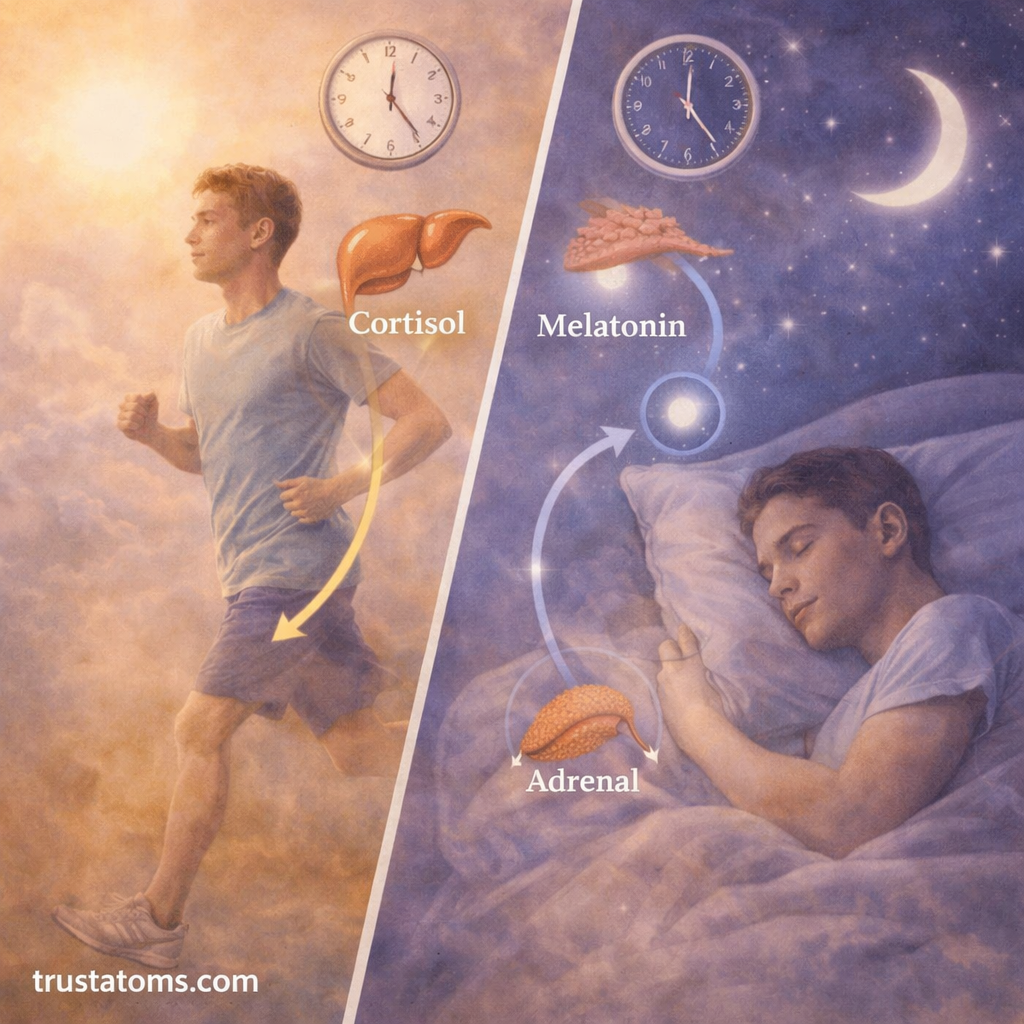
Several important hormones follow circadian patterns, rising and falling at specific times of the day.
Melatonin (Sleep Hormone)
- Released by the pineal gland
- Increases in darkness
- Promotes sleep and relaxation
Melatonin levels peak at night and decrease in the morning.
Cortisol (Stress and Alertness Hormone)
- Produced by the adrenal glands
- Peaks in the early morning
- Helps wake the body and increase energy
Cortisol follows a daily rhythm opposite to melatonin.
Growth Hormone (GH)
- Released during deep sleep
- Supports tissue repair and growth
- Important for muscle recovery and development
GH secretion is closely tied to sleep quality.
Insulin and Metabolic Hormones
- Regulate blood sugar levels
- More active during the day when eating occurs
- Reduced activity at night
This helps align metabolism with feeding patterns.
Sleep-Wake Cycle and Hormonal Balance
The sleep-wake cycle is one of the most visible effects of circadian rhythms.
During the Day
- Cortisol levels are higher
- Alertness and focus increase
- Body temperature rises
At Night
- Melatonin increases
- Body temperature drops
- The body enters rest and repair mode
Proper sleep timing ensures that these hormonal shifts occur as intended.
What Disrupts Circadian Rhythms?
Modern lifestyles can interfere with natural circadian patterns.
Common Disruptors
- Irregular sleep schedules
- Exposure to artificial light at night
- Shift work
- Jet lag
- Excessive screen time before bed
These disruptions can lead to hormonal imbalances and health issues.
Effects of Circadian Disruption on Hormones
When circadian rhythms are out of sync, hormone regulation is affected.
Potential Consequences
- Reduced melatonin production (poor sleep)
- Elevated cortisol levels (chronic stress)
- Impaired insulin function (blood sugar issues)
- Decreased growth hormone release (poor recovery)
Long-term disruption can increase the risk of:
- Sleep disorders
- Obesity
- Diabetes
- Cardiovascular disease
How to Support Healthy Circadian Rhythms
Maintaining a consistent daily routine helps regulate hormonal cycles.
Practical Tips
- Go to bed and wake up at the same time each day
- Get natural sunlight exposure in the morning
- Limit screen use before bedtime
- Keep your sleeping environment dark and cool
- Avoid caffeine late in the day
These habits help reinforce the body’s natural clock.
Circadian Rhythms and Overall Health
Circadian rhythms influence more than just sleep—they affect nearly every system in the body.
- Coordinate hormone release
- Support metabolic efficiency
- Enhance cognitive performance
- Promote physical recovery
When these rhythms are aligned, the body functions more efficiently and maintains better long-term health.
Summary
Circadian rhythms are essential for regulating hormonal cycles and maintaining balance in the body. By controlling when hormones like melatonin, cortisol, and growth hormone are released, the internal clock ensures that the body operates in sync with the day-night cycle.
Key takeaways:
- Circadian rhythms follow a 24-hour cycle influenced by light
- The SCN in the brain acts as the body’s master clock
- Hormones like melatonin and cortisol follow daily patterns
- Sleep quality is closely linked to hormone regulation
- Disruptions can lead to hormonal imbalance and health issues
Understanding circadian rhythms helps explain how timing plays a critical role in overall health and well-being.