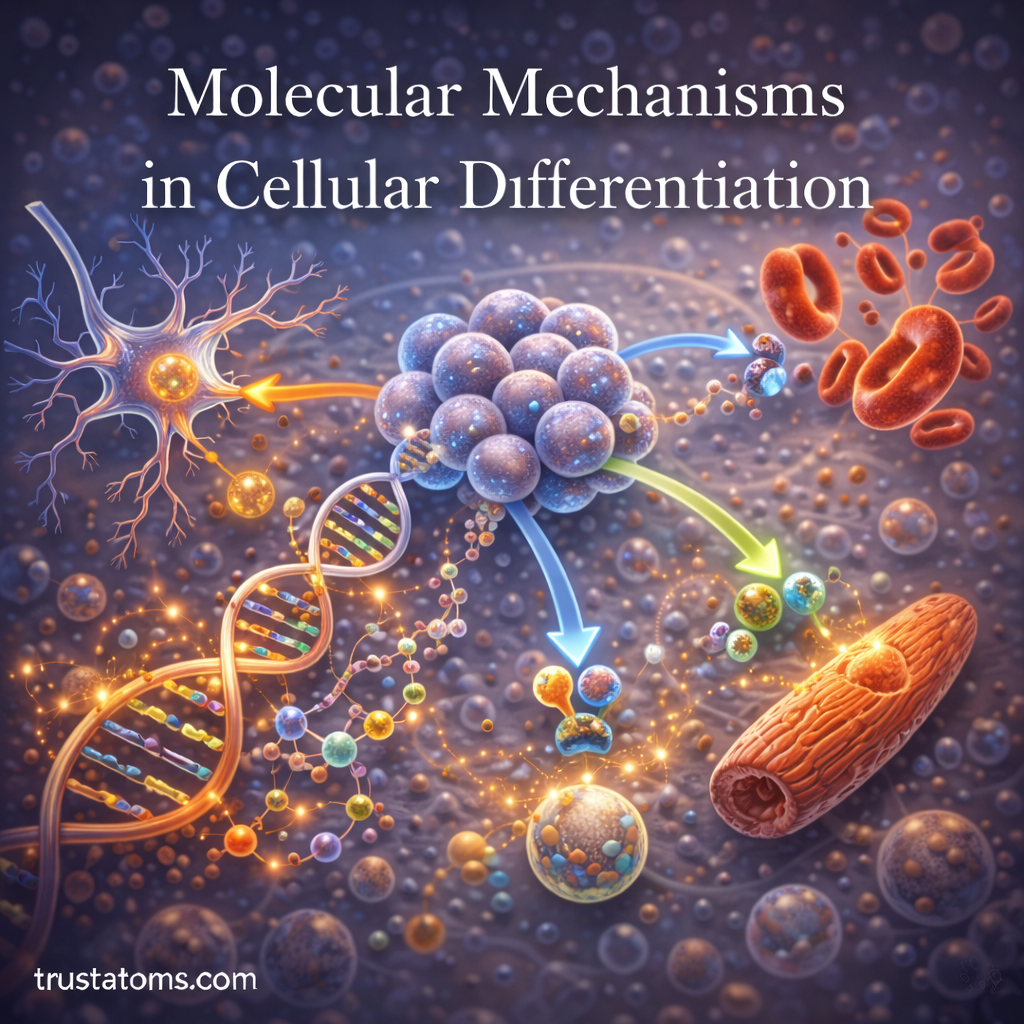
Molecular mechanisms control cellular differentiation by regulating which genes are active, how cells respond to signals, and which specialized proteins they produce. Through transcription factors, epigenetic changes, and signaling pathways, unspecialized cells develop into distinct cell types such as neurons, muscle cells, and blood cells.
Most cells in an organism contain essentially the same genetic instructions, yet they perform remarkably different functions. Understanding how cells acquire these identities is a central question in biology and the science of life, particularly in developmental biology, genetics, and regenerative medicine.
Cell specialization begins during embryonic development and continues throughout life as tissues replace damaged or aging cells. The underlying molecular processes determine not only what a cell becomes but also how it maintains its identity.
What Is Cellular Differentiation?
Cellular differentiation is the biological process through which unspecialized cells develop into specialized cell types with distinct structures and functions.
During development, cells gradually activate some genes while reducing the activity of others. These changes influence the proteins they produce, their shapes, and their interactions with neighboring cells.
For example, neurons develop structures suited to transmitting electrical signals, while muscle cells produce specialized proteins that enable contraction. Their different functions arise largely from differences in gene expression rather than entirely different sets of DNA.
Major specialized cell types include:
- Neurons that transmit information through the nervous system.
- Muscle cells that generate force and movement.
- Red blood cells that transport oxygen.
- Epithelial cells that form protective surfaces and tissue linings.
- Immune cells that recognize and respond to potential threats.
How Gene Regulation Determines Cell Identity
Gene regulation determines which instructions in a cell’s DNA are used to produce RNA and proteins. Different combinations of active genes create the molecular characteristics associated with specific cell types.
Several mechanisms contribute to this selective gene expression:
- Transcription factors: Proteins that bind regulatory DNA sequences and influence transcription.
- Enhancers and promoters: DNA regions that help control when and where genes are expressed.
- Chromatin organization: DNA packaging that influences access to particular genes.
- Regulatory RNA: RNA molecules that can influence gene expression and RNA stability.
These mechanisms work together rather than independently. A developmental signal may activate a transcription factor, which then changes the expression of multiple genes involved in establishing cell identity.
Transcription Factors Direct Differentiation
Transcription factors are proteins that recognize specific DNA sequences and influence the transcription of nearby genes. Some activate gene expression, while others repress it.
During differentiation, combinations of transcription factors coordinate developmental programs. A factor may activate genes needed for a specialized function while suppressing genes associated with alternative cell identities.
Certain transcription factors are especially influential. For example, MyoD is associated with skeletal muscle differentiation and can activate genes involved in muscle development.
However, a single transcription factor rarely acts alone. Cell identity generally depends on interacting proteins, regulatory DNA sequences, and signals from the surrounding environment.
Epigenetic Regulation Maintains Gene Expression Patterns
Epigenetic mechanisms influence gene activity without changing the underlying DNA sequence. They help establish and maintain patterns of gene expression as cells become specialized.
Examples of epigenetic regulation include:
- DNA methylation: Chemical modifications that can influence gene activity, often contributing to transcriptional repression in particular genomic regions.
- Histone modifications: Chemical changes to histone proteins that influence chromatin structure and gene regulation.
- Chromatin organization: Changes in how DNA is packaged that affect the accessibility of regulatory sequences.
Chromatin remodeling in epigenetic systems describes how specialized protein complexes reposition or alter nucleosomes, changing access to DNA during gene regulation.
Some epigenetic states persist through cell division, helping daughter cells maintain appropriate gene expression patterns. These mechanisms contribute to cellular memory, although epigenetic modifications can also change in response to developmental signals.
How Cell Signaling Influences Differentiation
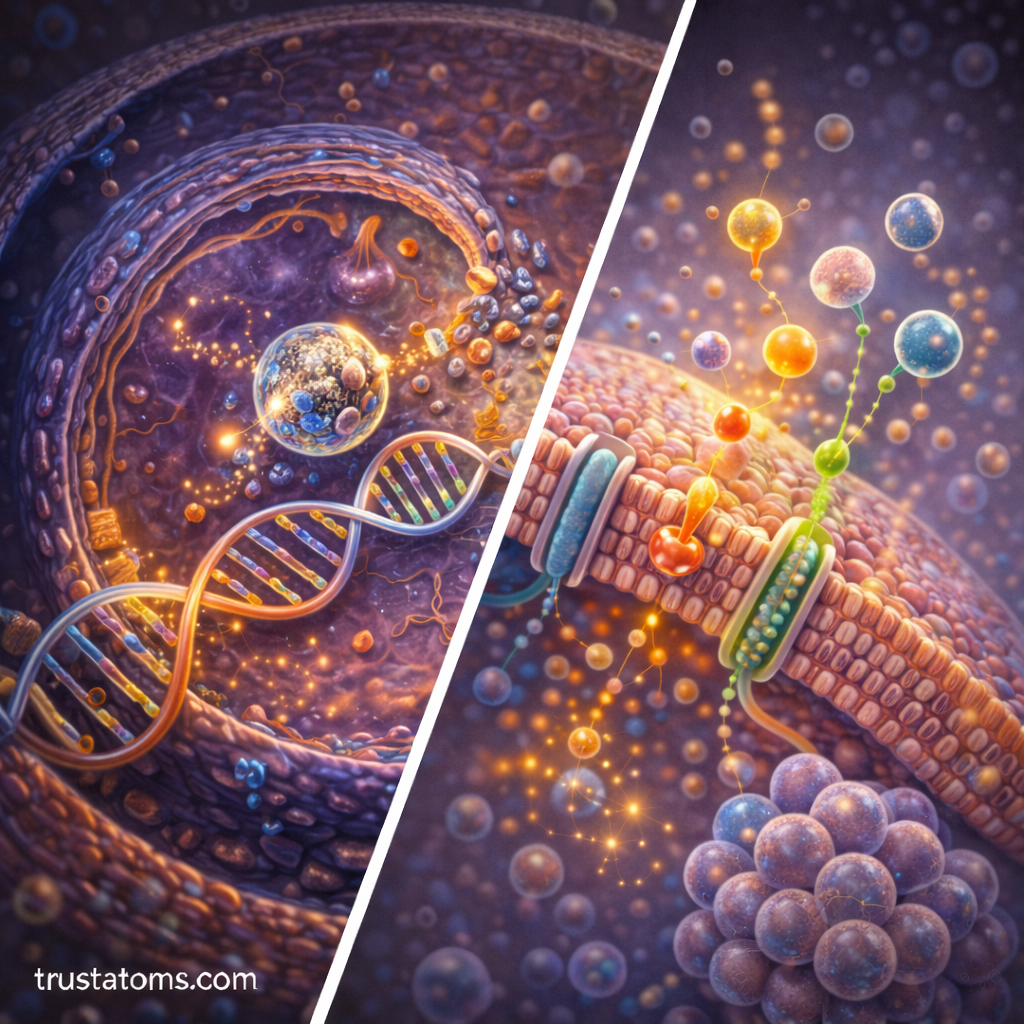
Cells do not determine their identities solely through internal genetic programs. Signals from neighboring cells and surrounding tissues also influence developmental decisions.
Signaling molecules bind receptors on cell surfaces or inside cells, triggering biochemical reactions that alter transcription factor activity and gene expression.
Important developmental signaling systems include Wnt, Notch, Hedgehog, and transforming growth factor-beta pathways. Their effects depend on the receiving cell, developmental stage, and interactions with other signals.
For example, Notch signaling frequently involves direct communication between neighboring cells. This allows cells to influence one another’s developmental choices and helps establish different cell identities within a tissue.
Stem Cells and Their Differentiation Potential
Stem cells can produce additional stem cells through self-renewal and generate specialized descendants through differentiation. Their developmental potential varies depending on the type of stem cell.
Embryonic Stem Cells
Embryonic stem cells are pluripotent, meaning they can produce cell types representing all three primary embryonic germ layers. They cannot independently generate every structure required to form an entire organism.
Researchers study these cells to understand early developmental decisions and the molecular signals that guide specialization.
Adult Stem Cells
Adult stem cells generally have more restricted differentiation potential. They maintain and replenish particular tissues throughout life.
Hematopoietic stem cells in bone marrow, for example, generate the different blood cell lineages. Stem cells in the skin and intestinal lining help replace cells lost through normal tissue turnover.
A Concrete Example: How Blood Stem Cells Produce Different Cells
Consider a hematopoietic stem cell in human bone marrow. Its descendants can develop into red blood cells, platelets through megakaryocytes, or several types of white blood cells.
These cells perform different functions despite originating from a common stem cell population. Red blood cells specialize in oxygen transport, while many white blood cells participate in immune defense.
As blood cell precursors differentiate, transcription factors and signaling molecules direct different gene expression programs. For example, erythropoietin supports the survival and development of red blood cell precursors.
Mature human red blood cells also lose their nuclei during development. This demonstrates that differentiation can involve major structural changes, not simply the activation of different genes.
The bone marrow example shows how a shared developmental origin can produce cells with dramatically different structures, proteins, and biological responsibilities.
Morphogen Gradients Provide Positional Information
During embryonic development, cells must respond not only to their internal state but also to their location within a growing tissue.
Morphogens are signaling molecules that can form concentration gradients across developing tissues. Cells exposed to different concentrations may activate different gene expression programs.
For example, Sonic hedgehog signaling contributes to pattern formation in the developing vertebrate neural tube. Different levels and durations of signaling help establish distinct neural progenitor identities.
These mechanisms allow coordinated tissue organization, although cell responses also depend on developmental history and interactions with other signaling pathways.
Gene Regulatory Networks Stabilize Cell Identity
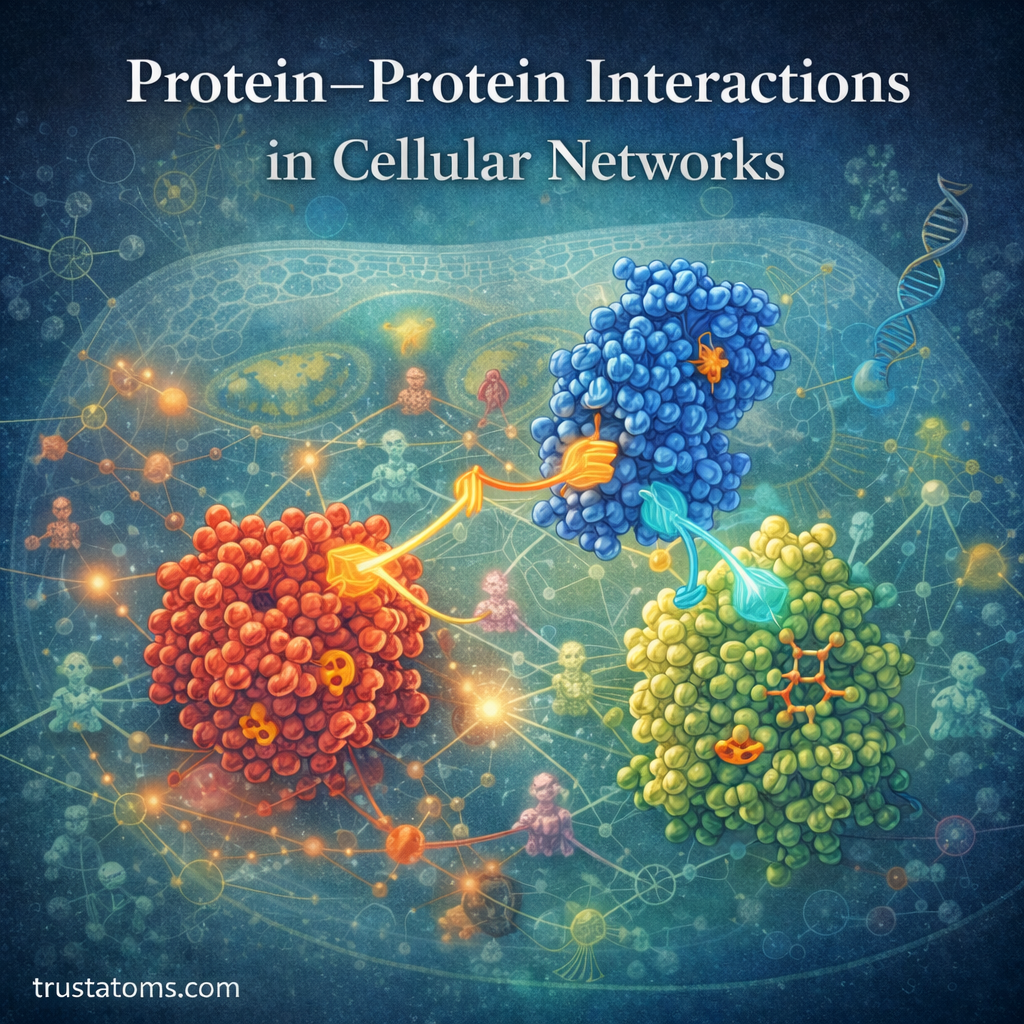
Cell differentiation depends on interactions among genes, transcription factors, and regulatory molecules. Together, these interactions form networks that coordinate developmental programs.
Some network components reinforce their own activity through feedback loops, helping maintain stable gene expression patterns. Other interactions suppress alternative developmental programs.
Computational models of gene regulatory networks help researchers investigate how interacting genes influence developmental decisions. Broader studies of regulatory networks in gene expression examine how these interactions coordinate cellular activity across different conditions.
Stable regulatory networks help differentiated cells maintain their identities. However, some specialized cells can change their gene expression programs under particular conditions, and experimental reprogramming can sometimes alter established cell identities.
When Differentiation Mechanisms Go Wrong
Disruptions in gene regulation, signaling, or chromatin organization can interfere with normal development.
Mutations affecting developmental transcription factors may prevent cells from acquiring appropriate identities. Abnormal signaling can alter tissue organization, while changes in epigenetic regulation may disrupt the expression of genes needed for specialized functions.
Defective differentiation is also associated with certain cancers. Some cancer cells display immature characteristics or fail to complete normal developmental programs, although the underlying causes vary among cancer types.
How Scientists Study Cellular Differentiation
Modern research methods allow scientists to examine differentiation at the level of individual cells and molecular interactions.
- Single-cell RNA sequencing: Measures gene expression in individual cells to identify cell populations and developmental states.
- CRISPR-based experiments: Alter selected genes to investigate their contributions to cell identity.
- Live-cell imaging: Tracks cellular behavior and developmental changes over time.
- Computational modeling: Examines how regulatory interactions may produce different developmental outcomes.
Combining these approaches helps researchers distinguish genes associated with a cell type from molecular mechanisms that actually influence its differentiation.
Applications in Regenerative Medicine
Understanding differentiation allows researchers to investigate ways of producing specialized cells for disease modeling, drug testing, and potential tissue repair.
Scientists can reprogram certain mature cells into induced pluripotent stem cells by introducing factors that alter their gene regulatory programs. These cells can then be directed toward selected developmental pathways under controlled laboratory conditions.
Stem cell research has potential applications in neurological disorders, heart disease, and other conditions involving damaged tissues. However, many proposed treatments remain experimental, and producing safe, functional cells requires careful control of differentiation and cell behavior.
Frequently Asked Questions
What molecular mechanisms control cellular differentiation?
Cellular differentiation is controlled by interacting mechanisms that include transcription factors, regulatory DNA sequences, epigenetic modifications, chromatin organization, and signaling pathways. Together, they determine which genes are expressed as cells become specialized.
Do differentiated cells have different DNA?
Most differentiated cells within an individual contain essentially the same genome. Their different characteristics mainly result from differences in gene expression, although some cell types undergo specialized genetic changes or lose their nuclei during development.
Can a differentiated cell become a stem cell again?
Some differentiated cells can be experimentally reprogrammed into induced pluripotent stem cells. This requires substantial changes in gene regulation and cellular identity and does not occur routinely in most mature human cells.
Cellular differentiation emerges from coordinated gene regulation, epigenetic changes, and signals that direct cells toward specialized functions. Transcription factors and regulatory networks establish cell identity, while chromatin organization and feedback mechanisms help maintain it. Understanding these interactions allows scientists to investigate developmental disorders and develop more precise approaches to studying and producing specialized cells.
Sources: Alberts et al., Molecular Biology of the Cell; Gilbert and Barresi, Developmental Biology; Lodish et al., Molecular Cell Biology.