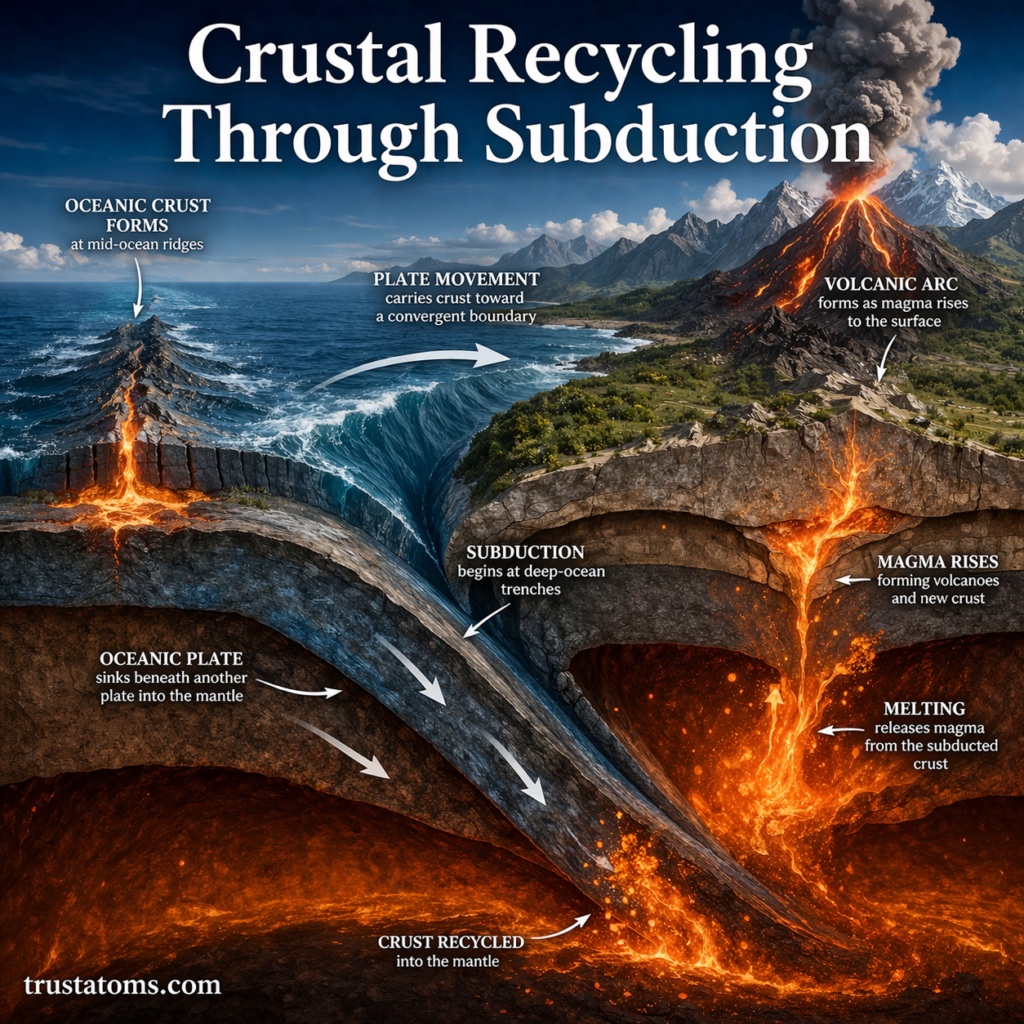
Earth’s surface is not permanent. Oceanic crust is constantly created, destroyed, and recycled through a powerful geological process known as subduction. This process plays a key role in shaping continents, fueling volcanic activity, and maintaining the dynamic nature of our planet.
Crustal recycling through subduction is one of the most important mechanisms in plate tectonics, helping regulate Earth’s structure over millions of years.
What Is Subduction?
Subduction occurs when one tectonic plate is forced beneath another and sinks into the mantle.
This typically happens at convergent plate boundaries, where plates collide.
Key Characteristics
- Denser oceanic plate sinks below a less dense plate
- Occurs along deep ocean trenches
- Generates intense heat and pressure
How Crustal Recycling Works
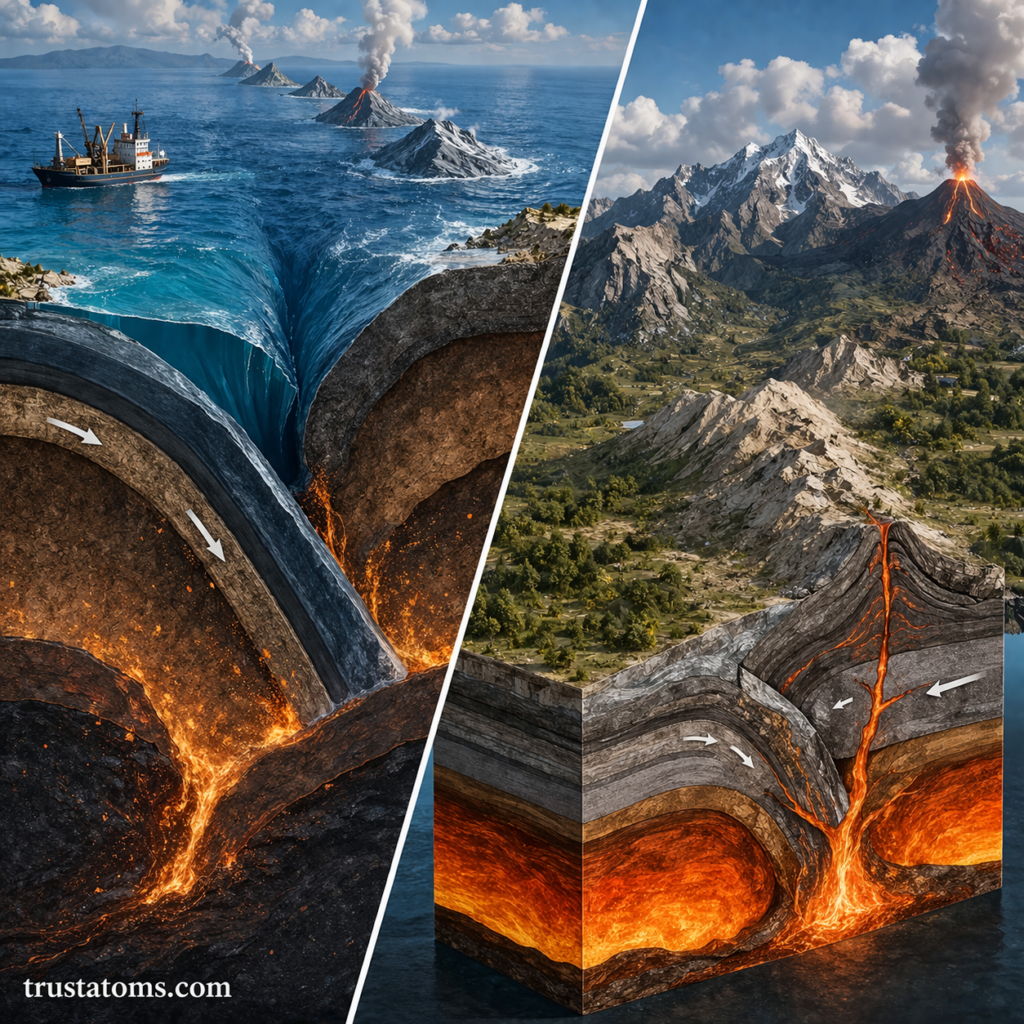
Subduction is part of a continuous cycle that recycles Earth’s crust.
Step-by-Step Process
- Oceanic crust forms at mid-ocean ridges
- Plate movement carries the crust away from the ridge
- Subduction begins when the plate reaches a convergent boundary
- Crust sinks into the mantle
- Material melts and rises, forming magma
- New crust forms through volcanic activity
This ongoing cycle ensures that Earth’s crust is constantly renewed.
Why Oceanic Crust Is Recycled
Oceanic crust is more likely to be recycled than continental crust because:
- It is denser and thinner
- It cools and becomes heavier over time
- It can sink more easily into the mantle
Continental crust, being less dense, typically resists subduction.
Geological Features Created by Subduction
Subduction zones produce some of Earth’s most dramatic landforms.
Ocean Trenches
- Deep depressions in the seafloor
- Mark the location where one plate dives beneath another
Example: The Mariana Trench is the deepest part of Earth’s oceans.
Volcanic Arcs
- Chains of volcanoes formed above subduction zones
- Created as melting material rises to the surface
Example: The Pacific Ring of Fire is a major zone of subduction-related volcanism.
Mountain Building
- Compression and uplift can form mountain ranges
- Occurs when continental plates collide
The Role of Magma in Recycling
As the subducting plate sinks, it experiences high temperatures and pressures.
What Happens Below the Surface
- Water and minerals are released from the plate
- These materials lower the melting point of surrounding rock
- Magma forms and rises toward the surface
This process leads to volcanic eruptions and the creation of new crust.
The Balance Between Creation and Destruction
Earth’s crust is constantly being:
- Created at divergent boundaries
- Destroyed at subduction zones
This balance keeps the size of Earth’s surface relatively stable over time.
Without subduction, Earth’s crust would continue to grow uncontrollably.
Environmental and Geological Impacts
Subduction zones are powerful and sometimes dangerous regions.
Natural Hazards
- Earthquakes
- Volcanic eruptions
- Tsunamis
Resource Formation
- Mineral deposits
- Geothermal energy sources
These areas are both valuable and hazardous.
Real-World Importance of Crustal Recycling
Understanding crustal recycling helps scientists:
- Predict earthquake and volcanic activity
- Study Earth’s internal processes
- Understand the formation of continents
It also provides insight into how Earth has evolved over billions of years.
Why Subduction Matters
Subduction is essential for maintaining Earth’s dynamic system.
Key Reasons
- Recycles old oceanic crust
- Drives volcanic activity
- Shapes continents and ocean basins
- Regulates geological balance
Without it, Earth would look very different.
Final Thoughts
Crustal recycling through subduction is a fundamental process that keeps our planet active and ever-changing. It connects deep Earth processes with surface features, from ocean trenches to volcanic mountains.
By recycling old crust and creating new material, subduction ensures that Earth remains a dynamic and evolving planet.