Dietary fiber plays a central role in maintaining digestive health, especially within the colon (large intestine). While often associated with regular bowel movements, fiber does far more—it supports gut bacteria, regulates waste movement, and contributes to overall metabolic health.
Understanding how fiber interacts with colon function can help you make better dietary choices and support long-term digestive wellness.
What Is Dietary Fiber?
Dietary fiber is a type of carbohydrate found in plant-based foods that the body cannot fully digest. Unlike sugars and starches, fiber passes through the digestive system largely intact.
There are two primary types of fiber:
Soluble Fiber
- Dissolves in water to form a gel-like substance
- Slows digestion and nutrient absorption
- Helps regulate blood sugar and cholesterol
- Found in oats, beans, apples, and citrus fruits
Insoluble Fiber
- Does not dissolve in water
- Adds bulk to stool
- Helps food move through the digestive tract
- Found in whole grains, nuts, seeds, and vegetables
Both types are essential for proper colon function.
Overview of the Colon’s Role
The colon is the final section of the digestive tract. Its primary functions include:
- Absorbing water and electrolytes
- Compacting and storing waste
- Supporting beneficial gut bacteria
- Facilitating the elimination of stool
The colon relies heavily on dietary fiber to perform these tasks efficiently.
How Fiber Supports Colon Function
1. Promotes Regular Bowel Movements
Fiber increases stool bulk and softness, making it easier to pass. Insoluble fiber, in particular, helps prevent constipation by speeding up the movement of waste through the colon.
Benefits include:
- Reduced risk of constipation
- Less straining during bowel movements
- Improved overall digestive comfort
2. Feeds Gut Microbiota
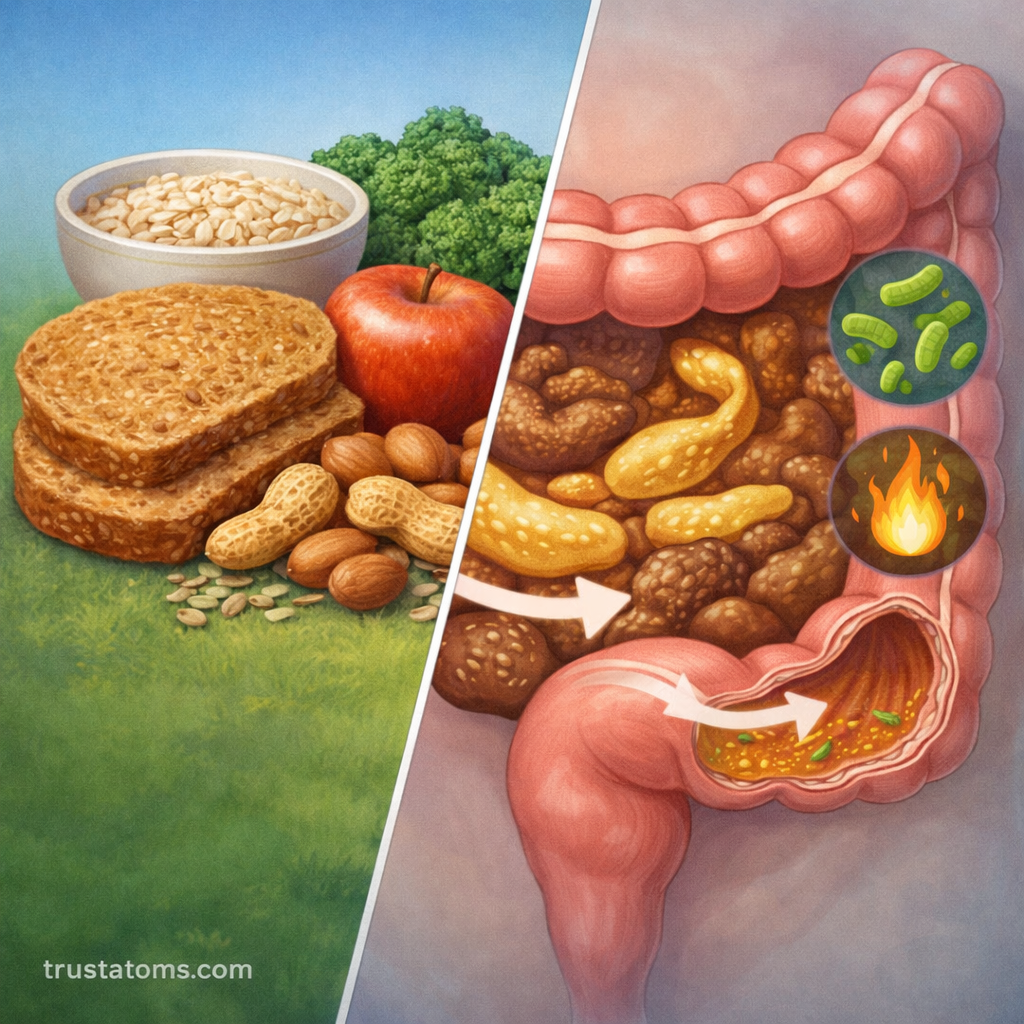
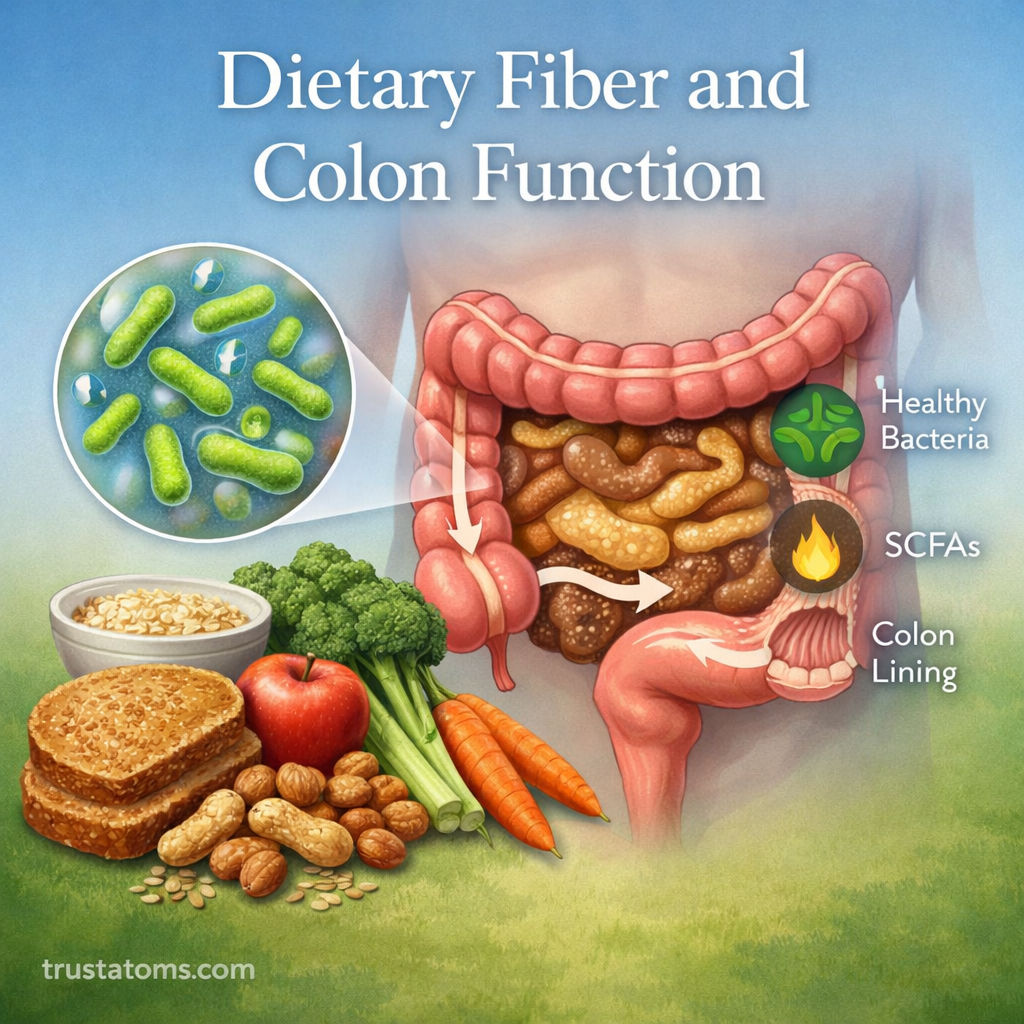
Soluble fiber acts as a food source for beneficial bacteria in the colon. These bacteria ferment fiber and produce short-chain fatty acids (SCFAs), such as butyrate.
SCFAs help:
- Nourish colon cells
- Reduce inflammation
- Maintain a healthy gut environment
3. Supports Colon Lining Health
The colon lining depends on nutrients produced by fiber fermentation. Butyrate, one of the main SCFAs, is especially important for maintaining the integrity of colon cells.
This contributes to:
- Stronger intestinal barrier function
- Reduced risk of irritation or inflammation
- Improved cellular repair processes
4. Regulates Water Balance in Stool
Fiber helps manage how much water remains in stool:
- Insoluble fiber absorbs water and increases bulk
- Soluble fiber retains water, softening stool
This balance prevents both constipation and overly loose stools, supporting consistent bowel patterns.
5. May Lower Risk of Colon Disorders
A fiber-rich diet is associated with a lower risk of several colon-related conditions, including:
- Diverticulosis
- Hemorrhoids
- Colorectal cancer (observational association)
Fiber helps reduce pressure within the colon and promotes efficient waste removal, which may contribute to these protective effects.
Fiber and Transit Time
Transit time refers to how long food takes to move through the digestive tract.
Fiber helps optimize transit time by:
- Speeding up slow digestion (preventing constipation)
- Adding structure to stool for smoother movement
- Supporting coordinated contractions of the colon
Balanced transit time is important because:
- Too slow → toxin buildup and discomfort
- Too fast → poor nutrient absorption
Recommended Daily Fiber Intake
General guidelines suggest:
- Men: ~30–38 grams per day
- Women: ~21–25 grams per day
However, most people consume significantly less than recommended levels.
Best Dietary Sources of Fiber
To support colon function, include a variety of fiber-rich foods:
Fruits
- Apples
- Pears
- Berries
Vegetables
- Broccoli
- Carrots
- Leafy greens
Whole Grains
- Oats
- Brown rice
- Whole wheat
Legumes
- Lentils
- Chickpeas
- Black beans
Nuts and Seeds
- Almonds
- Chia seeds
- Flaxseeds
A diverse intake supports both types of fiber and promotes a healthier gut microbiome.
Tips for Increasing Fiber Safely
Increasing fiber too quickly can cause bloating or discomfort. Gradual changes are best.
Follow these tips:
- Increase fiber intake slowly over time
- Drink plenty of water to support digestion
- Include both soluble and insoluble fiber sources
- Choose whole foods over processed options
- Monitor how your body responds
Common Misconceptions About Fiber
“All Fiber Works the Same”
Different types of fiber have distinct roles. Both soluble and insoluble fiber are necessary for optimal colon function.
“More Fiber Is Always Better”
Excessive fiber without enough water can lead to discomfort or constipation.
“Fiber Only Affects Digestion”
Fiber also influences metabolic health, immune function, and even mental well-being through the gut-brain connection.
Final Thoughts
Dietary fiber is a key component of colon health, influencing everything from bowel regularity to the activity of beneficial gut bacteria. By incorporating a variety of fiber-rich foods into your diet, you support not only digestive function but overall health.
Consistent, balanced fiber intake—paired with adequate hydration—creates an environment where the colon can function efficiently and effectively over the long term.