The human body relies on close coordination between systems to function efficiently. One of the most important partnerships is between the digestive system and the circulatory system. Together, they ensure that nutrients from food are absorbed, transported, and delivered to cells throughout the body.
Understanding how these systems integrate provides a clearer picture of how the body converts food into usable energy and essential building blocks.
Overview of the Digestive System
The digestive system is responsible for breaking down food into smaller components that the body can absorb and use.
Key organs include:
- Mouth (mechanical and chemical digestion begins)
- Stomach (breaks down food with acids and enzymes)
- Small intestine (primary site of nutrient absorption)
- Large intestine (absorbs water and forms waste)
While digestion prepares nutrients, it is the circulatory system that distributes them.
Overview of the Circulatory System
The circulatory system transports substances throughout the body using blood.
Main components include:
- Heart (pumps blood)
- Blood vessels (arteries, veins, capillaries)
- Blood (carries oxygen, nutrients, hormones, and waste)
This system acts as a delivery network, connecting the digestive tract to every cell.
Where Digestion Meets Circulation
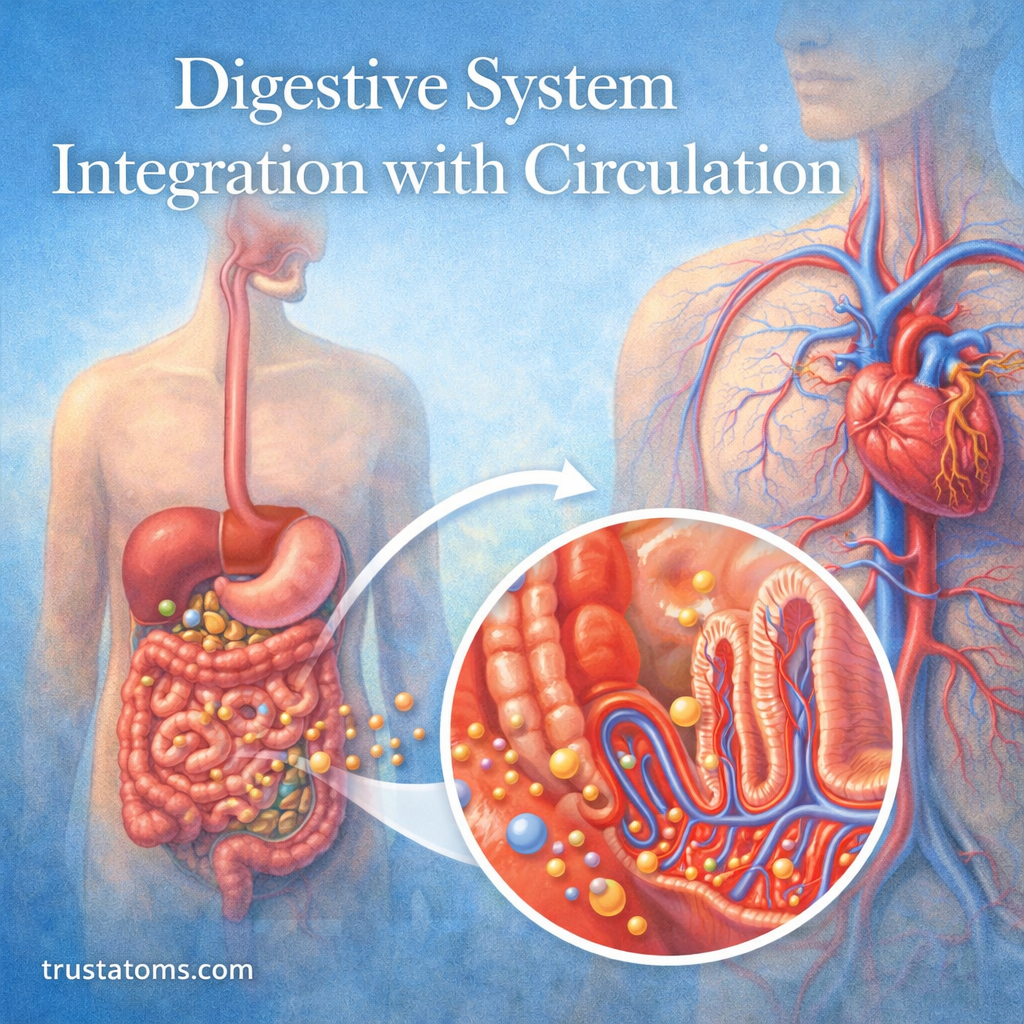
The integration between these systems primarily occurs in the small intestine, particularly in structures called villi.
Villi and Microvilli
The inner lining of the small intestine contains millions of tiny finger-like projections called villi, which are covered in even smaller structures called microvilli.
These structures:
- Increase surface area for absorption
- Contain capillaries and lymph vessels
- Facilitate rapid nutrient transfer into circulation
This is where digested nutrients enter the bloodstream.
How Nutrients Enter the Bloodstream
Once food is broken down, nutrients pass through the intestinal wall and into nearby blood vessels.
Water-Soluble Nutrients
These include:
- Glucose (from carbohydrates)
- Amino acids (from proteins)
- Vitamins such as B and C
They enter capillaries directly and are transported via the bloodstream.
Fat-Soluble Nutrients
These include:
- Fatty acids
- Fat-soluble vitamins (A, D, E, K)
Instead of entering the bloodstream immediately, they are absorbed into lymphatic vessels (lacteals) and later enter circulation.
The Role of the Hepatic Portal System
Before nutrients reach the rest of the body, many are first transported to the liver through a specialized pathway called the hepatic portal system.
Why the Liver Is Important
The liver acts as a processing and filtering center:
- Stores glucose as glycogen
- Detoxifies harmful substances
- Regulates nutrient levels in the blood
- Produces proteins and bile
This ensures that nutrients are balanced and safe before distribution.
Oxygen and Digestive Function
The circulatory system not only transports nutrients but also delivers oxygen to digestive organs.
Oxygen supports:
- Cellular metabolism in intestinal cells
- Enzyme production
- Muscle contractions (peristalsis)
Without adequate blood flow, digestion becomes less efficient.
Hormonal Coordination Between Systems
Hormones help regulate the interaction between digestion and circulation.
Examples include:
- Insulin (regulates blood glucose levels after absorption)
- Gastrin (stimulates stomach activity)
- Secretin and cholecystokinin (control digestive secretions)
These signals ensure that nutrients are processed and distributed appropriately.
Waste Removal and Circulatory Support
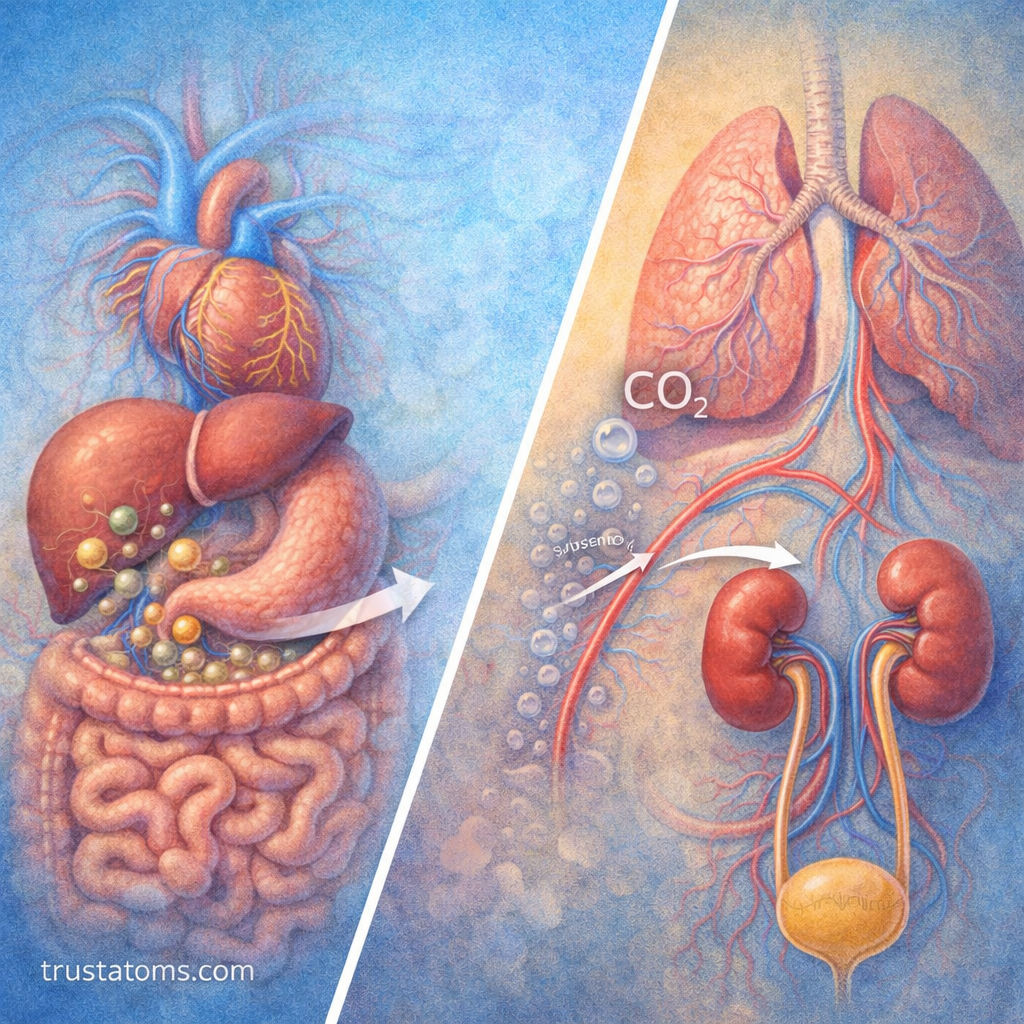
After nutrients are delivered, the circulatory system also helps remove waste products from digestion and metabolism.
It transports:
- Carbon dioxide to the lungs
- Metabolic waste to the kidneys
- Toxins to the liver for processing
This completes the cycle of intake, use, and elimination.
Factors That Affect Integration Efficiency
Several factors influence how well the digestive and circulatory systems work together:
- Diet quality and nutrient intake
- Hydration levels
- Physical activity (improves blood flow)
- Gut health and microbiota balance
- Underlying health conditions
Maintaining these factors supports optimal system integration.
Common Issues Related to Poor Integration
Disruptions in this relationship can lead to various health problems:
Malabsorption
- Nutrients are not properly absorbed
- Can lead to deficiencies
Circulatory Problems
- Reduced blood flow limits nutrient delivery
- Affects organ function
Liver Dysfunction
- Impairs nutrient processing and detoxification
Recognizing these issues early can help maintain overall health.
Tips to Support Digestive and Circulatory Health
To promote efficient integration:
- Eat a balanced diet rich in whole foods
- Stay hydrated throughout the day
- Exercise regularly to improve circulation
- Limit processed foods and excess sugars
- Support gut health with fiber-rich foods
These habits help both systems work together effectively.
Final Thoughts
The integration of the digestive and circulatory systems is essential for transforming food into energy and nutrients that sustain life. From the small intestine’s absorption process to the liver’s regulation and the bloodstream’s delivery network, each step depends on seamless coordination.
By understanding how these systems interact, you can better appreciate the importance of nutrition, hydration, and overall lifestyle in maintaining optimal health.