Earth is not a cold, inactive planet. Beneath the surface lies a vast reservoir of heat that drives many of the geological processes shaping our world. From volcanic eruptions to plate tectonics, this internal energy plays a crucial role in how Earth evolves over time.
Understanding where this heat comes from—and how it moves—helps explain everything from mountain formation to earthquakes and even the structure of Earth’s layers.
What Is Earth’s Internal Heat?
Earth’s internal heat refers to the thermal energy stored within the planet’s interior. This heat exists deep below the surface and gradually moves outward, influencing geological activity.
It is responsible for:
- Melting rock into magma
- Driving convection currents in the mantle
- Powering plate tectonics
- Fueling volcanic and geothermal activity
Without this internal heat, Earth would be a much more geologically inactive planet.
Main Sources of Earth’s Internal Heat
Earth’s heat comes from a combination of processes that have been active since the planet formed.
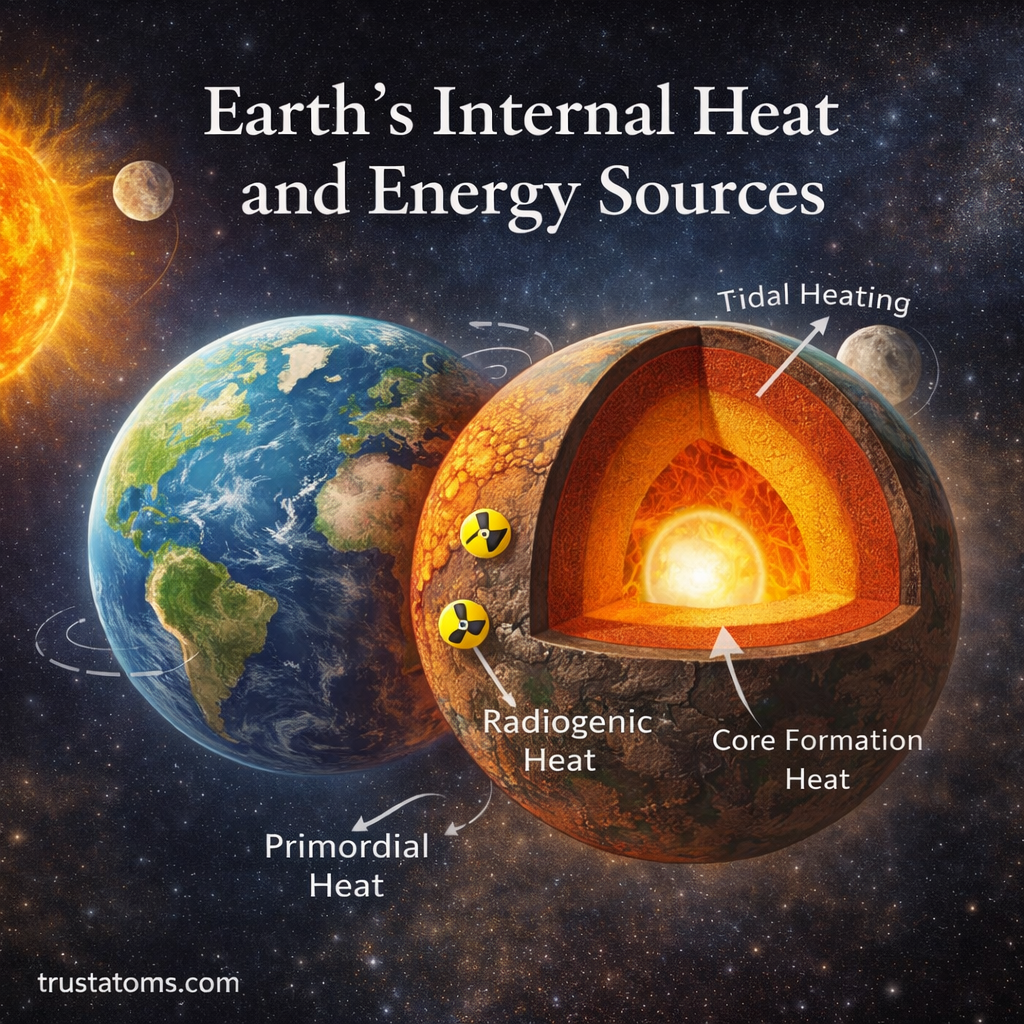
Primordial Heat
Primordial heat is leftover energy from Earth’s formation about 4.5 billion years ago.
This heat originated from:
- Collisions of particles during planetary formation
- Gravitational compression as Earth grew
- Differentiation (when dense materials sank toward the core)
Even today, some of this original heat remains trapped deep inside the planet.
Radiogenic Heat
Radiogenic heat is produced by the natural decay of radioactive elements within Earth’s interior.
Common elements include:
- Uranium
- Thorium
- Potassium
As these elements decay, they release energy in the form of heat. This is one of the most significant ongoing sources of Earth’s internal energy.
Heat from Core Formation
During Earth’s early history, heavier elements like iron sank to form the core. This process released a large amount of heat due to friction and gravitational energy.
Additionally:
- The inner core continues to slowly solidify
- This process releases latent heat
- It contributes to maintaining high temperatures in the core
Tidal Heating (Minor Contribution)
Tidal forces from the Moon and the Sun cause slight flexing of Earth’s interior.
While this effect is relatively small compared to other sources, it still contributes a minor amount of heat through friction within Earth’s materials.
How Heat Moves Inside Earth
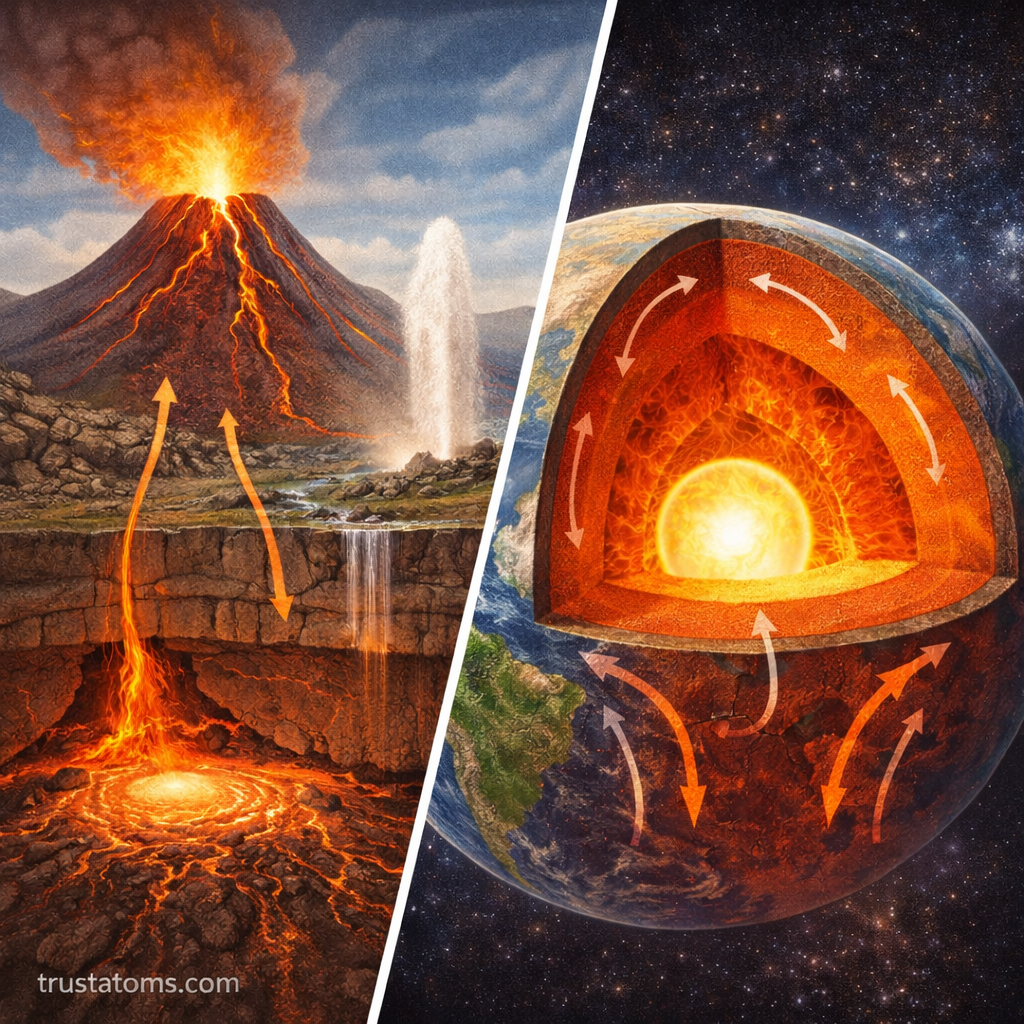
Heat does not stay in one place—it constantly moves toward the surface through several processes.
Conduction
- Heat transfers directly through solid materials
- Occurs mainly in the crust and lithosphere
- Slower compared to other methods
Convection
- Heat moves through the flow of material in the mantle
- Hot material rises, cools, and then sinks
- Creates convection currents that drive plate tectonics
This is one of the most important mechanisms for distributing heat inside Earth.
Advection
- Heat is transported by moving magma or fluids
- Common in volcanic regions and hydrothermal systems
- Plays a key role in geothermal activity
Earth’s Internal Structure and Heat Distribution
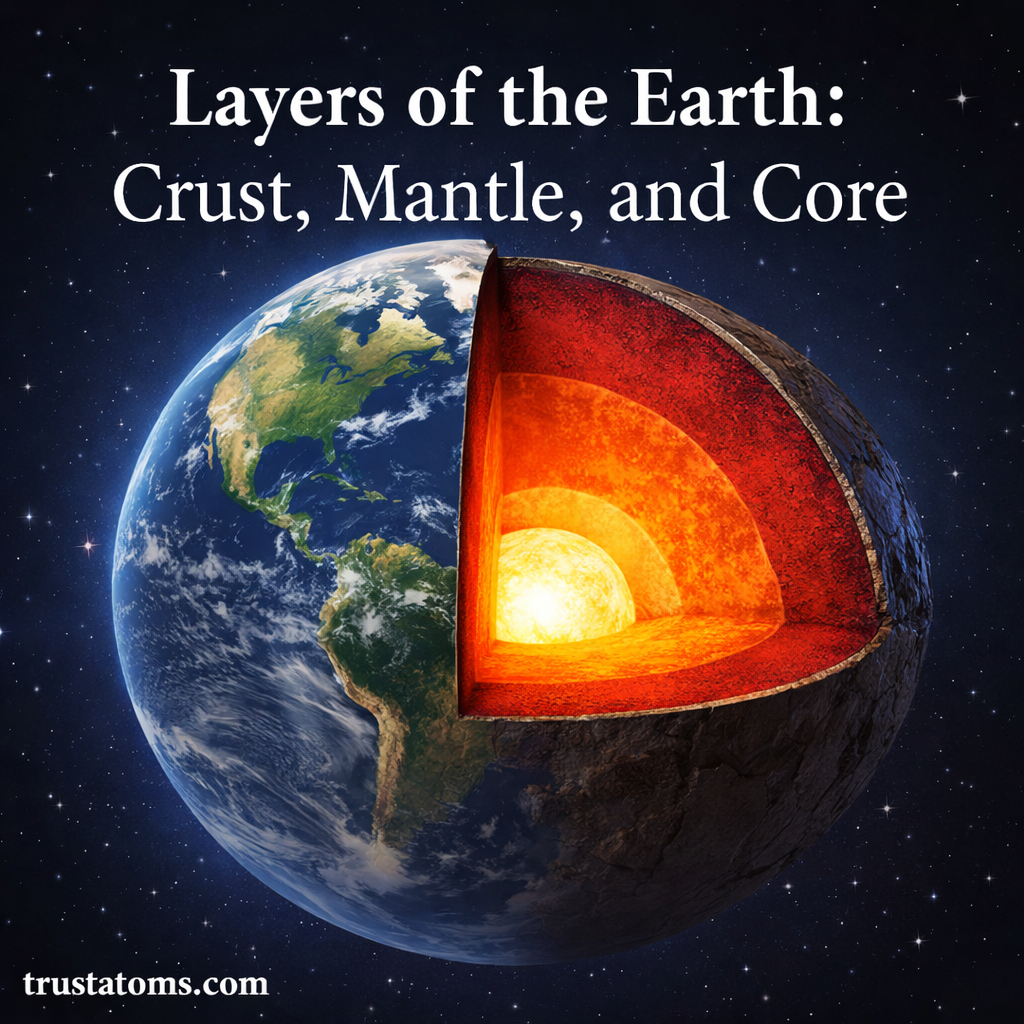
Earth is divided into layers, each with different temperatures and behaviors.
Crust
- Thin outer layer
- Relatively cool compared to deeper layers
- Heat mainly transferred by conduction
Mantle
- Thick, semi-solid layer beneath the crust
- Extremely hot, but capable of slow movement
- Convection currents dominate heat transfer
Core
- Divided into outer (liquid) and inner (solid) core
- Temperatures can exceed those at the surface of the Sun
- Major source of Earth’s internal heat
Why Earth’s Internal Heat Matters
Earth’s internal heat is essential for maintaining a dynamic and active planet.
It influences:
- Plate tectonics and continental movement
- Formation of mountains and ocean basins
- Volcanic eruptions
- Earthquakes
- Creation of new crust at mid-ocean ridges
Without internal heat, Earth would lack the geological processes that continually reshape its surface.
Geothermal Energy: A Practical Use
Humans can harness Earth’s internal heat as a renewable energy source.
Geothermal energy is used for:
- Generating electricity
- Heating buildings
- Supporting agricultural systems like greenhouses
It is considered sustainable because it relies on naturally occurring heat within Earth.
Key Takeaways
- Earth’s internal heat comes from primordial energy, radioactive decay, and core formation
- Radiogenic heat is a major ongoing source
- Heat moves through conduction, convection, and advection
- Internal heat drives plate tectonics and geological activity
- Geothermal energy provides a practical way to use this natural heat
Final Thoughts
Earth’s internal heat is a powerful force that continues to shape the planet from within. It fuels the movement of tectonic plates, drives volcanic activity, and supports the dynamic systems that make Earth geologically active.
By understanding these energy sources and how heat moves through Earth’s layers, we gain deeper insight into the processes that have shaped the planet over billions of years—and continue to influence it today.