Growth and puberty are complex biological processes controlled by the endocrine system. Hormones act as chemical messengers that regulate physical development, sexual maturation, and overall body changes from childhood into adulthood.
This article explains how the endocrine system controls growth and puberty, highlighting the key hormones and glands involved.
What Is the Endocrine System?
The endocrine system is a network of glands that produce and release hormones directly into the bloodstream. These hormones regulate many body functions, including growth, metabolism, and reproduction.
Major Endocrine Glands Involved
- Hypothalamus
- Pituitary gland
- Thyroid gland
- Adrenal glands
- Gonads (ovaries in females, testes in males)
Each gland plays a specific role in coordinating development and maintaining balance in the body.
Hormonal Control of Growth
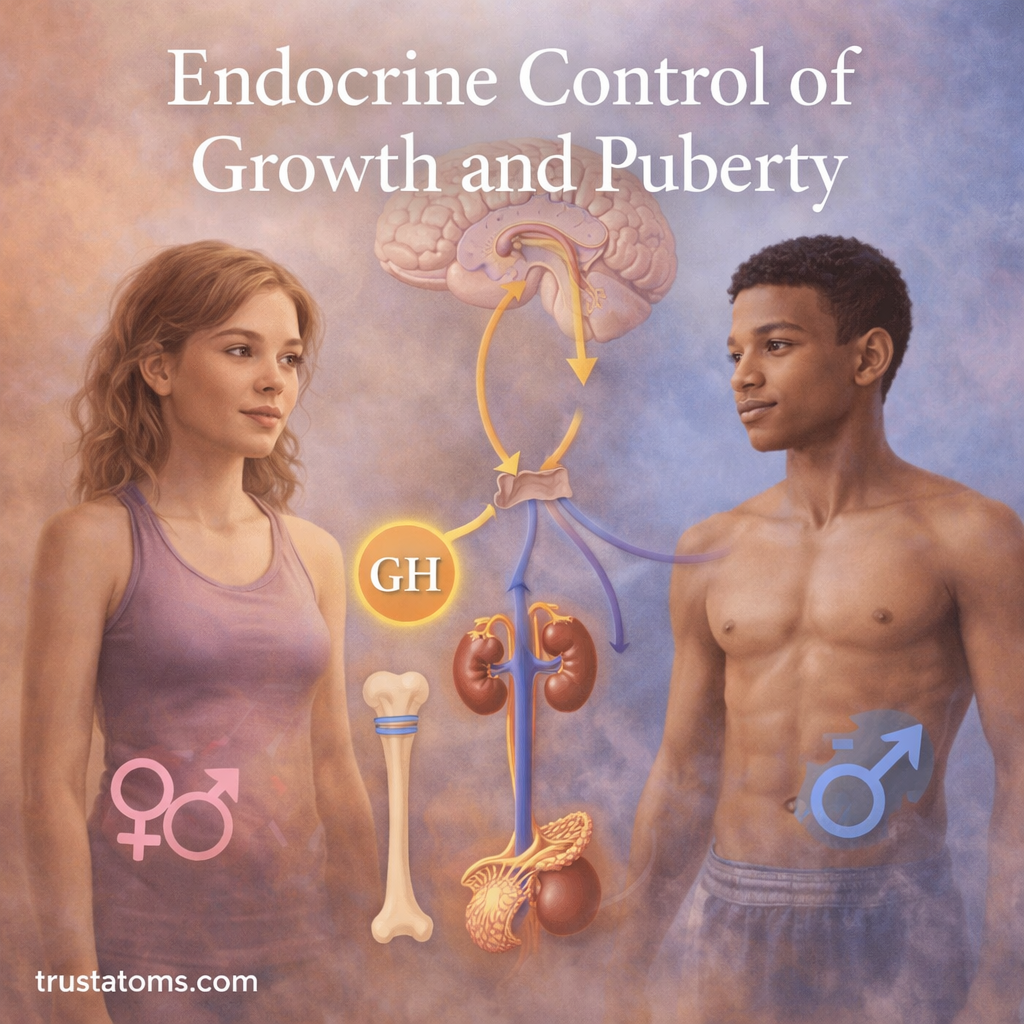
Growth during childhood and adolescence is primarily regulated by growth hormone (GH) and other supporting hormones.
Growth Hormone (GH)
Growth hormone is produced by the anterior pituitary gland and is essential for normal physical development.
Key Effects of GH
- Stimulates bone lengthening
- Promotes muscle growth
- Increases protein synthesis
- Supports fat metabolism
GH works by stimulating the liver to produce insulin-like growth factor 1 (IGF-1), which directly promotes tissue growth.
Thyroid Hormones and Growth
Thyroid hormones (T3 and T4) also play a critical role in growth and development.
Functions of Thyroid Hormones
- Regulate metabolism
- Support brain development
- Enhance the effects of growth hormone
Without adequate thyroid hormones, normal growth and development can be delayed.
Role of Nutrition and Insulin
Proper nutrition and insulin levels are essential for growth.
- Insulin helps cells absorb glucose for energy
- Nutrients provide the building blocks for growth
- Malnutrition can impair hormone function and slow development
What Triggers Puberty?
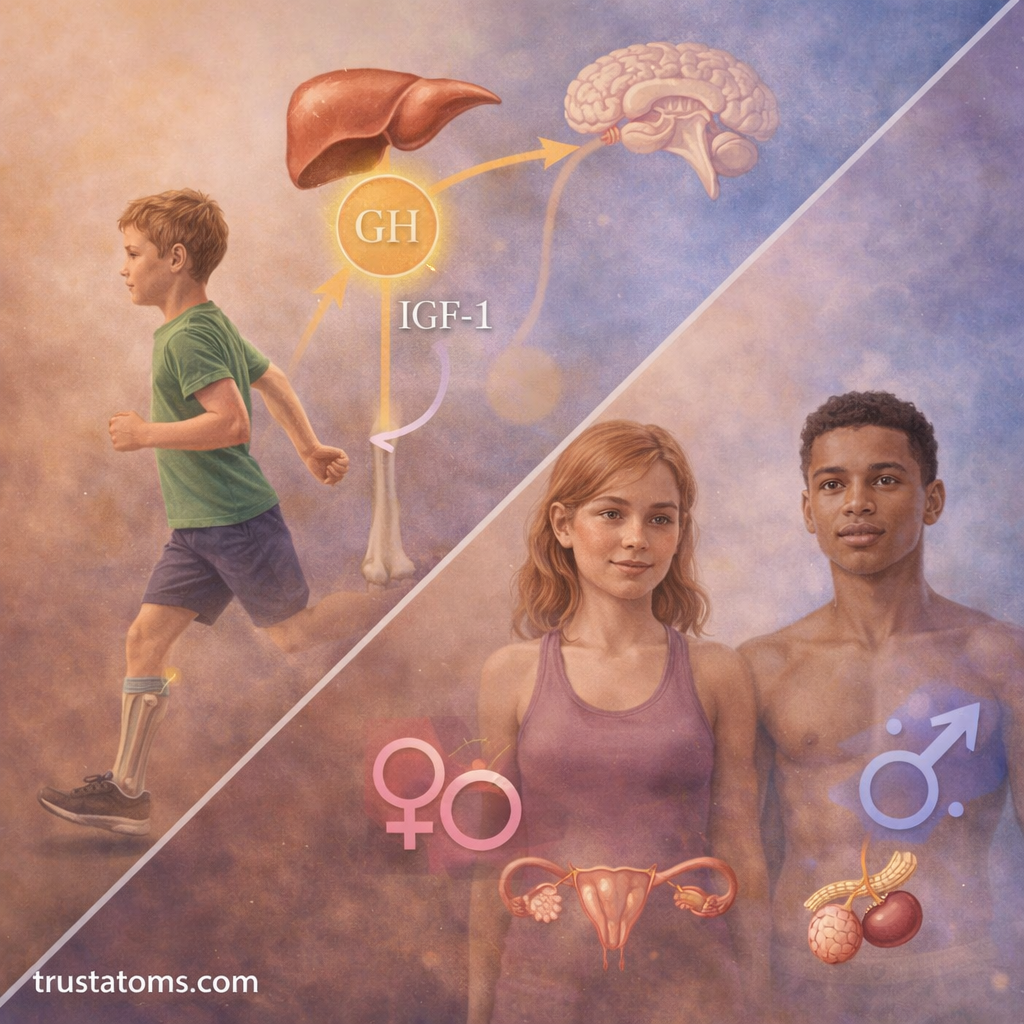
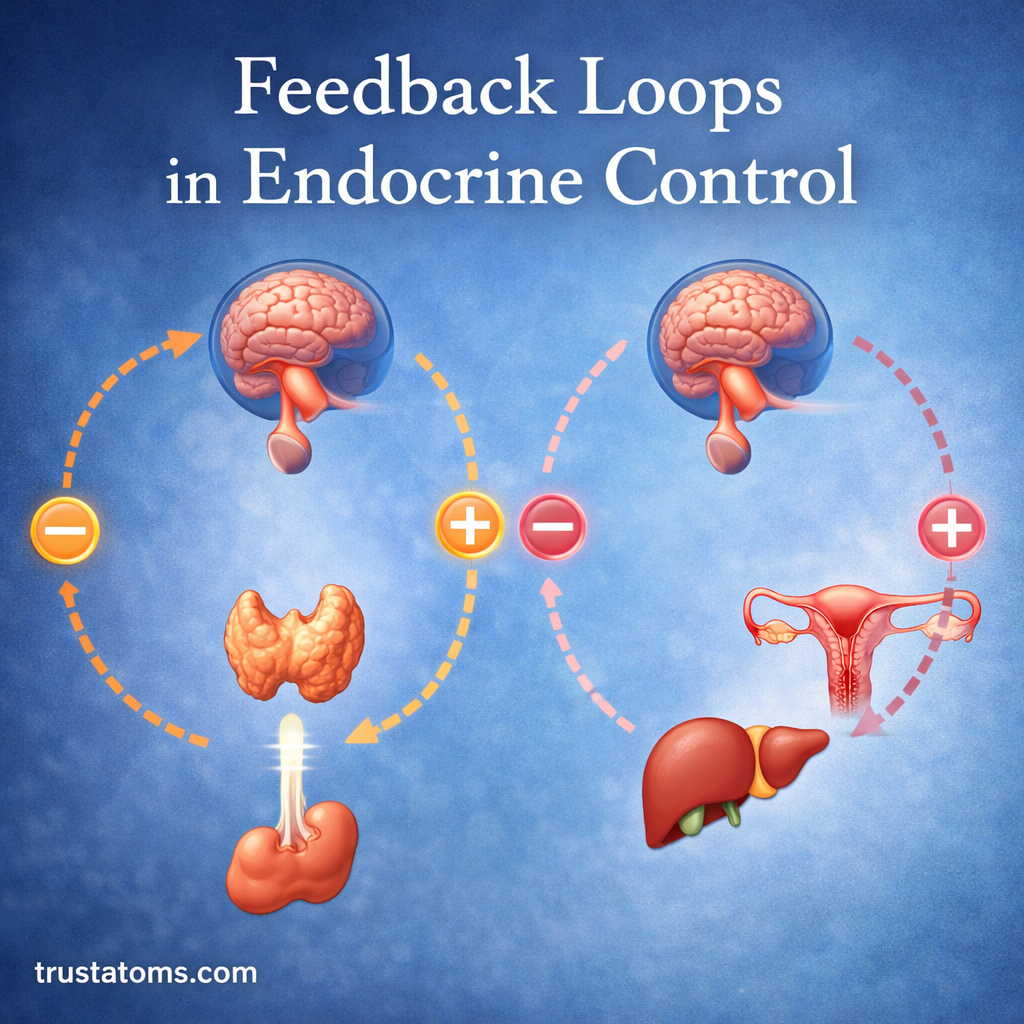
Puberty begins when the brain activates a hormonal signaling pathway known as the hypothalamic-pituitary-gonadal (HPG) axis.
Activation of the HPG Axis
- The hypothalamus releases gonadotropin-releasing hormone (GnRH)
- GnRH stimulates the pituitary gland
- The pituitary releases LH (luteinizing hormone) and FSH (follicle-stimulating hormone)
- LH and FSH act on the gonads
- Gonads produce sex hormones (estrogen or testosterone)
This process marks the start of puberty and leads to physical and reproductive changes.
Sex Hormones and Puberty
Sex hormones are responsible for the development of secondary sexual characteristics.
In Females: Estrogen
- Development of breasts
- Onset of menstruation
- Widening of hips
- Regulation of reproductive cycle
In Males: Testosterone
- Deepening of the voice
- Growth of facial and body hair
- Increase in muscle mass
- Development of reproductive organs
These hormones also contribute to growth spurts during puberty.
Growth Spurts During Puberty
One of the most noticeable changes during puberty is the rapid increase in height.
How Growth Spurts Occur
- GH and IGF-1 levels rise
- Sex hormones enhance bone growth
- Growth plates in bones become highly active
Eventually, sex hormones cause growth plates to close, ending height increase.
Role of the Adrenal Glands
The adrenal glands also contribute to puberty through a process called adrenarche.
Adrenarche
- Release of adrenal androgens
- Development of pubic and underarm hair
- Increased oil production in skin
This process occurs before full reproductive maturity.
What Happens When Hormonal Control Is Disrupted?
Imbalances in endocrine function can affect growth and puberty timing.
Delayed Growth or Puberty
- Low GH or thyroid hormone levels
- Chronic illness or malnutrition
- Late activation of the HPG axis
Early (Precocious) Puberty
- Early activation of the HPG axis
- Hormonal disorders
- Tumors or genetic factors (rare cases)
Growth Disorders
- Gigantism (excess GH in childhood)
- Dwarfism (insufficient GH)
Early diagnosis and treatment are important for managing these conditions.
Summary
The endocrine system plays a central role in controlling growth and puberty through a complex network of hormones and glands. Growth hormone, thyroid hormones, and sex hormones all work together to regulate physical development and sexual maturation.
Key takeaways:
- Growth is regulated mainly by GH and IGF-1
- Puberty is triggered by activation of the HPG axis
- Sex hormones drive physical and reproductive changes
- Hormonal balance is essential for normal development
- Disruptions can lead to early or delayed puberty and growth disorders
Understanding endocrine control helps explain how the body transitions from childhood to adulthood in a coordinated and regulated way.