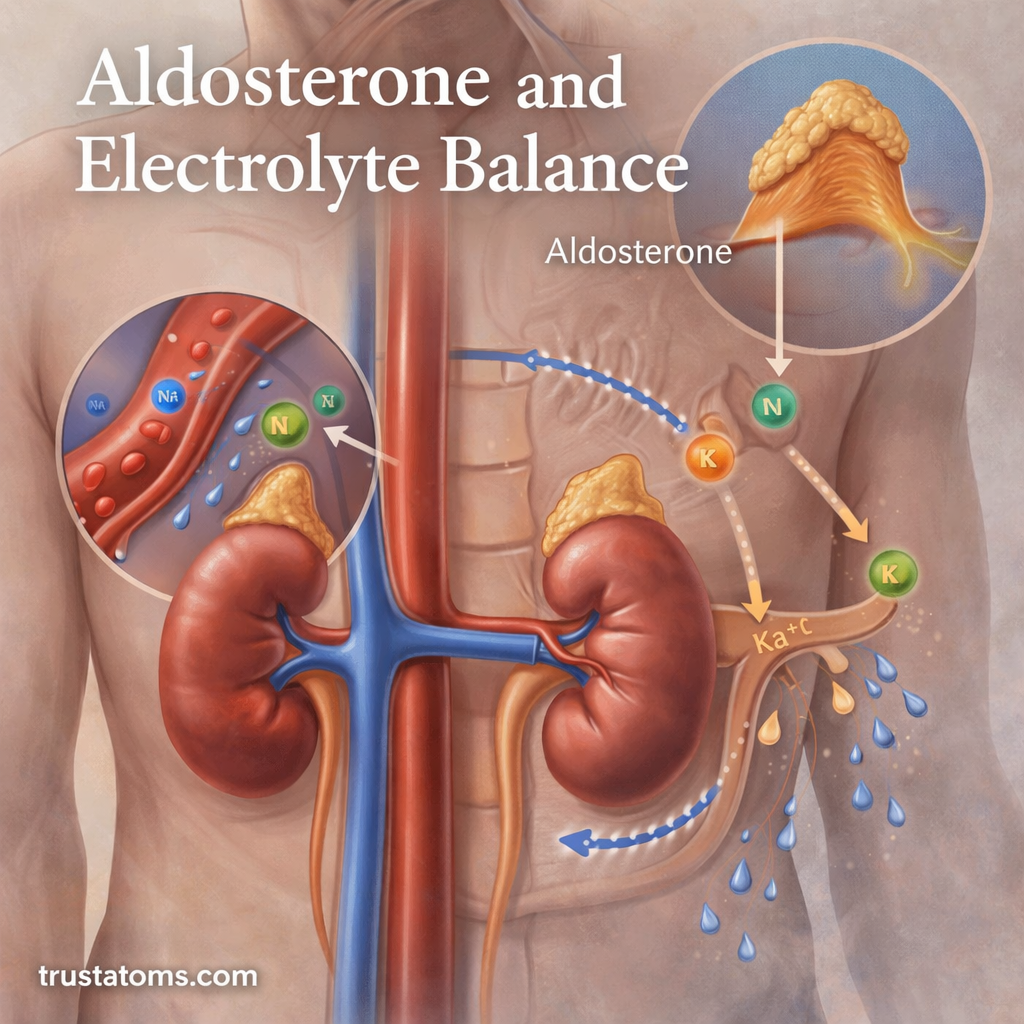
Aldosterone is a hormone that helps maintain electrolyte balance by directing the kidneys to retain sodium and excrete potassium. Because sodium retention influences how much water the body keeps, aldosterone also helps regulate blood volume and blood pressure.
This connection between hormones, kidneys, and circulation is an example of homeostasis in human anatomy. When blood pressure falls or potassium levels rise, aldosterone secretion can increase to help restore internal balance.
What Is Aldosterone?
Aldosterone is a steroid hormone produced by the adrenal glands, which sit on top of each kidney. It belongs to a group of hormones called mineralocorticoids.
More specifically, aldosterone is synthesized in the zona glomerulosa, the outermost layer of the adrenal cortex. Unlike hormones that act primarily on metabolism or stress responses, aldosterone mainly controls the movement of certain electrolytes across kidney cells.
Its principal effects are increasing sodium reabsorption, promoting potassium excretion, and supporting fluid balance. These processes are closely connected to blood volume regulation and homeostasis, which helps explain how the circulatory system maintains adequate pressure.
How Aldosterone Regulates Electrolyte Balance
Aldosterone acts mainly on the late distal tubules and collecting ducts of the kidneys. These structures adjust the final composition of urine before it leaves the body.
After entering kidney cells, aldosterone binds to mineralocorticoid receptors and changes the production and activity of proteins responsible for transporting electrolytes.
Sodium Reabsorption
Aldosterone increases the activity of epithelial sodium channels and sodium-potassium pumps. Together, these transport systems move sodium from the fluid inside kidney tubules back into the bloodstream.
Retaining sodium helps maintain the amount of dissolved particles in extracellular fluid. Water can follow retained sodium when the kidneys are able to reabsorb it, contributing to the maintenance of blood volume.
Potassium Excretion
Aldosterone also promotes potassium secretion from kidney cells into the tubular fluid, allowing more potassium to leave through urine. This response helps prevent excessive potassium accumulation in the bloodstream.
Potassium concentration must remain within a narrow range because it influences electrical signaling in nerves, muscles, and the heart.
These processes connect with water balance and electrolyte absorption, which describes how the body coordinates the movement of dissolved substances and fluids.
How the Renin-Angiotensin-Aldosterone System Works
The renin-angiotensin-aldosterone system, or RAAS, is a hormonal pathway that responds to reduced effective circulating blood volume, decreased kidney perfusion, and certain changes in sodium delivery to the kidneys.
Its main sequence follows these steps:
- The kidneys detect reduced perfusion pressure, decreased sodium chloride delivery to the macula densa, or increased sympathetic stimulation.
- Specialized kidney cells release the enzyme renin into the bloodstream.
- Renin converts angiotensinogen, a protein produced by the liver, into angiotensin I.
- Angiotensin-converting enzyme converts angiotensin I into angiotensin II.
- Angiotensin II stimulates aldosterone secretion from the adrenal cortex.
- Aldosterone increases kidney sodium reabsorption, helping conserve sodium and support blood volume.
Angiotensin II also constricts blood vessels and influences other mechanisms controlling circulation. RAAS therefore regulates blood pressure through several coordinated actions, not aldosterone alone.
What Triggers Aldosterone Release?
Aldosterone secretion changes according to the body’s electrolyte concentrations and circulatory needs. The strongest physiological signals include:
- Increased blood potassium: Elevated potassium directly stimulates aldosterone-producing adrenal cells.
- Reduced blood volume or pressure: Activation of RAAS increases angiotensin II and subsequently aldosterone.
- Reduced sodium chloride delivery to the kidney’s macula densa: This can promote renin release and activate RAAS.
- ACTH: Adrenocorticotropic hormone can briefly stimulate aldosterone secretion but has a smaller regulatory influence than potassium and angiotensin II.
A low blood sodium concentration does not automatically trigger aldosterone release. Blood sodium concentration depends heavily on the balance between water and sodium, so it must be distinguished from the body’s total sodium content.
A Practical Example: Losing Fluid Through Sweating
Imagine spending an afternoon exercising outdoors and losing fluid through sweat. If enough fluid and sodium are lost to reduce effective circulating volume, the kidneys may respond by increasing renin secretion.
RAAS activation then raises aldosterone levels, encouraging the kidneys to conserve sodium rather than excrete as much of it in urine. Water retention depends on additional factors, including fluid intake and antidiuretic hormone activity.
This response helps limit further losses, but it does not immediately replace fluid already lost through sweating. Drinking appropriate fluids remains necessary to restore hydration.
How Aldosterone Differs From Antidiuretic Hormone
Aldosterone and antidiuretic hormone (ADH), also called vasopressin, both influence fluid balance, but their primary targets differ.
| Feature | Aldosterone | ADH |
|---|---|---|
| Produced by | Adrenal cortex | Hypothalamus; released by posterior pituitary |
| Main function | Regulates sodium retention and potassium excretion | Regulates water reabsorption |
| Primary kidney action | Increases sodium transport in distal nephron segments | Increases water permeability in collecting ducts |
| Major triggers | Angiotensin II and elevated potassium | Increased plasma osmolality or reduced effective circulating volume |
ADH helps the kidneys conserve water by increasing water permeability through aquaporin channels. Aldosterone primarily changes electrolyte transport, which can indirectly influence water retention. Their coordinated actions are explained further in water balance and ADH regulation.
Effects of Aldosterone on Blood Pressure and Fluid Distribution
By encouraging sodium retention, aldosterone helps maintain extracellular fluid volume. When sufficient water is available and retained, this can increase circulating blood volume and support blood pressure.
However, fluid does not remain exclusively inside blood vessels. It moves between the bloodstream and surrounding tissues according to hydrostatic pressure, osmotic forces, and other physiological factors.
The relationship between circulating fluid and tissue swelling is explored in edema and fluid exchange principles. Excessive sodium retention may contribute to fluid expansion, although edema depends on additional circulatory and tissue conditions.
What Happens When Aldosterone Levels Are Abnormal?
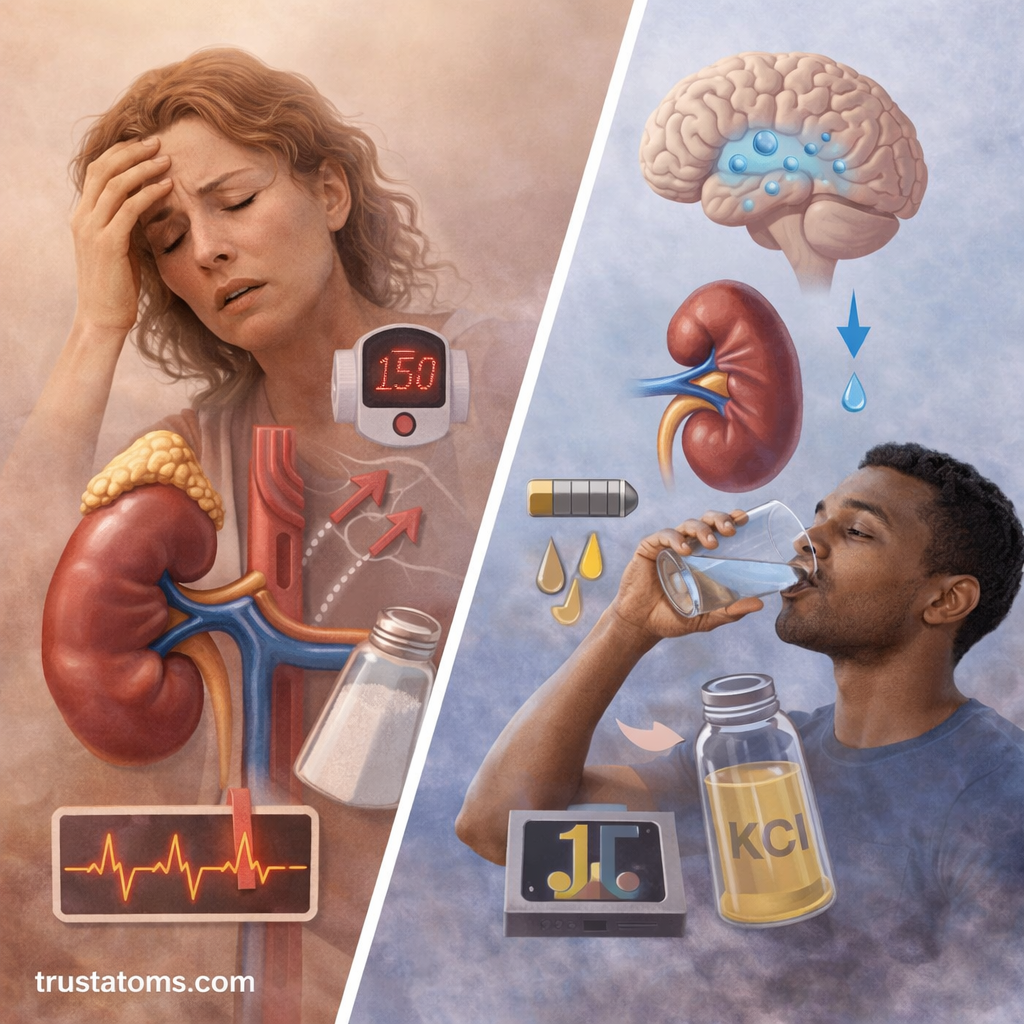
Excess Aldosterone: Hyperaldosteronism
Hyperaldosteronism occurs when aldosterone production is excessive relative to the body’s needs. Primary aldosteronism originates in the adrenal glands and commonly causes high blood pressure.
Excessive aldosterone can also increase potassium loss, sometimes causing hypokalemia. Possible effects include muscle weakness, fatigue, and abnormal heart rhythms, although many affected people have normal blood potassium levels.
Insufficient Aldosterone: Hypoaldosteronism
Too little aldosterone reduces the kidneys’ ability to conserve sodium and excrete potassium. Possible consequences include low blood pressure, elevated potassium, and reduced circulating fluid volume.
Primary adrenal insufficiency, including Addison’s disease, can cause aldosterone deficiency. However, hypoaldosteronism can also occur through other mechanisms, including certain kidney disorders or medications.
Severe electrolyte disturbances can affect cardiac electrical activity and require prompt medical evaluation.
Frequently Asked Questions
Does aldosterone increase or decrease potassium?
Aldosterone generally increases potassium excretion through the kidneys, which can lower blood potassium concentration. The final effect depends on kidney function, potassium intake, and other regulatory mechanisms.
Does aldosterone directly control how much water the kidneys retain?
Not primarily. Aldosterone increases sodium reabsorption, which can promote water retention under suitable conditions. ADH more directly controls water permeability in the kidney collecting ducts.
Can aldosterone affect blood pressure without changing blood sodium concentration?
Yes. Aldosterone can increase total body sodium and extracellular fluid volume while blood sodium concentration remains within its normal range. This is because blood sodium concentration reflects the relationship between sodium and water rather than total sodium content alone.
Aldosterone connects adrenal hormone secretion with kidney electrolyte transport, helping the body conserve sodium, remove excess potassium, and maintain circulating fluid volume. Its regulation through RAAS and blood potassium explains why abnormal aldosterone activity can affect blood pressure, hydration, and muscle or nerve function.
This article is for general education and is not medical advice. Talk to a qualified health professional about any medical concern.
Sources: Guyton and Hall Textbook of Medical Physiology; Boron and Boulpaep Medical Physiology; National Institute of Diabetes and Digestive and Kidney Diseases.