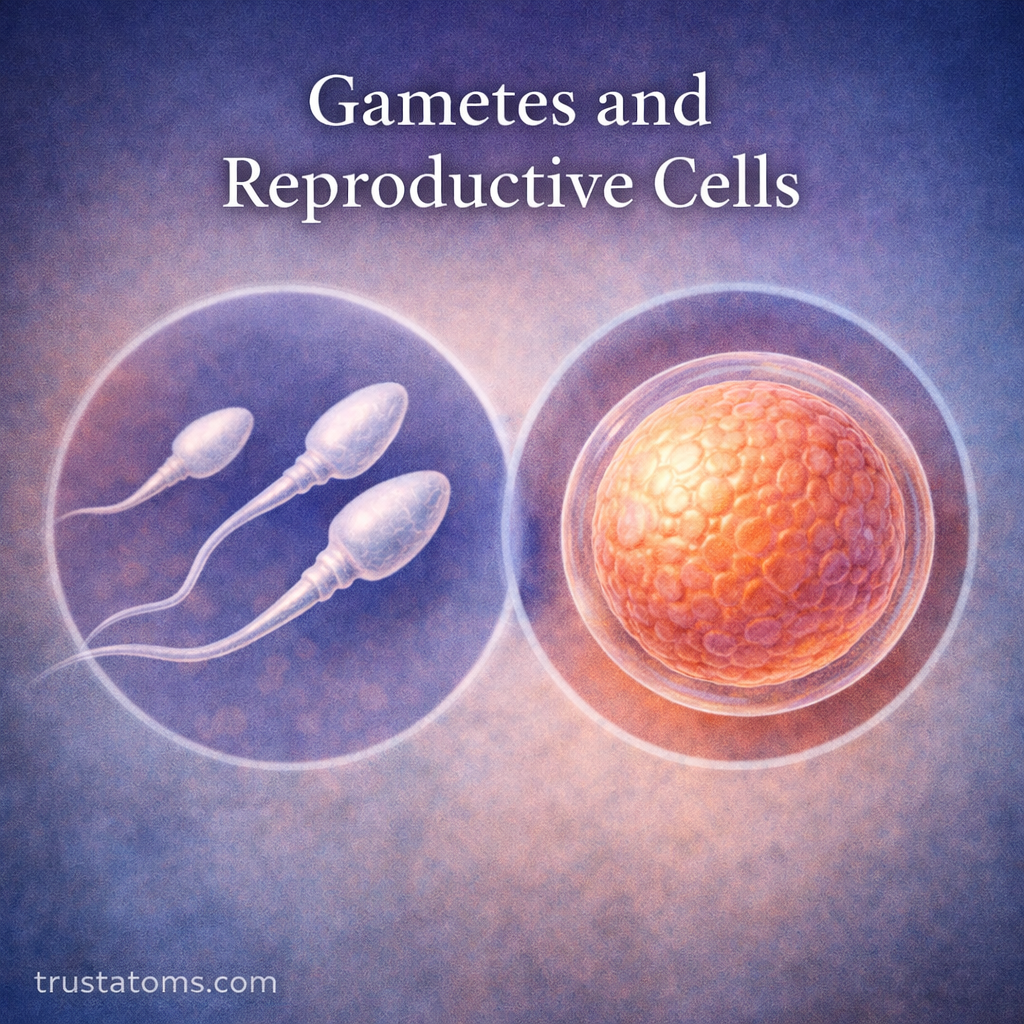
Gametes are specialized reproductive cells that play a central role in human reproduction. In humans, these cells are known as sperm (male gametes) and eggs (ova) (female gametes). Each carries half of the genetic information needed to create a new individual.
When a sperm and egg unite during fertilization, they form a zygote, which contains a complete set of DNA and begins the process of development into a human being.
What Are Gametes?
Gametes are unique compared to other cells in the body because they are haploid, meaning they contain only one set of chromosomes.
- Human body cells typically have 46 chromosomes (23 pairs)
- Gametes contain 23 single chromosomes
- This ensures the correct chromosome number is restored after fertilization
This reduction in chromosome number is essential for maintaining genetic stability across generations.
Types of Gametes
Male Gametes: Sperm Cells
Sperm cells are produced in the testes and are designed for mobility and delivery of genetic material.
Key Characteristics of Sperm
- Small and streamlined for movement
- Tail (flagellum) enables swimming
- Head contains DNA and enzymes to penetrate the egg
- Produced in large numbers daily
Sperm are highly specialized to travel through the female reproductive tract and reach the egg.
Female Gametes: Egg Cells (Ova)
Egg cells are produced in the ovaries and are larger and more complex than sperm cells.
Key Characteristics of Eggs
- Large and nutrient-rich to support early development
- Non-motile (do not move on their own)
- Released during ovulation, typically one per cycle
- Contain organelles needed for early cell division
Egg cells provide not only genetic material but also the initial environment for development.
How Gametes Are Produced
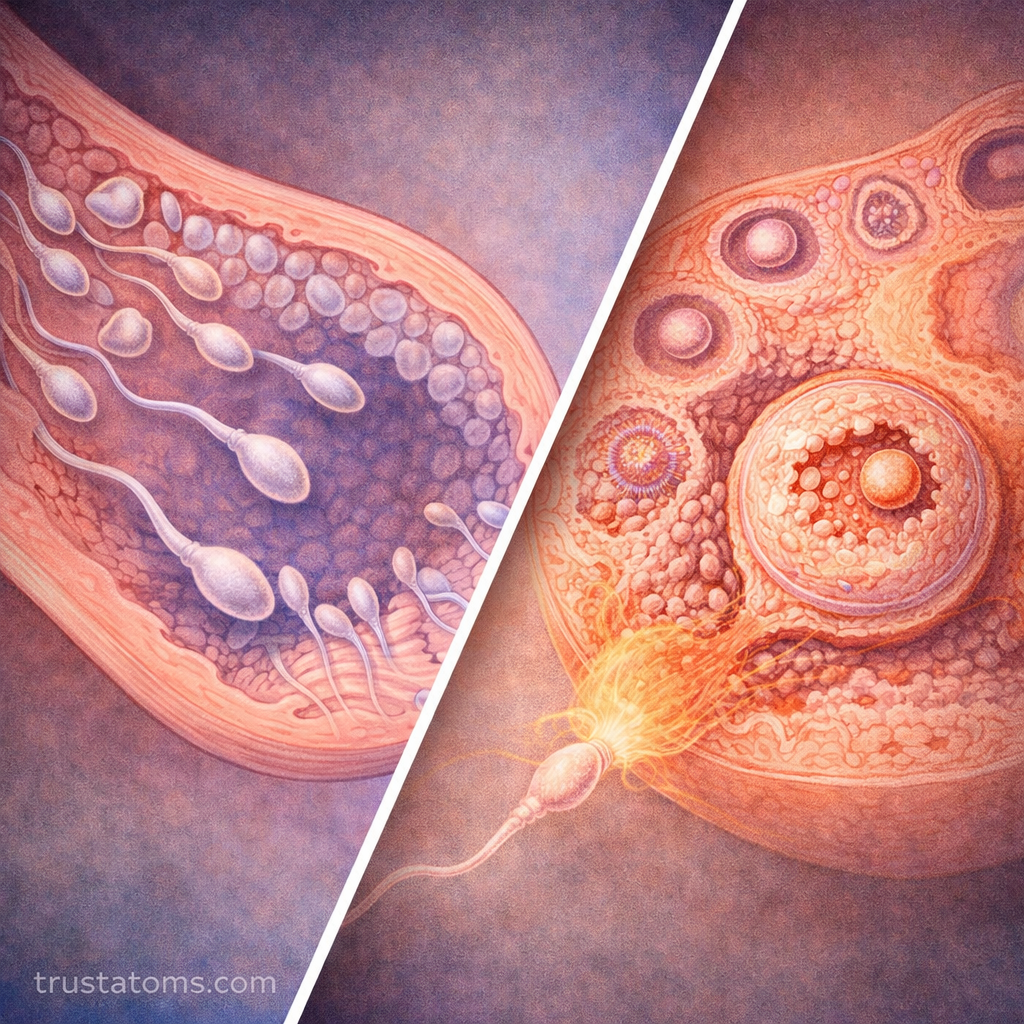
Gamete production occurs through a specialized type of cell division called meiosis.
Meiosis Overview
- Reduces chromosome number from 46 to 23
- Produces genetically unique cells
- Occurs in reproductive organs (testes and ovaries)
Spermatogenesis (Sperm Production)
Spermatogenesis takes place in the testes.
Process Steps
- Stem cells divide and begin development
- Cells undergo meiosis to reduce chromosome number
- Mature sperm cells form and gain mobility
- Continuous process starting at puberty
- Produces millions of sperm daily
Oogenesis (Egg Production)
Oogenesis occurs in the ovaries and differs significantly from sperm production.
Process Steps
- Egg cells begin developing before birth
- Meiosis pauses and resumes later in life
- One mature egg is released during ovulation
- Limited number of eggs available
- Typically one egg matures per menstrual cycle
Fertilization: When Gametes Unite
Fertilization is the process where a sperm cell merges with an egg cell.
Key Steps in Fertilization
- Sperm travels through the female reproductive tract
- One sperm penetrates the egg’s outer layer
- Genetic material from both cells combines
- A zygote is formed
This marks the beginning of a new organism with a unique genetic identity.
Genetic Contribution of Gametes
Each gamete contributes half of the genetic blueprint.
- 23 chromosomes from sperm
- 23 chromosomes from egg
- Combine to form 46 chromosomes in the zygote
This process ensures genetic diversity and variation in offspring.
Key Differences Between Sperm and Egg Cells
Structural Differences
- Sperm: small, mobile, minimal cytoplasm
- Egg: large, stationary, rich in nutrients
Functional Differences
- Sperm: delivers DNA to the egg
- Egg: supports fertilization and early development
Production Differences
- Sperm: produced continuously in large numbers
- Egg: limited supply, released cyclically
Why Gametes Are Important
Gametes are essential for reproduction and genetic continuity.
They enable:
- Transmission of genetic information from parents to offspring
- Genetic variation, which supports evolution and adaptation
- Formation of new life through fertilization
Without gametes, sexual reproduction would not be possible.
Common Issues Related to Gametes
Problems with gametes can affect fertility and reproductive health.
- Low sperm count or motility – reduces chances of fertilization
- Poor egg quality – impacts embryo development
- Chromosomal abnormalities – can lead to genetic disorders
- Infertility – may result from issues in gamete production or function
Understanding gametes helps identify and address these challenges.
Final Thoughts
Gametes are fundamental to human reproduction, carrying the genetic information needed to create new life. Despite their differences, sperm and egg cells work together in a highly coordinated process that begins with meiosis and culminates in fertilization.
By understanding how gametes are formed and function, we gain deeper insight into genetics, reproduction, and the biological processes that sustain life.