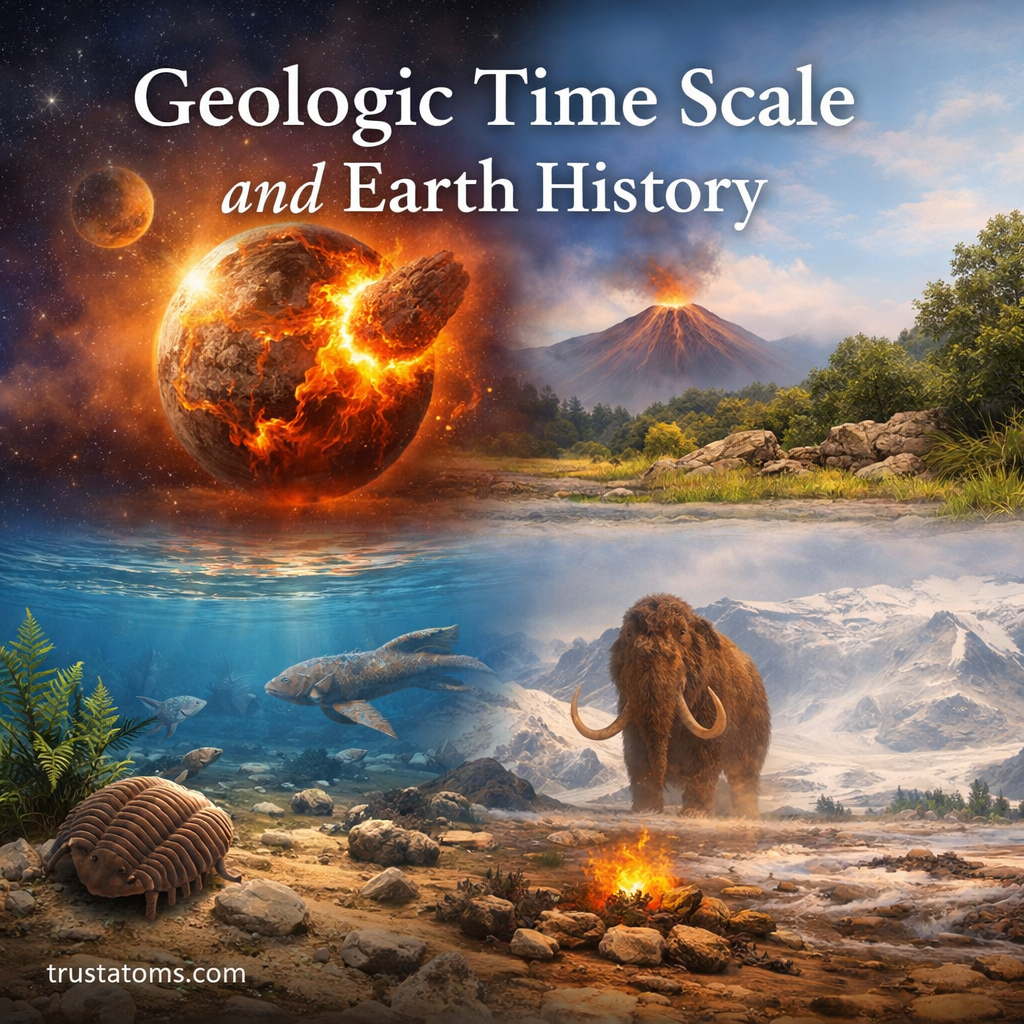
The geologic time scale is a system used to organize Earth’s history into structured segments. It helps explain how the planet’s surface, climate, and natural features have changed over time based on evidence found in rock layers, landforms, and fossil records.
While interpretations of Earth’s history can vary, the geologic time scale remains a useful framework for studying the order of events and the processes that shaped the world we see today.
What Is the Geologic Time Scale?
The geologic time scale divides Earth’s history into major units such as eons, eras, periods, and epochs. These divisions are based on:
- Differences in rock layers (stratigraphy)
- Changes in fossil groupings
- Evidence of major geological events
- Shifts in environmental conditions
Rather than focusing on exact durations, many researchers emphasize the sequence of events and observable changes recorded in Earth’s crust.
The Main Divisions of Geologic Time
Eons
Eons represent the largest spans of Earth’s history and reflect broad phases of development:
- Early formation of Earth’s surface
- Stabilization of land and oceans
- Periods marked by large-scale geological activity
These divisions provide a high-level view of how Earth’s structure came together over time.
Eras
Eras divide eons into smaller segments characterized by distinct environmental conditions:
- Periods of widespread water coverage
- Times of land expansion and mountain formation
- Shifts in climate and ecosystems
These changes are often visible in large-scale rock formations across continents.
Periods
Periods offer more detailed subdivisions within eras and are often identified by specific rock layers and fossil patterns.
Examples of what periods can show:
- Changes in sediment types
- Appearance or disappearance of certain organisms
- Evidence of environmental shifts
Epochs
Epochs are the most detailed commonly used units and reflect more recent changes in Earth’s landscape and climate, including:
- Ice ages
- Shifts in sea levels
- Development of modern environments
Reading Earth’s Layers
Rock layers act as a natural record of Earth’s past. By studying them, scientists can reconstruct sequences of events.
Key Observations
- Lower layers are typically beneath upper layers
- Some rock layers extend across large regions
- Fossils are often grouped in specific layers
What These Layers Suggest
- Sediment can be deposited under a variety of conditions, including rapid events
- Fossil preservation often requires quick burial
- Certain formations point to powerful natural forces shaping the landscape
Major Earth-Shaping Processes
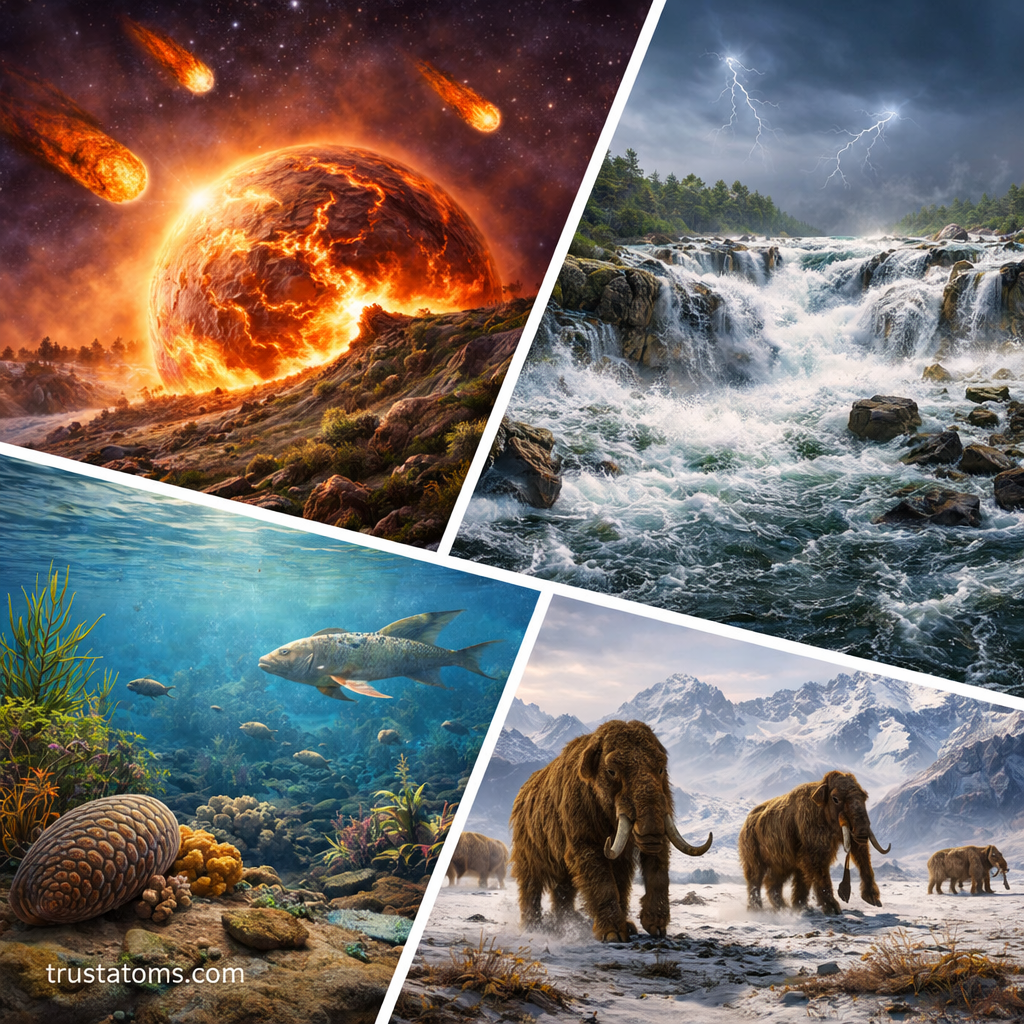
Several key processes have played a major role in forming Earth’s surface:
1. Sediment Deposition
- Layers of sand, mud, and minerals accumulate over time
- In some cases, thick deposits suggest large-scale water movement
2. Volcanic Activity
- Lava flows and ash layers create new rock formations
- Volcanic regions show how quickly landscapes can change
3. Tectonic Movement
- Shifting plates form mountains, valleys, and ocean basins
- These movements continue to reshape Earth today
4. Erosion
- Wind, water, and ice gradually wear down surfaces
- Under certain conditions, erosion can also occur rapidly
Why the Geologic Time Scale Matters
The geologic time scale helps us:
- Organize Earth’s history into a clear sequence
- Understand how landscapes and environments developed
- Identify patterns in rock formations and natural features
- Locate important natural resources such as minerals and groundwater
It provides a structured way to study Earth while allowing room for different perspectives on how events unfolded.
Common Misconceptions
“All geological change happens slowly”
- Some features show signs of sudden or large-scale formation
“Rock layers always represent long time spans”
- Certain layers may form more quickly under the right conditions
“Fossils only form over long periods”
- Fossilization can occur rapidly when organisms are buried quickly
Final Thoughts
The geologic time scale offers a valuable way to understand Earth’s history through the evidence preserved in rocks and landscapes. By focusing on observable patterns and the sequence of events, it provides insight into how the planet has been shaped over time.
Whether examining towering mountains, deep canyons, or layered rock formations, the story of Earth is written in its structure—inviting continued exploration and understanding.