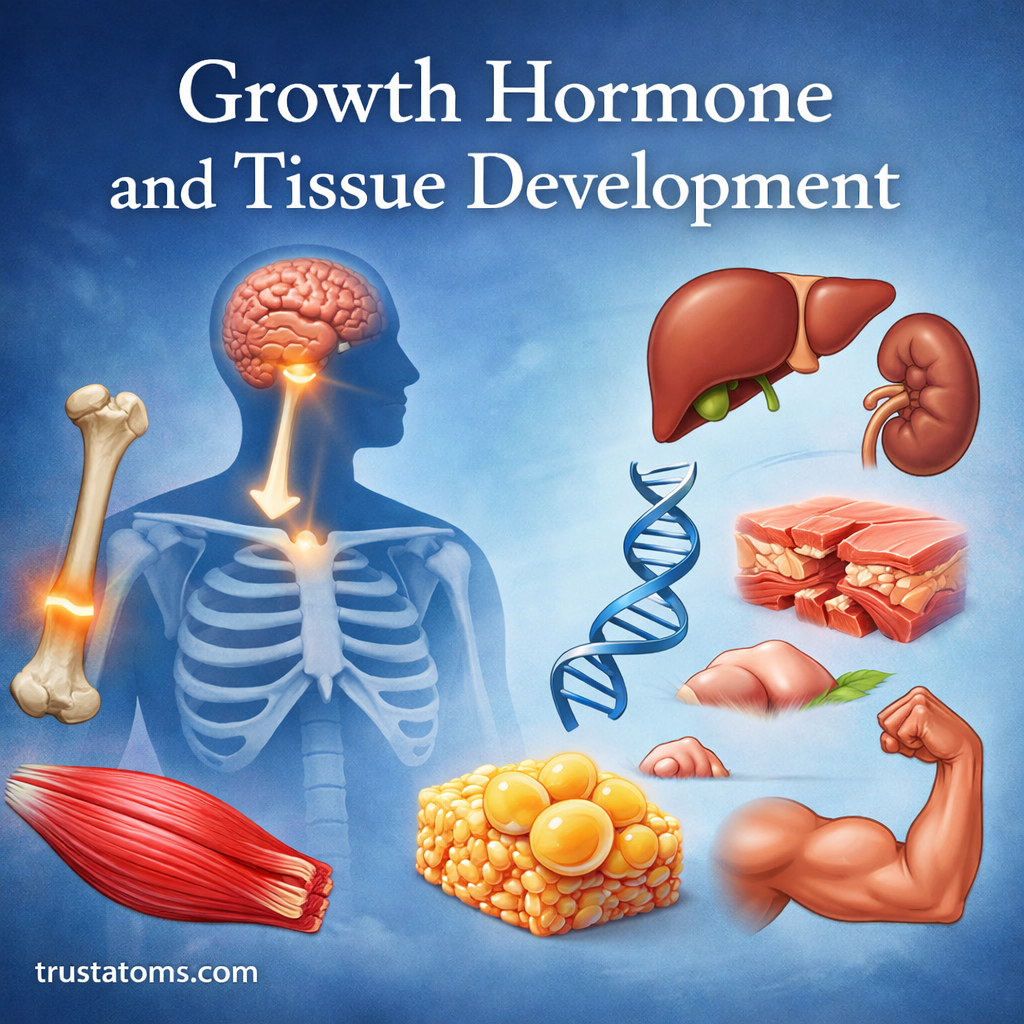
Growth hormone (GH) plays a central role in how the human body grows, repairs, and maintains tissues throughout life. While it’s most commonly associated with childhood growth spurts, its influence extends far beyond height—impacting muscles, bones, metabolism, and even organ function.
Understanding how growth hormone works helps explain everything from puberty changes to recovery after injury.
What Is Growth Hormone?
Growth hormone is a peptide hormone produced by the pituitary gland, a small structure located at the base of the brain. It is released in pulses, with the highest levels typically occurring during deep sleep.
Its primary function is to stimulate growth, but it also regulates many metabolic processes.
Key characteristics of growth hormone:
- Produced by the anterior pituitary gland
- Released in bursts, especially during sleep
- Influenced by age, nutrition, stress, and exercise
- Works both directly and indirectly through other hormones
How Growth Hormone Affects Tissue Development
Growth hormone does not act alone. It works closely with insulin-like growth factor 1 (IGF-1), which is produced mainly in the liver. Together, they drive tissue growth and regeneration.
1. Bone Growth and Density
Growth hormone is essential for bone development, especially during childhood and adolescence.
- Stimulates growth plates in long bones
- Increases bone length and thickness
- Enhances calcium retention
- Supports bone remodeling throughout life
Even in adulthood, GH helps maintain bone density, reducing the risk of fractures.
2. Muscle Growth and Repair
Growth hormone promotes protein synthesis, which is critical for building and repairing muscle tissue.
- Increases amino acid uptake into cells
- Stimulates muscle fiber growth (hypertrophy)
- Enhances recovery after exercise or injury
- Reduces muscle breakdown
This is why GH is often associated with athletic performance and recovery.
3. Organ and Tissue Maintenance
Beyond muscles and bones, GH supports the growth and function of internal organs.
- Promotes cell division in organs like the liver and kidneys
- Helps maintain healthy skin and connective tissue
- Supports wound healing and tissue regeneration
- Contributes to overall structural integrity
4. Fat Metabolism and Energy Use
Growth hormone plays a major role in how the body uses energy.
- Stimulates fat breakdown (lipolysis)
- Reduces fat storage
- Helps maintain lean body mass
- Supports stable energy levels
This metabolic function is why GH is sometimes linked to body composition changes.
Growth Hormone Across Different Life Stages
Growth hormone levels change significantly throughout life, influencing how the body develops and ages.
Childhood and Adolescence
- High GH levels drive rapid growth
- Essential for height increase and skeletal development
- Supports puberty-related changes
Adulthood
- Maintains muscle mass and bone density
- Aids in metabolism and tissue repair
- Supports overall physical performance
Aging
- GH levels naturally decline
- Associated with reduced muscle mass and bone density
- Slower tissue repair and recovery
What Regulates Growth Hormone Release?
Growth hormone secretion is tightly controlled by the brain, particularly the hypothalamus.
Main regulators:
- Growth hormone–releasing hormone (GHRH) → stimulates GH release
- Somatostatin → inhibits GH release
- Ghrelin → enhances GH secretion
Lifestyle factors that influence GH:
- Sleep quality (deep sleep boosts GH release)
- Exercise (especially high-intensity training)
- Nutrition (protein intake supports GH function)
- Stress levels (chronic stress can suppress GH)
Common Disorders Related to Growth Hormone
Imbalances in growth hormone can lead to noticeable health conditions.
Growth hormone deficiency (GHD)
- Short stature in children
- Reduced muscle mass
- Fat accumulation
- Low energy levels
Excess growth hormone
- Gigantism (in children)
- Acromegaly (in adults)
- Enlarged bones and organs
- Joint pain and metabolic issues
Early diagnosis and treatment are important for managing these conditions.
How Growth Hormone Supports Tissue Repair
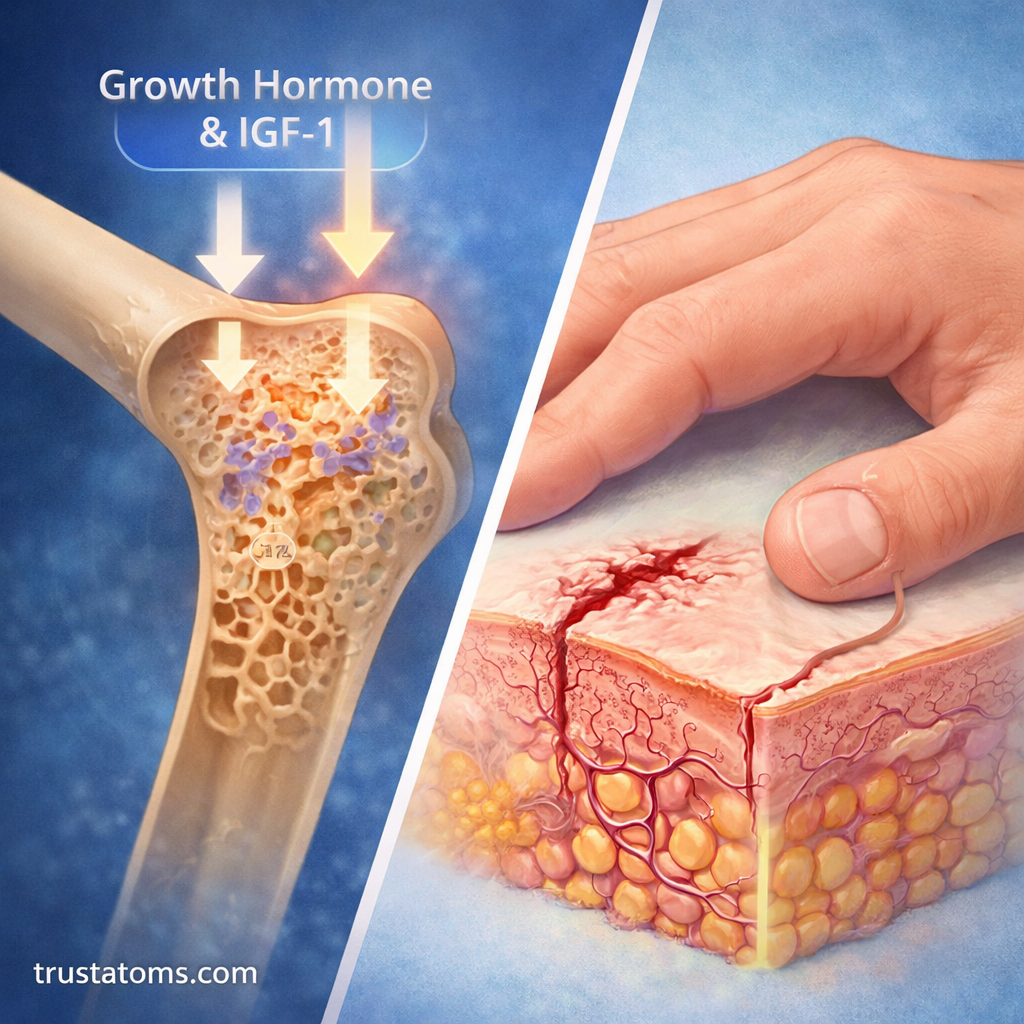
Growth hormone plays a critical role in healing and recovery.
It helps by:
- Increasing collagen production
- Stimulating cell regeneration
- Enhancing blood flow to tissues
- Accelerating wound healing
This makes GH especially important after injuries, surgeries, or intense physical activity.
Final Thoughts
Growth hormone is far more than a “height hormone.” It is a key regulator of tissue development, influencing bones, muscles, organs, and metabolism throughout life.
From childhood growth to adult tissue repair and aging, GH remains essential for maintaining the body’s structure and function. Supporting healthy GH levels through sleep, exercise, and proper nutrition can play a meaningful role in overall well-being.