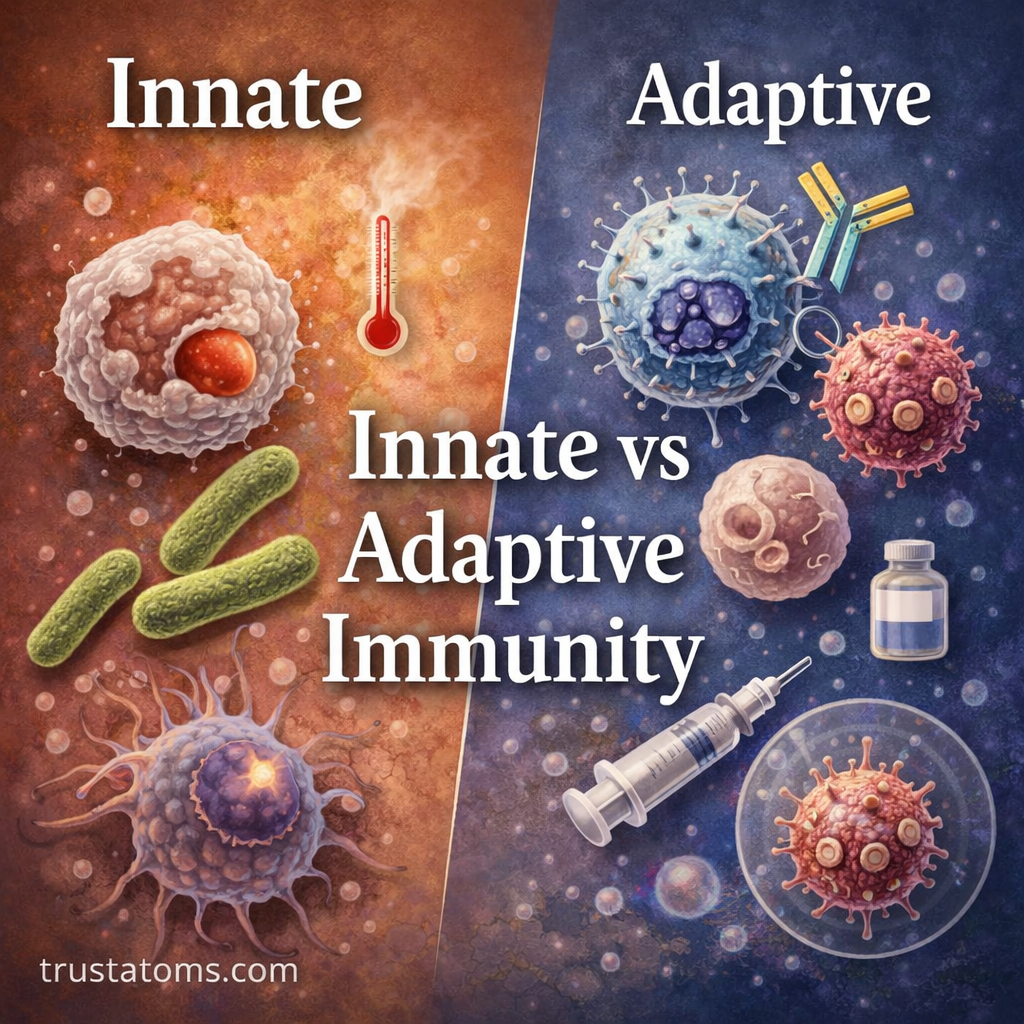
Innate immunity provides rapid, broad protection against infections, while adaptive immunity recognizes specific targets and can develop long-lasting immune memory. These two defense systems work together: innate responses help contain threats immediately, and adaptive responses provide targeted protection that can improve after previous exposure.
The human immune system protects the body using two complementary defense strategies: innate immunity and adaptive immunity. Although both defend against harmful microorganisms, they differ in how quickly they respond, what they recognize, and whether they develop antigen-specific memory.
These defenses involve the skin, blood, lymphatic tissues, and specialized cells throughout the body. Understanding their organization connects immune function with human anatomy and helps explain how infections are controlled, how vaccines provide protection, and why some immune responses become harmful.
What Is Innate Immunity?
Innate immunity is the body’s built-in defense system. It includes physical barriers, chemical defenses, and immune cells that can respond rapidly when microorganisms enter tissues.
Unlike adaptive immunity, innate defenses do not require prior exposure to a particular pathogen. They recognize broad molecular patterns associated with microorganisms or damaged cells rather than relying on a unique receptor for each individual antigen.
Many innate responses begin within minutes to hours. However, different components act on different schedules, and some responses, including the recruitment of additional immune cells, continue over several days.
Physical and Chemical Barriers
The skin forms a physical barrier that limits microbial entry. Mucous membranes trap particles and microorganisms, while mucus movement and cilia help clear material from respiratory passages.
Stomach acid, antimicrobial substances in secretions, and protective microorganisms living on body surfaces also help limit the growth or entry of harmful microbes.
Innate Immune Cells and Their Functions
When a barrier is breached, immune cells detect danger signals and respond. The major immune cells and their functions include engulfing microorganisms, releasing chemical signals, and destroying infected cells.
- Neutrophils: Rapidly enter infected tissues and engulf many bacteria and fungi.
- Macrophages: Engulf microbes and damaged material while releasing signals that influence inflammation.
- Dendritic cells: Detect threats and help connect innate recognition to adaptive immune activation.
- Natural killer cells: Recognize and destroy certain infected or abnormal body cells.
Innate immunity also includes complement proteins, which can mark microbes for destruction, promote inflammation, and sometimes damage microbial membranes directly.
What Is Adaptive Immunity?
Adaptive immunity is a targeted defense system carried out mainly by B lymphocytes and T lymphocytes. These cells possess receptors capable of recognizing particular antigens, which are molecular structures associated with pathogens or other substances.
During a first encounter with an unfamiliar antigen, the adaptive response generally takes several days to develop fully. Specific lymphocytes must become activated, multiply, and differentiate into cells that can perform immune functions.
One connection between the two systems is antigen presentation in adaptive immunity, through which specialized cells display antigen fragments to T lymphocytes.
The sequence of cell recognition, activation, and multiplication is described further in adaptive response activation pathways.
B Cells and Antibody-Mediated Immunity
B cells can differentiate into plasma cells that secrete antibodies. These proteins bind specific antigens and can neutralize pathogens or toxins, mark microbes for removal, and activate complement.
This branch is called humoral immunity because antibodies circulate in blood and other body fluids. Antibody effectiveness depends on factors such as concentration, binding properties, and the pathogen involved.
T Cells and Cell-Mediated Immunity
Helper T cells coordinate immune responses by communicating with other immune cells. Cytotoxic T cells can recognize and destroy infected cells displaying appropriate antigen fragments.
Regulatory T cells help limit inappropriate immune activation and maintain tolerance toward the body’s own tissues. Together, these T-cell populations support targeted defense and control.
Innate vs Adaptive Immunity: Comparison Table
Both systems protect against infection, but their recognition mechanisms, response times, and memory characteristics differ.
| Feature | Innate Immunity | Adaptive Immunity |
|---|---|---|
| Initial response | Often minutes to hours | Usually develops over days |
| Recognition | Broad microbial and damage-associated patterns | Specific antigens |
| Main cells | Neutrophils, macrophages, dendritic cells, NK cells | B cells and T cells |
| Major mechanisms | Barriers, inflammation, phagocytosis, complement | Antibodies and antigen-specific cellular responses |
| Previous exposure required | No | No for initial activation; previous exposure shapes later responses |
| Memory | No classical antigen-specific memory; some trained responses occur | Antigen-specific memory B and T cells |
| Repeat exposure | Generally similar recognition, with possible functional changes | Often faster or stronger against recognized antigens |
| Main advantage | Rapid protection | Specificity and long-term protection |
The two systems are interconnected rather than independent. Innate responses help activate adaptive immunity, while antibodies and other adaptive mechanisms can make innate cells more effective at removing pathogens.
How Innate and Adaptive Immunity Work Together
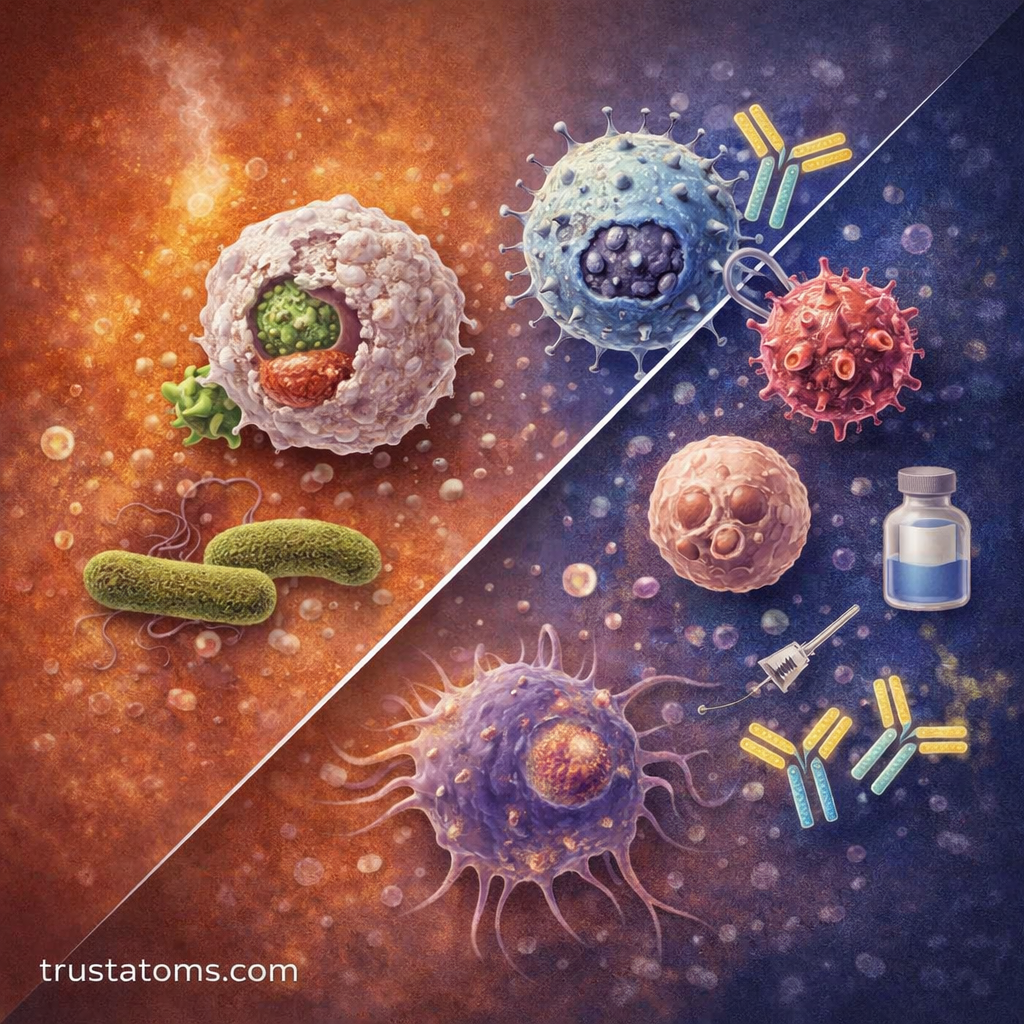
When a pathogen enters the body, innate defenses usually respond first. Immune cells recognize signs of infection and release chemical messengers called cytokines, which recruit additional cells and influence subsequent immune activity.
Dendritic cells can capture microbial material and travel to nearby lymph nodes, where they present antigen fragments to T cells. Activated T cells may then coordinate other immune cells or destroy infected cells.
B cells can produce antibodies that bind to the pathogen. Some antibodies coat microbes so phagocytes can recognize and engulf them more efficiently, demonstrating how adaptive responses reinforce innate defenses.
Worked Example: The Immune Response to a Skin Wound
Consider a small cut that allows unfamiliar bacteria to enter the skin. The following simplified sequence shows how the two defense systems can respond. Actual timing varies with the organism, exposure, and person’s immune condition.
- The skin barrier breaks, allowing bacteria to enter underlying tissue.
- Resident immune cells recognize microbial molecules and release inflammatory signals.
- Blood vessels become more permeable, and neutrophils and other immune cells move into the affected area.
- Phagocytes engulf bacteria while dendritic cells process microbial antigens.
- Dendritic cells may activate antigen-specific T cells in nearby lymph nodes, helping initiate adaptive responses.
- Activated B cells may produce antibodies, while appropriate T-cell responses support control of infection.
- After the infection resolves, some antigen-specific lymphocytes can remain as memory cells.
A minor infection may be cleared by innate defenses before a substantial new adaptive response develops. The example shows how immune responses overlap rather than following a rigid sequence in every infection.
How Immune Memory Changes Future Responses
One of the defining features of adaptive immunity is its capacity to generate antigen-specific memory. Following infection or vaccination, some activated B and T cells persist and can respond when the same or a sufficiently similar antigen appears again.
The reason people often recover faster from a disease the second time is partly due to adaptive immune memory. Memory cells and existing antibodies can help limit pathogen multiplication before severe illness develops.
Protection is not always complete or permanent. Pathogens may change their antigens, immune memory can decline, and the strength of protection differs between infections and individuals.
How Vaccines Use Adaptive Immunity
Vaccines expose the immune system to selected antigens or provide instructions for producing them. This allows adaptive immune responses to develop without requiring the person to experience the disease caused by the target pathogen.
Innate immune recognition also contributes to vaccination by supplying signals that support lymphocyte activation. Some vaccines include adjuvants, substances that strengthen the immune response to the vaccine antigen.
Vaccination can generate antibodies, memory B cells, and memory T cells. The resulting protection depends on the vaccine, pathogen, immune response, and time since vaccination. Booster doses may be recommended when additional or renewed protection is needed.
What Happens When Immune Defenses Malfunction?
Immune disorders can affect innate defenses, adaptive responses, or both. Some inherited conditions impair phagocyte function or complement activity, while others interfere with antibody production or T-cell development.
Autoimmune diseases occur when immune responses mistakenly target the body’s own tissues. Allergies involve inappropriate immune responses to substances that are generally harmless, such as certain foods or pollen.
Inflammation is normally protective, but excessive or persistent inflammation can damage healthy tissues. Effective immunity therefore requires both the ability to recognize threats and mechanisms that limit unnecessary responses.
Common Misconceptions About Innate and Adaptive Immunity
Misconception 1: Innate Immunity Cannot Change After Exposure
Innate immunity does not form classical antigen-specific memory like adaptive immunity. However, some innate cells can undergo functional changes after stimulation, a phenomenon researchers call trained immunity.
Misconception 2: Adaptive Immunity Only Starts After Innate Immunity Ends
Innate and adaptive responses overlap. Innate immune activity continues while lymphocytes become activated, and adaptive responses can strengthen the ability of innate cells to remove microbes.
Misconception 3: Antibodies Are the Entire Adaptive Immune System
Antibodies are produced by B-cell-derived plasma cells, but adaptive immunity also includes T-cell responses. T cells coordinate immune activity, kill certain infected cells, and help regulate responses.
Misconception 4: Immune Memory Guarantees Lifelong Protection
Immune memory can provide long-lasting protection, but its duration and effectiveness vary. Changes in pathogens, declining antibody levels, and differences in immune responses can reduce protection over time.
Frequently Asked Questions
What is the main difference between innate and adaptive immunity?
Innate immunity responds rapidly using broad recognition mechanisms, while adaptive immunity targets specific antigens through B and T lymphocytes. Adaptive immunity can also generate antigen-specific memory that influences future responses.
Which immune response happens first?
Innate immunity usually responds first through barriers, resident immune cells, and inflammatory mechanisms. Adaptive immunity generally requires additional time for antigen-specific lymphocytes to activate and multiply during a first exposure.
Are natural killer cells innate or adaptive?
Natural killer cells are generally classified as innate lymphoid cells. They can recognize and destroy certain infected or abnormal cells without the same antigen-specific receptor rearrangement used by conventional B and T cells.
Why does adaptive immunity have memory?
After activation, some antigen-specific B and T lymphocytes develop into long-lived memory cells. These cells can respond more rapidly during later encounters with a recognized antigen.
Do vaccines activate innate or adaptive immunity?
Vaccines can activate both. Innate immune recognition helps initiate and shape the response, while adaptive B and T cells generate antigen-specific protection and, in many cases, immune memory.
Innate immunity provides immediate barriers and rapid cellular defenses, while adaptive immunity supplies antigen-specific responses and the capacity for lasting immune memory. Their cooperation allows the body to recognize infections, coordinate pathogen removal, and respond more efficiently to familiar threats. Understanding both systems explains how immune protection develops and why it can vary between people and pathogens.
This article is for general education and is not medical advice. Talk to a qualified health professional about any medical concern.
Sources: OpenStax, Anatomy and Physiology 2e; Abbas, Lichtman, and Pillai, Cellular and Molecular Immunology; Murphy and Weaver, Janeway’s Immunobiology; National Institute of Allergy and Infectious Diseases (NIAID).