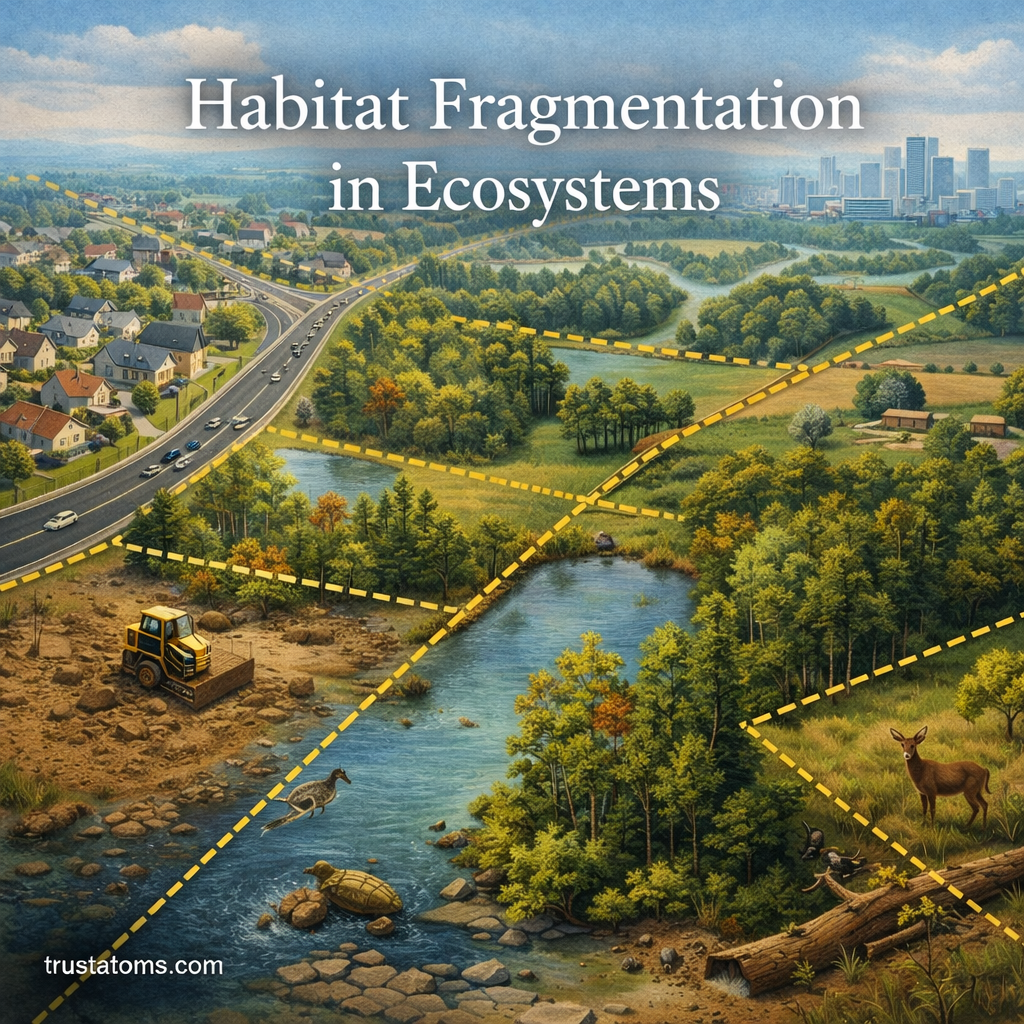
Habitat fragmentation is one of the most significant environmental challenges affecting ecosystems around the world. It occurs when large, continuous habitats are divided into smaller, isolated patches, often due to human activities such as urban development, agriculture, and infrastructure expansion.
When habitats become fragmented, ecosystems lose their natural connectivity. This separation can disrupt species movement, reduce genetic diversity, and alter ecological processes that maintain healthy environments.
Understanding habitat fragmentation helps scientists and conservationists develop strategies to protect biodiversity and maintain ecosystem stability.
What Is Habitat Fragmentation?
Habitat fragmentation occurs when a once-continuous ecosystem is broken into smaller sections separated by barriers or altered landscapes.
These barriers can include:
- Roads and highways
- Cities and suburban development
- Agricultural fields
- Dams and reservoirs
- Logging or mining areas
Instead of one large habitat where species can move freely, fragmented ecosystems consist of isolated habitat patches surrounded by less suitable environments.
This isolation changes how species interact with their environment and with each other.
How Habitat Fragmentation Happens
Habitat fragmentation can result from both natural events and human activities, but human development is the most common cause today.
Human-Caused Fragmentation
Human land use often divides ecosystems into separate pieces. Major drivers include:
- Urban expansion and housing development
- Agricultural land conversion
- Road and railway construction
- Industrial development
- Resource extraction such as mining or logging
As these activities expand, natural landscapes are transformed into fragmented habitats.
Natural Fragmentation
Although less common, natural processes can also create fragmented habitats.
Examples include:
- Volcanic eruptions creating new landscape barriers
- Flooding that isolates forest or wetland areas
- Landslides dividing mountain ecosystems
- Wildfires temporarily breaking up vegetation patterns
Natural fragmentation usually occurs gradually and ecosystems often adapt to these changes over time.
Effects of Habitat Fragmentation on Wildlife
Fragmented ecosystems can dramatically affect plant and animal populations.
Reduced Habitat Size
When habitats are divided, the total usable area for species decreases.
Smaller habitat patches may not provide enough:
- Food resources
- Shelter or nesting sites
- Breeding space
- Migration routes
Species that require large territories are especially vulnerable.
Isolation of Populations
Fragmentation often separates populations that once interacted regularly.
This isolation can lead to:
- Reduced gene flow between populations
- Increased inbreeding
- Lower genetic diversity
- Greater vulnerability to disease
Over time, isolated populations may struggle to adapt to environmental changes.
Increased Edge Effects
Fragmentation increases the amount of “edge habitat,” which is the boundary between natural ecosystems and altered environments.
Edge environments can have different conditions compared to interior habitats.
Common edge effects include:
- Higher temperatures and wind exposure
- Increased light penetration
- Greater presence of predators
- Easier access for invasive species
These conditions can favor some species while harming others.
Disruption of Migration and Movement
Many species depend on movement across large landscapes.
Habitat fragmentation can block or limit movement patterns such as:
- Seasonal migration
- Daily feeding routes
- Dispersal of young individuals
- Pollinator travel between plants
For example, highways or urban areas can prevent animals from reaching breeding grounds or food sources.
Impacts on Ecosystem Processes
Habitat fragmentation does not only affect individual species—it also alters ecosystem functions.
Key ecological processes influenced by fragmentation include:
- Nutrient cycling
- Pollination
- Seed dispersal
- Predator–prey interactions
- Water regulation
When species disappear or decline due to fragmentation, these ecological processes may weaken or collapse.
For example, fewer pollinators can reduce plant reproduction, which affects entire food webs.
Examples of Habitat Fragmentation Around the World
Habitat fragmentation occurs in many ecosystems globally.
Examples include:
Tropical Rainforests
Large sections of rainforest have been cleared for agriculture and development.
Fragmented forest patches may no longer support species that depend on large continuous habitats.
Grasslands and Agricultural Landscapes
Grasslands are often converted into farmland, leaving isolated natural patches.
Species that rely on wide open spaces, such as certain birds and mammals, can struggle to survive in fragmented landscapes.
River Systems
Dams and water diversion projects can fragment river ecosystems.
Fish species that migrate upstream to spawn may be unable to reach breeding areas.
Conservation Strategies to Reduce Fragmentation
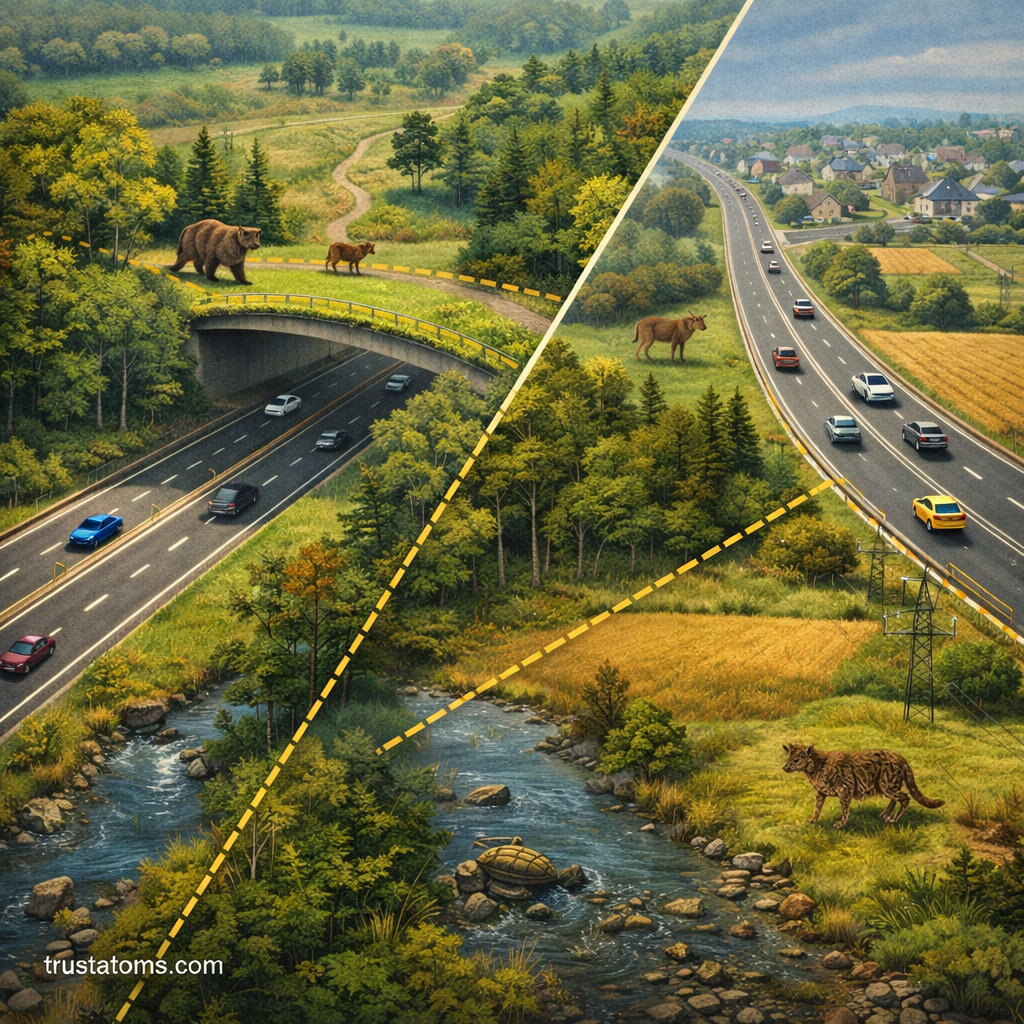
Scientists and conservation groups use several approaches to reduce the effects of habitat fragmentation.
Wildlife Corridors
Wildlife corridors are natural pathways that connect fragmented habitat patches.
They allow animals to move safely between areas for feeding, breeding, and migration.
Examples include:
- Forested corridors connecting protected areas
- Overpasses and underpasses across highways
- River passage systems for migrating fish
Protected Areas and Land Management
Establishing protected areas helps preserve large, continuous ecosystems.
Effective land management can also reduce fragmentation by limiting development in ecologically sensitive regions.
Strategies include:
- National parks and wildlife reserves
- Conservation easements
- Sustainable forestry practices
- Habitat restoration projects
Ecological Restoration
Restoration efforts can reconnect fragmented ecosystems by rebuilding natural habitats.
Examples include:
- Reforestation of degraded land
- Wetland restoration
- Removal of obsolete dams
- Rehabilitation of wildlife migration routes
Over time, these actions can restore ecosystem connectivity and biodiversity.
Why Habitat Connectivity Matters
Habitat connectivity allows species and ecological processes to move across landscapes.
Connected ecosystems are more resilient because they allow:
- Genetic exchange between populations
- Species migration during environmental changes
- Recovery after disturbances
- Balanced predator–prey relationships
Maintaining connectivity helps ecosystems adapt to pressures such as climate change and land development.
Final Thoughts
Habitat fragmentation is a major environmental issue that reshapes ecosystems across the globe. By dividing natural habitats into smaller, isolated patches, fragmentation disrupts species movement, reduces biodiversity, and alters essential ecological processes.
Addressing habitat fragmentation requires a combination of conservation strategies, including wildlife corridors, protected areas, and ecological restoration. By improving habitat connectivity, scientists and conservationists can help ecosystems remain healthy and resilient for future generations.