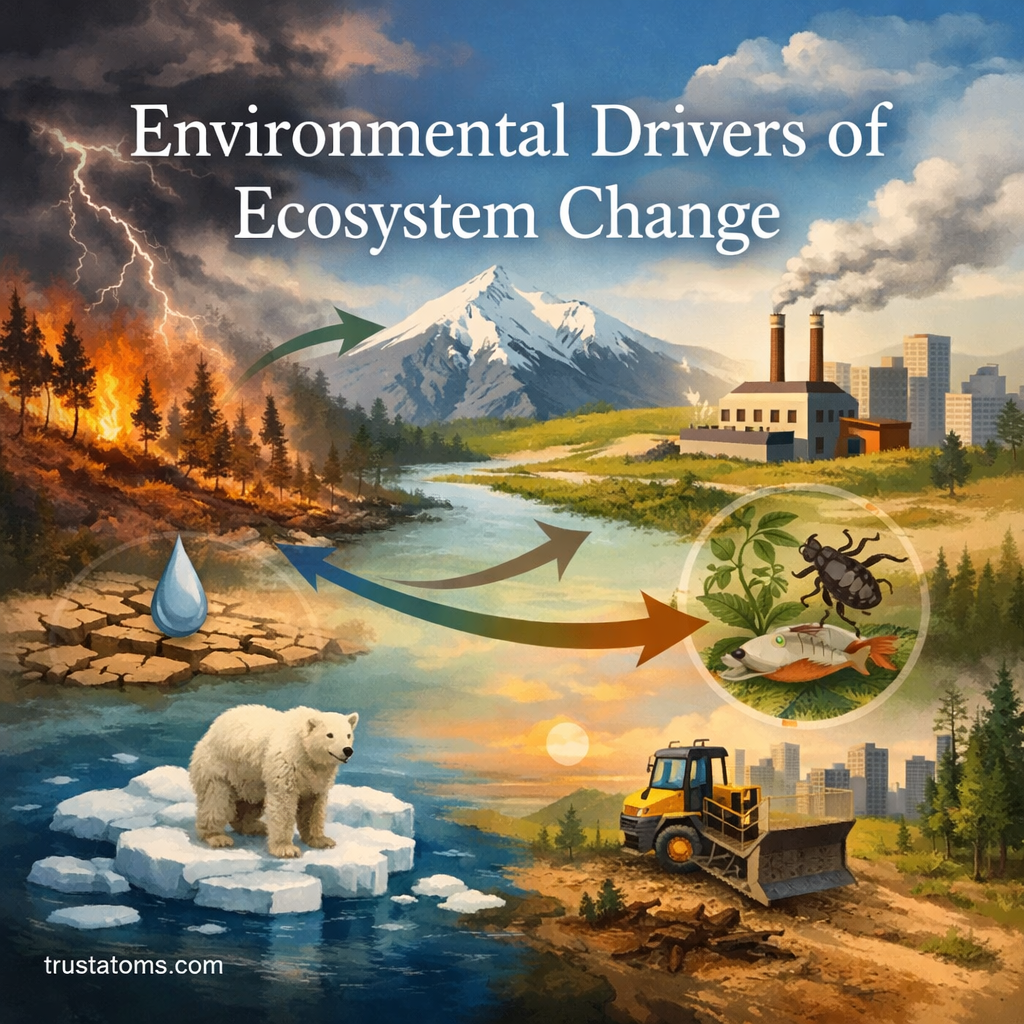
Environmental drivers of ecosystem change are natural and human-caused factors that alter how ecosystems function, which species survive, and how resources move through the environment. Major drivers include climate change, water availability, nutrient levels, natural disturbances, habitat modification, and invasive species.
Understanding these forces connects ecology with the study of biology by explaining how environmental conditions influence organisms and their relationships. A change in rainfall, for example, can affect plant growth, herbivore populations, and the predators that depend on them.
Environmental drivers operate over different timescales, from a sudden wildfire to decades of changing temperatures. Their effects depend on an ecosystem’s existing conditions, biodiversity, and ability to recover.
What Are Environmental Drivers in Ecosystems?
Environmental drivers are physical, chemical, or biological influences that change ecosystem conditions. They affect species distributions, population sizes, food webs, and processes such as photosynthesis and nutrient cycling.
Scientists distinguish between drivers and ecological responses. Drought is a driver, for example, while reduced plant growth and declining water-dependent wildlife populations are possible responses.
Drivers may act over different periods:
- Short-term: Storms, heatwaves, floods, and sudden pollution events.
- Seasonal: Rainfall cycles, temperature variation, and recurring water shortages.
- Long-term: Climate shifts, land conversion, and persistent nutrient changes.
Functional ecology in environmental systems examines how these changes influence the activities of organisms and the ecological processes they support.
Major Environmental Drivers of Ecosystem Change
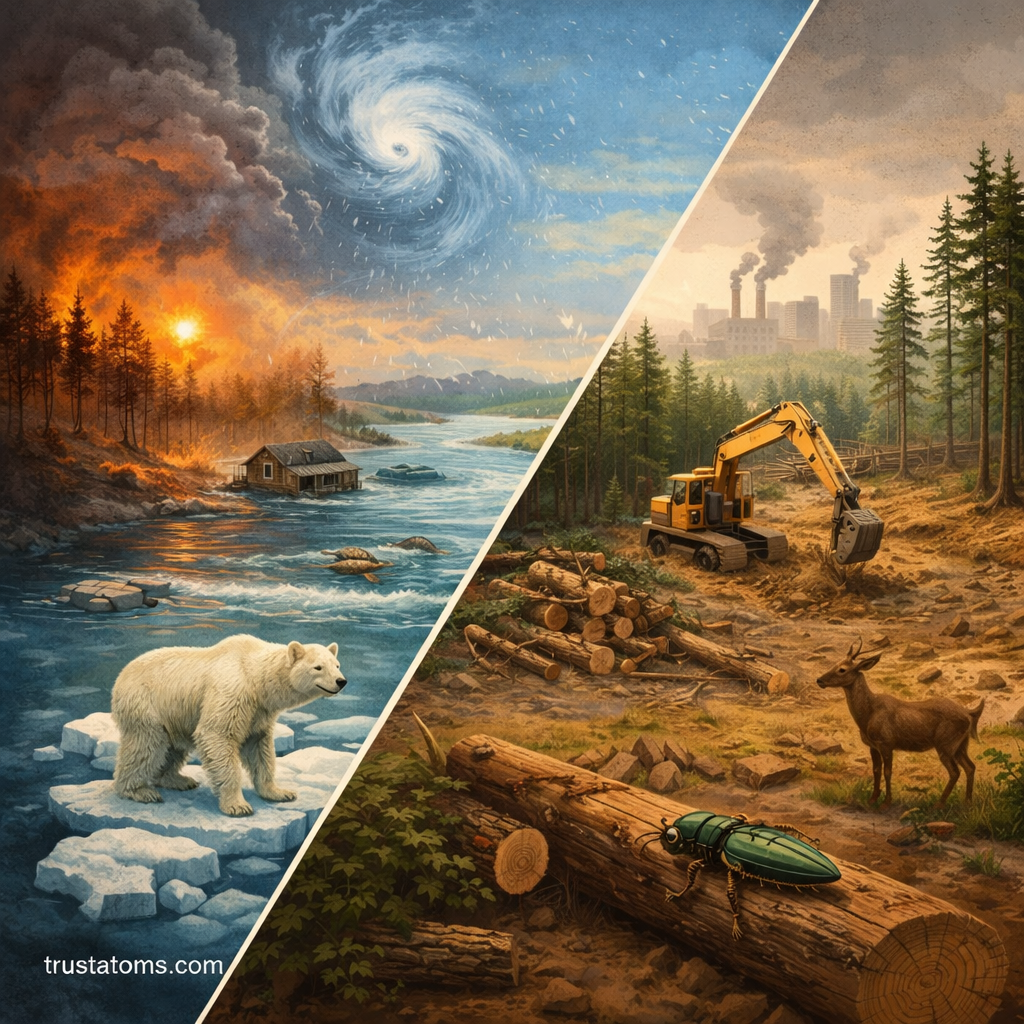
Different drivers affect ecosystems through different mechanisms. Some alter physical conditions, while others change habitats or relationships among species. Understanding their effects helps researchers distinguish temporary disturbances from lasting ecological transformations.
Research into climate impacts on ecosystem stability shows how changing environmental conditions can affect biodiversity, species interactions, and ecosystem recovery.
When degradation has already occurred, methods used in ecosystem restoration in environmental science can help rebuild habitats and restore ecological functions.
1. Climate Change and Temperature Shifts
Temperature and precipitation influence where organisms can survive, grow, and reproduce. Long-term climate changes may alter species distributions and the timing of seasonal biological events.
Examples include coral bleaching during marine heatwaves, earlier flowering in some plants, and shifts in the geographic ranges of temperature-sensitive species.
Climate change can also alter the likelihood or severity of certain extreme events, including heatwaves and droughts. These pressures may affect ecosystems already experiencing habitat loss or pollution.
2. Water Availability and Hydrological Changes
Water availability affects plant productivity, animal survival, and the movement of nutrients. Changes in rainfall, groundwater levels, or river flow can reshape entire biological communities.
During prolonged drought, wetlands may shrink, reducing breeding habitat for amphibians and waterbirds. Flooding can produce different effects by transporting sediment, reconnecting floodplains, and creating new aquatic habitats.
Human activities such as groundwater extraction, dam construction, and water diversion can intensify these changes by altering natural water cycles.
3. Nutrient Availability and Soil Conditions
Nitrogen and phosphorus are essential nutrients for plant growth, but their availability can strongly influence ecosystem composition.
Nutrient-poor soils may limit vegetation growth, while excessive fertilizer runoff can increase algae production in lakes and rivers. When large amounts of algae die and decompose, microbial activity can reduce dissolved oxygen and harm aquatic organisms.
Soil erosion, changes in decomposition, and atmospheric nutrient deposition also influence how nutrients move through ecosystems.
4. Natural Disturbances and Ecological Renewal
Wildfires, storms, volcanic eruptions, floods, and insect outbreaks can rapidly change ecosystem structure. Although disturbances may cause substantial damage, some are part of natural ecological cycles.
Periodic fire helps maintain certain grasslands and fire-adapted forests. Seasonal flooding can replenish floodplain soils and create habitats for aquatic organisms.
However, disturbance intensity and frequency matter. Repeated severe fires, for example, may prevent tree seedlings from becoming established and gradually change forest composition.
5. Habitat Modification and Fragmentation
Deforestation, agricultural expansion, urban development, and infrastructure construction can remove or alter habitats. These changes affect food availability, shelter, breeding sites, and movement between populations.
Habitat fragmentation is especially impactful. When continuous habitats are broken into smaller pieces, species may struggle to move, reproduce, or find resources.
Isolated populations may become more vulnerable to local extinction, particularly when roads or developed areas prevent individuals from reaching suitable habitats elsewhere.
6. Invasive Species and Biological Interactions
Invasive species are introduced organisms that establish, spread, and cause ecological or other harm. They may compete with native species, introduce diseases, alter habitats, or change predator-prey relationships.
For example, an invasive plant may form dense stands that reduce light and space available to native vegetation. Changes in plant communities can then affect insects, birds, and soil organisms.
Not every introduced species becomes invasive. Ecological impacts depend on the organism, its environment, and its interactions with existing species.
How Environmental Drivers Interact
Environmental drivers rarely operate independently. Their combined effects can be stronger or more complicated than the effects of any single factor.
For example, warming temperatures can increase evaporation and worsen drought conditions. Dry vegetation may then become more susceptible to wildfire, while fragmented habitats can make it harder for wildlife to escape or recolonize affected areas.
Other interactions include nutrient runoff combined with warm water, which can encourage algal blooms, and habitat disturbance that creates opportunities for invasive species.
These relationships can create feedback loops. Loss of vegetation may increase soil erosion, which further reduces the ability of plants to become established.
A Practical Example: Drought Changes a Pond Ecosystem
Imagine a small freshwater pond that normally supports fish, aquatic insects, frogs, and water plants. After several unusually dry months, its water level falls substantially.
As the pond becomes shallower, sunlight may warm the remaining water more quickly. Warmer water generally holds less dissolved oxygen, while the reduced habitat concentrates aquatic organisms into a smaller area.
Fish may experience oxygen stress, amphibian breeding sites may disappear, and some aquatic plants may die as exposed sediments dry out.
If rainfall returns soon enough, the pond may recover. If drought persists or becomes frequent, the pond could support a different community of organisms.
This scenario demonstrates how one environmental driver, reduced rainfall, can trigger linked changes in temperature, oxygen availability, habitat size, and species survival.
Ecosystem Resilience and Recovery
Ecosystem resilience describes the capacity of an ecological system to absorb disturbance and recover its functions and structure. Recovery depends on disturbance severity, environmental conditions, and the organisms remaining after disruption.
Factors that can support resilience include:
- Diverse species performing complementary ecological functions.
- Connected habitats that allow organisms to move and recolonize.
- Healthy soils and functioning nutrient cycles.
- Natural regeneration processes and suitable water conditions.
Resilience is related to, but distinct from, ecological stability. Stability concerns how ecosystems maintain or regain their characteristics when conditions change, while resilience emphasizes their capacity to absorb disturbances and recover.
If pressures exceed an ecosystem’s capacity to recover, lasting changes may occur. Repeated severe disturbances can sometimes shift forests toward more open vegetation, while persistent nutrient enrichment may favor algae over aquatic plants.
How Scientists Measure Ecosystem Change
Scientists use field surveys, environmental sensors, satellite imagery, and ecological models to investigate changing ecosystems.
Measurements commonly include species abundance, vegetation cover, water quality, soil nutrients, temperature, and rainfall. Long-term observations help distinguish ordinary seasonal variation from persistent ecological shifts.
Researchers may also compare disturbed sites with less-affected locations to evaluate how particular drivers influence ecological conditions.
These findings inform habitat protection, sustainable land management, and restoration planning. They also help identify environmental pressures that can be reduced before extensive damage occurs.
Frequently Asked Questions
What are the main environmental drivers of ecosystem change?
Major drivers include climate change, water availability, nutrient conditions, natural disturbances, habitat modification, and invasive species. Their importance varies across ecosystems and geographic regions.
Can natural disturbances benefit ecosystems?
Yes. Periodic fires, floods, and other disturbances can maintain habitats, recycle nutrients, and create opportunities for new growth. However, unusually intense or frequent disturbances may cause lasting damage.
Can ecosystems recover after environmental change?
Many ecosystems can recover when damaging pressures decrease and suitable conditions return. Recovery may be limited when habitats are permanently altered, species disappear locally, or repeated disturbances prevent regeneration.
Environmental drivers reshape ecosystems by changing the conditions that support organisms and ecological processes. Climate, water, nutrients, disturbances, habitat modification, and invasive species often interact, producing effects that extend through entire food webs. Identifying these connections helps scientists anticipate ecological change and choose more effective conservation and restoration measures.
Sources: OpenStax, Biology 2e; Millennium Ecosystem Assessment, Ecosystems and Human Well-being: Synthesis; Intergovernmental Panel on Climate Change, Climate Change 2022: Impacts, Adaptation and Vulnerability.