Hair is a defining feature of the human body, serving both functional and aesthetic purposes. Beyond appearance, hair plays roles in protection, temperature regulation, and sensory perception.
Understanding hair structure and the hair growth cycle helps explain why hair grows, sheds, and changes over time.
What Is Hair Made Of?
Hair is primarily made of keratin, a strong protein also found in the skin and nails. Each strand of hair grows from a structure in the skin called a hair follicle.
Basic Components of Hair
- Hair shaft: The visible part above the skin
- Hair root: The portion below the surface
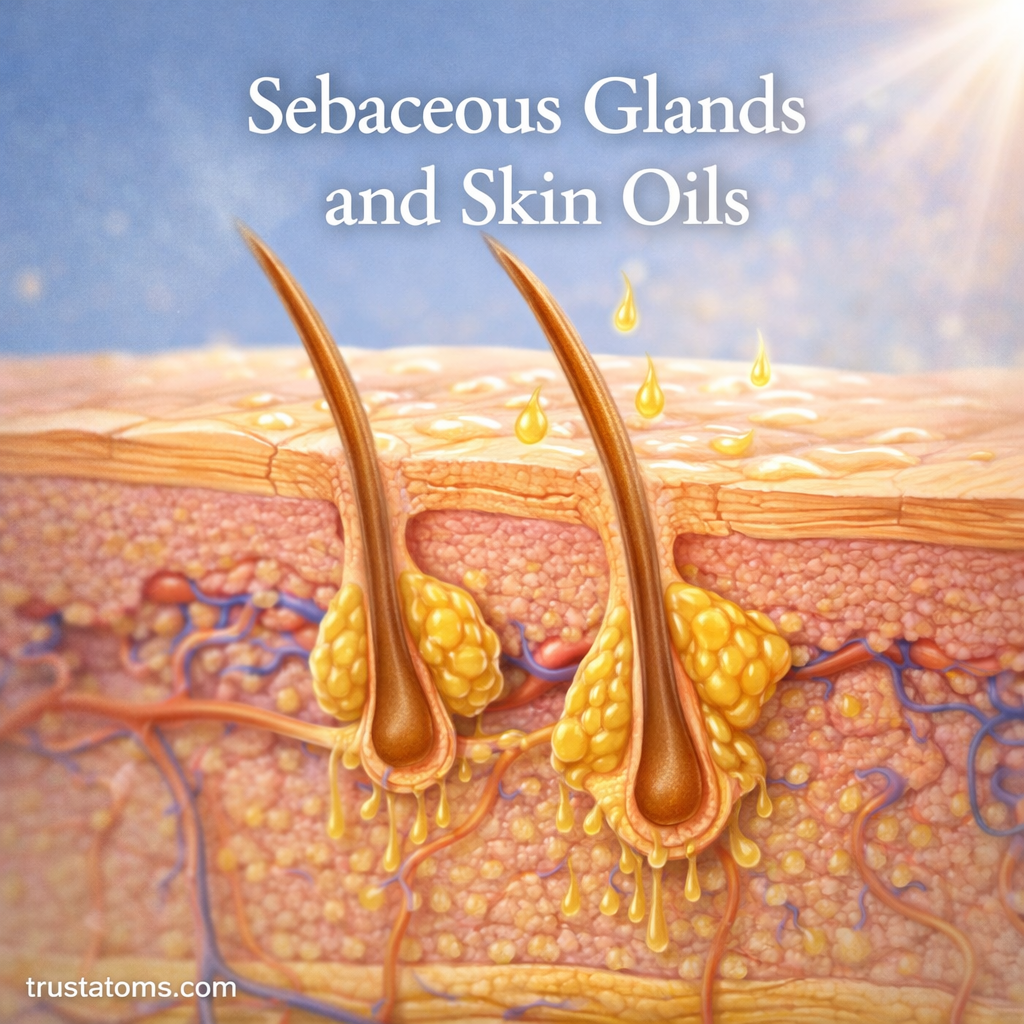
- Hair follicle: The structure in the dermis that produces hair
- Hair bulb: The base of the follicle where growth begins
Structure of the Hair Shaft
The hair shaft is composed of three main layers:
1. Cuticle
- Outermost layer
- Made of overlapping, scale-like cells
- Protects inner layers
2. Cortex
- Middle layer
- Contains most of the hair’s protein and pigment (melanin)
- Determines strength, texture, and color
3. Medulla
- Innermost layer
- May be absent in fine hair
- Plays a minor structural role
Structure of the Hair Follicle
The hair follicle is a complex structure embedded in the skin.
Key Parts of the Hair Follicle
- Dermal papilla: Supplies nutrients via blood vessels
- Matrix: Rapidly dividing cells that produce new hair
- Sebaceous gland: Produces oil (sebum) to condition hair
- Arrector pili muscle: Causes hair to stand up (goosebumps)
How Hair Grows
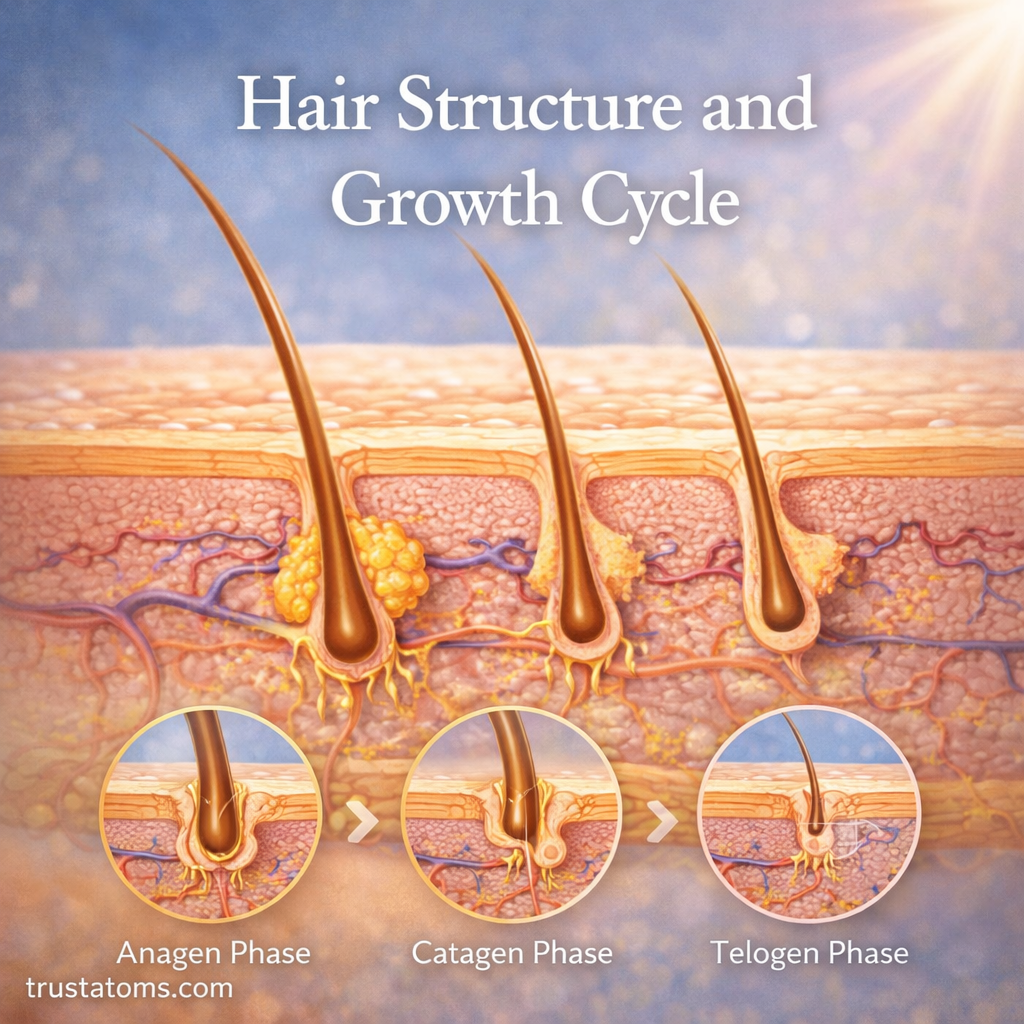
Hair growth begins in the hair follicle, where cells divide and push older cells upward. As these cells move away from the blood supply, they harden and form the hair shaft.
This continuous process results in visible hair growth over time.
The Hair Growth Cycle
Hair does not grow continuously at the same rate. Instead, it follows a repeating cycle consisting of three main phases.
1. Anagen Phase (Growth Phase)
- Active growth stage
- Can last 2 to 7 years (varies by individual and location)
- Hair grows approximately 0.5 inches (1.25 cm) per month
At any given time, about 85–90% of hair is in this phase.
2. Catagen Phase (Transition Phase)
- Short transitional stage lasting a few weeks
- Hair growth slows and the follicle shrinks
- Hair detaches from the blood supply
Only a small percentage of hair is in this phase at once.
3. Telogen Phase (Resting Phase)
- Lasts about 2–3 months
- Hair does not grow but remains in place
- Eventually, the hair is shed and replaced
Normal daily hair shedding (50–100 strands) occurs during this phase.
Factors That Affect Hair Growth
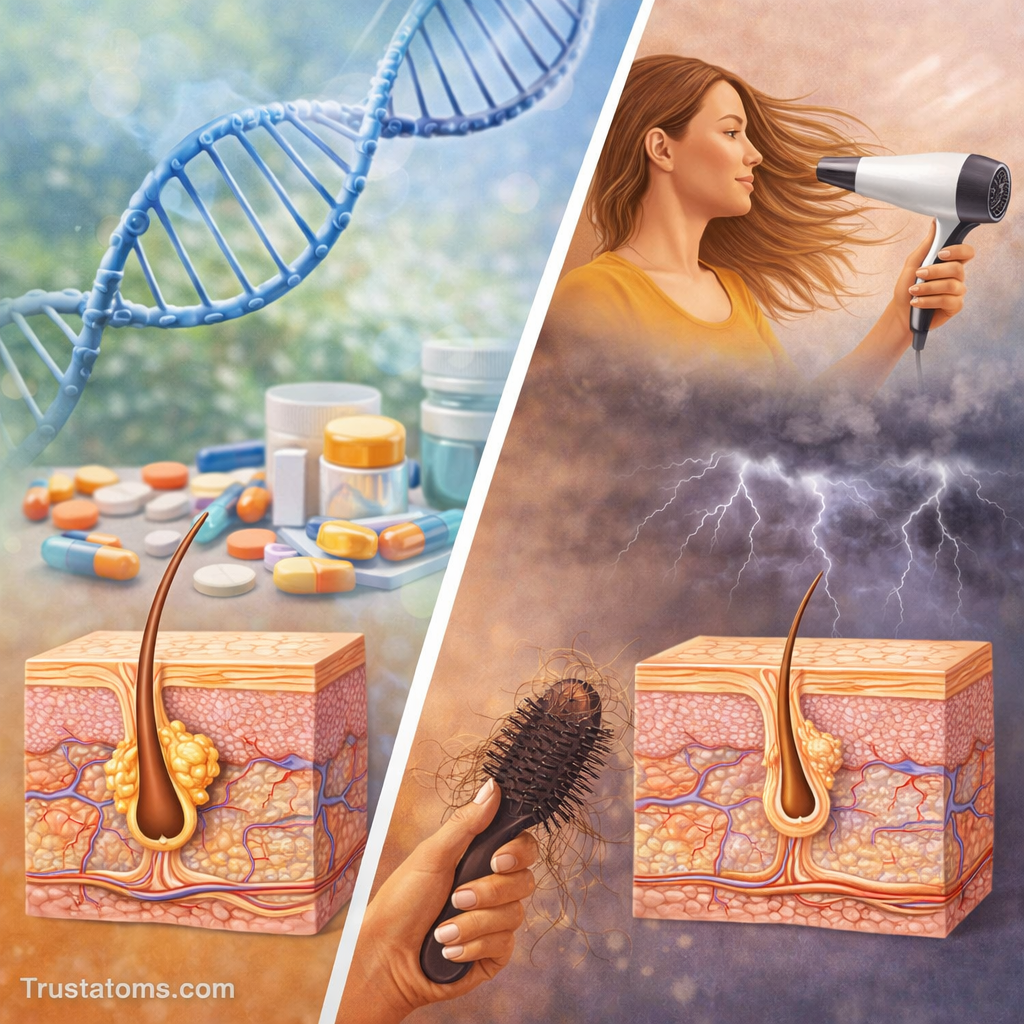
Hair growth and health can be influenced by multiple factors:
Biological Factors
- Genetics: Determines hair thickness, color, and growth rate
- Hormones: Changes during puberty, pregnancy, or aging affect hair
- Age: Growth rate and density may decrease over time
Environmental and Lifestyle Factors
- Nutrition: Protein, vitamins, and minerals support growth
- Stress: Can disrupt the hair cycle
- Hair care practices: Excessive heat or chemicals may damage hair
Why Hair Falls Out
Hair shedding is a normal part of the growth cycle. However, excessive hair loss can occur when the cycle is disrupted.
Common Causes of Increased Hair Loss
- Stress or illness
- Hormonal changes
- Nutritional deficiencies
- Damage to hair or scalp
Conditions like telogen effluvium occur when more hairs than usual enter the resting phase at the same time.
Hair Function in the Human Body
Hair serves several important functions beyond appearance:
- Protection: Shields the scalp from UV radiation
- Temperature regulation: Helps retain heat
- Sensory input: Detects light touch through nerve endings
- Defense: Eyelashes and nose hairs block debris
Maintaining Healthy Hair
Healthy hair depends on both internal and external care.
Tips for Supporting Hair Health
- Eat a balanced diet rich in protein and nutrients
- Avoid excessive heat styling
- Use gentle hair care products
- Protect hair from environmental damage
- Manage stress levels
Final Thoughts
Hair structure and growth are the result of a complex biological process involving follicles, proteins, and cycles of renewal. While hair naturally grows, rests, and sheds, maintaining overall health can support stronger, more resilient hair.
Understanding the hair growth cycle helps explain normal shedding patterns and provides insight into how to care for hair effectively over time.