The heart is a powerful muscular organ that drives the circulatory system, ensuring that oxygen, nutrients, and hormones reach every cell in the body. Understanding the heart’s structure and how blood flows through it helps explain how the body maintains life and balance.
This article breaks down the anatomy of the heart and traces the exact pathway blood takes as it moves through the body.
Overview of the Heart
The heart is about the size of a fist and is located slightly left of the center of the chest. It works continuously, beating around 100,000 times per day.
Primary Functions
- Pump oxygen-rich blood to the body
- Send oxygen-poor blood to the lungs
- Maintain circulation and blood pressure
The heart operates as a double pump, handling both pulmonary (lung) and systemic (body) circulation.
Structure of the Heart
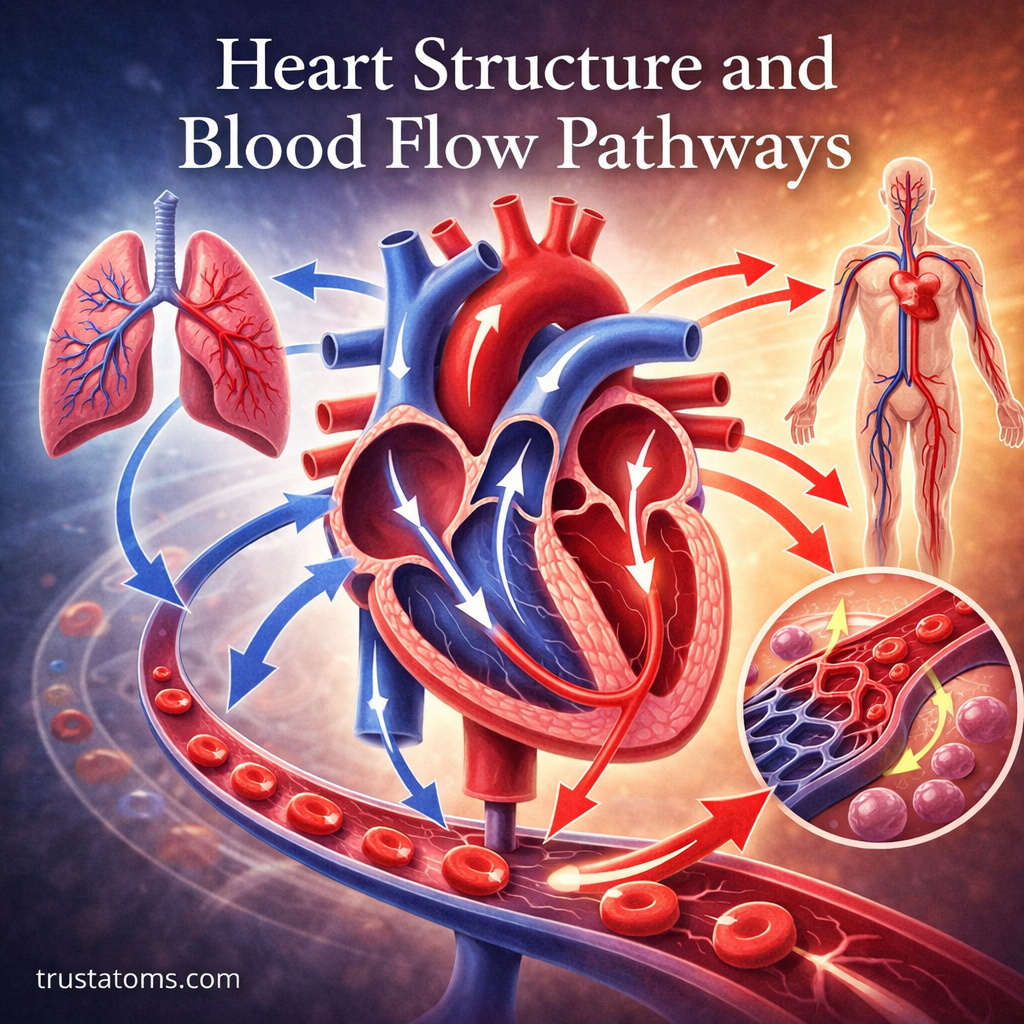
The heart is divided into four chambers that manage blood flow efficiently.
The Four Chambers
Right Atrium
- Receives oxygen-poor blood from the body
- Blood enters through the superior and inferior vena cava
Right Ventricle
- Pumps oxygen-poor blood to the lungs via the pulmonary artery
Left Atrium
- Receives oxygen-rich blood from the lungs
- Blood enters through the pulmonary veins
Left Ventricle
- Pumps oxygen-rich blood to the body through the aorta
- Has the thickest muscular wall due to high pressure demands
Heart Valves and Blood Flow Direction
Valves ensure that blood flows in one direction and prevent backflow.
Main Heart Valves
- Tricuspid valve: Between right atrium and right ventricle
- Pulmonary valve: Between right ventricle and pulmonary artery
- Mitral (bicuspid) valve: Between left atrium and left ventricle
- Aortic valve: Between left ventricle and aorta
These valves open and close in response to pressure changes within the heart.
Blood Flow Pathway Through the Heart
Blood follows a precise, continuous pathway through the heart and lungs.
Step-by-Step Blood Flow
- Oxygen-poor blood returns from the body to the right atrium
- Blood passes through the tricuspid valve into the right ventricle
- The right ventricle pumps blood through the pulmonary valve into the pulmonary artery
- Blood travels to the lungs, where it gains oxygen and releases carbon dioxide
- Oxygen-rich blood returns to the left atrium via the pulmonary veins
- Blood flows through the mitral valve into the left ventricle
- The left ventricle pumps blood through the aortic valve into the aorta
- Blood is distributed throughout the body
This cycle repeats continuously to sustain life.
Pulmonary and Systemic Circulation
The heart supports two interconnected circulation systems.
Pulmonary Circulation
- Moves blood between the heart and lungs
- Oxygenates blood
- Removes carbon dioxide
Systemic Circulation
- Delivers oxygen-rich blood to tissues
- Supplies nutrients and removes waste
- Maintains overall body function
These systems work together to ensure efficient circulation.
The Cardiac Cycle
The cardiac cycle refers to the sequence of events during one heartbeat.
Two Main Phases
Diastole (Relaxation Phase)
- Heart chambers fill with blood
- Valves between atria and ventricles are open
Systole (Contraction Phase)
- Ventricles contract to pump blood out
- Semilunar valves (pulmonary and aortic) open
This coordinated rhythm ensures continuous blood flow.
Electrical Control of the Heart
The heart has its own electrical system that controls the heartbeat.
Key Components
- Sinoatrial (SA) node: The natural pacemaker that initiates each heartbeat
- Atrioventricular (AV) node: Delays the signal to allow ventricles to fill
- Bundle of His and Purkinje fibers: Distribute electrical signals through the ventricles
This system ensures the heart beats in a coordinated and efficient manner.
Why Heart Structure Matters
The design of the heart allows it to function as an efficient pump.
Key Advantages
- Separation of oxygen-rich and oxygen-poor blood
- Strong muscular walls for high-pressure pumping
- Valves that prevent backflow
- Coordinated electrical signals for rhythm
Each structural feature contributes to effective circulation.
Common Heart-Related Issues
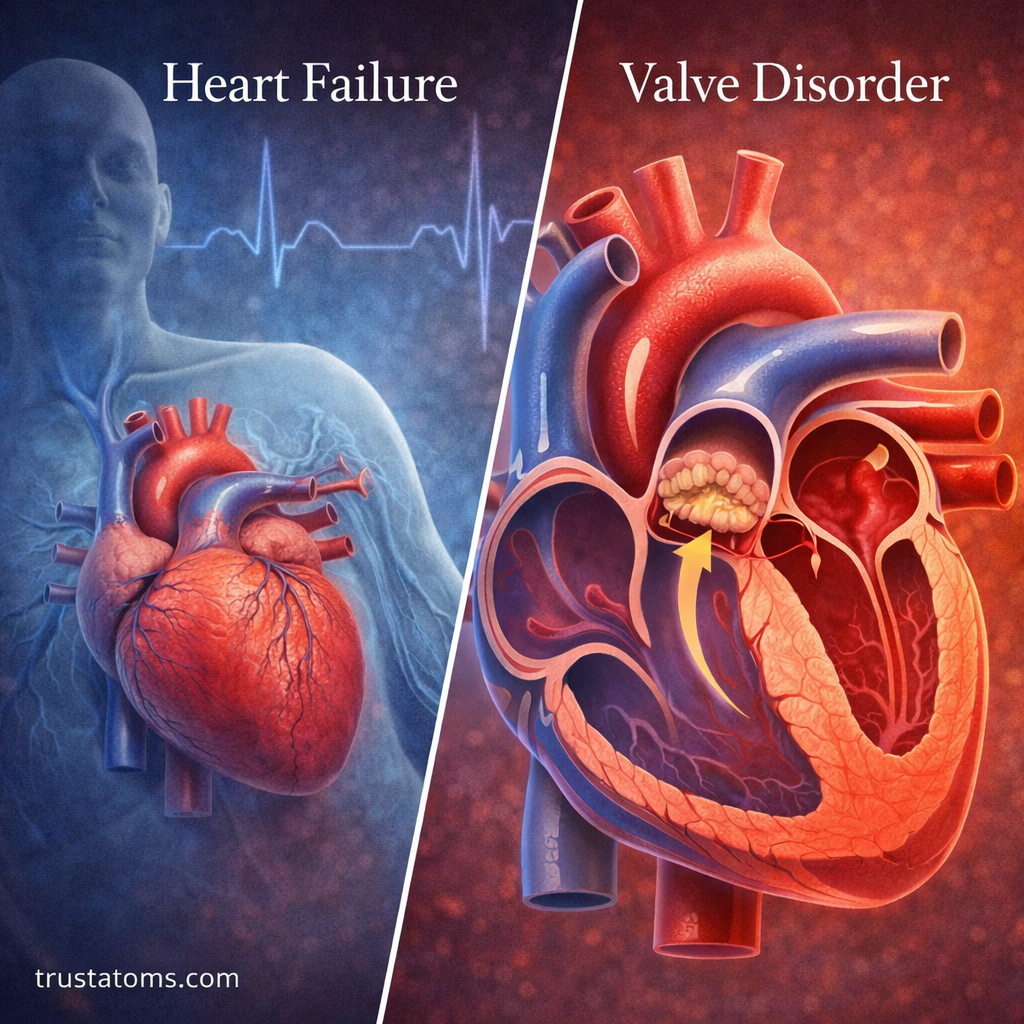
Understanding heart structure helps explain various health conditions.
Examples
- Valve disorders: Can cause backflow or restricted blood movement
- Heart failure: Reduced ability to pump blood effectively
- Arrhythmias: Irregular heart rhythms due to electrical issues
- Coronary artery disease: Reduced blood flow to heart muscle
Early detection and treatment are important for maintaining heart health.
Final Thoughts
The heart’s structure and blood flow pathways are carefully designed to support life. By coordinating chambers, valves, and electrical signals, the heart ensures that blood moves efficiently through the lungs and the rest of the body.
Understanding how the heart works not only deepens your knowledge of human anatomy but also highlights the importance of maintaining cardiovascular health.