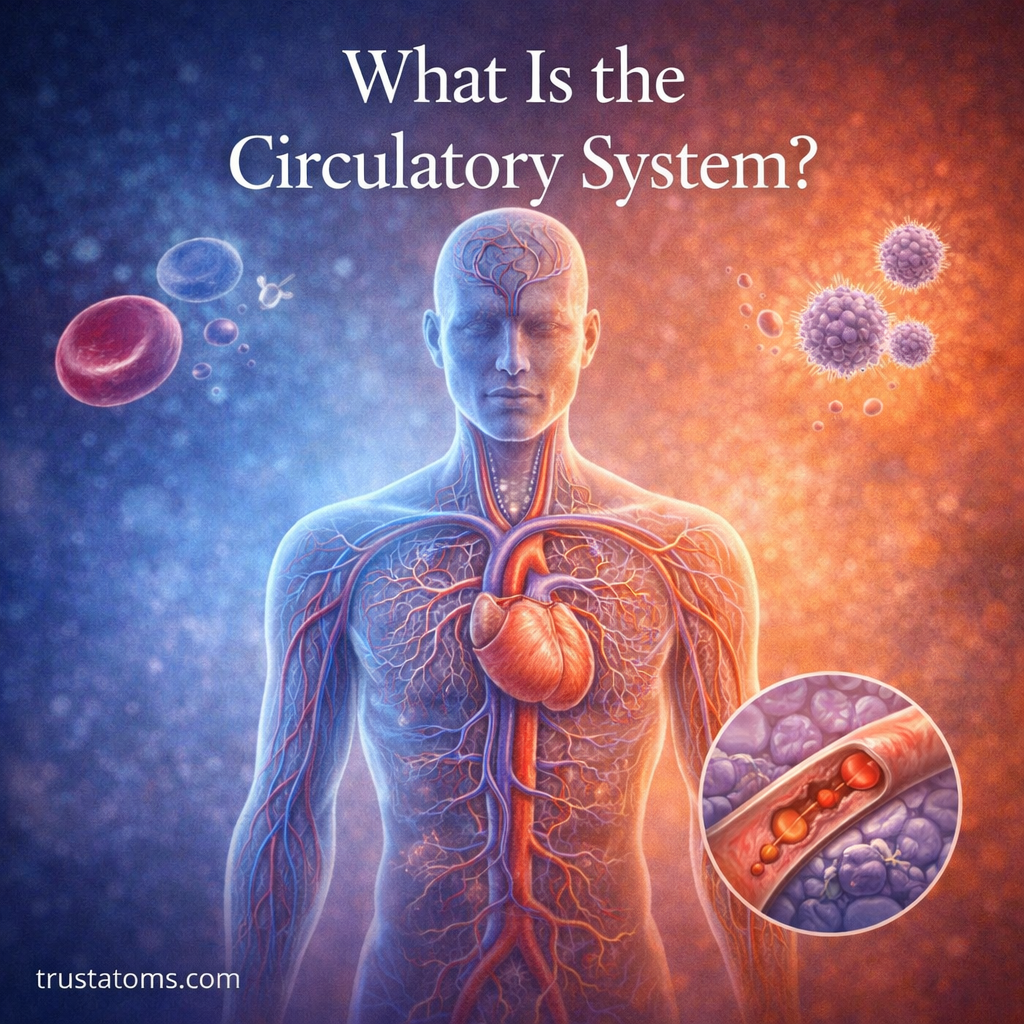
The circulatory system is the body’s network of the heart, blood vessels, and blood that transports oxygen, nutrients, hormones, and other substances while helping remove metabolic waste. It continuously moves blood through the lungs and body tissues, supporting cellular activity, temperature regulation, and normal organ function.
Also called the cardiovascular system, this network connects nearly every organ through a series of branching blood vessels. Understanding its structure is an important part of human anatomy because circulation links the activities of the respiratory, digestive, nervous, and other body systems.
The circulatory system operates through two connected pathways: pulmonary circulation, which carries blood between the heart and lungs, and systemic circulation, which supplies the rest of the body. Both pathways depend on the heart’s pumping action and the exchange of substances across tiny blood vessels.
Main Components of the Circulatory System
The circulatory system consists of three closely connected components: the heart, blood vessels, and blood. Each performs a different function, but all three are necessary for effective circulation.
1. The Heart
The heart is a muscular organ that generates the pressure needed to move blood through the circulatory system. Its right side pumps blood toward the lungs, while its left side pumps blood into systemic circulation.
A typical resting adult heart rate is approximately 60–100 beats per minute, although healthy rates vary with age, fitness, medications, and other factors. Heart rate works together with the amount of blood pumped per beat to determine cardiac output.
2. Blood Vessels
Blood vessels form the connected pathways through which blood travels. Their structures differ according to pressure, direction of flow, and exchange requirements.
- Arteries: Carry blood away from the heart, generally under relatively high pressure.
- Arterioles: Small vessels that regulate resistance and blood delivery to capillary networks.
- Capillaries: Microscopic vessels where gases, nutrients, and other substances move between blood and tissues.
- Venules: Collect blood leaving capillary networks.
- Veins: Return blood toward the heart at relatively low pressure.
Blood flow is influenced by pressure differences, vessel diameter, and resistance. The behavior of blood in major arteries is examined in Hemodynamics in Large Vessels.
3. Blood
Blood is a specialized connective tissue containing cells and cell fragments suspended in a liquid called plasma. Its components perform different transport and protective functions.
- Red blood cells: Contain hemoglobin, which carries most of the oxygen transported in blood.
- White blood cells: Participate in immune defense against pathogens and other threats.
- Platelets: Help form blood clots after vessel injury.
- Plasma: Transports dissolved substances, including nutrients, hormones, proteins, and metabolic waste.
Together, these components allow blood to function as both a transport medium and a contributor to the body’s protective and regulatory processes.
How the Circulatory System Works Step by Step
Blood circulates through a continuous series of connected chambers and vessels. A complete route can be traced from the right side of the heart through the lungs, back to the left side of the heart, and then through the body.
- Oxygen-poor blood from systemic veins enters the right atrium through the superior and inferior venae cavae.
- Blood passes through the tricuspid valve into the right ventricle.
- The right ventricle pumps blood through the pulmonary valve into the pulmonary arteries.
- In lung capillaries, blood releases carbon dioxide and takes up oxygen.
- Oxygen-rich blood returns through pulmonary veins to the left atrium.
- Blood crosses the mitral valve into the left ventricle, which pumps it through the aortic valve into the aorta.
- Systemic arteries distribute blood to tissue capillaries, where exchange occurs before blood returns through systemic veins.
This sequence repeats continuously. The pulmonary and systemic circuits are connected in series, so under stable conditions the same average volume of blood passes through each circuit over time.
Pulmonary vs. Systemic Circulation
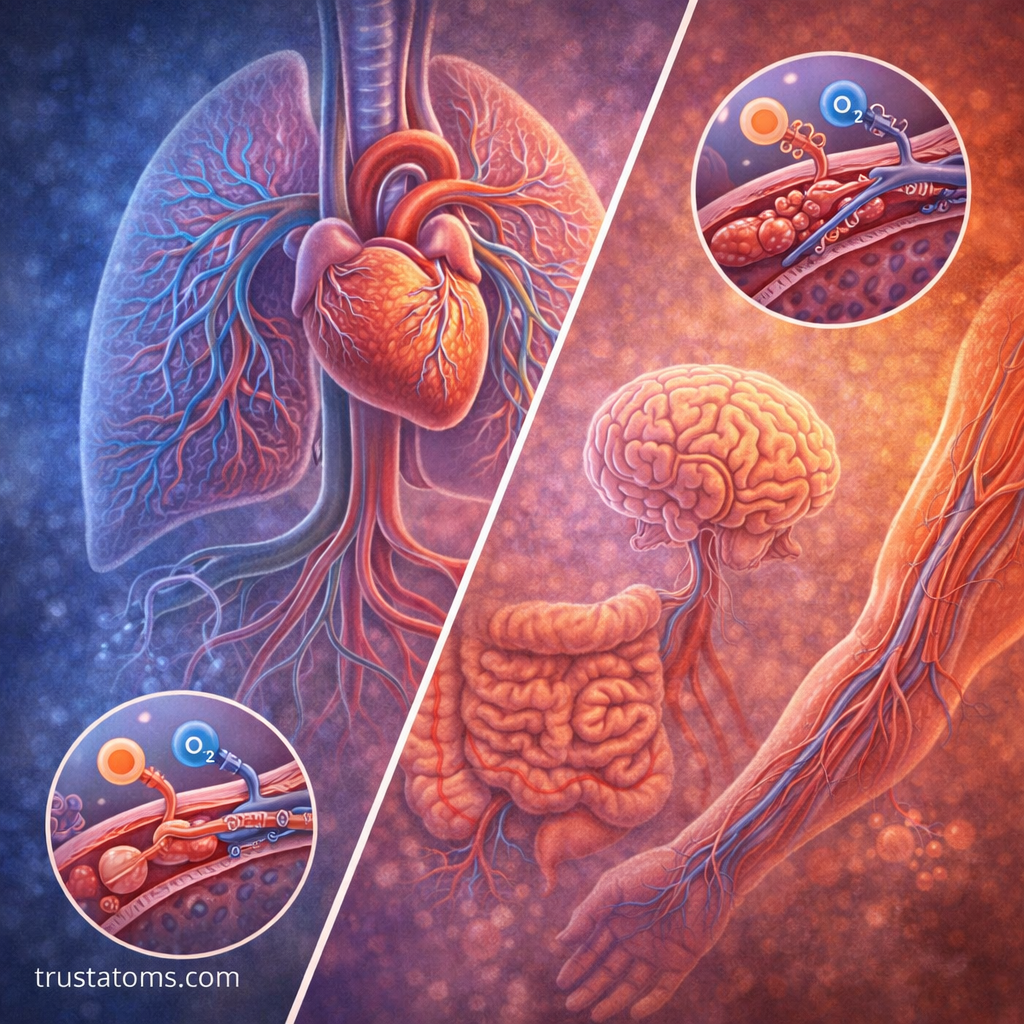
Pulmonary and systemic circulation have different destinations and pressure requirements. Their pathways are compared in greater detail in Systemic vs Pulmonary Circulation.
Pulmonary Circulation
Pulmonary circulation moves blood from the right ventricle to the lungs and back to the left atrium. Gas exchange occurs in capillaries surrounding the alveoli, the tiny air sacs where oxygen enters blood and carbon dioxide leaves it.
Pulmonary arteries carry oxygen-poor blood, while pulmonary veins carry oxygen-rich blood. This illustrates why arteries and veins are defined by blood flow direction rather than oxygen content.
Systemic Circulation
Systemic circulation moves blood from the left ventricle through the body’s organs and tissues before returning it to the right atrium. It operates at higher pressure than pulmonary circulation because it supplies a larger and more extensive vascular network.
The heart muscle also needs its own blood supply. Coronary arteries branch from the aorta and deliver oxygenated blood to the myocardium, as described in Coronary Circulation and Heart Supply.
| Feature | Pulmonary Circulation | Systemic Circulation |
|---|---|---|
| Starting chamber | Right ventricle | Left ventricle |
| Main destination | Lungs | Body tissues |
| Ending chamber | Left atrium | Right atrium |
| Primary function | Gas exchange | Deliver substances and collect waste |
| Typical pressure | Lower | Higher |
| Arterial oxygen content | Generally oxygen-poor | Generally oxygen-rich |
How the Heart Is Structured to Pump Blood
The heart has four chambers arranged as two coordinated pumps. The atria receive blood, while the ventricles generate the pressure needed to eject it.
- Right atrium: Receives blood returning from systemic circulation.
- Right ventricle: Pumps blood into pulmonary circulation.
- Left atrium: Receives oxygen-rich blood from pulmonary veins.
- Left ventricle: Pumps blood into the aorta and systemic circulation.
Four valves help maintain forward flow by opening and closing in response to pressure differences. The tricuspid and mitral valves separate atria from ventricles, while the pulmonary and aortic valves control blood leaving the ventricles.
The contraction and relaxation sequence that produces each heartbeat is explained in How the Heart Pumps Blood.
The Role of Capillaries in Tissue Exchange
Capillaries are microscopic vessels whose thin walls allow substances to move between blood and surrounding tissues. They connect the arterial and venous sides of local circulation through branching networks.
Oxygen moves from systemic capillary blood toward tissues where oxygen partial pressure is lower. Carbon dioxide generally moves in the opposite direction. Nutrients, water, and other substances cross capillary walls through mechanisms that depend on their properties and the tissue involved.
Capillaries differ from the larger vessels that deliver and collect blood. The structural and functional distinctions are explained in Arteries, Veins, and Capillaries.
Capillary networks are especially dense in many metabolically active tissues. Local changes in arteriolar resistance help adjust blood supply according to tissue demand.
Worked Example: Calculating Cardiac Output
Cardiac output is the volume of blood pumped by one ventricle each minute. It depends on heart rate and stroke volume, which is the amount of blood ejected during one heartbeat.
Consider an illustrative resting adult with a heart rate of 70 beats per minute and a stroke volume of 70 milliliters per beat.
- Start with the formula: cardiac output = heart rate × stroke volume.
- Multiply 70 beats per minute by 70 milliliters per beat.
- The result is 4,900 milliliters per minute.
- Convert to liters: 4,900 milliliters equals 4.9 liters per minute.
In this example, each ventricle pumps approximately 4.9 liters per minute. The outputs are not added together to give 9.8 liters per minute of systemic flow, because blood passes through the pulmonary and systemic circuits sequentially.
Cardiac output changes with activity and physiological conditions. During exercise, increased heart rate and stroke volume can raise blood delivery to working tissues.
How Circulation Supports Other Body Functions
Circulation does more than deliver oxygen. Blood connects organs with different responsibilities and helps maintain a relatively stable internal environment, called homeostasis.
- Nutrient transport: Moves absorbed glucose, amino acids, and other nutrients toward tissues.
- Waste transport: Carries carbon dioxide toward the lungs and many dissolved waste products toward organs involved in their removal.
- Hormone distribution: Transports chemical messengers released by endocrine glands.
- Temperature regulation: Redistributes heat and changes blood flow near the skin.
- Immune defense: Circulates immune cells, antibodies, and other protective substances.
- Clotting: Delivers platelets and clotting factors that help limit blood loss after injury.
These functions depend on coordination between the circulatory system and other organs. For example, the lungs exchange respiratory gases, the digestive system absorbs nutrients, and the kidneys help regulate blood composition and fluid balance.
Common Circulatory Disorders and Prevention
Disorders affecting the heart or blood vessels can reduce blood delivery, increase cardiovascular strain, or interrupt circulation to specific organs.
- Hypertension: Persistently elevated arterial blood pressure that increases the risk of cardiovascular complications.
- Atherosclerosis: Plaque accumulation in arterial walls that can narrow vessels or contribute to clot formation.
- Coronary artery disease: Reduced blood supply through coronary arteries, potentially causing chest pain or heart attack.
- Heart failure: A condition in which the heart cannot pump or fill sufficiently to meet the body’s needs without abnormal pressures.
- Stroke: Brain injury caused by interrupted blood supply or bleeding within or around the brain.
Regular physical activity, a balanced diet, avoiding tobacco, and appropriate management of blood pressure, cholesterol, and diabetes can reduce cardiovascular risk. Medical evaluation is important when symptoms or risk factors suggest a circulatory problem.
Common Misconceptions About the Circulatory System
Misconception 1: Arteries Always Carry Oxygen-Rich Blood
Arteries carry blood away from the heart, regardless of oxygen content. Pulmonary arteries normally transport oxygen-poor blood toward the lungs, while pulmonary veins return oxygen-rich blood to the heart.
Misconception 2: Blood Is Blue Before It Receives Oxygen
Human blood is always red, although its shade changes with oxygenation. Oxygen-poor blood is darker red, and veins may appear blue through the skin because of how light interacts with tissues.
Misconception 3: The Heart Sends Blood Through the Body Only Once
Blood circulates repeatedly through connected pathways. After passing through systemic tissues, it returns to the heart, travels through the lungs, and reenters systemic circulation.
Misconception 4: All Body Tissues Receive the Same Amount of Blood
Blood flow varies among organs and changes with activity. Local resistance, nervous system signals, and hormones help direct circulation according to physiological demand.
Frequently Asked Questions
What Is the Circulatory System in Simple Terms?
The circulatory system is the network that moves blood through the heart, lungs, and body tissues. It delivers oxygen and nutrients, transports hormones, and helps remove waste products.
What Are the Three Main Parts of the Circulatory System?
The three main components are the heart, blood vessels, and blood. The heart generates pumping pressure, vessels provide transport pathways, and blood carries cells and dissolved substances.
What Is the Difference Between Pulmonary and Systemic Circulation?
Pulmonary circulation carries blood between the heart and lungs for gas exchange. Systemic circulation moves blood between the heart and body tissues to support oxygen delivery, nutrient transport, and waste collection.
How Much Blood Does the Heart Pump Per Minute?
A commonly cited resting adult cardiac output is approximately 5 liters per minute, although actual values vary. Cardiac output increases during physical activity to support greater oxygen and nutrient demands.
What Happens if Blood Circulation Is Interrupted?
Interrupted circulation can deprive tissues of oxygen and nutrients, potentially causing injury. The consequences depend on the location, severity, and duration of reduced blood flow, with the brain and heart particularly vulnerable to prolonged interruption.
The circulatory system connects the heart, blood vessels, and blood into a continuous transport network that supports every organ. Pulmonary circulation enables gas exchange in the lungs, while systemic circulation delivers blood to body tissues and returns it to the heart. Together, these pathways maintain the movement of oxygen, nutrients, hormones, and metabolic waste required for normal physiological function.
This article is for general education and is not medical advice. Talk to a qualified health professional about any medical concern.
Sources: OpenStax, Anatomy and Physiology 2e; Guyton and Hall, Textbook of Medical Physiology; Tortora and Derrickson, Principles of Anatomy and Physiology; National Heart, Lung, and Blood Institute (NHLBI), How the Heart Works.