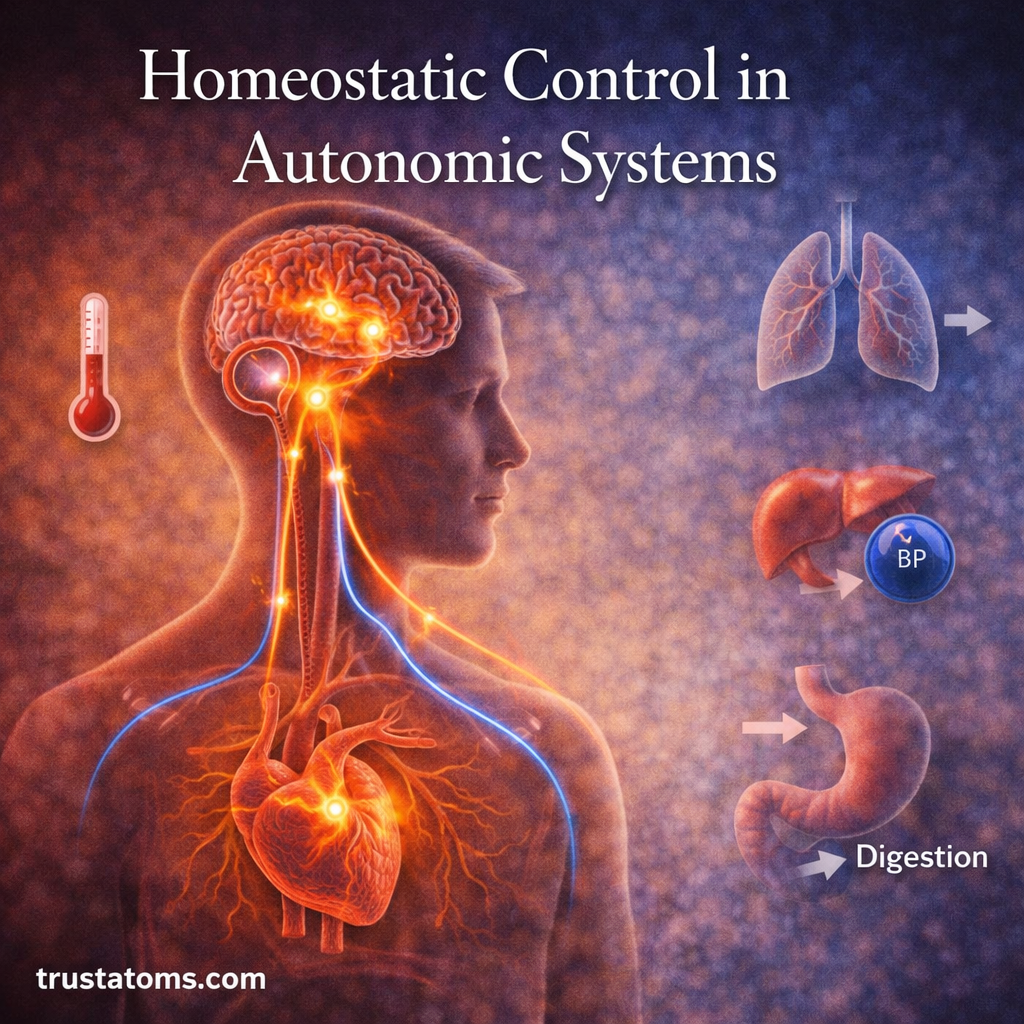
The human body constantly works to maintain internal balance, even as external conditions change. This balance—known as homeostasis—is largely regulated by the autonomic nervous system (ANS), which controls essential functions without conscious effort.
From heart rate and digestion to temperature and blood pressure, autonomic systems ensure that the body stays stable and functional in every situation.
What Is Homeostasis?
Homeostasis is the process by which the body maintains a stable internal environment.
It involves regulating:
- Body temperature
- Blood pressure
- Blood glucose levels
- Fluid balance
- Oxygen and carbon dioxide levels
These processes operate continuously to keep conditions within a narrow, optimal range.
The Role of the Autonomic Nervous System
The autonomic nervous system is the primary regulator of homeostasis.
It works automatically to:
- Monitor internal conditions
- Send signals to organs and glands
- Adjust body functions in real time
The ANS acts as a communication network between the brain and the body’s internal systems.
Divisions of the Autonomic Nervous System
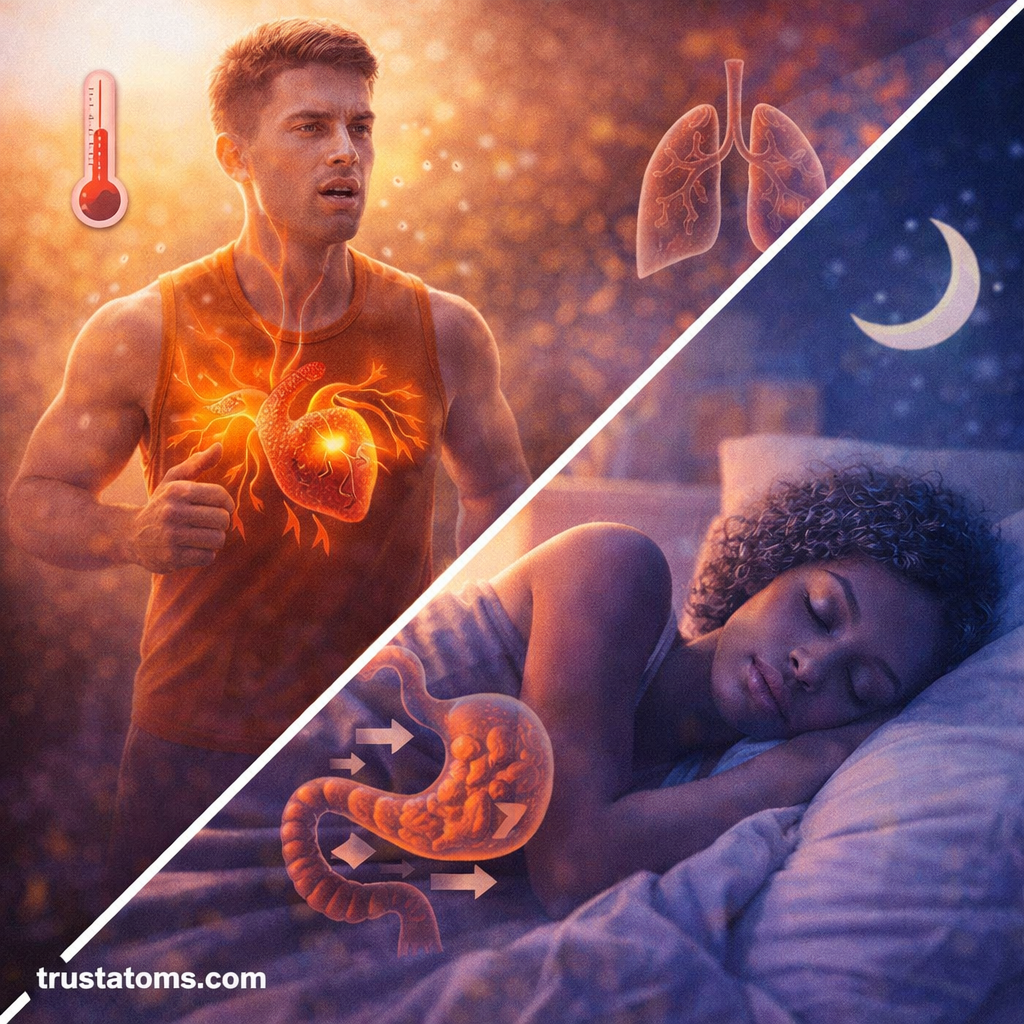
The ANS has two main divisions that work together to maintain balance.
Sympathetic Nervous System
- Known as the “fight or flight” system
- Activates during stress or activity
- Increases heart rate and blood pressure
- Redirects energy to muscles
Parasympathetic Nervous System
- Known as the “rest and digest” system
- Promotes relaxation and recovery
- Slows heart rate
- Supports digestion and energy storage
These systems have opposing effects that create balance.
How Homeostatic Control Works
Homeostasis relies on continuous feedback loops.
The Basic Feedback Process
- A change occurs in the internal environment
- Receptors detect the change
- Signals are sent to the control center (usually the brain)
- The brain processes the information
- Effectors (organs or glands) respond
- The system returns to balance
This process happens rapidly and repeatedly.
Negative Feedback Mechanisms
Most homeostatic regulation is controlled by negative feedback.
How It Works
- A change triggers a response
- The response reverses the original change
- Once balance is restored, the response stops
Example: Body Temperature
- Body temperature rises
- Sweating begins
- Heat is released
- Temperature returns to normal
Negative feedback prevents overcorrection and maintains stability.
Positive Feedback (Less Common)
Positive feedback amplifies a response instead of reversing it.
Example
- During childbirth, hormone release increases contractions
- Contractions trigger more hormone release
This continues until the process is complete.
Key Systems Regulated by the ANS
Cardiovascular System
- Regulates heart rate and blood pressure
- Adjusts blood flow based on activity
Respiratory System
- Controls breathing rate
- Maintains oxygen and carbon dioxide balance
Digestive System
- Regulates digestion and nutrient absorption
- Controls movement of food through the gastrointestinal tract
Thermoregulation
- Maintains body temperature
- Activates sweating or shivering
Endocrine Interaction
- Works with hormones to regulate long-term processes
- Helps control metabolism and stress responses
Role of the Hypothalamus
The hypothalamus is a key control center for homeostasis.
Functions
- Integrates signals from the body
- Regulates temperature, hunger, and thirst
- Coordinates autonomic and endocrine responses
It acts as the bridge between the nervous system and hormonal regulation.
Adaptation to Changing Conditions
The autonomic system allows the body to adapt quickly to different situations.
Examples
- Increasing heart rate during exercise
- Cooling the body during heat exposure
- Conserving energy during rest
These adjustments help maintain internal balance despite external changes.
Factors That Influence Homeostasis
Several factors affect how well the body maintains balance.
Internal Factors
- Age
- Genetics
- Overall health
External Factors
- Environment (temperature, altitude)
- Physical activity
- Stress levels
Lifestyle Influences
- Diet and hydration
- Sleep quality
- Exercise habits
Healthy behaviors support effective homeostatic regulation.
Clinical Significance
Disruptions in autonomic homeostasis can lead to health issues.
Common Conditions
- Hypertension (high blood pressure)
- Hypotension (low blood pressure)
- Autonomic dysfunction
- Diabetes (impaired glucose regulation)
Stress and Imbalance
- Chronic stress can overstimulate the sympathetic system
- May lead to long-term health problems
Importance in Medicine
- Understanding homeostasis helps guide treatment
- Supports management of chronic conditions
Key Takeaways
- Homeostasis maintains a stable internal environment
- The autonomic nervous system is central to this process
- Sympathetic and parasympathetic systems balance each other
- Feedback loops regulate body functions continuously
- The hypothalamus plays a key control role
- Disruptions can lead to significant health conditions
Final Thoughts
Homeostatic control in autonomic systems is essential for survival. Without it, the body would struggle to adapt to even minor changes in the environment. By constantly monitoring and adjusting internal conditions, the autonomic nervous system ensures that vital processes remain stable and efficient.
Understanding this system highlights the importance of maintaining overall health and supporting the body’s natural ability to regulate itself.