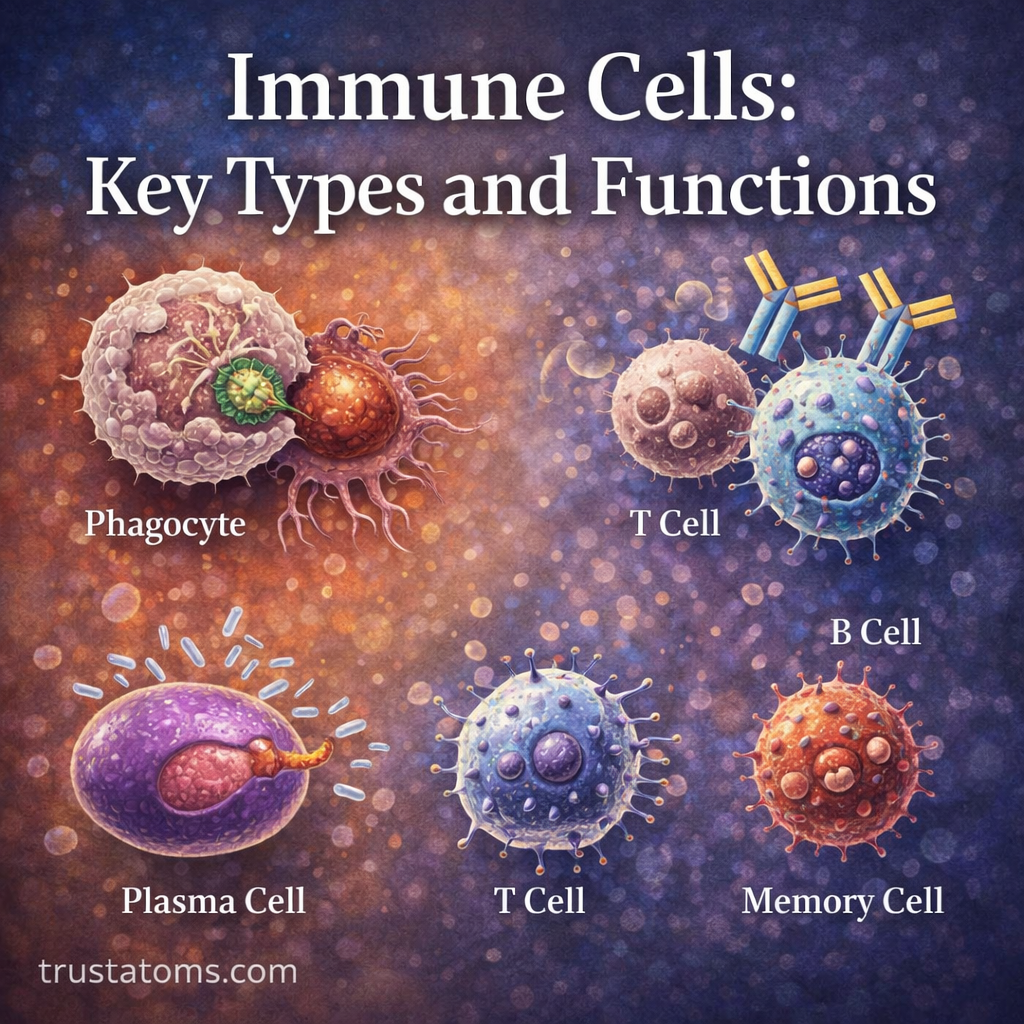
Immune cells are the body’s frontline defenders, constantly working to detect, attack, and eliminate harmful invaders like bacteria, viruses, and abnormal cells. These cells are part of a highly coordinated system that keeps you healthy and protects against disease.
Each type of immune cell has a specific role, and together they form a powerful defense network that adapts and improves over time.
What Are Immune Cells?
Immune cells are specialized cells that identify and respond to threats in the body. Most are a type of white blood cell (leukocyte), produced primarily in the bone marrow and circulating through the bloodstream and lymphatic system.
They are responsible for:
- Recognizing harmful substances (antigens)
- Destroying pathogens and infected cells
- Communicating with other immune cells
- Creating memory for faster future responses
Major Categories of Immune Cells
Immune cells are broadly divided into two groups based on how they respond to threats:
Innate Immune Cells
These provide fast, non-specific defense.
- Act immediately when a pathogen enters the body
- Do not remember past infections
- Form the first line of internal defense
Adaptive Immune Cells
These provide targeted, long-term protection.
- Respond more slowly at first
- Recognize specific pathogens
- Develop memory for future immunity
Key Types of Immune Cells and Their Functions
Phagocytes
Phagocytes are “eating cells” that engulf and digest harmful invaders.
Types of Phagocytes
- Neutrophils – the most abundant; first responders to infection
- Macrophages – clean up debris and alert other immune cells
- Dendritic cells – capture pathogens and present them to adaptive immune cells
Main Function
- Destroy pathogens through engulfment (phagocytosis)
- Trigger immune responses by signaling other cells
Natural Killer (NK) Cells
Natural killer cells are part of the innate immune system and specialize in detecting abnormal cells.
Main Function
- Kill virus-infected cells
- Destroy cancerous or damaged cells
They act quickly without needing prior exposure to a specific pathogen.
B Cells (B Lymphocytes)
B cells are a key part of adaptive immunity and are responsible for producing antibodies.
Main Functions
- Create antibodies that bind to specific pathogens
- Neutralize toxins and viruses
- Form memory B cells for long-term immunity
T Cells (T Lymphocytes)
T cells are another essential part of adaptive immunity and have multiple roles.
Types of T Cells
- Helper T cells (CD4+) – coordinate immune responses
- Cytotoxic T cells (CD8+) – kill infected or abnormal cells
- Regulatory T cells – prevent excessive immune reactions
Main Functions
- Direct other immune cells
- Destroy infected cells
- Maintain immune system balance
Plasma Cells
Plasma cells are activated B cells that produce large amounts of antibodies.
Main Function
- Release antibodies into the bloodstream to target pathogens
Memory Cells
Memory cells are long-lived immune cells that “remember” past infections.
Main Function
- Enable faster and stronger responses upon re-exposure to the same pathogen
These cells are the reason vaccines provide long-term protection.
How Immune Cells Work Together
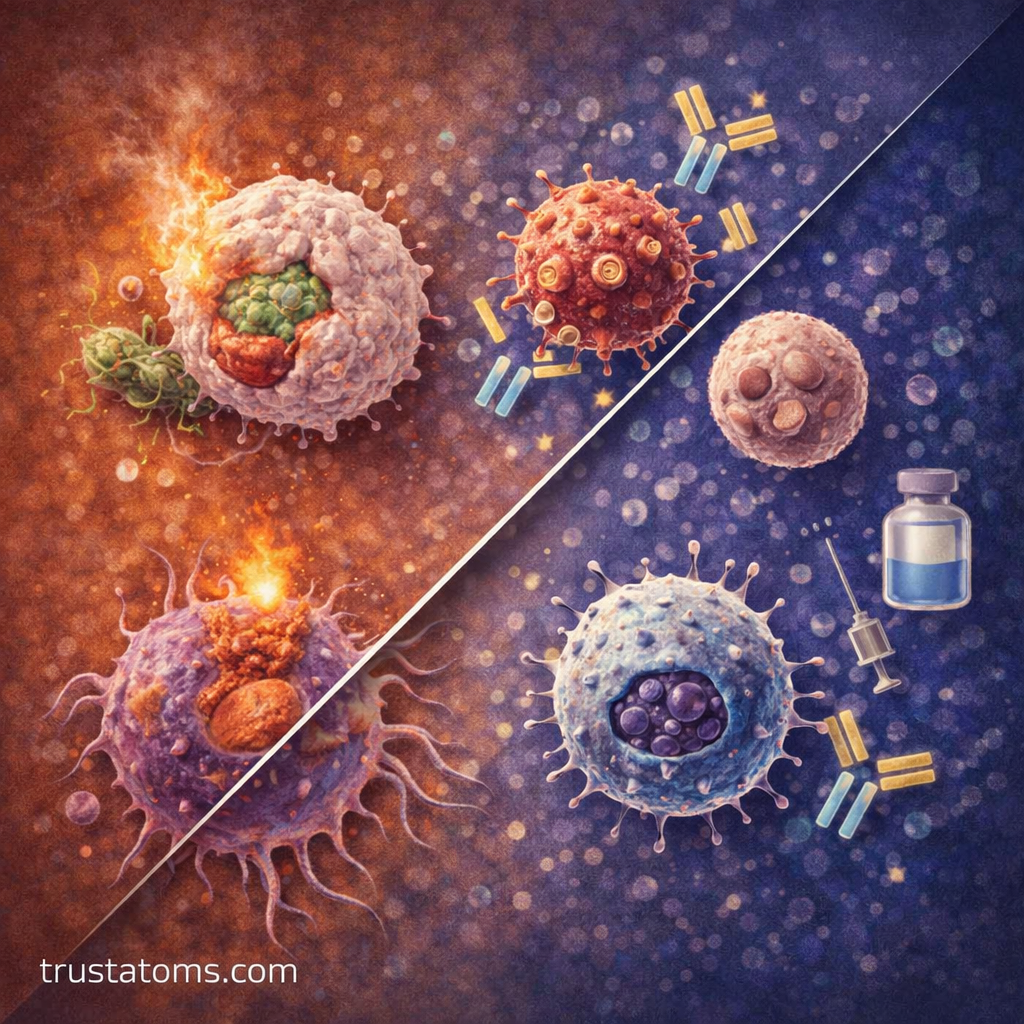
Immune cells do not act alone—they operate as a coordinated system.
Here’s a simplified sequence of how they interact during an infection:
- Detection – Dendritic cells and macrophages identify invaders
- Activation – Signals are sent to activate T cells and B cells
- Response
- Phagocytes destroy pathogens
- T cells kill infected cells
- B cells produce antibodies
- Memory formation – Memory cells are created for future protection
This teamwork ensures both immediate defense and long-term immunity.
Where Immune Cells Are Found
Immune cells circulate and reside in various parts of the body:
- Bloodstream – transports immune cells throughout the body
- Lymph nodes – filter harmful substances and activate immune responses
- Spleen – filters blood and stores immune cells
- Bone marrow – produces immune cells
- Thymus – where T cells mature
Why Immune Cells Are Important
Healthy immune cell function is critical for:
- Fighting infections effectively
- Preventing disease spread
- Eliminating abnormal or cancerous cells
- Supporting recovery from illness
If immune cells are weakened or malfunctioning, the body becomes more vulnerable to infections and disorders.
Factors That Affect Immune Cell Function
Several factors influence how well immune cells perform:
- Nutrition – vitamins and minerals support immune activity
- Sleep – essential for immune regulation
- Stress – chronic stress can suppress immune function
- Exercise – boosts circulation and immune efficiency
- Age – immune response may decline over time
Simple Way to Understand Immune Cells
Think of immune cells as a defense team:
- Phagocytes = cleanup crew
- NK cells = rapid response attackers
- T cells = tactical commanders and fighters
- B cells = weapon producers (antibodies)
- Memory cells = intelligence archive
Each plays a unique role, but all work together to keep the body protected.
Final Thoughts
Immune cells are the foundation of the body’s defense system. From fast-acting innate cells to highly specialized adaptive cells, each type contributes to identifying, attacking, and remembering threats.
Understanding these key players helps explain how your body stays protected—and why maintaining immune health is essential for overall well-being.