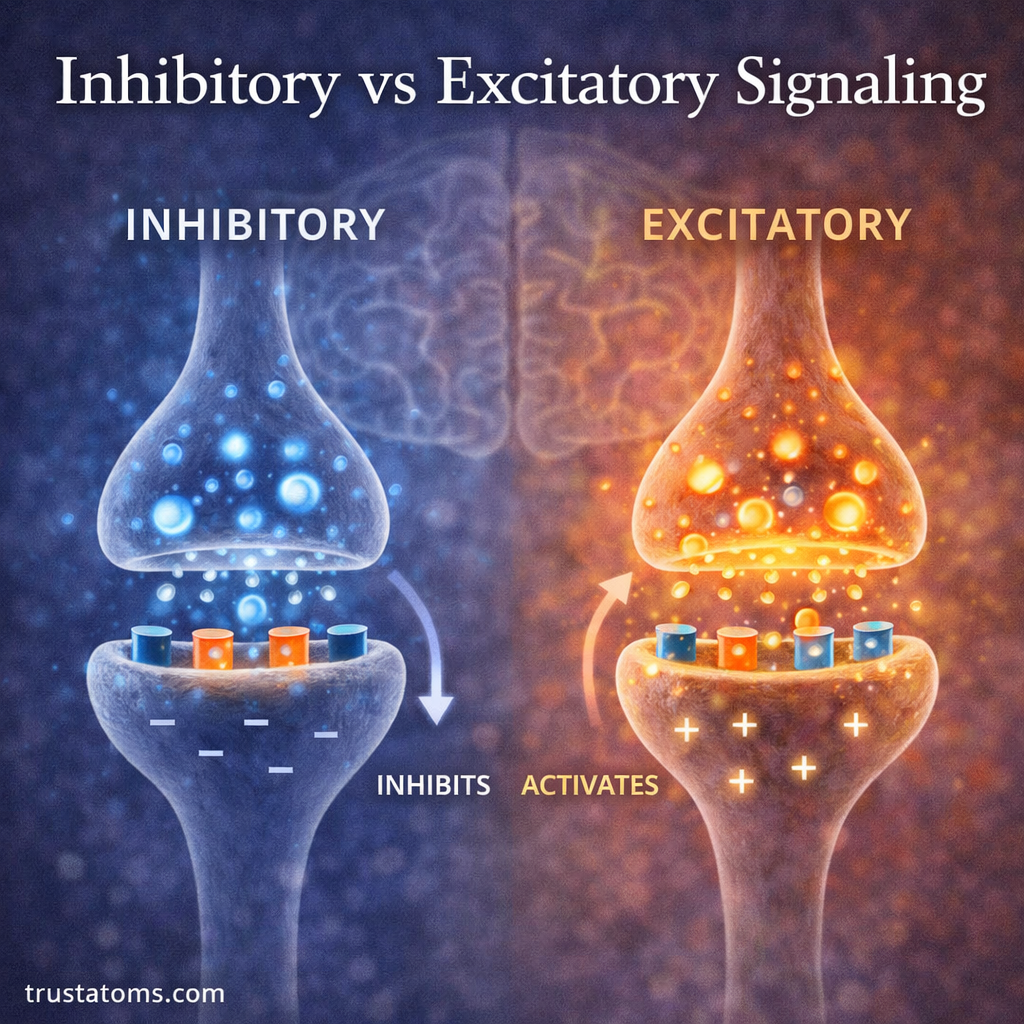
The brain operates through a constant balance of electrical and chemical signals. Every thought, movement, and sensation depends on how neurons communicate with one another. Two fundamental types of signaling make this possible: excitatory signaling and inhibitory signaling.
These opposing processes work together to regulate brain activity, ensuring that signals are neither too weak nor overly intense. Understanding this balance is key to understanding how the nervous system functions.
What Is Neural Signaling?
Neural signaling refers to how neurons communicate through electrical impulses and chemical neurotransmitters.
This process involves:
- An electrical signal traveling along a neuron
- Release of neurotransmitters at the synapse
- Activation or suppression of the next neuron
Depending on the type of signal, the receiving neuron may become more or less likely to fire.
What Is Excitatory Signaling?
Excitatory signaling increases the likelihood that a neuron will fire an action potential.
How It Works
- Neurotransmitters bind to receptors on the receiving neuron
- Ion channels open, allowing positive ions (like sodium) to enter
- The neuron becomes more positively charged (depolarized)
- If the threshold is reached, the neuron fires
Key Features of Excitatory Signals
- Promote neural activity
- Help transmit information across networks
- Essential for learning and memory
- Drive muscle movement and sensory processing
Common Excitatory Neurotransmitters
- Glutamate – the primary excitatory neurotransmitter in the brain
- Acetylcholine – involved in muscle activation and attention
What Is Inhibitory Signaling?
Inhibitory signaling decreases the likelihood that a neuron will fire.
How It Works
- Neurotransmitters bind to receptors on the receiving neuron
- Ion channels open, allowing negative ions (like chloride) to enter
- The neuron becomes more negatively charged (hyperpolarized)
- The neuron is less likely to reach the firing threshold
Key Features of Inhibitory Signals
- Suppress neural activity
- Prevent overstimulation
- Refine and control signal flow
- Support precise coordination
Common Inhibitory Neurotransmitters
- GABA (gamma-aminobutyric acid) – the primary inhibitory neurotransmitter
- Glycine – important in spinal cord inhibition
The Importance of Balance
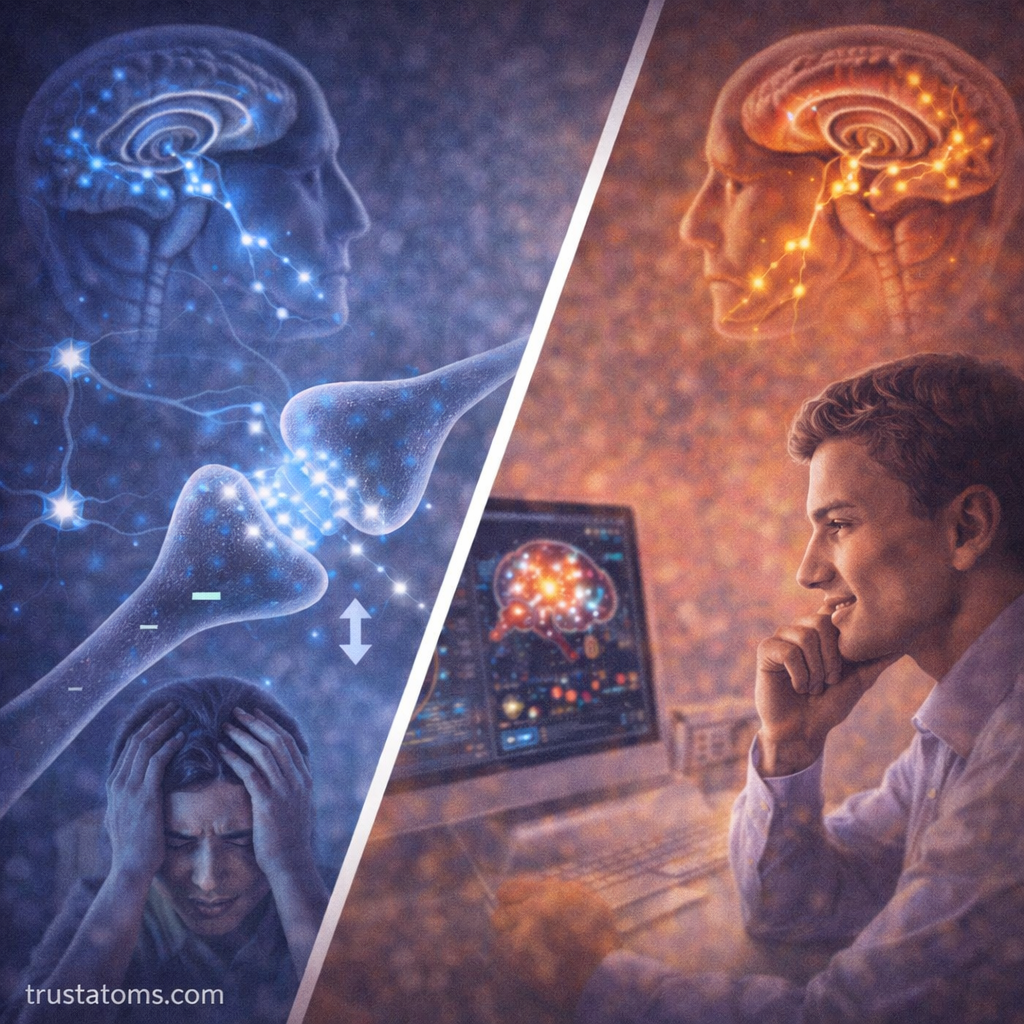
The nervous system depends on a delicate balance between excitatory and inhibitory signals.
Why Balance Matters
- Too much excitation → overstimulation and instability
- Too much inhibition → reduced responsiveness and slowed processing
This balance ensures:
- Stable brain activity
- Accurate information processing
- Controlled movement and behavior
Excitatory and Inhibitory Postsynaptic Potentials
When neurotransmitters affect a neuron, they create changes in electrical potential.
Excitatory Postsynaptic Potentials (EPSPs)
- Depolarize the neuron
- Bring it closer to firing
- Increase activity
Inhibitory Postsynaptic Potentials (IPSPs)
- Hyperpolarize the neuron
- Move it further from firing
- Decrease activity
Summation of Signals
Neurons receive many inputs at once.
They integrate signals through:
- Spatial summation – signals from multiple neurons
- Temporal summation – repeated signals from one neuron
The final outcome determines whether the neuron fires.
Role in Motor Control
Excitatory and inhibitory signaling are essential for coordinated movement.
They help:
- Activate the correct muscles
- Suppress opposing muscle groups
- Control timing and precision
For example, when you bend your arm:
- Excitatory signals activate flexor muscles
- Inhibitory signals suppress extensor muscles
This coordination allows smooth motion.
Role in Sensory Processing
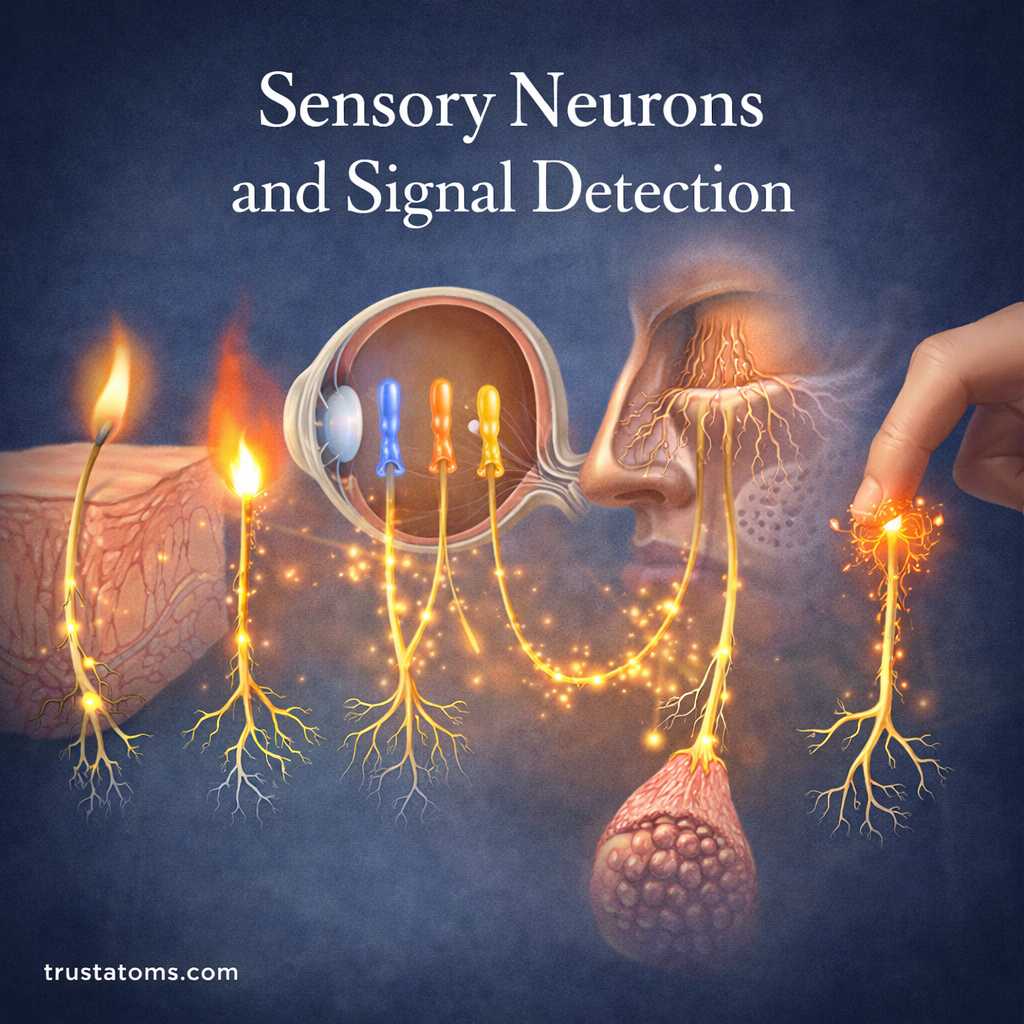
These signals also shape how we perceive the world.
They:
- Enhance important sensory inputs
- Filter out irrelevant information
- Prevent sensory overload
This allows the brain to focus on meaningful stimuli.
Role in Learning and Memory
Excitatory and inhibitory signaling influence how the brain forms and refines connections.
- Excitatory signals strengthen pathways (learning)
- Inhibitory signals refine and prune connections
This balance supports efficient neural networks and memory formation.
Disruptions in Signaling Balance
When the balance between excitation and inhibition is disrupted, neurological issues can arise.
Excess Excitation
- Seizures and epilepsy
- Overactive neural circuits
- Increased stress responses
Excess Inhibition
- Slowed cognitive processing
- Reduced alertness
- Impaired responsiveness
Related Conditions
- Anxiety disorders (reduced inhibitory control)
- Schizophrenia (imbalanced signaling)
- Neurodevelopmental disorders
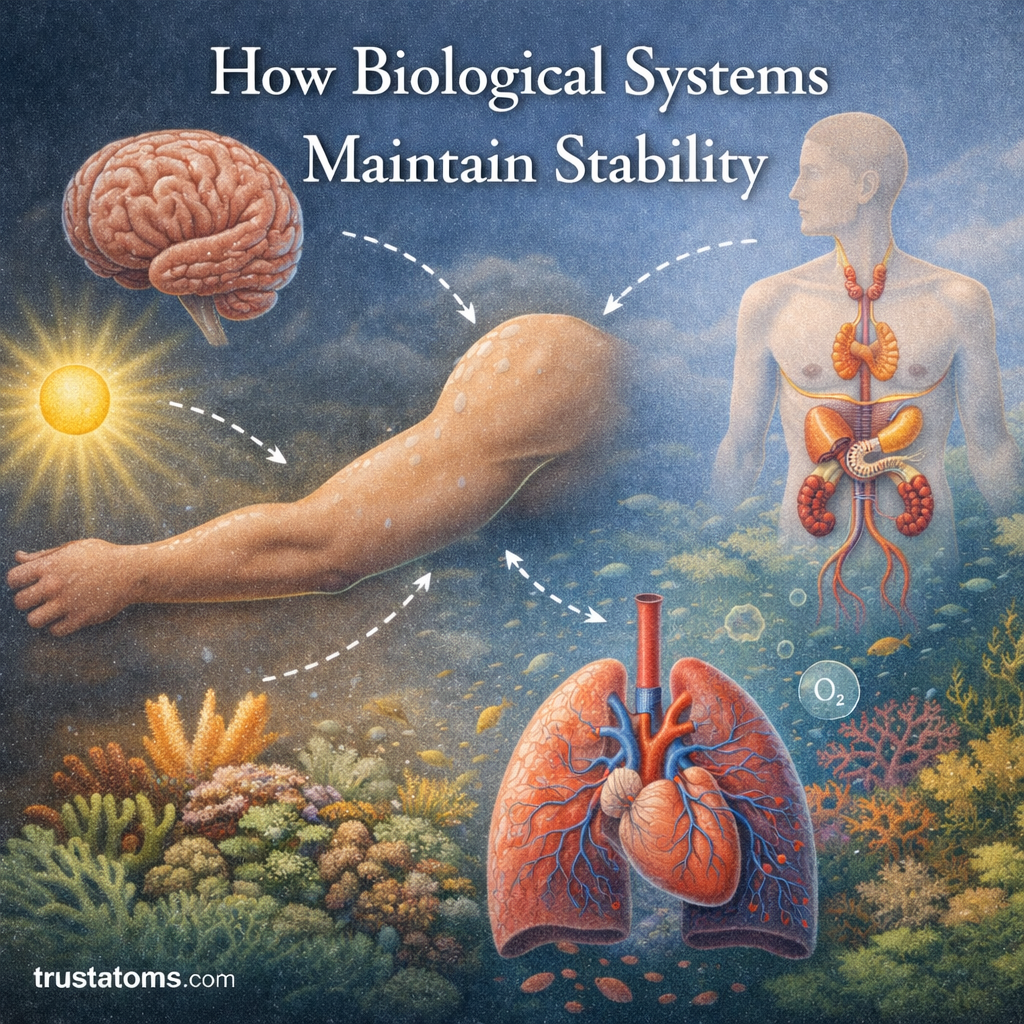
How the Brain Maintains Balance
The brain regulates signaling balance through:
- Neurotransmitter release control
- Receptor sensitivity adjustments
- Neural circuit feedback loops
- Synaptic plasticity
These mechanisms ensure stable and adaptable function.
Key Takeaways
- Excitatory signaling increases the likelihood of neuron firing
- Inhibitory signaling decreases neural activity
- Both are essential for proper brain function
- Balance between the two ensures stability and precision
- Disruptions can lead to neurological and mental health conditions
Final Thoughts
Inhibitory and excitatory signaling form the foundation of neural communication. By working together, they create a balanced system that supports everything from basic reflexes to complex thoughts.
This balance allows the brain to remain both active and controlled, enabling precise movement, clear thinking, and effective responses to the environment. Understanding these processes provides deeper insight into how the nervous system maintains harmony and function.