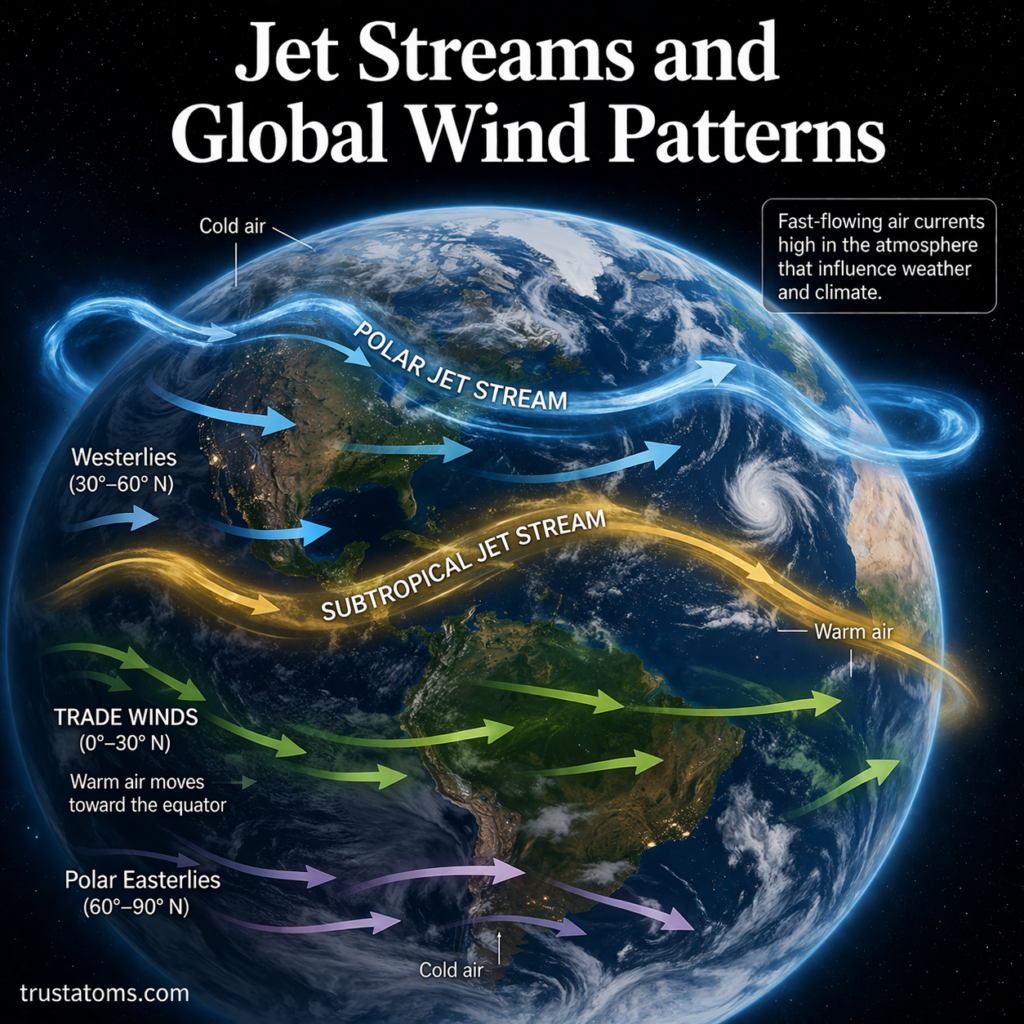
Jet streams and global wind patterns are powerful forces that shape Earth’s weather and climate. These high-speed air currents influence storm paths, temperature changes, and even flight routes.
Understanding how these systems work provides insight into everything from daily forecasts to long-term climate patterns.
What Are Jet Streams?
Jet streams are narrow bands of fast-moving air found high in the atmosphere, typically in the upper troposphere.
Key Characteristics
- Located about 8–15 km (5–9 miles) above Earth’s surface
- Wind speeds can exceed 100–200 mph
- Flow primarily from west to east
- Form at the boundaries between air masses of different temperatures
Why Jet Streams Form
Jet streams develop due to:
- Temperature differences between warm and cold air masses
- Earth’s rotation (the Coriolis effect)
- Pressure gradients in the upper atmosphere
The Two Main Jet Streams
There are two primary jet streams in each hemisphere.
1. Polar Jet Stream
- Located between cold polar air and warmer mid-latitude air
- Stronger and more variable
- Closely linked to weather systems and storms
2. Subtropical Jet Stream
- Found closer to 30° latitude
- Generally weaker and more stable
- Influences dry and warm climate regions
How Jet Streams Affect Weather
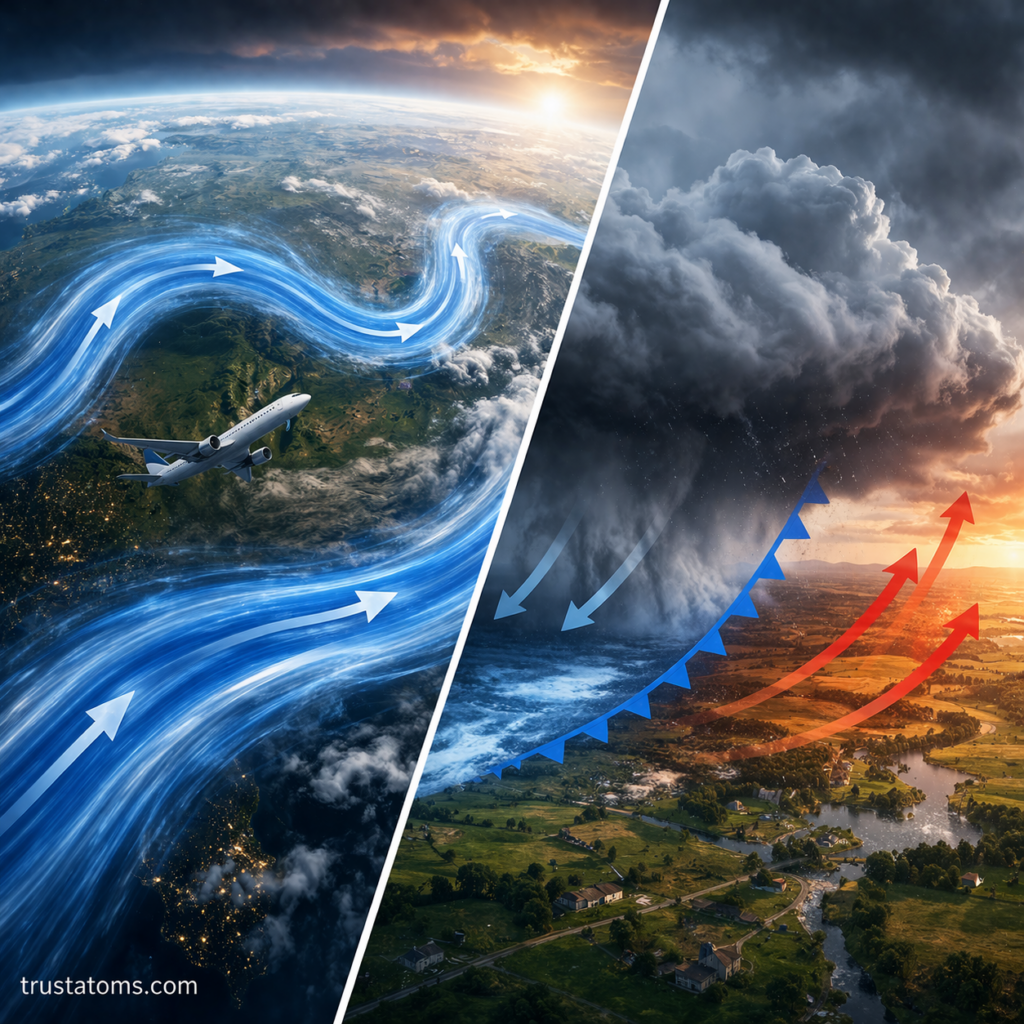
Jet streams act like atmospheric highways that guide weather systems.
Key Impacts
- Direct storm paths and precipitation patterns
- Separate warm and cold air masses
- Influence temperature changes
Example Effects
- A dip in the jet stream can bring cold air southward
- A ridge can push warm air northward
- Strong jet streams can intensify storms
What Are Global Wind Patterns?
Global wind patterns are large-scale movements of air that distribute heat across the planet.
They are driven by uneven heating of Earth’s surface and the rotation of the planet.
The Three Major Wind Belts
Earth’s surface is divided into three primary wind belts in each hemisphere.
1. Trade Winds (0°–30° latitude)
- Blow from east to west
- Move toward the equator
- Warm and steady winds
2. Westerlies (30°–60° latitude)
- Blow from west to east
- Influence much of North America and Europe
- Associated with changing weather
3. Polar Easterlies (60°–90° latitude)
- Blow from east to west
- Cold and dry winds
- Originate near the poles
The Role of the Coriolis Effect
Earth’s rotation causes moving air to curve rather than travel in straight lines.
How It Works
- Deflects winds to the right in the Northern Hemisphere
- Deflects winds to the left in the Southern Hemisphere
This effect is essential in shaping both jet streams and global wind patterns.
How Jet Streams and Wind Patterns Work Together
Jet streams and global winds are interconnected systems.
Key Interactions
- Global wind belts influence where jet streams form
- Jet streams steer weather systems carried by surface winds
- Both systems redistribute heat across the planet
This interaction helps balance temperature differences between the equator and the poles.
Jet Streams and Aviation
Jet streams play a major role in air travel.
Benefits
- Planes flying with the jet stream save fuel and time
Challenges
- Strong winds can cause turbulence
- Flights against the jet stream take longer
Airlines carefully plan routes to take advantage of these high-speed air currents.
Real-World Weather Examples
Jet streams and wind patterns can explain many common weather events:
- Sudden cold snaps when polar air moves south
- Heatwaves when warm air is trapped under a ridge
- Storm tracks following jet stream paths
Why These Systems Matter
Jet streams and global wind patterns are essential for:
- Weather forecasting
- Climate regulation
- Ocean current interaction
- Aviation planning
They help maintain Earth’s energy balance and influence ecosystems worldwide.
Final Thoughts
Jet streams and global wind patterns are dynamic, interconnected systems that drive much of Earth’s weather. From guiding storms to influencing temperatures, these invisible forces shape the environment we experience every day.
By understanding how they work, you gain a clearer picture of how the atmosphere operates on both local and global scales.